Think pallet delivery is only for warehouses, factories, or companies moving thousands of units at a time? It’s a surprisingly common assumption, but it’s simply not true. Pallet delivery isn’t just for large companies; it’s a method designed to streamline shipping for all kinds of senders, including small businesses, sole traders, and even individuals selling large items online.
This guide breaks down exactly what pallet delivery is, how it works, and when it’s the smartest choice for your next shipment.
Table of Contents
- Understanding pallet delivery: the basics explained
- Benefits of pallet delivery for UK businesses and individuals
- Comparing pallet delivery with other shipping methods
- What to consider when booking pallet delivery
- Our view: why pallet delivery is more accessible than most realise
- How Van-247 can make pallet delivery even easier
- Frequently asked questions
Key Takeaways
| Point | Details |
|---|---|
| Pallet delivery definition | Pallet delivery is the shipment of goods consolidated on a wooden or plastic platform for faster, safer, and more cost-effective transport. |
| Ideal for bulk shipments | It’s most cost-effective when sending heavy or multiple items that benefit from being combined into one shipment. |
| Reduces handling risks | Consolidation minimises the risk of damage or loss compared to sending separate parcels. |
| Accessible for all | Businesses and private individuals in the UK can both use pallet delivery services, even for one-off shipments. |
Understanding pallet delivery: the basics explained
Pallet delivery is, at its core, the process of loading goods onto a flat wooden or plastic platform (the pallet), securing them safely, and transporting them as a single unit. Rather than sending multiple loose boxes through a standard parcel network, you consolidate everything onto one stable base. That simple change makes a big difference when it comes to safety, speed, and cost.
Our guide to pallet delivery services explains this process in more detail, but the short version is this: pallet delivery is ideal for anything bulky, heavy, fragile, or made up of multiple pieces that belong together. Think machinery parts, trade supplies, retail stock, appliances, building materials, furniture, and yes, even that oversized item you sold on Facebook Marketplace.
So how pallet delivery works in practice is fairly straightforward. You stack your goods on a pallet, secure them with stretch wrap or strapping, book a collection, and a driver picks them up on a set date. The pallet then moves through a freight network to its destination, often much faster and more reliably than individual parcels.
Here’s a quick comparison to put it in context:
| Shipment type | Best method | Typical weight | Key advantage |
|---|---|---|---|
| Single small item | Parcel courier | Under 30kg | Speed, simplicity |
| Multiple related items | Pallet delivery | 30kg to 1,000kg+ | Consolidation, cost saving |
| Heavy machinery | Pallet or dedicated van | 200kg+ | Safety, reduced handling |
| Fragile goods | Pallet delivery | Any | Fewer handling events |
| Retail stock replenishment | Pallet delivery | 100kg+ | Efficiency, scheduling |
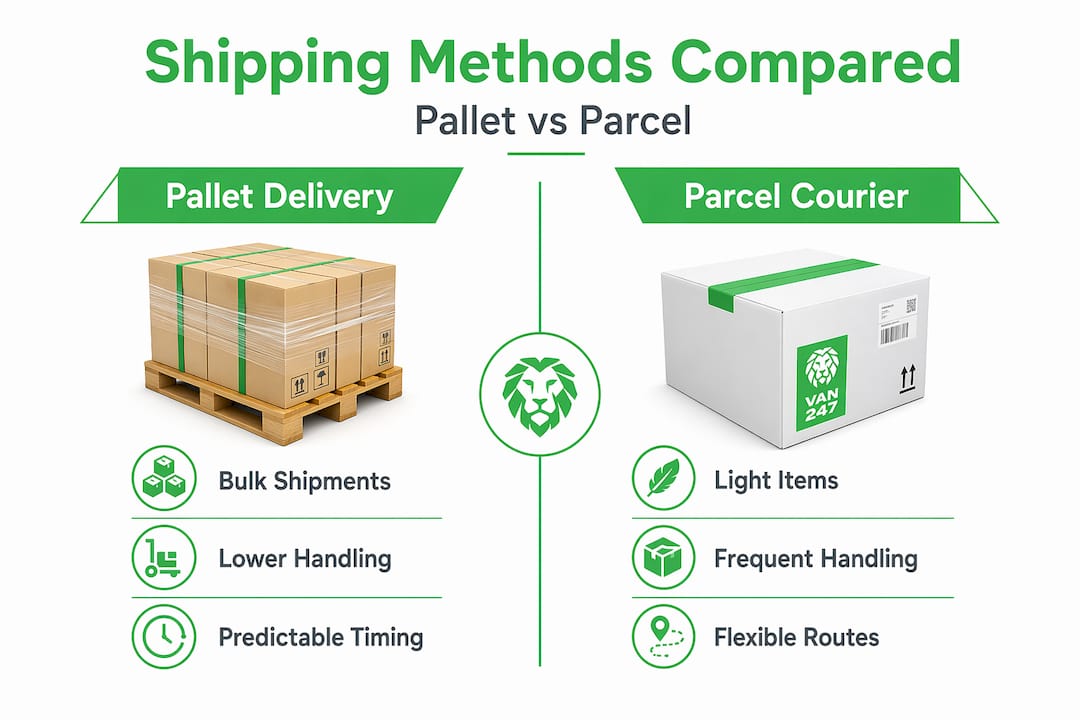
The practical break-even for pallet vs parcel delivery hinges on the bulk and heaviness of your shipment, and the ability to consolidate items onto one pallet. It’s less about how many boxes you have, and more about whether those boxes, stacked together, make better sense as a single freight unit.
Why people choose pallet delivery:
- Goods are handled as one unit rather than many separate parcels
- Lower risk of items going missing or getting damaged in transit
- Often cheaper than booking multiple heavy parcels individually
- Better suited to large, awkward, or fragile items
- Trackable, scheduled, and reliable for both B2B and B2C shipments
- Access to nationwide freight networks without needing a full lorry load
Benefits of pallet delivery for UK businesses and individuals
Having outlined the basics, let’s explore why so many UK businesses and individuals are making pallet delivery their preferred choice. The advantages go well beyond simply “it’s cheaper.” There are real, practical reasons this method is growing in popularity across sectors.
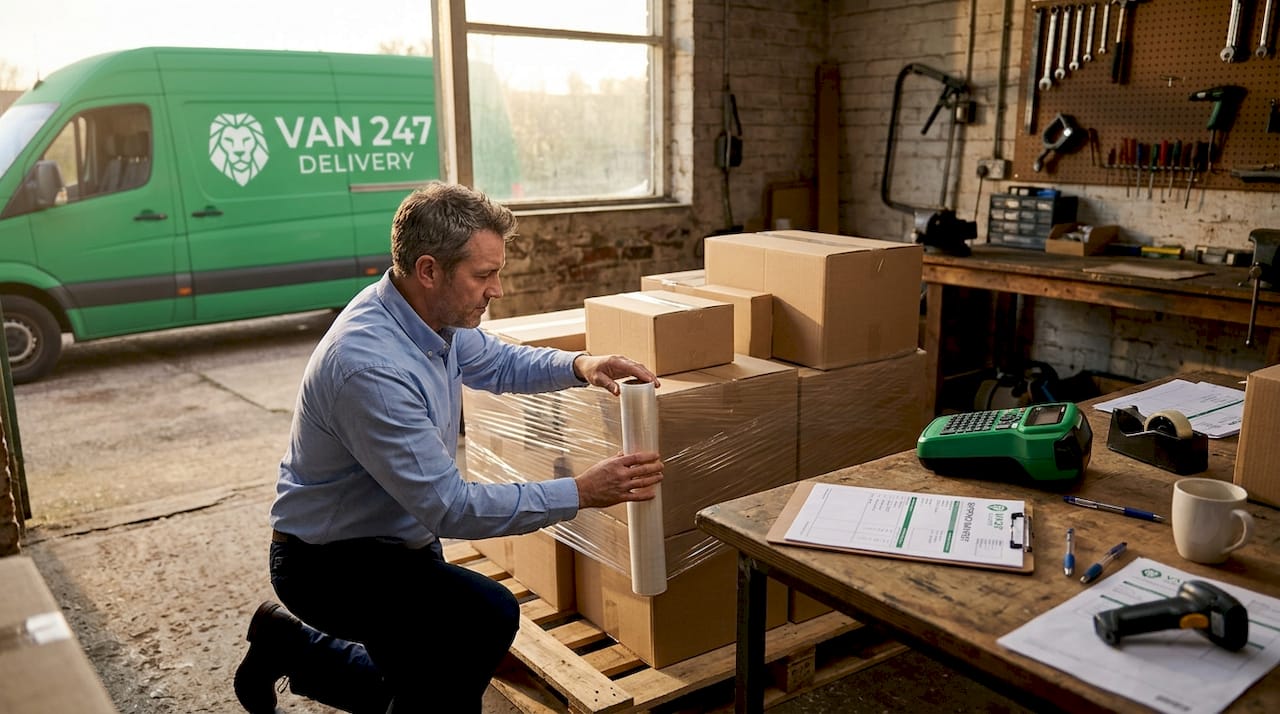
1. Cost savings on bulk and heavy shipments. When your goods exceed typical parcel thresholds (often around 30kg or large dimensions), standard courier pricing can quickly escalate. Booking one pallet collection is almost always more economical than paying for five or six oversized parcel surcharges. Our article on saving money on pallet delivery walks through exactly how to keep costs down.
2. Reduced handling events. Every time a parcel is touched, there’s a chance of damage or misplacement. Consolidating items onto a single pallet reduces handling events, streamlining the logistics process considerably. For fragile goods, that reduction in handling is genuinely significant.
3. Greater flexibility for all types of senders. Pallet delivery isn’t tied to any particular business size. Whether you’re streamlining your supply chain as a growing retailer or sending a single large item as a private individual, the infrastructure is available to you.
4. Predictable scheduling. Unlike parcel services where delivery windows can be vague, pallet networks typically offer specific collection and delivery time slots. That’s a real benefit if you’re coordinating with a customer, a site manager, or a storage facility.
5. Better protection for goods. A pallet keeps items off the ground and stacked securely. Add stretch wrap and corner boards, and you have a shipment that’s far more resilient to the bumps and knocks of transit than loose boxes on a conveyor belt.
Here’s a numbered summary of the top reasons to consider pallet delivery:
- Lower cost per kg for heavy or bulky loads compared with parcel couriers
- Fewer handling touchpoints means less risk of damage or loss
- Nationwide coverage with scheduled collections and deliveries
- Suitable for fragile, oversized, or high-value goods
- Easier to track as a single consignment rather than multiple packages
- Available to private individuals, not just trade accounts or businesses
Pro Tip: Use pallet delivery when your shipment’s total weight or combined bulk would push parcel surcharges through the roof. If you’re sending more than 50kg, or several large items that logically belong together, the economics almost always tip in favour of palletised freight.
Comparing pallet delivery with other shipping methods
Understanding the benefits is crucial, but how does pallet delivery actually stack up against the alternatives? This comparison will make your decision much clearer.
The key shipping methods available in the UK are standard parcel couriers, pallet networks, dedicated van or vehicle hire, and full lorry loads. Each has its sweet spot.
| Method | Best for | Typical cost | Flexibility | Key limitation |
|---|---|---|---|---|
| Parcel courier | Small, light items under 30kg | Low per item | Very high | Size and weight limits |
| Pallet delivery | Bulky, heavy, or multiple items | Medium per pallet | High | Requires pallet prep |
| Dedicated van | Time-sensitive, fragile, or oversized items | Higher | Very high | Cost for smaller loads |
| Full lorry load | Large commercial volumes | Lowest per unit | Low | Only viable at scale |
Pallet delivery becomes far more efficient with bulkier shipments, as opposed to sending many separate parcels. That efficiency doesn’t kick in for a single lightweight item, but it becomes obvious once you’re dealing with combined weights above 50kg or items that simply won’t fit in a standard box.
Our detailed breakdown of when to use pallets vs parcels is worth reading if you’re still weighing up the options. But here’s a quick guide to help you decide:
Scenarios where pallet delivery wins:
- Sending machinery, equipment, or trade goods to a site or customer
- Shipping multiple units of the same product in one go
- Moving large furniture items or appliances between locations
- Selling heavy items online and needing a reliable, tracked delivery method
- Restocking a retail unit with multiple product lines
- Sending goods that are fragile and benefit from minimal handling
When parcel courier makes more sense:
- Single lightweight items under 20kg
- Time-critical next-day deliveries with no access to pallet facilities at the destination
- Last-mile deliveries where a pallet would be impractical to offload
The key takeaway here is that neither method is universally better. It genuinely comes down to what you’re sending, where it’s going, and how much handling you’re comfortable with.
What to consider when booking pallet delivery
Now that you’ve seen how pallet delivery compares with other methods, here’s how to get it right from the start when booking your shipment. Getting the preparation right makes the whole process smoother and reduces the risk of delays, damage, or additional charges.
Step-by-step booking process:
- Measure and weigh your goods. Before anything else, get accurate dimensions and total weight. Most pallet couriers price based on weight and pallet size, so being precise avoids surprise charges.
- Choose the right pallet size. Standard UK pallet sizes include the Euro pallet (120cm x 80cm), the standard UK pallet (120cm x 100cm), and half pallets. Don’t overhang your goods beyond the pallet edge.
- Stack and secure your goods properly. Place heavier items at the bottom and lighter ones on top. Use stretch wrap (at least three layers) and consider corner boards for extra rigidity. Read up on safety standards for pallet deliveries to make sure you’re compliant.
- Label clearly. Every pallet should have a visible, weather-resistant label showing the sender’s and recipient’s details, the weight, and any handling instructions such as “fragile” or “this way up.”
- Confirm the delivery address is pallet-accessible. This is the step most people overlook. Residential addresses sometimes can’t accept tail-lift deliveries, or there’s limited kerb access. Check in advance. There are also some key shipping decisions around service levels, such as kerbside vs. room-of-choice delivery, that are worth thinking through before you book.
- Book collection with a reliable provider. Provide accurate details about the consignment, confirm collection windows, and get your tracking number ready.
Pro Tip: Always confirm that your delivery destination can physically receive a pallet before you book. Residential properties, upper-floor flats, and narrow driveways can all cause problems if not flagged in advance. A quick phone call to the recipient can save a failed delivery charge.
Common mistakes to avoid:
- Overhanging goods beyond the edges of the pallet (this causes damage and may invalidate insurance)
- Using inadequate stretch wrap or only wrapping once
- Underestimating the weight, leading to reclassification charges
- Failing to label pallets correctly or using labels that aren’t weatherproof
- Not confirming consolidating fragile goods onto one pallet to reduce handling events before booking a sensitive consignment
- Assuming all residential addresses can receive standard pallet deliveries without checking first
Following these steps means fewer headaches and a much smoother delivery experience for both you and your recipient.
Our view: why pallet delivery is more accessible than most realise
The logistics industry has done a poor job of communicating just how accessible pallet delivery actually is. For years, the default assumption has been that pallets are the domain of warehouses, distribution centres, and fleet managers. The language used, the websites built, and even the booking systems have often felt designed for businesses with accounts and regular consignments, not for an individual who just needs to get a heavy sofa to a buyer two counties away.
But that’s changing. Online booking platforms, transparent pricing, and more flexible collection options mean that pallet delivery is genuinely as accessible for a one-off private sender as it is for a weekly trade shipper. The barriers to entry are lower than most people think.
What most guides miss, though, is this: the cost-effectiveness of pallet delivery isn’t primarily about sending lots of things. It’s about sending bulky or heavy things. That distinction matters enormously. The practical break-even is usually misunderstood as being about shipment quantity, when it’s actually about shipment bulk and consolidation.
We’ve seen this play out many times through our own experience. A private seller sends a single washing machine. A sole trader ships a batch of handmade furniture. A small business restocks a client’s shelves with 80kg of product. In each case, how pallet delivery networks work makes these shipments not only viable but genuinely cheaper and safer than the parcel alternative. The method fits the shipment. That’s the whole point.
Our honest advice: stop thinking about pallet delivery as a scale question, and start thinking about it as a match question. Does your shipment’s weight, bulk, or fragility match what a pallet network is designed to handle? If yes, it’s almost certainly your best option.
How Van-247 can make pallet delivery even easier
With all of this in mind, finding a reliable pallet delivery provider can make the whole process stress-free and cost-effective. You shouldn’t have to wrestle with complex booking forms or worry about whether your consignment will arrive safely.
At Van-247, we make it straightforward to book pallet delivery across the UK, with same-day collection options available and a simple online booking process. Whether you’re a business looking for a consistent, dependable freight partner or an individual clearing out a property and needing a one-off solution, we’ve got you covered. We also offer house removals and local man and van services if your needs go beyond palletised freight. Get an instant quote today and see how easy organised, insured, and tracked pallet transport can be.
Frequently asked questions
When should I choose pallet delivery over parcel services?
Choose pallet delivery when your items are heavy, bulky, or can be consolidated onto a pallet for lower handling risk and better overall cost, typically when combined weight exceeds 50kg or items are awkward in size.
Are there standard pallet sizes for delivery in the UK?
The most common option is the Euro pallet at 120cm x 80cm, but standard UK pallets (120cm x 100cm) and half pallets are also widely used depending on the carrier and the nature of your goods.
Can individuals as well as businesses use pallet delivery?
Yes, absolutely. this delivery streamlines shipping for all types of senders, including private individuals making one-off shipments of heavy or large items.
How do I prepare my goods for pallet delivery?
Stack items securely with heavier goods at the base, use at least three layers of stretch wrap, add corner boards for fragile consignments, distribute weight evenly across the pallet, and attach a clear weatherproof label with full sender and recipient details.
What happens if the delivery location can’t accept pallets?
You should always confirm access before booking. Some residential addresses require a tail-lift vehicle or kerbside-only delivery, and narrow or restricted access points may need special arrangements agreed with your provider in advance.