Yes, you can absolutely hire a professional to move a single large or bulky item in the UK, and it is far more affordable than most people expect. Man and van services handle single-item jobs every day, from a sofa collected off Facebook Marketplace to a wardrobe shifted between rooms. Your immediate next step: measure the item (height, width, depth), take a few photos, note any access issues such as stairs or narrow doorways, and request an instant quote. Van-247delivery offers insured transport with online quotes and flexible scheduling, making it one of the most straightforward booking routes for a single-item move anywhere in the UK.
Table of Contents
- Which single items can movers handle, and what needs a specialist?
- How does pricing work for single-item moves in the UK?
- What does a single-item move include, and what costs extra?
- How to book and prepare so the job runs smoothly
- Which van size do you need, and when is a two-person team worth it?
- What insurance and safety checks should you make before booking?
- When is it worth hiring a pro versus doing it yourself?
- Why Van-247delivery works well for single-item moves
- Key takeaways
- The part most people skip (and then regret)
- Single-item moves made simple with Van-247delivery
- Useful sources
- FAQ
Which single items can movers handle, and what needs a specialist?
Most professional furniture movers will comfortably take on the items you are most likely to need shifted.
Standard items a man and van will typically handle:
- Sofas, corner sofas, and armchairs
- Double, king, and super-king beds (often requiring disassembly)
- Wardrobes, chest of drawers, and bookcases
- Fridges, washing machines, and other white goods
- Mattresses and divan bases
- Large mirrors and framed artwork (with protective wrapping)
- Dining tables and sideboards
Items that usually need a specialist or extra equipment:
- Upright and grand pianos (specialist teams and piano boards required)
- Pool tables (slate beds must be disassembled by a professional)
- Large antiques or museum-quality pieces with high declared value
- Very large glass panels or bespoke fitted furniture
Beds, flat-pack wardrobes, and some dining tables often need disassembly before they can be moved safely through doorways. A furniture mover or moving labourer will typically handle basic disassembly and reassembly, though this adds time and may increase the final cost. Specialist items such as pianos routinely require dedicated teams and equipment; attempting them with a standard man-and-van risks damage and a much higher bill to put things right.
How does pricing work for single-item moves in the UK?
Pricing for single-item moves usually follows one of three models: an hourly rate with a minimum hire period, a fixed per-job quote, or a distance-based charge for longer hauls. Most local jobs are quoted hourly or as a short fixed price.
UK man and van rates vary by city and access, but London figures give a useful benchmark:
| Service type | Low | Average | High |
|---|---|---|---|
| Man & van (per hour, local) | £35 | £50 | £70 |
| Single-item delivery (local) | £35 | £60 | £100 |
| Half-day hire (up to 4 hours) | £125 | £185 | £250 |
| Half-day hire (up to 4 hours) | £125 | — | — |
A two-hour minimum is common, so even a 30-minute job will typically be charged at the minimum rate. Outside London, rates tend to sit at the lower end of these ranges.
Common extras that push the price up:
- Stairs at collection or delivery address
- Narrow corridors or awkward access requiring extra manoeuvring time
- Parking charges or congestion zone fees
- Disassembly and reassembly of beds or wardrobes
- Heavy-lifting surcharges for items over a certain weight
- Protective wrapping or specialist padding
For a short local single-item collection, such as picking up a sofa from a seller, you can realistically budget £35–£125 depending on distance and job duration.
What does a single-item move include, and what costs extra?
The base price for a typical single-item move covers loading at the collection point, transport, unloading, and basic placement inside one room at the destination. That is the core job. Everything beyond it is usually an optional add-on.
Common optional extras:
- Two-person crew for heavy or awkward items
- Protective padding, blankets, or shrink-wrap
- Disassembly and reassembly
- Appliance disconnection and reconnection
- Inside placement beyond the first room (e.g. up a flight of stairs to a bedroom)
- Short-term storage if there is a gap between collection and delivery
Pro Tip: If you are able to carry one end of a sofa or clear a path through the property yourself, you can often reduce the job from a two-person crew to a single mover plus your assistance, which can noticeably lower the cost.
How to book and prepare so the job runs smoothly
Getting the details right before you book saves you from surprise charges on the day. Here is the sequence to follow:
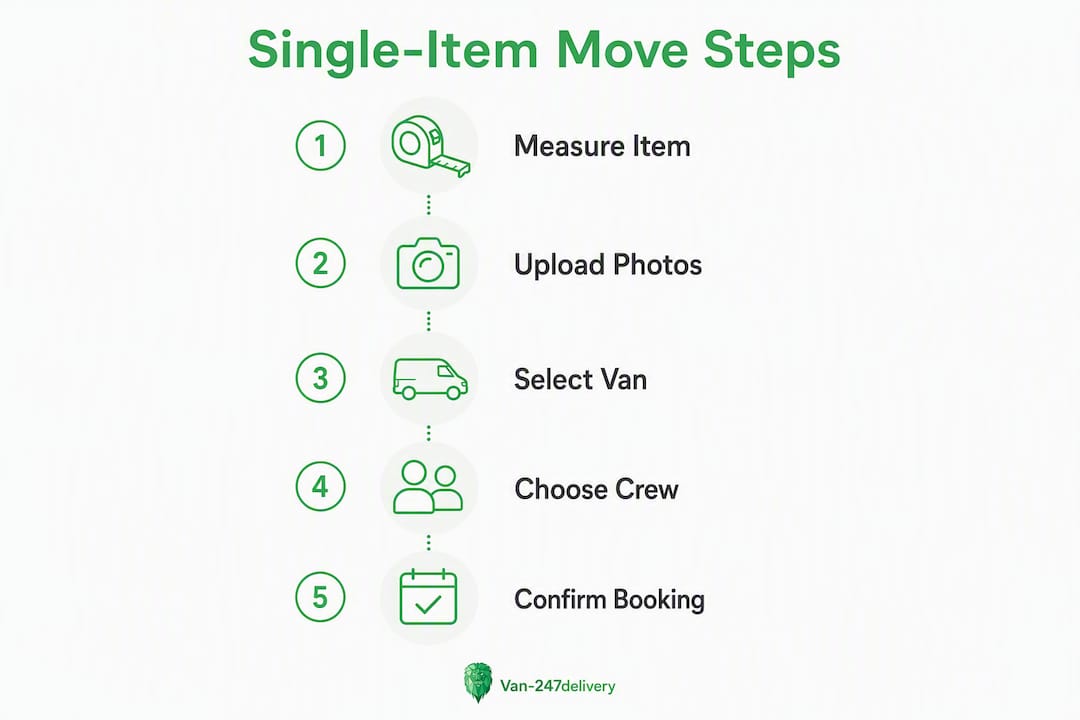
- Measure the item. Record height, width, and depth. For odd shapes (L-shaped sofas, curved headboards), measure the diagonal too.
- Take photos from all angles. Include the underside if relevant, any fragile areas, and the narrowest doorways or stairwells the item must pass through. Providing clear photos and measurements helps movers give you a faster, more accurate fixed quote.
- Note all access details. Floor number, lift availability, parking restrictions, and any tight corners between the front door and the item’s current location.
- Confirm your preferred timing. Morning slots often book up fastest; mid-week tends to offer more flexibility.
- Check insurance and payment method. Confirm the mover carries goods-in-transit cover and ask about their claims process before you pay a deposit.
- Clear the path and protect your floors. Remove rugs, lay down floor protection, and take fragile items off shelves near the route before the mover arrives.
For practical preparation tips, the furniture delivery moving tips guide on the Van-247delivery blog covers packing and access preparation in detail.
Which van size do you need, and when is a two-person team worth it?
For most single large items, a standard long-wheelbase Transit-style van is sufficient. A Luton van (the box-body type with a tail lift) becomes useful when the item is very bulky, awkwardly shaped, or when a tail lift removes the need to carry something heavy up a ramp.
A two-person crew is worth requesting when:
- The item weighs more than roughly 100 kg
- There are stairs at either address
- Corridors or doorways require the item to be tilted and manoeuvred simultaneously
- The item needs disassembly in a tight space
Parking matters more than most people anticipate. A Luton van needs a longer loading bay than a Transit, and in city centres or terraced streets this can add time or require a parking permit. Mention any parking restrictions when you book. For detailed guidance on staircase moves, the Van-247delivery article on transporting furniture up and down stairs is worth a read before you confirm your crew size.
What insurance and safety checks should you make before booking?
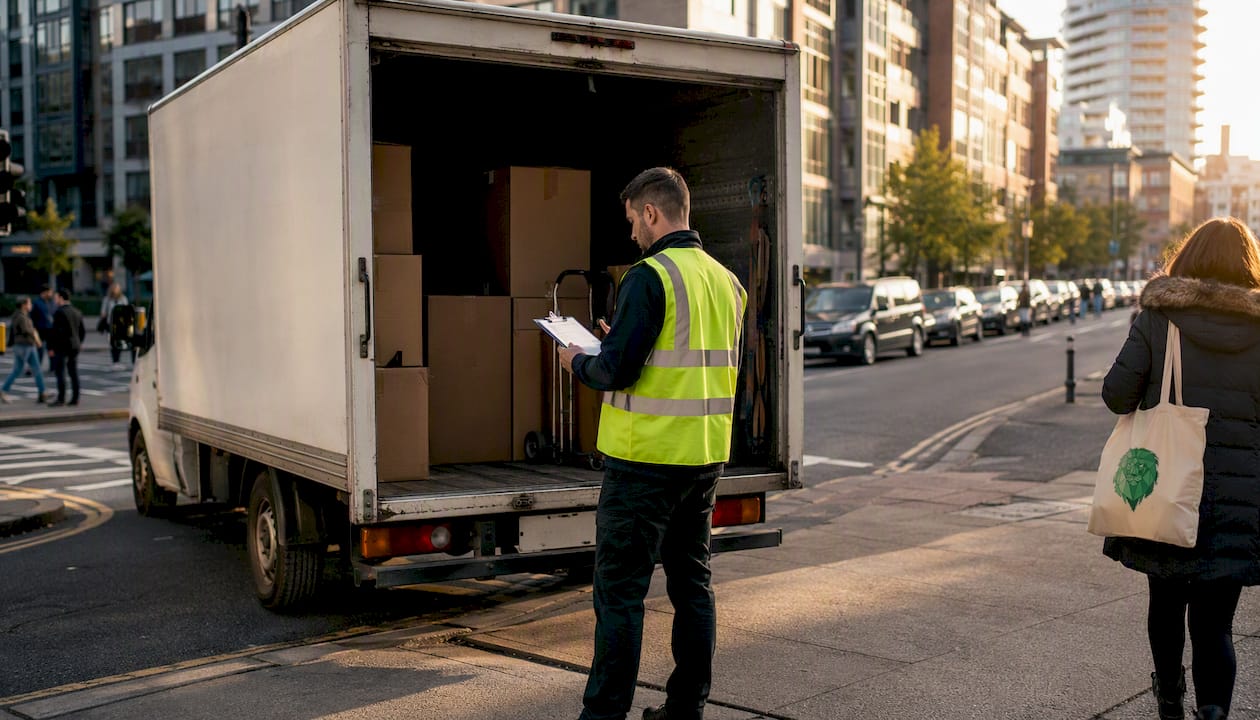
Two types of cover matter for a single-item move: goods-in-transit insurance (covers your item if it is damaged or lost during transport) and public liability insurance (covers damage to your property during the move). Always ask for both before confirming a booking.
Questions to ask your mover:
- What is the maximum declared value covered under goods-in-transit?
- Are fragile or high-value items excluded or subject to a lower limit?
- How do you make a claim, and what is the typical timeline?
- Do you carry public liability cover, and for how much?
Red flags to watch for:
- No proof of insurance when asked
- Cash-only payment with no receipt or written confirmation
- No fixed business address or verifiable reviews
- Vague or verbal-only quotes with no written breakdown
- Pressure to book immediately without time to check credentials
On the day, a reputable mover will arrive with proper straps, moving blankets, and the right lifting technique. If someone turns up without basic equipment and asks you to help carry a fridge down two flights of stairs, that is a problem worth walking away from.
When is it worth hiring a pro versus doing it yourself?
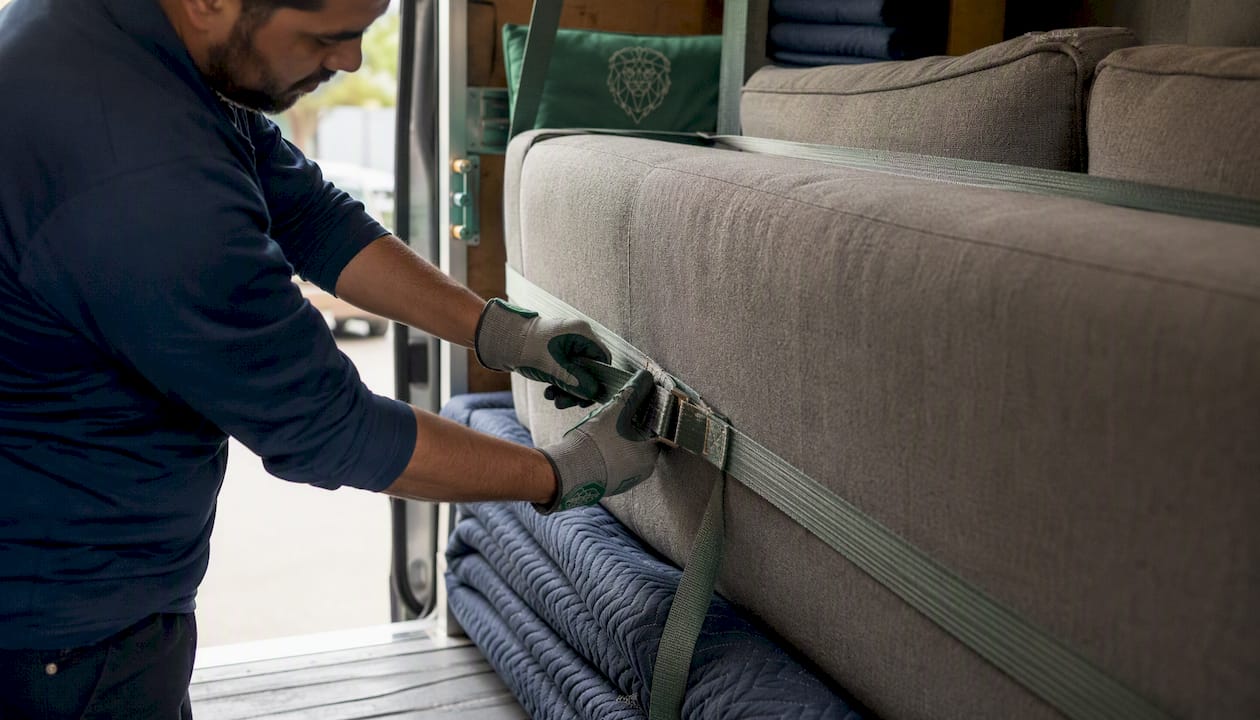
A quick rule of thumb: DIY is reasonable if the item weighs under roughly 45 kg (about 100 lbs) and you have at least one other person to help. Call a professional if the item exceeds roughly 90 kg (200 lbs), involves stairs, requires disconnection (washing machines, American-style fridge-freezers), or is a piano, pool table, or antique.
If you do go DIY, furniture sliders (around £10–£20) and a dolly or sack truck (rental roughly £15–£30) make the job significantly safer. Never lift with your back; always bend at the knees and keep the load close to your body.
The hidden costs of DIY are easy to underestimate: a pulled muscle, a scratched floor, or a doorframe gouged by a wardrobe corner can quickly cost more than a professional mover would have charged. Hiring a professional for a single heavy item is often the more cost-effective choice once you factor in those risks.
Why Van-247delivery works well for single-item moves
Van-247delivery has been operating in UK logistics for over 15 years, and single-item moves are a core part of what they do. The booking process is built around speed and clarity.
What Van-247delivery offers for single-item jobs:
- Instant online quotes with no obligation
- Insured transport (goods-in-transit and public liability cover)
- Man-with-a-van and two-person team options
- Optional disassembly and reassembly
- Flexible scheduling, including same-day availability
- Tracking and confirmed booking confirmation
A typical booking looks like this: you upload photos and measurements, select your van and crew option, confirm the collection and delivery addresses, and receive a fixed price. No hidden extras, no vague estimates. The man and van same-day services guide explains exactly what is included for short-notice jobs.
Key takeaways
Hiring a professional to move a single item in the UK is straightforward, affordable, and far safer than attempting a heavy or awkward piece alone.
| Point | Details |
|---|---|
| Typical UK cost range | Local single-item moves often cost in a moderate range with a typical two-hour minimum charge. |
| Measure and photograph first | Accurate dimensions and photos of access points get you a faster, more accurate fixed quote. |
| Check insurance before booking | Confirm goods-in-transit and public liability cover before paying any deposit. |
| Match crew and van to the item | Items over ~90 kg or involving stairs need a two-person team; a Luton van suits very bulky pieces. |
| Van-247delivery for quick bookings | Van-247delivery offers instant online quotes, insured transport, and same-day options for single-item moves across the UK. |
The part most people skip (and then regret)
Most of the stress around single-item moves comes from one thing: not asking the right questions before booking. People focus on price and forget to check insurance limits, confirm crew size, or mention the awkward half-landing on the stairs. Then something goes wrong and there is no clear agreement to fall back on.
The movers who are worth hiring will not mind being asked about their cover, their claims process, or whether they have moved a piano before. A short, direct conversation before you confirm the booking tells you almost everything you need to know about how professional the service actually is. Price matters, but a mover who answers your questions clearly and confirms everything in writing is worth a few pounds more than one who does not.
Van-247delivery’s 15-plus years in UK logistics, insured transport, and transparent online quoting are the kinds of proof points that make that conversation easier. You can read more on the Van-247delivery blog for deeper guidance on furniture moves, packing, and what to expect on the day.
Single-item moves made simple with Van-247delivery
Moving one large item should not mean hiring a full removal team or spending a day on the phone chasing quotes. Van-247delivery gives you a faster route: get an instant fixed price online, choose your van and crew, and confirm your booking in minutes.
Before you book, have these ready: the item’s dimensions, photos of the item and any tight access points, your collection and delivery addresses, preferred date and time, and your payment method. Van-247delivery covers the rest, including insured transport, loading, and placement at the destination.
Whether it is a sofa, a wardrobe, or a fridge-freezer, book your single-item move with Van-247delivery and get a confirmed price without the guesswork.
Useful sources
- Man & van cost in London, howmuchshoulditcost.co.uk — UK pricing benchmarks for hourly rates and single-item jobs
- Furniture moving cost, moving-calculator.net — per-item DIY thresholds and tool cost guidance
- In-home furniture movers, Task rabbit — how platforms handle photo-based quoting for single-item moves
- Van-247delivery blog and service pages — practical guides on furniture delivery, staircase moves, and booking routes
- Furniture moving cost, HomeAdvisor — cost drivers including stairs, weight, and in-building moves
Always verify insurance documents and vehicle specifications directly with your chosen mover before confirming a booking.
FAQ
Can you hire someone to move just one piece of furniture?
Yes. Man and van services across the UK regularly handle single-item jobs, from a sofa collection to a wardrobe delivery. Van-247delivery offers instant online quotes for exactly this type of move.
How much does it cost to move a sofa in the UK?
A local single-item move such as a sofa typically costs £35–£100, with most providers applying a two-hour minimum charge. Distance, stairs, and crew size all affect the final price.
Can I hire someone to move furniture around inside my house?
Yes, in-home furniture moves are a common request. A single mover or two-person team can rearrange items within a property; costs depend on the number of items, weight, and whether stairs are involved.
What is the job title for someone who moves furniture?
The role is typically called a furniture mover or moving labourer, covering physical lifting, carrying, and basic disassembly and reassembly tasks.