What is a pallet network and how does it work?
How pallet networks work? A pallet network is a cooperative system where independent hauliers and regional carriers join forces to move palletised freight across the UK without any single company needing to cover every postcode alone. Think of it as a nationwide relay race: each member handles their own patch, and together they cover the whole country.
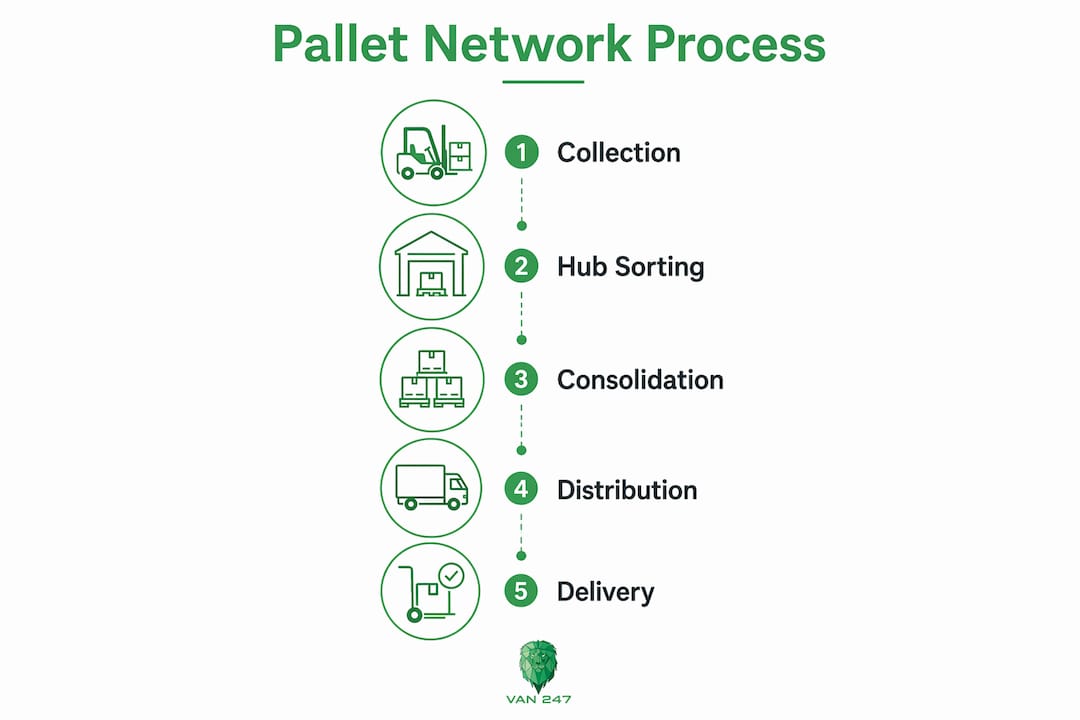
The operational backbone is the hub-and-spoke model. Here is how it flows:
- Collection: A local member depot picks up your palletised goods from your premises.
- Consolidation: Pallets from multiple customers are grouped together at the local depot, filling vehicles efficiently.
- Trunking: Loaded vehicles travel overnight to a central hub, where pallets from across the network arrive together.
- Marshalling: At the hub, pallets are sorted by destination postcode and loaded onto the correct outbound vehicles.
- Final delivery: The receiving member depot takes the pallets and delivers them to the end customer, usually next day.
The Association of Pallet Networks (APN) represents the major UK pallet networks, collectively combining large fleets and full postcode coverage to deliver millions of pallets every year. Participants in these networks fall into three broad categories: full members (who own a stake in the network), licensees (who operate under the network’s brand), and shareholders who help govern the collective.
Table of Contents
- Why pallet networks are good for your business
- How pallet deliveries work and what pallet sizes are used
- Major UK pallet networks and their roles
- What industry experts say about pallet network efficiency
- How UK transport hubs keep the network moving
- Technology and tracking in pallet networks
- How pallet network pricing works
- Van-247delivery makes pallet shipping straightforward
- Key takeaways
- FAQ
Why pallet networks are good for your business
The efficiency gains from pallet network logistics are real and practical. Rather than sending a half-empty lorry directly from Manchester to Plymouth, a network consolidates freight from dozens of shippers onto one vehicle. That single change has a ripple effect across cost, speed, and environmental impact.
Key benefits include:
- Lower cost per pallet: Shared vehicle space means you only pay for what you use, not an entire lorry.
- Next-day national coverage: Most major pallet transport solutions in the UK offer next-day delivery across the full postcode range.
- Higher vehicle fill rates: The hub-and-spoke model means vehicles run closer to full capacity, reducing wasted space and empty miles.
- Reduced carbon footprint: Freight consolidation cuts the number of vehicles on the road, lowering emissions compared to direct haulage.
- Reliability: Central coordination and route optimisation mean fewer delays and more consistent delivery windows.
- Compliance and safety: UK pallet networks maintain compliance with transport safety standards, giving you confidence that your goods are handled correctly at every stage.
Freight consolidation is the primary advantage of pallet networks. By grouping shipments from multiple businesses onto shared vehicles, networks avoid inefficient routes, boost vehicle utilisation, and significantly lower carbon footprints compared to traditional point-to-point haulage.
The environmental case is particularly strong. Pallet networks achieve higher average vehicle fill rates than general UK road transport, which directly reduces congestion and cuts unnecessary mileage. For businesses with sustainability targets, that is a meaningful operational advantage.
How pallet deliveries work and what pallet sizes are used part of how pallet networks work
Understanding the practical steps helps you plan shipments with confidence. The pallet delivery workflow follows a clear sequence:
- Your goods are palletised and collected from your site by a local member depot.
- The depot consolidates your pallet with others heading to the same hub.
- Overnight trunking vehicles carry the consolidated load to the central hub.
- Hub staff marshal pallets by destination postcode and load them onto delivery vehicles.
- The receiving depot delivers to your customer, typically the following business day.
Pallet size matters at every stage, because it determines how pallets are stacked, handled, and loaded. Here are the most common types used within UK networks:
| Pallet type | Dimensions (L x W) | Typical use |
|---|---|---|
| Quarter pallet | — | Small, light consignments |
| Half pallet | — | Retail and e-commerce goods |
| Standard UK/Euro pallet | — | General freight, most common |
| Full pallet | — | Heavier industrial goods |
| Oversized/industrial pallet | — | Machinery, construction materials |
Goods suitable for pallet networks include industrial components, retail stock, food and drink (including chilled or perishable items where the network supports temperature control), and consumer goods. Fragile or unusually shaped items may need specialist packaging, but the network can generally accommodate them with the right preparation.
Major UK pallet networks and their roles
The UK has several large pallet networks, each with its own membership structure, regional strengths, and operational focus. The APN recognises the following as the principal players:
- Palletline: One of the UK’s longest-established networks, known for its member-owned cooperative structure and strong service quality standards.
- Palletways: Part of the Imperial Holdings group, Palletways operates across the UK and into Europe, with a focus on speed and technology-led tracking.
- Fortec Distribution Network: A member-owned network with a reputation for high service levels and a strong presence across England and Wales.
- Pallex: Operates a large hub in the East Midlands and is known for its flexible membership model and broad postcode coverage.
- United Pallet Network (UPN): A member-owned network with a focus on quality assurance and consistent next-day delivery performance.
- The Pallet Network (TPN): One of the UK’s largest pallet networks by volume, TPN operates a central hub in the West Midlands and serves the full UK postcode range.
Each network competes on service quality, technology, and member support, but they share the same fundamental hub-and-spoke operating model. The choice of network often comes down to your location, the volume you ship, and the specific service levels you need.
What industry experts say about pallet network efficiency
The Association of Pallet Networks consistently highlights vehicle utilisation as the defining metric of network performance. When vehicles run full, costs fall, emissions drop, and delivery reliability improves. Pallet networks achieve this by design, because consolidation is built into every stage of the operation.
“Network freight consolidation drastically increases efficiency compared to traditional haulage, reducing environmental impact and operational costs. By grouping shipments from multiple businesses, pallet networks eliminate the inefficient routes that plague direct-to-destination transport.”
Industry experts via Motor Transport
Van-247delivery.com draws on over 15 years of UK logistics experience, working within and alongside these networks to offer businesses reliable, insured pallet transport. That depth of knowledge means you get practical guidance on which network suits your freight, not just a booking form.
Pro Tip: When choosing a pallet network or service provider, ask specifically about their vehicle fill rate targets and hub locations. A network with a hub close to your region will typically offer faster trunking times and more consistent next-day delivery.
How UK transport hubs keep the network moving part of how pallet networks work
The central hub is the engine room of any pallet network. Most major UK networks operate a single primary hub, strategically located to minimise trunking distances across the country. The West Midlands is a particularly common hub location, sitting roughly equidistant from Scotland, the South West, East Anglia, and the South East.
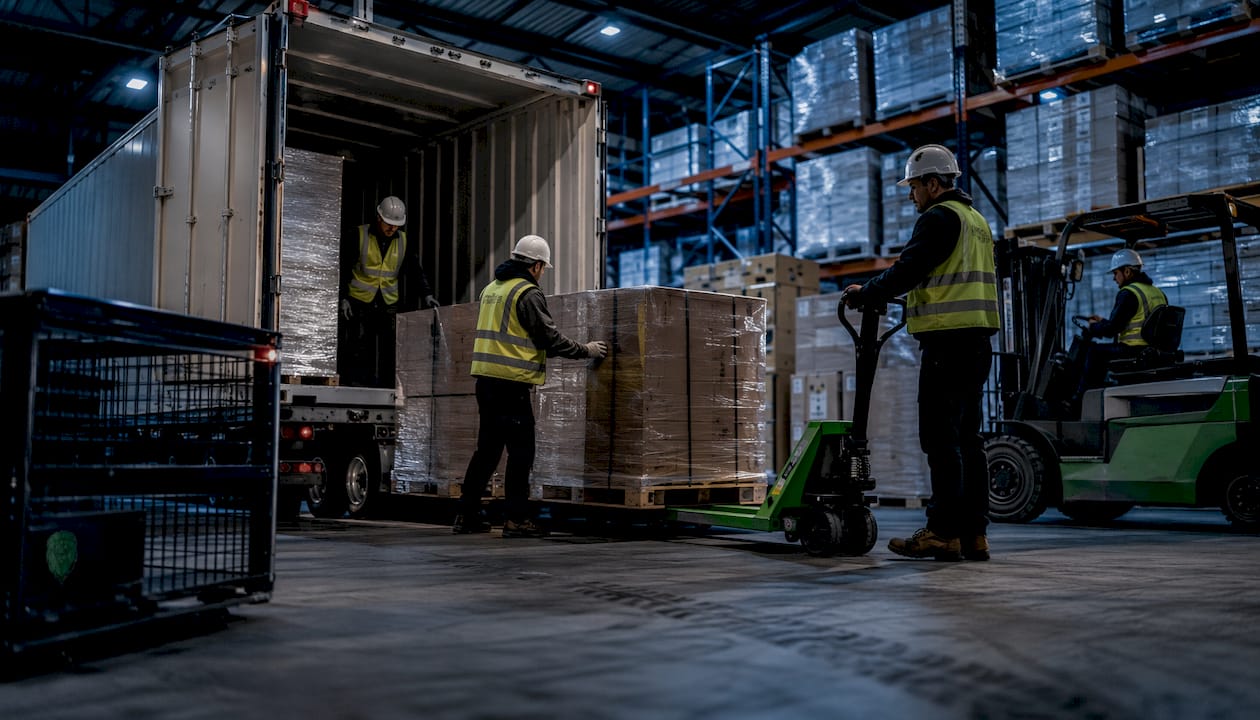
At the hub, operations run through the night. Vehicles arrive from member depots across the country, pallets are unloaded, scanned, and sorted by destination postcode, then reloaded onto outbound vehicles before dawn. The whole cycle typically completes within a few hours, which is what makes next-day delivery possible at national scale.
Some networks also operate regional sub-hubs to handle high-volume areas or to support two-man delivery services for heavier goods. The vehicle load optimisation that happens at hub level is one of the key reasons pallet networks outperform traditional haulage on both cost and carbon metrics.
Technology and tracking in pallet networks part of how pallet networks work
Modern pallet networks rely heavily on technology to keep shipments visible and on time. Real-time tracking is now standard across most major UK networks, giving both senders and recipients live status updates from collection through to final delivery.
Key technology features include:
- Barcode and scan systems: Every pallet is scanned at each stage, from depot intake to hub sorting to delivery vehicle loading.
- Electronic proof of delivery (ePOD): Drivers capture signatures and photos digitally, reducing disputes and speeding up invoicing.
- Customer portals: Most networks offer online dashboards where you can monitor all active shipments in one place.
- Automated notifications: SMS or email alerts keep your customers informed without you needing to chase updates manually.
This transparency is one of the clearest practical benefits of using an established network over ad hoc haulage arrangements.

Pricing works part of how pallet networks work
Pallet network pricing is generally based on a combination of pallet size, weight, distance, and service level. The key variables are:
- Pallet size: Quarter, half, full, and oversized pallets are priced differently, reflecting the space they occupy on the vehicle.
- Weight: Most networks apply a weight threshold per pallet type; exceeding it triggers a surcharge.
- Delivery zone: The UK is divided into postcode zones, with remote areas (Scottish Highlands, islands, Northern Ireland) typically carrying a premium.
- Service level: Next-day timed delivery (e.g., before noon) costs more than a standard next-day window.
- Additional services: Tail-lift delivery, pre-booked delivery slots, and returns handling all carry separate charges.
The consolidation model means you pay only for the space your pallet occupies, which makes pallet networks significantly more cost-effective than booking a dedicated vehicle for smaller loads. For businesses shipping regularly, volume agreements with a network member or a logistics provider like Van-247delivery can reduce the per-pallet rate further.
Van-247delivery makes pallet shipping straightforward
If you have read this far, you already understand how pallet distribution works. The next step is finding a provider who handles the complexity for you. Van-247delivery offers UK-wide pallet delivery with same-day collection, real-time tracking, and full insurance cover, so you are not left guessing where your freight is or whether it is protected.
With over 15 years in UK logistics, Van-247delivery works with established pallet networks to give you national coverage without the overhead of managing network memberships yourself. Whether you are shipping a single half-pallet or running regular consignments, you get a straightforward quote, flexible booking, and a team that knows the network inside out. Get your instant quote at van-247delivery.com/pallet-transport and have your freight moving today.
Key takeaways
Pallet networks work by consolidating freight from multiple businesses onto shared vehicles via a hub-and-spoke model, delivering national coverage and next-day service at a fraction of the cost of dedicated haulage.
| Point | Details |
|---|---|
| Hub-and-spoke model | Local depots collect and consolidate pallets; a central hub sorts them by postcode overnight. |
| Cost efficiency | You pay only for the space your pallet occupies, making networks far cheaper than dedicated vehicles for smaller loads. |
| Environmental benefit | Freight consolidation reduces empty miles and lowers carbon emissions compared to direct haulage. |
| Technology and tracking | Real-time scanning, ePOD, and customer portals give full shipment visibility from collection to delivery. |
| Van-247delivery | Offers UK-wide pallet transport with same-day collection, tracking, and insurance via established networks. |
FAQ
How does The Pallet Network (TPN) work?
TPN operates a hub-and-spoke model from its central hub in the West Midlands. Member depots collect pallets locally, trunk them overnight to the hub for postcode sorting, then deliver them the following business day.
How many pallet networks are there in the UK?
The UK has several major pallet networks, including Palletline, Palletways, Fortec, Pallex, United Pallet Network, and The Pallet Network. The Association of Pallet Networks represents the principal operators collectively covering the full UK postcode range.
Do pallet networks contact you before delivery?
Most networks offer pre-delivery notifications via SMS or email, and many provide timed delivery slots you can book in advance. Specific contact practices vary by network member and service level chosen.
Who owns The Pallet Network?
TPN is a member-owned network, meaning the independent hauliers and regional carriers who participate in it collectively hold ownership stakes rather than it being owned by a single parent company.
Can Van-247delivery ship pallets through a network?
Yes. Van-247delivery provides pallet transport across the UK using established networks, with same-day collection, real-time tracking, and full insurance cover included.