A pallet tail lift requirement comes down to one practical question: can your pallet get from the vehicle floor to the ground safely, at your address? If you have no loading dock or forklift, the answer is usually a vehicle with a tail lift. The law then puts the duties on whoever runs and operates that lift, and your job is to give the right information at booking and have the pallet and the delivery spot ready. That is what this guide covers, in plain terms.
If you are sending or receiving pallets and want it handled properly, our pallet delivery service is built around exactly this kind of job, and you can get an instant online quote.
TL;DR
- A tail lift is the hydraulic platform on the back of a vehicle that raises and lowers pallets between the vehicle floor and the ground. You need one when there is no dock, forklift or ramp at the delivery address.
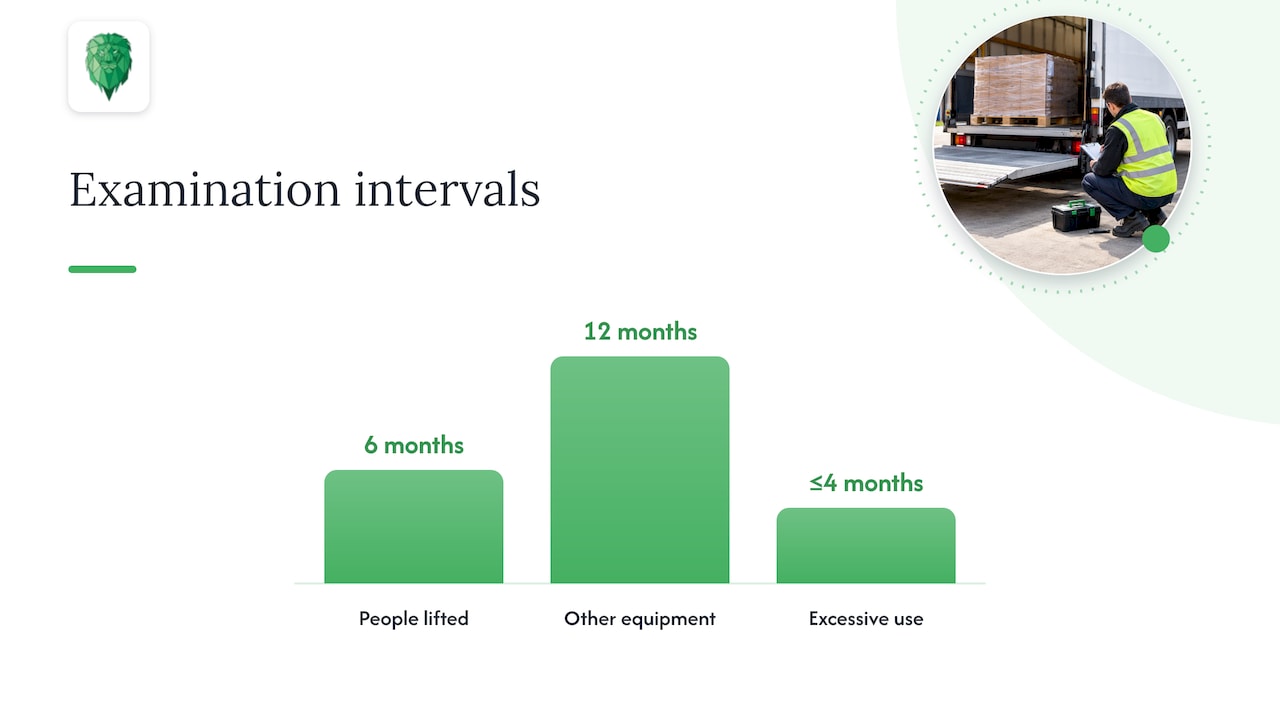
- Under UK law, vehicle tail lifts are lifting equipment covered by LOLER. The operator of the vehicle must have them thoroughly examined: every 6 months if people ride the platform, every 12 months otherwise, or to a written examination scheme.
- As a customer you do not carry out those examinations, but you do control the weight, packaging and access details, and those are what cause failed or delayed deliveries.
- Pallet trucks are not covered by LOLER, though they still have to be kept in safe working order.
- Tell your carrier at booking if you have no loading dock, no forklift or a tight or sloping access.
Table of Contents
- What a tail lift does and when a pallet delivery needs one
- What the law says about tail lifts
- How often a tail lift must be examined
- Has anything changed recently?
- Weight: what the lift can take and what your pallet weighs
- Preparing the pallet so it survives the lift
- Getting your delivery spot ready
- Pallet trucks are a different matter
- Booking a tail-lift pallet delivery: the checklist
- Booking with us
- Our view
- FAQ
- Sources
What a tail lift does and when a pallet delivery needs one
A standard pallet can weigh several hundred kilograms. Nobody lifts that by hand from the back of a van. At a warehouse with a raised loading dock, the vehicle backs up to the dock and a forklift or pallet truck rolls the pallet straight off. At a home, a shop, a unit on a trading estate or a building site, there is no dock. That is where a tail lift earns its place: the driver loads the pallet on the platform, lowers it to the ground and moves it with a pallet truck.
So in practice you need a tail-lift delivery when:
- the delivery address has no loading dock;
- you have no forklift or other way to take a pallet off a vehicle floor;
- the pallet is too heavy or bulky to be handled safely by hand;
- the pallet is going to a residential address, a shop front or a roadside unit.
If you do have a dock or a forklift, say so as well. It can change what vehicle is sent. Whichever applies, the delivery has to be planned around your address, not assumed.
The delivery type belongs in your booking, not in a phone call from the driver on the day. If you want a refresher on how the whole journey works, our guide to how pallet delivery works walks through it from collection to drop-off.
What the law says about tail lifts
This is the part that matters when you want to know your delivery is being done properly. The Health and Safety Executive (HSE), Britain’s workplace safety regulator, lists vehicle tail lifts as lifting equipment covered by the Lifting Operations and Lifting Equipment Regulations 1998, known as LOLER. The same HSE page says the Provision and Use of Work Equipment Regulations (PUWER) also apply to those who control the use of work equipment.
In plain English:
- LOLER is about lifting equipment: it must be strong and stable enough, marked with its safe working load (SWL), and thoroughly examined at set intervals.
- PUWER is the wider duty to keep work equipment suitable, maintained and used by trained people.
The HSE’s approved code of practice for LOLER, known as L113, names vehicle tail lifts among the equipment that needs a thorough examination by a competent person, with testing where appropriate.
New machinery sold in Great Britain also has to carry a UKCA or CE marking, come with a declaration of conformity and have instructions in English, according to the HSE. That is a supplier and manufacturer matter, not something you check on a delivery.
One point sometimes causes confusion: who is responsible when a vehicle is leased or hired? According to Transport Engineer, responsibility for testing the lift sits with the vehicle operator’s employer whether the vehicle is owned, leased or on contract hire. Only short-term rental under a year shifts it to the rental company. None of this lands on the customer receiving a pallet.
How often a tail lift must be examined
The HSE sets the baseline: lifting equipment must be thoroughly examined every 6 months if it is used to lift people and every 12 months otherwise, unless a competent person draws up an examination scheme with other intervals. It must also be examined before first use, with stated exceptions, and after exceptional circumstances such as damage, failure or repair of critical parts.
The detail that trips people up is the word “people”. In practice a driver often stands on the platform with the pallet and rides it down. The industry safety body SAFed says in its MLCC03 policy that where equipment lifts persons, even occasionally, the interval should be 6 months. A compliance specialist makes the same point: “goods only” has to be true every day, not only on the day the interval was set.
A few other points on the examination itself:
- It should be done by a competent person who is independent. SAFed advises that the person doing routine maintenance should not also carry out the thorough examination, and that UKAS accreditation to ISO/IEC 17020 is an indication of competence.
- Records of examinations and maintenance are kept. A transport consultancy advises keeping reports for at least two years or until the next report, whichever is later.
- Operators should be trained on the specific lift they use.
- Heavy use can justify shorter intervals: Transport Engineer reports that test intervals may be cut to four months or less for excessive use.
The SWL must be clearly marked on the lift, and the same article reports that on cantilever lifts the load’s centre of gravity should typically sit within 600mm of the platform heel. Drivers deal with that. For you, the takeaway is simple: a lift has a rated limit, and your pallet has to be inside it.
Has anything changed recently?
Not in a way that alters your delivery. A transport consultancy’s October 2026 legislation review lists tail-lift examination under LOLER 1998 as unchanged, with BS EN 1756-1:2021 still the design and manufacturing standard for goods tail lifts. A compliance guide reports that the HSE’s September 2026 response to its call for evidence on LOLER found no case for changing the law, so the 6-month and 12-month baseline stands. Rules can be revised, so the HSE pages linked above are the place to check the current position.
Weight: what the lift can take and what your pallet weighs
There is no single “maximum weight” for every tail lift. Each lift carries its own SWL, set by the manufacturer and marked on the equipment. The vehicle too has limits: the HSE’s workplace transport guide HSG136 says no vehicle should be loaded beyond its rated capacity or its legal axle and gross weight limits, because overloading makes vehicles unstable, harder to steer and less able to brake.
The weight of the pallet also affects the handling on the ground. The haulage trade guidance from the RHA and the Association of Pallet Networks cites HSE tests showing that pushing or pulling a pallet truck loaded above 750kg can exceed the 200N force guideline by 50% even in ideal conditions, according to the Tail Lift and Pallet Truck Guidance Document. That is why very heavy pallets need special arrangements, and why you should always give the true weight when you book.
What to do:
- Weigh the pallet, including the pallet itself and any wrapping.
- Give the real figure at booking, not an estimate rounded down.
- Give the real dimensions too, especially height.
An understated weight is the classic cause of reweighs, extra charges and rearranged deliveries. Our guide to pallet weight limits in the UK explains how to avoid them.
Preparing the pallet so it survives the lift
A tail lift is a small platform, and a pallet that leans or sheds boxes is the biggest risk on it. GOV.UK’s guidance on carrying different types of load says to:
- secure the load to the pallet as one unit before loading, by shrink wrapping, banding or strapping, since securing the pallet alone is not enough;
- check pallets for damage or weakness before loading;
- avoid stacking heavy pallets on light ones.
The same page says that where gaps remain in a van body, pallets should be restrained with lashings or the gaps filled with packing material or dunnage.
In practice:
- Use a sound pallet, not one with cracked boards or missing blocks.
- Stack heaviest items at the bottom and keep the load within the pallet edges.
- Wrap the load to the pallet, not just the load itself. Our guides on palletising for delivery and pallet stretch wrap show how.
- Keep the load a sensible height so it stays stable on a small platform.
If the contents are valuable, our note on pallet insurance is worth reading before you book.
Getting your delivery spot ready
GOV.UK warns that kerbside deliveries with a body-mounted tail lift carry a risk of the load or driver falling from height, particularly when unloading box-sided vehicles. Transport Engineer reports that around half of reported tail-lift accidents involve people falling from or slipping on the lift, or being struck by a falling load. So the place where the lift lowers matters.
A good delivery spot has:
- a flat, firm, clear surface where the platform can touch down;
- enough space behind the vehicle for the lift to open fully and for the driver to move around it;
- no parked cars, bins or pedestrians in the lowering zone;
- a smooth route from the drop point to where the pallet will go, free of steps and soft ground;
- someone present to receive the pallet and sign.
For trade premises, a clear access route matters on the pavement and at the unit door. For a home, check width of gates and slope of the drive.
The HSE’s suggested safe system of work, as reported by Transport Engineer, includes planning the loading to minimise time on the lift and arranging goods so the operator pushes them off the vehicle rather than pulling them onto the lift. Both depend on knowing the load, the vehicle and the site in advance, which is another reason accurate booking details help.
Pallet trucks are a different matter
A common search is whether pallet trucks fall under LOLER. According to the HSE, pallet trucks where the consequence of the load falling off is very low are not covered by LOLER, though they still have to be kept safe and may be inspected under PUWER. A vehicle tail lift, by contrast, is explicitly listed as covered and needs statutory thorough examination and SWL marking.
Handy rule: the lift on the vehicle is the regulated item, the trolley on the ground is not.
Booking a tail-lift pallet delivery: the checklist
Have these ready before you ask for a quote:
| Detail | Why it matters |
|---|---|
| Real weight of each pallet | Sets the vehicle and handling method |
| Dimensions, including height | Affects stability and fit |
| Address type (home, shop, unit, site) | Decides whether a tail lift is needed |
| Loading dock or forklift available? | May change the vehicle sent |
| Access: gates, slope, narrow road | Avoids a failed drop |
| Contact on site, with a phone number | Delivery needs someone to receive it |
| Value of contents | Helps you choose cover |
Delays at the address can add cost. Our waiting time fee is £24 per hour per man, so having someone ready and the spot clear saves money as well as time.
Booking with us
If you are sending a pallet or receiving one, we can handle the delivery from quote to drop-off. Our pallet delivery service covers pallet transport across the UK, with insured transport and over 15 years in logistics behind it. You can start with an instant online quote, and our London pallet delivery page covers the capital in more detail.
If you are moving a piano, furniture or a whole office alongside your pallets, we also offer furniture and large item transport and office relocation, so one booking can cover it all.
Our view
Most pallet problems we deal with are not about the law. They are about information. A pallet turns up heavier than quoted, or the delivery address turns out to have no space for a vehicle to drop it, and a simple job becomes a stressful one.
That is why we ask you to think about the delivery end first. Where will the pallet go? Who is there to receive it? What does the ground look like? Answer those three and most of the rest takes care of itself.
The legal side is clear: tail lifts are lifting equipment, they need regular thorough examination and trained operators, and that responsibility sits with the business running the vehicle. Your part is to give accurate weights, a well-wrapped pallet and a clear delivery spot. Do that and you give the driver the best chance of a safe, quick delivery.
We built our pallet service around safe, fast and insured transport, and we would rather you ask a question before booking than worry afterwards.
Claudiu
FAQ
Is a tail lift a legal requirement for pallet delivery?
There is no law saying every pallet delivery must use one. You need one in practice when there is no dock or forklift at the delivery address. If a tail lift is used, it is lifting equipment under LOLER and must be examined and operated properly by the business running the vehicle.
How often does a vehicle tail lift need inspecting?
The HSE baseline is every 6 months if the lift carries people and every 12 months otherwise, or to a written examination scheme drawn up by a competent person. Because drivers often ride the platform, the 6-month interval is common in practice. Extra examinations follow damage or repair of critical parts.
Are pallet trucks covered by LOLER?
No. The HSE lists pallet trucks, where the consequence of a load falling is very low, as outside LOLER. They still need to be maintained and may be inspected under PUWER. Vehicle tail lifts are covered.
What is the maximum weight a tail lift can carry?
It depends on the lift. Each one has a safe working load marked on it, and the vehicle also has its own rated capacity and legal weight limits. Give your true pallet weight when you book so the right vehicle and handling method are planned.
Sources
- Safe lifting by machine, HSE
- L113: Safe use of lifting equipment, HSE
- Thorough examinations and inspections of lifting equipment, HSE
- SAFed MLCC03 Issue 8.4
- Tail lifts update, Transport Engineer
- How Often Should a Tail Lift Be Inspected?, PULO Compliance
- Transport Legislation Updates 2026, J&JL Transport Consultancy
- What Is LOLER?, Core Inspection
- Workplace transport safety HSG136, HSE
- Tail Lift and Pallet Truck Guidance Document, RHA
- Securing loads: how to carry different types of load, GOV.UK
- Securing loads: how to load different vehicles, GOV.UK