Pallet weight limits UK: most standard UK pallets carry a working maximum of around 1,000 to 1,200kg for a full pallet, dropping to roughly 500kg for a half pallet and 250kg for a quarter. The catch: that figure changes depending on whether you’re looking at the static, dynamic, or racking rating, and it should always include the pallet’s own tare weight of around 20 to 30kg, plus any packaging.
TL;DR:
- The maximum load for a standard UK pallet ranges from 1,000 to 1,200kg in typical conditions, but it varies with the pallet’s age, grade, and storage environment.
- Static, dynamic, and racking ratings differ significantly, with static loads around 1,000–1,500kg and racking loads often being the lowest, so always verify the specific rating before loading.
- Declaring the total weight must include pallet tare, product, packaging, and securing materials; under-declaring can trigger surcharges, delays, or vehicle overloading issues.
- Heavier pallets are usually reweighed at collection or depot, and if weight discrepancies are found, carriers typically impose surcharges or refuse the load.
- Proper packing, stacking, and choosing suitable pallets can prevent damage or collapse during transit, especially under movement or braking conditions.
Table of Contents
- Pallet weight limits UK: common types and realistic load allowances
- Static, dynamic and racking loads: which one applies to you?
- Calculating and declaring your total pallet consignment weight
- What happens when a pallet is overweight or misdeclared
- Loading and packing tips that actually prevent damage
- What we’ve learned handling pallets across the UK
- Book pallet transport that handles the weighing for you
- Sources
- FAQ
Pallet weight limits UK: common types and realistic load allowances
The pallet sat in your warehouse right now is probably one of two shapes, and knowing which one changes everything about how much you can safely stack on it.
The UK standard pallet measures 1200 x 1000mm and is the workhorse of British logistics. Guidance from pallet sizing specialists puts its typical working maximum at 1,000 to 1,200kg, though that range shifts with the timber grade, the number of times the pallet has been reused, and whether it’s been stored somewhere damp. A pallet that’s been round the block a few dozen times will not perform like a fresh one, even if it looks fine from a distance.
The Euro pallet, at 1200 x 800mm, turns up constantly in cross channel freight and European supply chains because it matches continental racking and vehicle dimensions more efficiently than the UK standard size. If you’re shipping to or from the EU, it’s often the better fit, and Guidance on pallet shipping to Europe covers how that footprint affects routing and cost.
Beyond the two main formats:
- Half pallets (600 x 1000mm or 1200 x 600mm variants) typically handle medium loads suitable for partial pallet shipments.
- Quarter pallets are used for smaller, denser consignments with appropriately lower load capacity.
- Plastic pallets carry manufacturer-stated ratings rather than the timber industry’s rule-of-thumb figures, and pooling specifications list them separately for exactly this reason.
Timber grade matters more than most people assume. A recycled or lower-grade pallet loses structural integrity faster under repeated loading, so the same “1,000kg” pallet can mean very different things depending on its history. For more on how footprint and grade affect what you can safely load, A breakdown of standard pallet sizes is worth a look before you commit to a shipment.
Static, dynamic and racking loads: which one applies to you? Part of pallet weight limits UK.
These three terms get thrown around interchangeably, but they describe completely different scenarios, and using the wrong one is how pallets end up collapsing in racking that looked perfectly capable on paper.
- Static load describes a pallet sitting still, supporting weight from above with no movement involved. This is the highest figure you’ll see quoted, sometimes reaching 1,000 to 1,500kg for a sound wooden pallet.
- Dynamic load applies when the pallet is being moved, lifted, or transported, and it’s always lower than static because movement introduces stress the timber doesn’t face when stationary.
- Racking load covers pallets stored on warehouse racking, and it’s usually the strictest figure of the three because the pallet is supported only at the edges rather than across its full base.
Manufacturer documentation, including CHEP’s B1210A specification, separates these ratings deliberately, and dynamic and racking figures typically sit lower than the static number for the same pallet.
Statistic Callout: A pallet rated for 1,200kg static might only be rated for 800kg dynamic and considerably less again when stored on racking. Always check which figure the supplier or carrier is quoting before you plan a load around it.
Calculating and declaring your total pallet consignment weight, part of pallet weight limits UK
Carriers weigh what actually arrives, not what you think you’ve loaded, so the declared figure needs to account for everything on the pallet, not just the product.
Include the following when working out your total:
- Pallet tare weight (typically 20 to 30kg for a standard timber pallet)
- Product weight for every item stacked
- Boxes, cartons, or crates
- Shrinkwrap and any strapping or banding
- Collars, if you’re using them to extend pallet height
- Protective padding or corner boards
A worked example: say you’ve got 950kg of boxed stock, 25kg of pallet tare, 8kg of shrinkwrap and strapping, and a 5kg cardboard collar. Your declared weight should read 988kg, not 950kg. That gap of 38kg sounds small, but it’s exactly the kind of discrepancy that triggers a reweigh at the depot.
Where possible, weigh the finished pallet on a floor scale, vehicle scale, or weighbridge rather than estimating. If you don’t have access to accurate scales, add up individual component weights from supplier documentation and round generously.
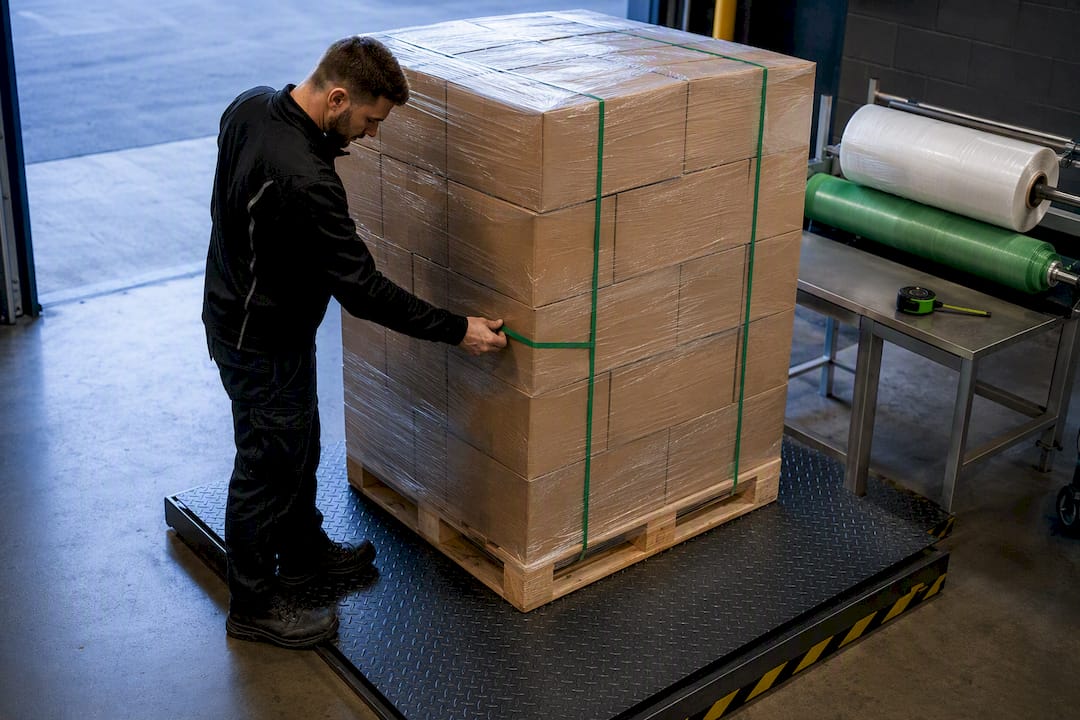
Pro Tip: When in doubt, round up rather than down. Carriers reweigh routinely, and an under-declaration is far more likely to cost you in surcharges than a slightly cautious over-estimate ever will.
Under-declaring is one of the most common and entirely avoidable causes of freight surcharges, and it catches out experienced shippers as often as newcomers.
What happens when a pallet is overweight or misdeclared, part of pallet weight limits UK
Most UK carriers reweigh pallets at collection or at the depot, and if the figure doesn’t match what you declared, you’ll usually face one of a few outcomes.
- A surcharge, often calculated as a percentage uplift on the original quote, applied automatically once the discrepancy is confirmed.
- Delay, because an overweight or mismatched pallet frequently gets pulled from the standard run for reassessment.
- Refusal or re-loading, particularly if the weight breaches the vehicle’s payload limit for that route.
Heavier pallets also interact with legal payload restrictions on the vehicle itself. A van or HGV has a fixed gross weight limit, and a handful of underestimated pallets can tip a full load over that threshold without anyone noticing until the vehicle’s weighed. That’s a compliance issue for the carrier, not just a pricing one.
Insurance is the other piece people overlook. If a pallet fails in transit because it was overloaded beyond its rated capacity, or because it was in poor condition to begin with, liability claims can get complicated fast, and cover may not apply if the load clearly exceeded a stated rating. Keep photos of the packed pallet, your weighing slip, and a packing list for every shipment. A guide to pallet delivery safety standards covers the handling side of this in more detail.
Loading and packing tips that actually prevent damage
Getting the weight right on paper means nothing if the load shifts or collapses in transit, so how you pack matters just as much as what you declare.
- Centre the densest items on the pallet base and avoid overhang, since edge loading concentrates stress exactly where the pallet is weakest.
- Choose plastic or reinforced pallets for very dense or unusually shaped loads where a standard timber pallet’s rating leaves little margin.
- Shrinkwrap tightly and band securely, using edge protectors on corners to stop straps cutting into cartons during transit.
- Leave fork-entry points clear so handlers aren’t forced to lift from an angle that puts uneven stress on the load.
- Label clearly with declared weight and any handling notes before handover.
Pro Tip: A pallet that looks stable standing still can still fail under braking or cornering. Pack for movement, not just for storage.
A pallet delivery process guide walks through exactly what carriers check before they’ll accept a load, which is worth a read if you’re shipping pallets for the first time.
What we’ve learned handling pallets across the UK
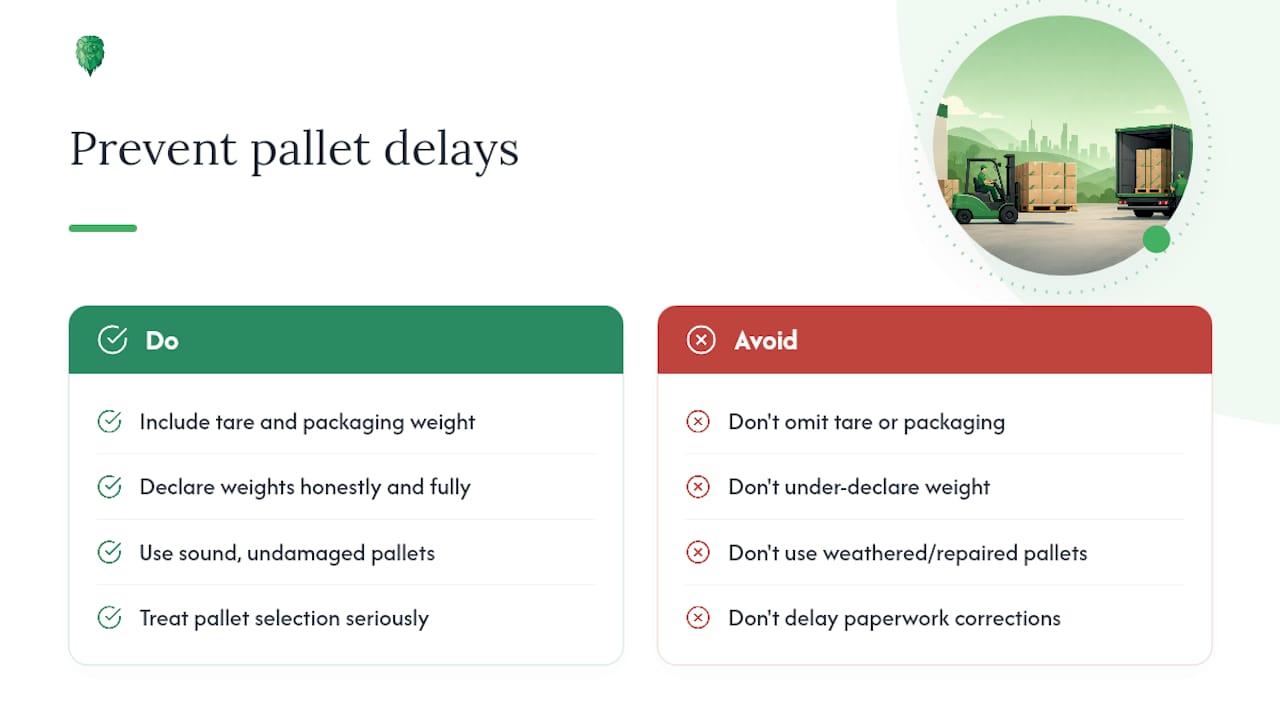
The most common problem seen isn’t has a higher weight pallets. It’s underweight declarations, where a shipper forgets to add the tare weight or the packaging and ends up 30 or 40kg short on paper. That gap causes more delays than genuinely heavy loads ever do, because it triggers a reweigh and a scramble to correct paperwork at the worst possible moment.
Pallet condition is the second recurring issue. A pallet that’s clearly weathered or repaired with mismatched timber gets flagged more often than a pristine one, regardless of what’s actually loaded on it. Businesses that ship regularly do best when they treat pallet selection as seriously as the goods themselves. Get the base right, declare honestly, and most of the friction in pallet freight simply disappears.
— Claudiu
Book pallet transport that handles the weighing for you
One practical alternative to juggling weighbridges and carrier paperwork yourself is a pallet transport service that factors accurate weighing, packing guidance, and insured handling into a single booking.
When you request a quote, have the declared weight ready, including pallet tare, product weight, and any packaging, along with the pallet’s dimensions and notes on site access such as tail-lift or forklift requirements. We handle collection and delivery with insured cover as standard, so you’re not left exposed if a load shifts or a pallet’s condition turns out weaker than expected. Get an instant quote for pallet transport and have your consignment collected without the reweigh headaches.
Sources
- CHEP B1210A timber specification
- UK pallet sizes – what are they, and do they affect your packaging?
- Pallet standards and pooling systems in UK logistics
- 5 unexpected factors that tip the scales on your freight weight
FAQ
What is the maximum weight allowed for a pallet in the UK?
There’s no single legal maximum. Typical working guidance puts a full UK standard pallet at around 1,000 to 1,200kg. But the actual limit depends on the pallet’s construction, grade, and whether you’re referencing its static, dynamic, or racking rating.
Can a pallet hold 1000kg?
A sound UK standard pallet in good condition can typically hold 1,000kg under static load, and often more. But dynamic and racking limits for the same pallet are usually lower, so check which rating applies to your situation.
Why are HGVs limited to 56mph?
HGVs are subject to speed limiter restrictions on motorways and dual carriageways in the UK. A rule aimed at reducing fuel consumption, emissions. And the severity of collisions involving large vehicles.
How much can a 44 tonne artic carry?
An articulated lorry’s payload depends on the unladen weight of the vehicle itself. But after accounting for the tractor unit and trailer, operators typically plan for a payload sufficient to carry dozens of standard pallets depending on their individual weight.