Why plan office moves? Planning office moves is defined as the structured coordination of logistics, technology, people, and space required to relocate a business with minimal disruption and maximum efficiency. Without that structure, you face avoidable costs, confused staff, and operational downtime that can last weeks. The good news is that a well-planned office relocation is one of the few business projects that genuinely pays for itself. This guide covers the core reasons why planning matters, what happens when it goes wrong, and how to use your move as a springboard for real business improvement.
What are the primary benefits of planning an office relocation?
Cost savings drive most office moves. A striking 76% of businesses cite savings as their primary motivation for relocating. That figure tells you something important: most business owners already sense that their current space costs more than it should.
Planning is what turns that instinct into a measurable outcome. Without a proper assessment of how your team actually uses space, you risk signing a new lease that replicates the same inefficiencies. A structured approach to planning an office move lets you right-size your footprint before you commit to anything.
The benefits of office relocation go well beyond the rent cheque:
- Cost control: You identify redundant square footage, negotiate better lease terms, and avoid last-minute supplier fees.
- Space efficiency: You design for how your team actually works, not how you assume they work.
- Employee morale: Staff who are kept informed and involved feel respected, not managed.
- Hybrid readiness: A planned move gives you the chance to redesign the office for flexible and collaborative working from day one.
- Brand signal: A well-executed move signals momentum to clients, partners, and prospective hires.
The opportunity to redesign your workspace is particularly valuable. Most businesses carry years of accumulated desk arrangements, storage habits, and meeting room configurations that no longer reflect how work gets done. A planned relocation forces a clean break from those inherited patterns.
Pro Tip: Before you sign any new lease, map out how your current space is actually used over a typical month. The data will almost certainly surprise you and give you real leverage in lease negotiations.
How does poor planning affect employees during an office move?
67% of employees find office moves challenging, and the reasons are rarely about the physical move itself. The real culprits are poor communication, unclear desk arrangements, and technology failures. That statistic should sit with every office manager planning a relocation.
When staff do not know what is happening, they fill the gap with anxiety. Rumours spread. Productivity drops before the move even begins. People worry about commute changes, desk assignments, and whether their equipment will work on day one. None of those concerns are unreasonable, and all of them are preventable with clear, early communication.
The operational risks are just as serious. A business that moves without a tested IT setup can lose days of productive work. Phone systems go down. Shared drives become inaccessible. Client-facing teams cannot do their jobs. These are not edge cases. They are the predictable result of treating the move as a logistics exercise rather than a project.
Here is a practical sequence for keeping employees on side throughout the process:
- Announce early. Tell staff about the move as soon as the decision is confirmed, even if details are still being finalised.
- Explain the why. Share the business reasons behind the move. People accept change more readily when they understand the purpose.
- Invite input. Ask teams what they need from the new space. You will get useful information and build goodwill at the same time.
- Publish a timeline. A clear office moving checklist shared with all staff removes uncertainty and sets expectations.
- Confirm the basics. Tell people where they will sit, how IT will work on day one, and who to contact if something goes wrong.
Pro Tip: Appoint a move champion in each department. That person becomes the go-to contact for questions and the feedback channel back to the project team. It reduces noise and builds trust across the business.
What role do space planning and technology play in a successful office move?
The average office utilisation rate sits at approximately 54%. That means nearly half of most offices sit empty on any given day. Designing your new space based on headcount alone guarantees you will overprovision and overpay.

The recommended desk-to-employee ratio for hybrid working models is between 0.6:1 and 0.8:1. That means a team of 100 needs between 60 and 80 desks, not 100. The savings on rent, furniture, and fit-out costs are immediate and ongoing.
Technology planning carries its own timeline pressures. IT and facilities teams should be involved 6–12 months before the move date. Internet provisioning alone can take 30–120 days depending on whether the building is already on a provider’s network. Order late and you move into a building with no connectivity. That is not a minor inconvenience. It is a business continuity failure.
| Planning area | Recommended lead time | Risk if delayed |
|---|---|---|
| Internet provisioning | 30–120 days before move | No connectivity on day one |
| IT infrastructure setup | 6–12 months before move | System failures, lost data access |
| Desk and space design | 3–6 months before move | Overcrowded or wasted space |
| Employee communication | As soon as decision is made | Anxiety, rumours, low morale |
| Lease negotiation | 6–12 months before move | Unfavourable terms, cost overruns |
Hybrid work models also require the right tools from day one. Desk booking systems and occupancy sensors prevent ghost bookings and give you real data on how the new space performs. That data becomes your baseline for adjusting layouts in the months after the move.
Pro Tip: Gather utilisation data in the first 60 days after moving in. You will quickly see which areas are underused and can reallocate space before habits become entrenched.
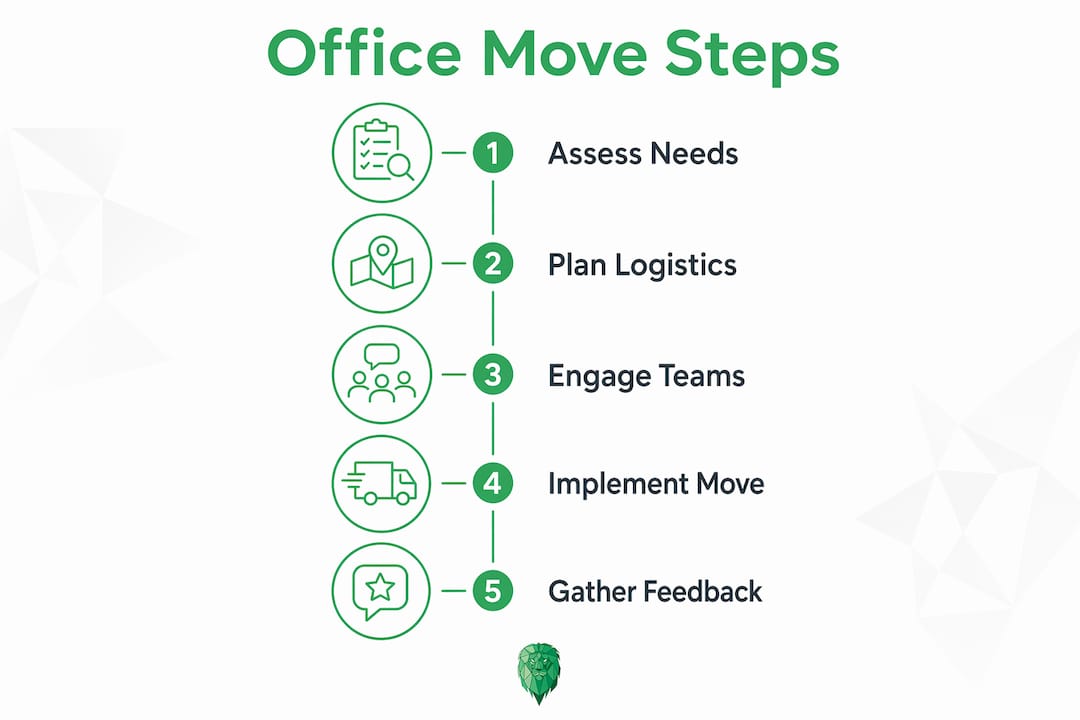
What strategic opportunities does an office move create?
An office relocation is one of the few moments in a business’s life when everything is up for reconsideration. Relocations serve as a strategic reset for company culture, aligning the physical workspace with where the business is actually headed rather than where it has been.
That reset has real commercial value. Moving closer to a talent pool, a client cluster, or a transport hub changes your competitive position in ways that no internal restructure can replicate. A new address in the right location can shorten your sales cycle, reduce recruitment costs, and improve client perception overnight.
The cultural dimension is equally significant. A well-planned office move boosts recruitment and retention by signalling that the business is growing and investing in its people. Candidates notice the quality of a workspace. Existing staff notice whether the new space reflects how they actually work.
Here is where the strategic thinking pays off most clearly:
- Culture alignment: Design the new space around your stated values. Open collaboration areas for teams that claim to value teamwork. Quiet zones for roles that require deep focus.
- Talent positioning: Choose a location that reduces commute friction for your existing team and sits within reach of the talent you want to hire.
- Client impression: A well-designed office in the right postcode sends a message that no marketing budget can replicate.
- Future flexibility: Build in capacity for growth. A move planned for today’s headcount that ignores next year’s hiring plan creates another expensive move sooner than necessary.
Involving IT, legal, HR, and finance from the earliest stages prevents the costly oversights that turn strategic opportunities into operational headaches. The businesses that treat office move project management as a multidisciplinary effort consistently outperform those that leave it to one person or one department.
Key takeaways
Proper planning is the single factor that separates a costly, disruptive office move from one that saves money, improves the workspace, and strengthens the business.
| Point | Details |
|---|---|
| Cost savings start with planning | 76% of businesses cite savings as their relocation motivation; planning makes those savings real. |
| Employee experience depends on communication | 67% of staff find moves hard due to poor communication, not the physical relocation itself. |
| Space design needs utilisation data | Average office use is 54%; plan for hybrid ratios of 0.6:1 to 0.8:1 to avoid overspending. |
| IT requires the longest lead time | Internet provisioning takes 30–120 days; involve IT 6–12 months before the move date. |
| Moves are a strategic reset | Relocations align space with culture and goals, improving hiring, retention, and client perception. |
The uncomfortable truth about office moves I have learned over the years
Office moves expose exactly how a business is actually run, not how it thinks it is run. I have seen companies with detailed project plans fall apart because no one told the IT manager until six weeks before the move date. I have seen businesses spend a fortune on a beautiful new fit-out and then watch staff sit in the wrong seats because no one mapped the floor plan to the team structure.
The most common mistake is treating the move as a logistics problem. It is not. The logistics are the easy part. The hard part is the communication, the cross-functional coordination, and the willingness to make decisions about how you want to work before you commit to a layout that will shape your culture for the next five years.
What I have found actually works is appointing a project lead with real authority, not just a coordinator who sends update emails. That person needs to pull IT, HR, legal, and finance into the room early and keep them there. The importance of planning is not abstract. It shows up in whether your phones work on day one and whether your best people stay through the transition.
The businesses that get this right treat the move as an investment, not an expense. They come out the other side with a better space, a clearer culture, and a team that felt respected throughout the process. That is not a coincidence. It is the direct result of planning done properly.
— Claudiu
Van-247delivery: professional support for your office relocation
Moving offices is a big undertaking, and having the right logistics partner makes a genuine difference to how smoothly it goes.
Van-247delivery has over 15 years of experience supporting UK businesses through office relocations of every size. Whether you need a full office removals service with specialist handling for IT equipment and furniture, or practical office move guidance to help you plan the process from start to finish, the team is ready to help. Van-247delivery offers insured transport, flexible booking, and clear pricing so you can plan your move with confidence and without surprises.
FAQ
Why is planning an office move so important?
Planning an office move prevents avoidable costs, technology failures, and employee disruption. Without a structured plan, businesses risk operational downtime and staff disengagement that can take months to recover from.
How far in advance should you start planning an office relocation?
IT and facilities teams should be involved at least 6–12 months before the move date. Internet provisioning alone can take 30–120 days, making early planning a practical necessity rather than a preference.
What is the biggest cause of employee dissatisfaction during office moves?
Poor communication is the primary cause. Research shows 67% of employees find office moves challenging due to unclear processes and feeling excluded, not the physical relocation itself.
What desk-to-employee ratio works best for hybrid offices?
A ratio of 0.6:1 to 0.8:1 is recommended for hybrid working models. With average office utilisation at 54%, a 1:1 ratio wastes significant space and budget.
Can an office move improve recruitment and retention?
A well-planned move can boost both. A better workspace in a well-chosen location signals business momentum and improves the day-to-day experience for existing staff and prospective hires alike.