Furniture moving tips:
- moving furniture sounds straightforward until you are wedging a sofa through a tight doorway at an awkward angle,
- or watching a heavy wardrobe teeter on the stairs. Injuries and damage happen more often than most people expect, and they usually strike when preparation has been skipped.
Whether you are moving a single bedroom’s worth of belongings or relocating an entire office, the right approach makes the difference between a stressful ordeal and a manageable day. This guide, furniture moving tips, gives you:
- practical,
- evidence-backed tips to protect yourself, your team, and your furniture at every stage.
Table of Contents
- Preparation: measure, plan, and clear the way
- Protecting furniture and your property
- Safe handling techniques to prevent injuries
- Tackling awkward items: appliances, pianos, and tall furniture
- Essential equipment: what to use and when
- What decades of moving have taught us
- Your next step: reliable help for any move
- Frequently asked questions
Key Takeaways
| Point | Details |
|---|---|
| Plan and measure first | Assess your furniture and moving routes to avoid costly complications. |
| Protect items and home | Use blankets, pads, and coverings to prevent furniture and property damage. |
| Lift safely as a team | Apply proper techniques and coordinate with others to reduce injury risk. |
| Choose the right equipment | Dollies, sack trucks, and straps can make moving safer and more efficient. |
| Know when to hire pros | Professional movers often save you time, money, and stress—especially for large or awkward items. |
Preparation: measure, plan, and clear the way first stage in furniture moving tips
Good moving days are built the evening before, not on the morning itself. The single most effective thing you can do is measure furniture dimensions against every doorway, hallway, and stairwell the items must pass through. It sounds obvious, yet it is one of the most commonly skipped steps, and it is the step that causes the most last-minute chaos.
Start by creating a simple inventory:
- List every large item: sofas, beds, wardrobes, dining tables, appliances, office desks
- Record the height, width, and depth of each piece
- Measure every doorway, corridor, stairwell, and any lift opening along the route
- Note tight corners, low ceilings, or awkward angles
- Identify which items will need to be partially disassembled
Once you have your measurements, plan the order of removal. Large, heavy items come out first, so they are not trapped behind smaller pieces. Check our heavy furniture moving advice if you are dealing with particularly bulky pieces and need a step-by-step breakdown.
Planning avoids last-minute surprises and saves both time and tempers. A few minutes with a tape measure can prevent hours of frustration on moving day.
Clear the entire route before you lift a single item. Remove rugs, shoes, boxes, and any other obstacles from hallways and stairwells. Alert other household members or colleagues so nobody walks through your moving path unexpectedly. If you are using a lift in a building, check the dimensions carefully and book exclusive use if the building management allows it.
Pro Tip: For very large sofas that will not fit through a doorway, try removing the legs first and then tilting the sofa vertically. This “hooking” technique can shave several inches off the profile and save you from calling in additional help.
Also consult a removal equipment guide early on. Knowing what tools you will need before you start prevents mid-move delays.
Protecting furniture and your property
A scratch on a hardwood floor or a chip out of a freshly painted wall can be an expensive and disheartening end to moving day. The good news is that protecting both your furniture and your home is affordable and straightforward if you gather your materials in advance.
Essentials to have ready:
- Moving blankets and furniture pads for wrapping large pieces
- Bubble wrap for ornate details, glass panels, and mirror-backed furniture
- Plastic stretch film to hold blankets in place and keep drawers shut
- Cardboard floor runners along high-traffic corridors
- Carpet shields for hallways and landings
- Foam corner guards for walls and door frames
- Tape and scissors, always within reach
Protect furniture with blankets and pads and protect your home with floor coverings and corner guards applied before anything is moved. This two-layer approach, protecting both the item and the surface it might contact, is what professionals do as standard practice.
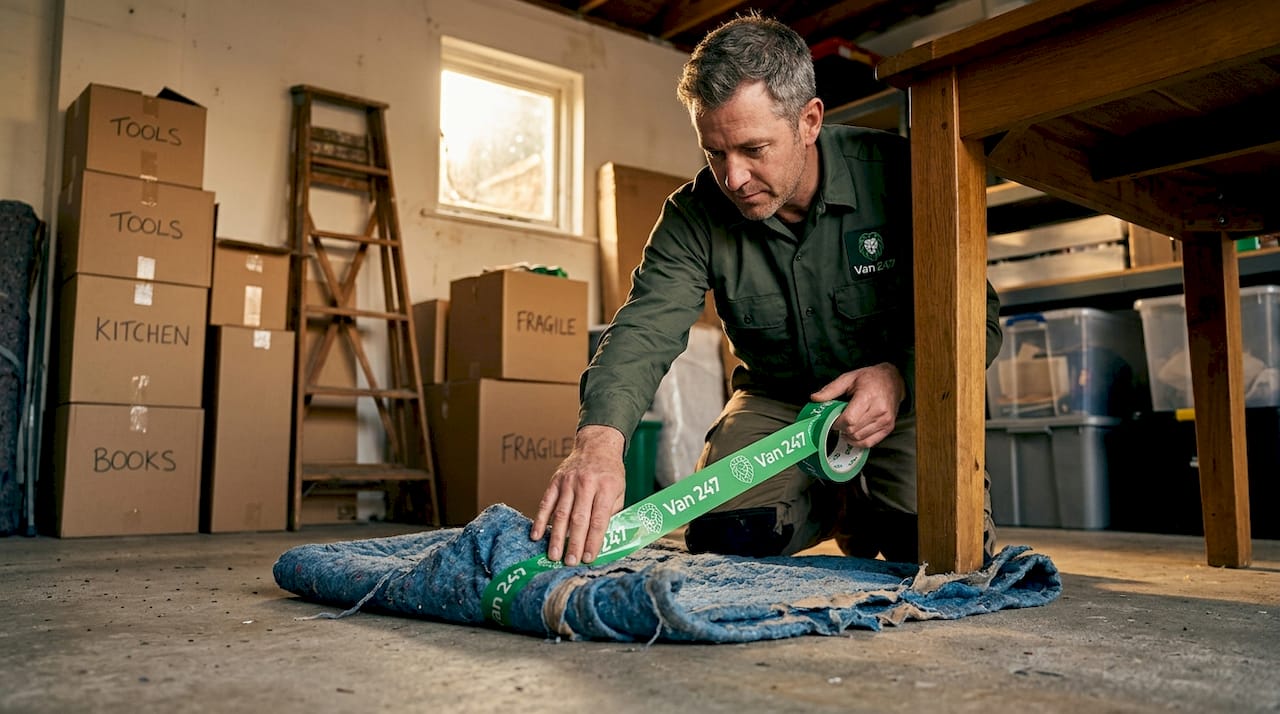
Pay special attention to handles, carved details, and glass inserts. Wrap these separately before covering the whole piece. A wardrobe door hinge, for example, can scratch everything it touches during transit if left unprotected.
If you own high-value or protecting luxury furniture made from marble or premium materials, consider specialist wrapping materials and extra padding layers. The cost of replacing or restoring a damaged statement piece far exceeds the cost of proper protection.
Pro Tip: Do not overlook what is already in your home. Duvets, folded towels, and thick blankets make excellent free padding for fragile items and can reduce your need to buy extra materials.
Safe handling techniques to prevent injuries when use furniture moving tips
Furniture is heavy. Moving day is a marathon, not a sprint. And yet, many people still try to rush lifts and carry more than they should, which is exactly how backs get strained and accidents happen.
Follow these steps every single time you lift a heavy item:
- Stand close to the load before you attempt to lift it
- Bend at the knees, keeping your back straight and your core engaged
- Grip firmly using both hands and get a secure hold before lifting
- Lift with your legs, pushing upward smoothly rather than jerking
- Keep the load close to your body throughout the carry
- Avoid twisting your torso while carrying; turn your whole body by moving your feet
- Lower carefully, bending the knees again as you set the item down
- Communicate constantly in team lifts, using clear verbal cues like “lift on three”
These are not just helpful suggestions. Good lifting technique is backed by the Health and Safety Executive as the core approach to reducing manual handling injuries in any setting.
Manual handling causes 27% of non-fatal workplace injuries in the UK, and the scale of the problem is significant across all industries.
That figure puts the risk in perspective. Across the UK, 472,000 workers suffer musculoskeletal disorders annually as a result of manual handling. The same risks apply to you on moving day, even if you are not in a workplace setting.
Team communication matters enormously. Agree in advance who leads the lift, who walks backwards, and what the verbal cues are. Confusion in a stairwell with a heavy item is dangerous. Take breaks between lifts. Fatigue is when most accidents happen, so give yourself permission to rest, hydrate, and reassess before the next big piece.
For more detail on approaching this safely, see our guide on lifting heavy furniture safely.
Tackling awkward items: appliances, pianos, and tall furniture included in furniture moving tips
Some items need their own strategy. A fridge, a piano, and a tall wardrobe each present different challenges, and treating them all the same way is a recipe for damage.
| Item | Key challenge | Best approach |
|---|---|---|
| Fridge freezer | Compressor damage, heavy | Defrost 24 hours ahead, keep upright, use sack truck |
| Piano | Extreme weight, fragile | Use piano dolly, specialist straps, consider pros |
| Large sofa | Awkward shape, width | Remove legs, tilt vertically, wrap thoroughly |
| Wardrobe | Height and instability | Empty completely, remove doors, use dolly |
| Washing machine | Drum movement | Fit transit bolts, keep level, use sack truck |
| Chest of drawers | Drawers slide out | Tape or remove drawers, wrap separately |
For appliances like fridges, defrost 24 hours ahead, keep the item upright during transport to protect the compressor, and always use a sack truck rather than attempting to carry it by hand. Tilting a fridge for extended periods risks oil from the compressor entering the refrigerant lines. Our appliance moving tips cover this in full detail.
Tall items like wardrobes are unstable once upright and moving. Use the high-low technique: one person holds the top to guide and stabilise while another controls the base direction. Never let a tall item lean forward without a hand at the top. Always empty wardrobes completely before moving them. Even a small amount of weight inside shifts the centre of gravity unpredictably.
For sofas, removing the legs and tilting the piece on its end dramatically changes what is possible. See what tools make this easier in our guide on using dollies and sack trucks.
Pianos are in a category of their own. A standard upright piano can weigh between 180 and 270 kilograms. Without proper equipment and experience, moving one risks serious injury and damage. Our specialist moving services cover piano transport with the right equipment and trained staff.
Pro Tip: Before you decide to move a large appliance or piano yourself, add up the realistic cost of any potential injury or repair. Sometimes hiring professionals upfront is genuinely the cheaper option once you factor in the full picture.
Essential equipment: what to use and when for furniture moving tips
Having the right tool for the right job is not just efficient. It is often the difference between a safe move and an unsafe one.
Key moving equipment to consider:
- Sack truck: Ideal for fridges, washing machines, and stacked boxes
- Furniture dolly (flat platform): Best for heavy, flat-bottomed items like sofas and wardrobes
- Piano dolly: Specifically built for instruments and very heavy single items
- Moving straps and harnesses: Distribute weight across shoulders and hips for long carries
- Furniture sliders: Fit under legs to glide heavy items across hard floors without lifting
- Protective gloves: Improve grip, protect hands, and reduce fatigue
- Ratchet straps: Secure loads inside vans and prevent shifting in transit
Read more about the practical value of each of these in our lifting equipment benefits guide.
The right option for your move also depends on your situation. Here is a quick comparison:
| Option | Cost | Control | Effort | Best for |
|---|---|---|---|---|
| Full DIY | Low upfront | High | Very high | Small, simple moves |
| Partial pro help (van hire + labour) | Medium | Medium | Medium | Medium-sized moves |
| Full professional service | Higher upfront | Low | Minimal | Large, complex, or business moves |
Small businesses in particular should prioritise HSE risk assessments before asking staff to move any heavy items. The assessment covers the task, the load, the environment, and the individual, ensuring you identify risks and use mechanical aids where possible. Failing to do this is not just a safety issue; it is a legal one.
For a fuller picture of what service suits your circumstances, our moving services comparison page breaks down the options in plain terms.
What decades of moving have taught us
Here is an uncomfortable truth most moving guides skip over: people consistently underestimate the true cost of doing it themselves.
The upfront savings of a DIY move look attractive. But hidden costs from injuries and damage routinely exceed the cost of professional services once you factor in replacement items, property repairs, medical appointments, and lost working days. This is not a scare tactic. It is what the numbers show, and it is what experience confirms time and again.
Professionals invest in three things that most individuals and small businesses do not: proper training, the right equipment, and systematic risk reduction. Training alone reduces injury risk by 24%, which is a significant margin when you are lifting heavy, awkward loads repeatedly across a long day.
That said, this is not an argument that every move needs full professional support. A small flat move with manageable furniture and a couple of able-bodied helpers can be done safely and cheaply with good preparation and the techniques outlined above. The key is matching the method to the move, not defaulting to DIY because it feels like the obvious choice.
Where we see the most stress and regret is when people choose DIY for a move that genuinely needed professional help. A heavy piano, a narrow Victorian staircase, fragile antique furniture, or a tight business deadline: these are the scenarios where the equation shifts decisively. Review your situation honestly against our self-move vs professional services breakdown before you commit to a plan.
Pro Tip: Paying a bit more upfront for the right level of help almost always reduces the total cost and stress of your move. Think of it as an investment in a smooth outcome, not an unnecessary expense.
The moves that go smoothly are almost never the ones where people just worked harder. They are the ones where people planned better, protected smarter, and chose the right tools and support from the start.
Your next step: reliable help for any move, furniture moving tips
If this guide has shown you one thing, it is that the right preparation and support transforms moving day completely. You do not have to tackle it alone.
At Van-247 Delivery, we have spent over 15 years helping individuals and businesses across the UK move furniture safely, efficiently, and without the headaches. Whether you need a single item collected or a full household relocated, our insured, experienced team is ready to help. Explore furniture removals near you to get an instant quote and see how straightforward booking can be.
For practical planning support before your move, our moving hacks guide is packed with time-saving ideas. If you are coordinating a business relocation, our office moving tips will help you keep disruption to an absolute minimum.
Frequently asked questions
What is the safest way to move heavy furniture?
The safest approach is to plan your route, clear the path, and use proper lifting techniques including bending at the knees, keeping the load close, and working in coordinated teams for heavy items.
How do I move a fridge safely?
Defrost the fridge 24 hours ahead, keep it upright throughout, and use a sack truck to move it without carrying it by hand, which protects both you and the compressor.
Why should I use moving equipment like dollies or sack trucks?
Moving equipment significantly reduces injury risk and prevents property damage, and HSE guidance recommends mechanical aids as a key risk-reduction measure for any manual handling situation.
Is it cheaper to move furniture myself or hire professionals?
DIY moves appear cheaper upfront, but hidden costs from damage or injury often outweigh the savings; professional services reduce risk, save time, and frequently work out more cost-effective overall.