Types of UK transport solutions. UK transport solutions are defined as the full range of methods and systems used to move people and goods across the country, covering road, rail, air, and water. Whether you are planning a house move, managing freight logistics, or simply figuring out how to travel in UK cities without a car, the right choice depends on your specific need. National Rail, Transport for London, National Express, and commercial van operators each serve a distinct purpose.
This guide breaks down every major category so you can match the right solution to your situation, without wasting time or money.
1. What are the main types of UK transport solutions?
UK transport solutions fall into four broad categories: road, rail, air, and water. Each category contains multiple service types, from private cars and commercial vans to ferries and domestic flights. The right category depends on distance, load size, budget, and urgency. Businesses moving pallets across the country face a very different decision from someone commuting daily into London.
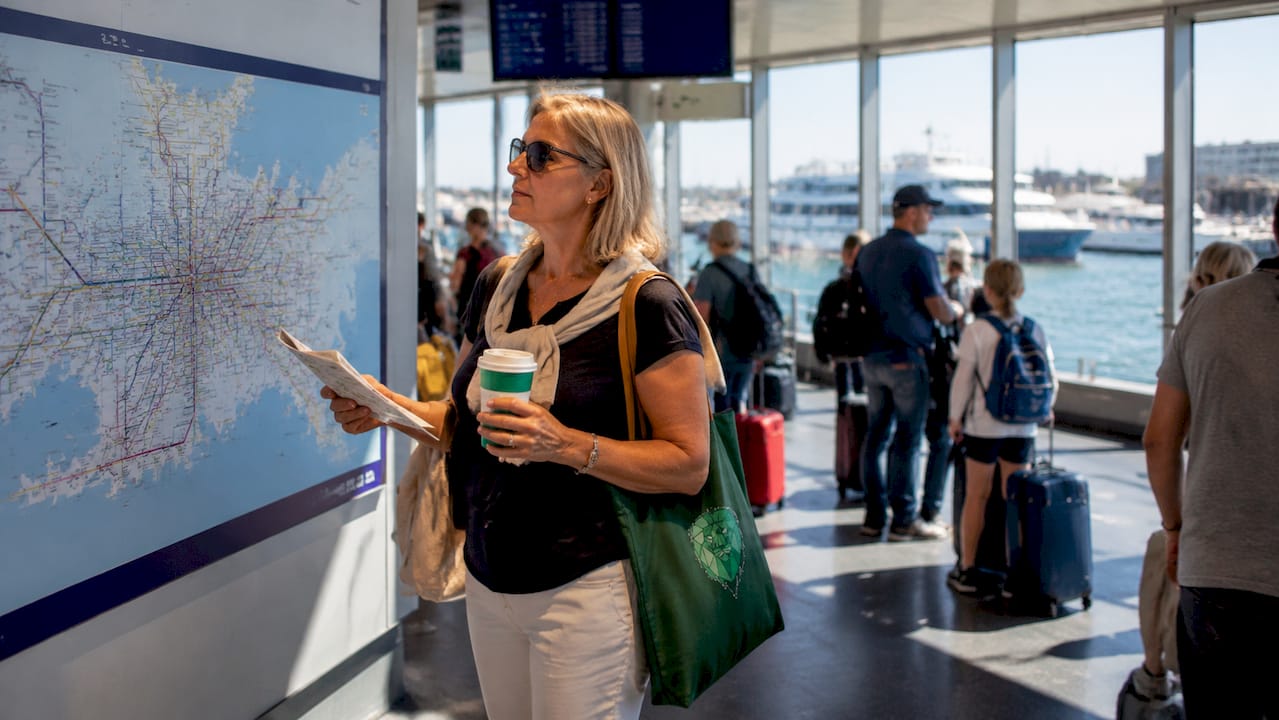
Understanding these categories is the first step. Once you know which mode fits your need, choosing the right operator or service becomes much simpler.
2. Road transport: the UK’s dominant mode
Road transport accounts for over 90% of motorised passenger travel and 65% of domestic freight in the UK. That dominance reflects road’s core strength: flexibility. You can reach almost any address in the country without a fixed timetable.
Road transport covers several distinct service types:
- Private cars for personal journeys and commuting
- Taxis and rideshare apps such as Uber and black cabs for urban, last-mile travel
- Commercial vans for house removals, furniture delivery, and small freight
- Heavy goods vehicles (HGVs) for pallet transport and bulk freight logistics
Commercial vans and man with a van services are the go-to choice for house removals and smaller freight deliveries across urban and suburban UK. They offer door-to-door access that rail or air simply cannot match for local moves. Heavy goods vehicles transporting pallets make up a significant share of UK road freight, particularly for businesses moving large volumes between distribution centres and retail sites.
The main drawbacks of road transport are congestion and cost. Urban congestion zones in cities like London add charges for certain vehicles. Fuel costs and driver time also make road freight more expensive per tonne than rail for very long distances.
Pro Tip: If you are moving goods into central London, check the Ultra Low Emission Zone (ULEZ) and Congestion Charge boundaries before booking a van. Unexpected charges can add significantly to your total cost.
3. Rail transport: cost-effective for long distances
The National Rail network connects every major UK city, from London to Edinburgh, Cardiff to Manchester. Rail is the most cost-effective option for long-distance passenger travel when you book ahead. National Rail advance tickets are considerably cheaper than walk-up fares, so planning your journey weeks in advance pays off.
Urban rail networks add another layer of choice:
- London Underground and Overground for fast city travel across the capital
- Elizabeth line (Crossrail) connecting Heathrow Airport directly to central London stations
- Tram networks in Manchester (Metrolink), Edinburgh (Trams), and Nottingham (NET)
- Commuter rail services linking suburban areas to city centres across England, Scotland, and Wales
The Elizabeth line connects Heathrow to central London quickly and affordably, making it the best airport transfer option for most visitors and commuters. Rail freight also plays a role in bulk goods transport, particularly for heavy materials like aggregates and automotive parts over long distances.
Smart ticketing has made rail more accessible. Contactless payment and Oyster cards work across Transport for London services, while apps like Trainline let you buy and store tickets digitally.
Pro Tip: Book National Rail advance tickets at least three weeks before travel for the biggest savings. Split ticketing, buying two tickets for different legs of the same journey, can cut costs further on longer routes.
4. Coach services: the budget-friendly alternative
National Express and Megabus provide extensive coach networks linking UK cities at fares that regularly undercut rail prices. Coach travel suits budget-conscious passengers who have flexibility on travel time. A London to Manchester coach ticket can cost a fraction of an equivalent rail fare, particularly at off-peak times.
Coach services do have trade-offs. Journey times are longer than rail, and services are subject to road congestion. That said, for non-urgent travel between major cities, coach is a genuinely practical and affordable option. National Express alone serves hundreds of destinations across England, Scotland, and Wales.
5. Air transport: connecting remote UK regions
Domestic UK flights serve remote and island regions that road and rail cannot reach efficiently. Flights between London and Inverness, or from the mainland to the Orkney and Shetland Islands, provide connectivity that would otherwise require very long overland journeys.
For freight, air transport suits urgent, high-value goods where speed outweighs cost. Pharmaceutical shipments, electronics, and time-sensitive documents all move by air when ground transport cannot meet the deadline. The environmental cost of air freight is high, so most businesses reserve it for genuinely urgent consignments.
Key considerations for air transport:
- Cost: Significantly higher per kilometre than road or rail
- Speed: Fastest option for long distances, especially to islands
- Environmental impact: Highest carbon footprint of all transport modes
- Freight suitability: Best for low-weight, high-value, time-critical goods
6. Water transport: ferries and inland freight
Ferries connect mainland UK to islands and international destinations, supporting both passenger travel and freight movement. Routes like Holyhead to Dublin, Portsmouth to Santander, and the Caledonian MacBrayne services to Scottish islands are lifelines for communities and businesses alike.
Inland waterways serve a niche but valuable freight role. Canals and rivers managed by the Canal and River Trust carry bulk goods like aggregates, waste, and construction materials. Waterway freight produces lower emissions per tonne than road transport and reduces pressure on congested motorways. It is not fast, but for non-urgent bulk loads, it is a cost-efficient and greener choice.
7. Integrated and technology-driven transport solutions
The UK government’s ‘Better Connected’ strategy prioritises user needs such as affordability, safety, and reliability over any single transport mode. The shift means transport planning now focuses on combining modes rather than defending individual networks. That is good news for anyone who needs to mix rail, coach, and road to complete a journey efficiently.
Contactless payment across urban rail and bus systems enables automatic daily fare capping, which makes multi-modal commuting genuinely affordable. You tap in and out across buses, the Underground, and Overground services, and the system charges you the best daily rate automatically. Apps like Citymapper provide real-time updates and combined ticketing information, making it straightforward to plan journeys across different modes in one place.
| Feature | Traditional ticketing | Smart ticketing |
|---|---|---|
| Payment method | Cash or paper ticket | Contactless card or app |
| Fare capping | Not available | Automatic daily cap |
| Multi-modal use | Separate tickets required | Single tap across modes |
| Real-time updates | Not included | Integrated via apps |
Multi-modal travel combining rail, bus, and coach is the most cost-effective approach for most UK travellers. The technology now exists to make that combination genuinely easy, not just theoretically possible.
8. Which transport solution suits your situation?
Matching the right solution to your specific need saves both time and money. Here is a practical breakdown by scenario:
| Scenario | Best solution | Why |
|---|---|---|
| House move, local or regional | Commercial van or man with a van | Door-to-door access, flexible timing |
| Large freight, long distance | HGV or rail freight | Cost-effective for bulk loads |
| Urban last-mile delivery | Commercial van or cargo bike | Navigates congestion zones |
| Daily commuting, city centre | Rail, Underground, or bus | Avoids parking costs and congestion |
| Remote or island travel | Domestic flight or ferry | Only practical options available |
| Budget intercity travel | Coach (National Express, Megabus) | Lowest fares for flexible travellers |
For logistics in removals, the combination of a well-planned route and the right vehicle size makes the biggest difference to cost and stress. Businesses with regular freight needs should also consider UK freight delivery options to find the most efficient model for their volume and frequency.
Environmental considerations are increasingly relevant too. Pallet couriers with sustainability credentials offer SMEs a way to reduce their carbon footprint without sacrificing reliability.
Key takeaways
Choosing the right UK transport solution means matching the mode to your specific need, whether that is cost, speed, distance, or load size.
| Point | Details |
|---|---|
| Road dominates UK transport | Road handles over 90% of passenger travel and 65% of domestic freight. |
| Rail saves money when booked early | National Rail advance tickets cut costs significantly compared to walk-up fares. |
| Coach suits budget intercity travel | National Express and Megabus regularly undercut rail fares for flexible passengers. |
| Smart ticketing reduces costs | Contactless fare capping on urban networks makes multi-modal travel more affordable. |
| Match mode to need | Vans suit removals, HGVs suit bulk freight, ferries suit islands, air suits urgent loads. |
My honest view on navigating UK transport
The biggest mistake I see people make is treating transport as a single-mode decision. You pick a van, or you pick a train, and you stick with it. The reality is that the most efficient journeys almost always combine two or three modes, and the technology now makes that genuinely easy.
Advance rail booking via Trainline or the National Rail app is one of the most underused money-saving tools in the UK. Most people buy tickets the day before and pay full price. Booking three to four weeks out can cut the same fare by more than half.
For businesses managing regular freight, the environmental argument for shifting some road loads to rail or waterway is getting harder to ignore. It is not just about carbon. Rail freight reduces road wear, lowers fuel costs per tonne, and often improves delivery predictability on longer routes.
The UK’s transport network is genuinely good when you use it strategically. The problem is most people do not plan across modes. They default to what they know. If you take one thing from this guide, let it be this: plan the journey first, then choose the mode, not the other way around.
— Claudiu
Van-247delivery: practical transport solutions across the UK
Knowing your options is one thing. Having a reliable service to call on is another.
Van-247delivery has over 15 years of experience handling house removals, pallet transport, and man with a van services across the UK. Whether you need a single-item furniture delivery or a full office relocation, the team covers a wide range of personal and commercial needs with insured, tracked transport. Instant quotes, flexible booking, and UK-wide coverage make it straightforward to get your move or delivery sorted without the stress. If road transport is the right solution for your situation, Van-247delivery is a dependable place to start.
FAQ
What are the main types of transport solutions in the UK?
The main types are road, rail, air, and water transport. Each serves different needs, from daily commuting and house removals to freight logistics and island connectivity.
Is road or rail better for UK freight?
Road transport suits flexible, door-to-door deliveries and smaller loads. Rail freight is more cost-effective for heavy, bulk goods over long distances.
How can I reduce the cost of UK travel?
Book National Rail advance tickets weeks ahead, use contactless payment for automatic fare capping on urban networks, and consider coach services like National Express or Megabus for budget intercity travel.
What transport solution is best for a house move?
A commercial van or man with a van service is the most practical choice for house moves. It provides door-to-door access, flexible scheduling, and the ability to handle large or fragile items directly.
Are there greener transport options for UK freight?
Rail freight and inland waterway transport both produce lower emissions per tonne than road haulage. For businesses, switching bulk loads to these modes reduces carbon output and can lower costs on longer routes.