Move potted plants: most houseplants travel best with you, in a climate-controlled car, prepped over the two weeks before your move and unpacked within a few days of arrival. That single window matters more than anything else you do. Avoid heavy watering on move day, give everything a light prune, and treat the plants’ comfort like you would a pet’s — because in transit, that’s exactly what they need.
TL;DR:
- Moving lightweight plastic pots two weeks before the move reduces the risk of breakage and weight issues during transit.
- Succulents, cacti, snake plants, and pothos tolerate travel better, while Calathea, orchids, and large palms are more prone to leaf loss and stress.
- Loading plants last and unloading them first minimizes their time in dark, unventilated vehicles, reducing stress and damage.
- Keep plants in a lower-light, stable environment for 48 to 72 hours post-move to prevent shock caused by lighting and temperature changes.
- Use a personal vehicle for transport whenever possible, avoiding prolonged exposure to temperature fluctuations in moving vans or trailers.
Table of Contents
- How do you decide which potted plants to move?
- What’s the right preparation timeline before moving day?
- How do you pack plants so they survive the journey?
- Car or van: which transport option is safer for plants?
- What should be on your moving-day plant checklist?
- How long should you leave plants to acclimatise after moving?
- Why do potted plants struggle after a move?
- What Van-247delivery sees on move day with plants
- A personal take on choosing which plants to save
- How Van-247delivery supports your plant move
- Sources
- FAQ
How do you decide which potted plants to move?
Not every plant deserves a seat in your car. Start by asking which ones you’d actually be gutted to lose, and which would survive a bumpy afternoon without sulking for a month.
Some houseplants shrug off relocation. Succulents, cacti, snake plants and pothos tolerate a few days of disruption without dramatic protest. Others punish you for it: Calathea, orchids and large palms tend to drop leaves or sulk for weeks after even a short car journey.
- Filter by value first: rarity and sentimental attachment should outrank size or how impressive a plant looks in the lounge.
- Swap heavy pots early: move anything in terracotta or ceramic into lightweight plastic around two weeks before moving day, if you can manage it.
- Take cuttings as insurance: for a plant that’s irreplaceable but awkward to transport (a huge fiddle-leaf fig, say), propagate a cutting rather than risk the whole specimen.
- Rehome the rest: a neighbour or local plant swap group will usually take healthy plants you can’t justify moving.
What’s the right preparation timeline before moving day, part of move potted plants?
Plants respond well to a bit of warning, just like people do. Spreading preparation over three stages avoids the last-minute scramble that damages roots and stresses foliage unnecessarily.
- Two weeks before: check every plant for pests hiding under leaves or in the soil, repot heavy specimens into lightweight plastic, and take cuttings from anything you’re leaving behind.
- One week before: ease off fertiliser completely, trim any dead or yellowing growth, and give each pot a wobble test to check it’s stable enough for transit.
- Day before: do a final light prune, bag any soil that looks likely to spill, and lay out your packing materials so moving day itself doesn’t involve improvising with bin bags.
Pro Tip: Skip fertiliser for the final fortnight before the move — a root system focused on drinking, not feeding, copes far better with the shock of transit.
How do you pack plants so they survive the journey, part of move potted plants?
Packing is where most DIY moves go wrong, usually because people treat plants like furniture instead of living things that need airflow and light right up until the last minute.
- Small plants: use open-top crates or divided boxes, pack gaps with crumpled paper or old towels, and keep pots upright rather than wedged on their sides.
- Tall plants: loosely wrap foliage in paper cones or thin sleeves to stop branches snapping, and support the main stem with a card collar around the base of the pot.
- Heavy pots: if you haven’t already repotted into plastic, wrap decorative ceramic or terracotta separately in blankets so it doesn’t crack against other items.
- Airflow matters: never seal a box completely — pack it with breathing room and label it clearly so nobody stacks something heavy on top.
Car or van: which transport option is safer for plants?
A personal car almost always beats a moving van for plants, and it’s not close. You control the temperature, the plants get some daylight through the windows, and you can reach back and steady a wobbling pot at a roundabout.
Most professional movers actually recommend this. Long-haul moving trailers lack climate control and light, which is exactly what a plant needs on a journey over a few hours.
- In your own car: seat plants in the footwell or securely on a seat, never in a boot with no light, and never near a blasting air vent.
- If plants must go in the van: load them last so they come off first, and ask the crew to keep them away from tightly packed furniture.
- Watch the temperature: shade pots from direct summer sun through glass, insulate against winter frost, and never, ever leave plants in a parked vehicle for more than a few minutes.
- Overnight stops: bring plants indoors with you rather than leaving them in a cold car boot until morning.
What should be on your moving-day plant checklist, part of move potted plants?
Moving day rewards a bit of order. A quick checklist keeps plants from becoming an afterthought squeezed in between boxes of kitchenware.
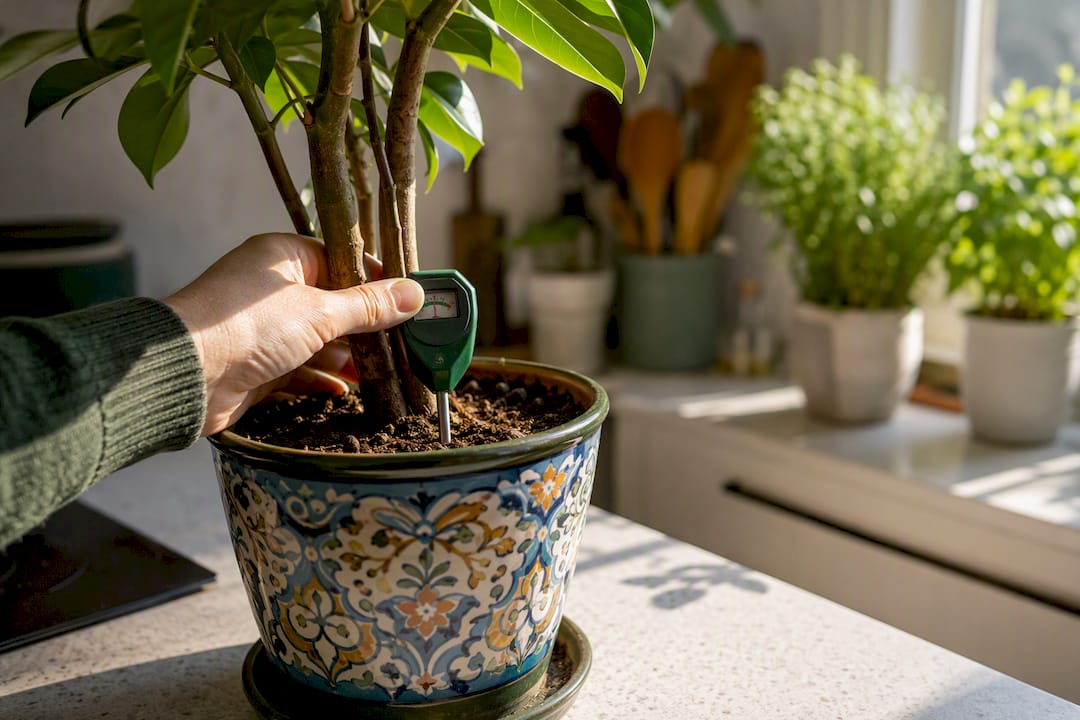
- Water a few days beforehand, not on the day itself — moist soil travels better than soggy or bone-dry soil, and it avoids mess and root rot.
- Load plants last, unload them first so they spend the least possible time in a dark, stationary vehicle.
- Label every box with the species and its light needs, and mark anything urgent with “unpack first” in bold letters.
- Protect yourself, not just the plant: use a sack truck for large pots and lift with a partner — a slipped disc isn’t worth saving five minutes.
How long should you leave plants to acclimatise after moving, part of move potted plants?
Resist the urge to arrange your whole plant collection the moment the van pulls away. Unpack quickly, but place everything in a lower-light, stable spot for the first 48 to 72 hours rather than straight onto a bright new windowsill.
That short holding period matters because lighting and temperature mismatches, not the journey itself, cause most post-move decline. A plant that travelled perfectly well can still wilt if it’s dropped into a sunnier or draughtier spot too fast.
- Watch for shock, don’t panic: droopy leaves in the first day or two are usually normal; only water if the soil is clearly dry to the touch.
- Hold off on repotting or feeding for two to four weeks, giving roots time to settle before you ask more of them.
- Boost humidity for tropicals: a pebble tray or light misting helps Calathea and similar species through the transition.
- Quarantine new arrivals: keep moved plants away from any you already have at the new address for a fortnight, so hitchhiking pests don’t spread.
Why do potted plants struggle after a move, part of move potted plants?
Some wobble is completely normal. Expect a few leaves to drop in the first couple of weeks, which is a normal adjustment — that’s a plant adjusting, not failing.
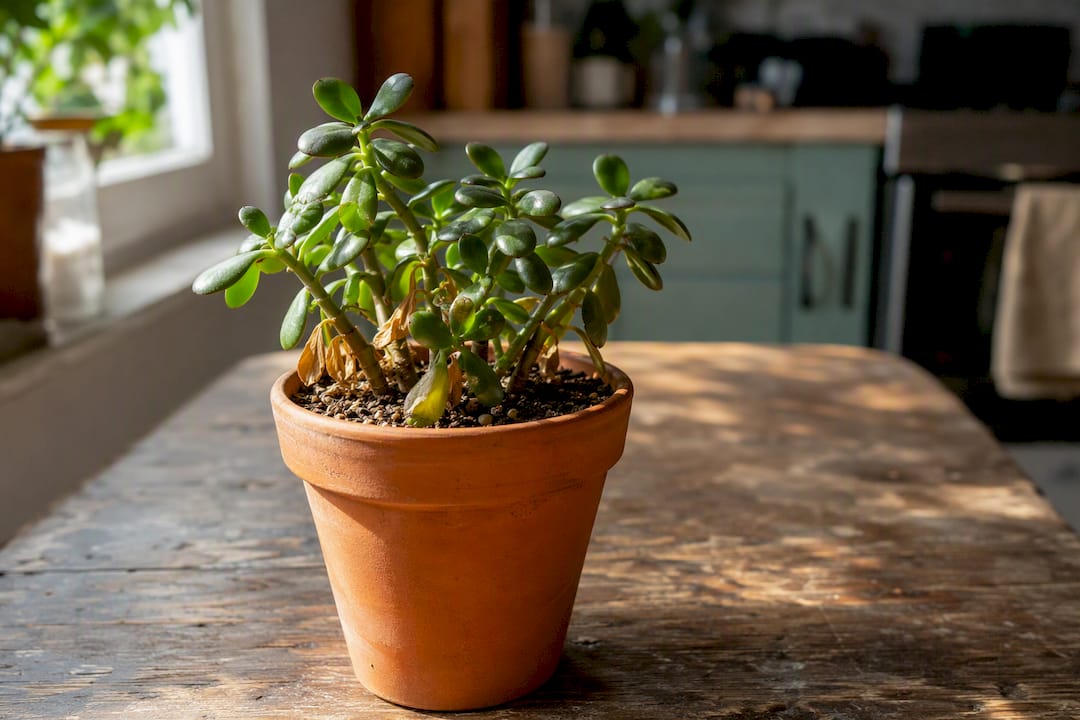
What isn’t normal is continuous yellowing, sudden leaf collapse, or visible pests on the underside of leaves. If a plant is still declining after four weeks, that’s your signal to check the roots for rot or move it away from a draughty window rather than waiting it out.
Change one thing at a time: relocate the pot, check the soil moisture, or raise humidity for tropical species, then give it a week before changing anything else. A pre-move pest check and that two-week quarantine period catch most problems before they spread to plants that were already thriving.
What Van-247delivery sees on move day with plants part of move potted plants
Most removal firms exclude live plants from their standard terms, which is why owners usually end up ferrying them personally in the family car. That’s sensible, but it doesn’t mean you’re on your own for everything else.
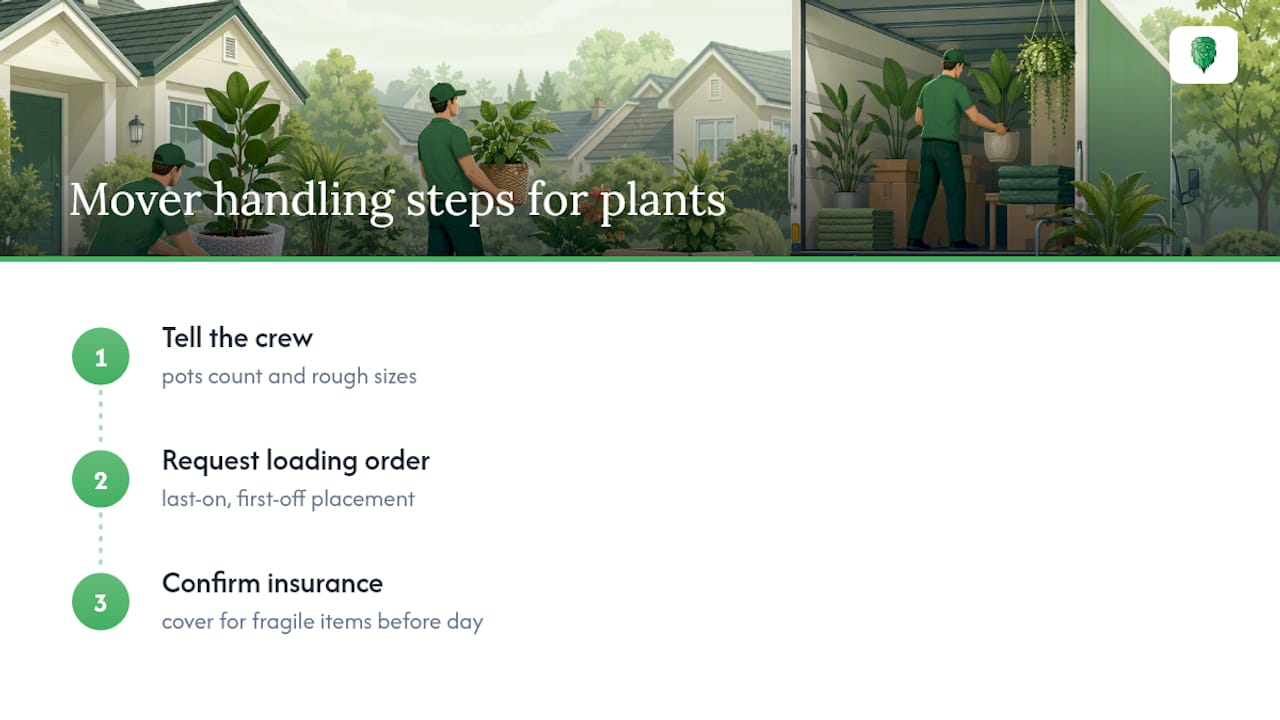
Van-247delivery’s man-with-a-van crews regularly handle the boxes, furniture and fragile items that surround your plants, with insured handling for anything breakable. Tell the team in advance how many pots you have and their rough size, ask for last-on-first-off loading, and confirm your insurance cover before the day itself.
A personal take on choosing which plants to save
Moving five plants brilliantly beats moving twenty badly. Sentiment pulls hard when you’re staring at a windowsill full of years-old growth, but survival rates favour the owner who prunes their collection down to what they can genuinely give attention to during those first shaky weeks.
Patience matters more than any packing trick. Watch, don’t fuss.
— Claudiu
How Van-247delivery supports your plant move
Your plants aren’t the only fragile things travelling on move day, and that’s where Van-247delivery earns its keep. Whether you need a man with a van for a quick local run alongside your car full of plants, or a full house removals service for everything else in the property, insured transport and trained packing labour take the pressure off the boxes and furniture so you can focus entirely on the plants riding with you.

Booking is straightforward: mention how many plants you’re bringing and roughly how large they are, ask the crew to load fragile boxes last and unload them first, and check your insurance options before confirming. Van-247delivery has handled house removals across the UK for over 15 years, so awkward, delicate cargo isn’t a surprise to the crew. Get an instant quote for house removals and book a date that gives your plants their best shot at a smooth landing.
Sources
- The ultimate moving day survival guide for your houseplants — Sunset Magazine
- A complete guide to moving houseplants | Atlas Van Lines
- How to pack plants | DN Van Lines
- Moving plants locally? 10‑step summer safety guide | PlantSolve
FAQ
How can I move heavy potted plants safely?
Repot into lightweight plastic containers a fortnight before the move if possible, and always use a sack truck or a two-person lift for anything you can’t comfortably carry alone, wearing gloves to protect your grip.
Which plants dislike being moved?
Calathea, orchids and large palms tend to react badly to relocation, often dropping leaves or sulking for weeks, while succulents, cacti, snake plants and pothos generally cope well with the disruption.
How long will a plant stay in shock after moving?
Most plants show some stress for the first 48 to 72 hours as they adjust to new light and temperature, with a few extra weeks of settling in before you should repot or fertilise.
When should I move plants from pots into the ground?
Wait until a plant has fully acclimatised at the new property, generally two to four weeks after the move, and only plant it out once the local weather and soil conditions suit that species.