Apartment move access: reserve the lift, secure legal parking and record every clearance in writing. Those three steps stop most apartment move delays before they start. Lifts get booked out by other residents, vans get slapped with parking tickets, and sofas get stuck on stairwell turns when nobody measured first. Sort these three, and the rest of your move day tends to fall into place.
TL;DR:
- Booking the service lift at least three weeks in advance is crucial, especially for buildings with limited slots near weekends or month ends.
- Applying early for parking suspensions and confirming van size and access measurements prevent delays and avoid illegal parking tickets on moving day.
- Precise measurements of doors, lifts, stairwells, and ceiling heights are essential to prevent furniture getting stuck or damaged during the move.
- External options like stair carries or furniture hoists require early building permission, disassembly, and preparation to ensure smooth transit of oversized items.
- Having a detailed run-sheet, confirming arrival times, assigning roles, and documenting protected areas guard against disputes and damage claims afterward.
Table of Contents
- What is apartment move access, exactly?
- Quick access checklist: what to book and when
- Measure and record clearances: exactly what to measure and how to report it
- Parking, loading bays and council permits: arranging legal van access
- If the lift is unavailable or too small: options and trade-offs
- Day-of coordination: a step-by-step run-sheet for moving day
- How Van-247delivery handles apartment access
- Book Van-247delivery for your apartment move
- Sources
- FAQ
What is apartment move access, exactly?
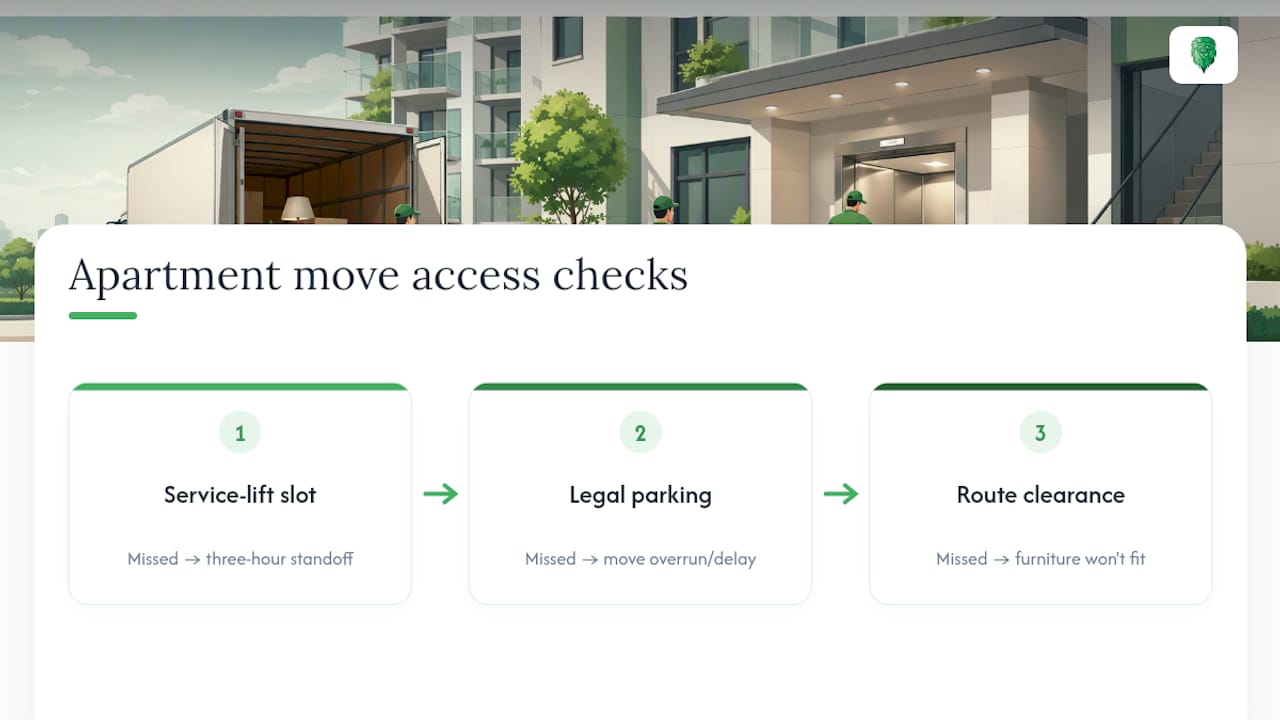
Apartment move access covers everything a removals team needs sorted before they turn up with a van: a booked lift slot, legal parking close to the entrance, and clearance measurements that confirm your furniture will actually fit through the route. It’s the practical groundwork that determines whether moving day runs to schedule or turns into a three-hour standoff with a building porter.
Most flat moves that overrun don’t fail because of bad luck. They fail because nobody checked the lift booking calendar, nobody applied for a parking suspension in time, or nobody measured the stairwell turn before the sofa arrived. Getting apartment move access right is largely admin, done early, by the right person.
Quick access checklist: what to book and when
Timing matters more than most people expect. Many managed buildings won’t let you reserve a service lift on short notice, and some councils need weeks to process a parking suspension.
- Book the lift three weeks out. Many blocks operate a booking calendar for the service lift, and slots near weekends fill fast.
- Tell your building manager or porter. A single named contact who knows your move date avoids confusion on the day.
- Start your parking suspension application as soon as your council allows, since processing times vary by borough.
- Confirm your van size and arrival window with your removals company so they can plan the route to your door.
- Photograph and measure every access point, then attach the images to your booking confirmation.
Pro Tip: Send your measurements and photos to your removals provider before moving day, not on it. A crew that already knows the lift is 1.1 metres wide can bring the right trolley and disassembly tools instead of improvising outside your front door.
Measure and record clearances: exactly what to measure and how to report it
Precise measurements are the difference between a smooth delivery and a wardrobe wedged sideways in a stairwell. iMoveUK’s guidance on apartment moves recommends measuring door widths, lift internal dimensions and stairwell clearances before quoting a job, and for good reason: verbal descriptions (“it’s a fairly tight lift”) tell a crew almost nothing useful.
Work through these measurements before you book:
- Door widths at your flat entrance, any internal doors on the route, and the building’s main entrance.
- Lift internal height, width and depth, plus the door opening width, since some lifts are wider than their doors suggest.
- Stairwell widths and landing turn radii, particularly on half landings where large items need to pivot.
- Ceiling height on stairwells, which matters more than people assume for tall wardrobes carried on their side.
- Van access dimensions, including any height barriers on approach roads or underground car parks.
Annotated photographs beat written notes every time. A single insight from iMoveUK’s research is worth repeating: photographing measurement points and marking them on the image gives a removals crew something they can actually plan around, rather than a paragraph of estimates.
Statistic Callout: Buildings that operate a managed service lift commonly expect bookings roughly three weeks in advance. Miss that window and you risk being refused lift use entirely on the day, competing with residents who booked first.
Note height restrictions too. If your building has an underground car park with a barrier, or the access road has a low bridge, tell your removals company before the van is booked, not after it’s turned back at the entrance.
Parking, loading bays and council permits: arranging legal van access, part of apartment move access
A removals van parked illegally outside your block isn’t just a ticket risk. It slows the whole job down while your crew watches the clock and a traffic warden. Sorting legal parking is one of the most overlooked parts of apartment move access, largely because people assume “there’s usually space” and only discover otherwise on the day.
Most UK councils allow you to apply for a temporary parking suspension or dispensation, which reserves a bay or stretch of road outside your building for the removal vehicle. You’ll typically need:
- Your address and the specific bay or road section you want suspended.
- The date and time window for the move.
- The vehicle registration, or confirmation that your removals firm will provide it.
- Payment of the council’s suspension fee, which varies by borough and by how much notice you give.
Apply as early as your council’s rules allow. Some London boroughs process suspensions within a few working days; others need several weeks, especially around bank holidays when everyone else is moving too.
If you’re in a private development with gated or underground parking, check the height limit and whether the gate needs remote access or a security call ahead of time. A van that’s 20cm too tall for a barrier is a problem nobody wants to discover on moving day.
When no legal parking is available close to the entrance, three fallbacks work well: use a trolley to ferry boxes over a short distance from a nearby loading bay, arrange a brief drop-off zone with a warden’s permission, or book a smaller van and run multiple trips. A man with a van service suits this last option particularly well, since smaller vehicles manoeuvre into tighter spaces that a full-size removals lorry simply can’t reach.
If the lift is unavailable or too small: options and trade-offs, part of apartment move access
Some flats have lifts too narrow for a wardrobe, and some period conversions have no lift at all. Neither situation is unusual, and both have realistic solutions, just not free ones.
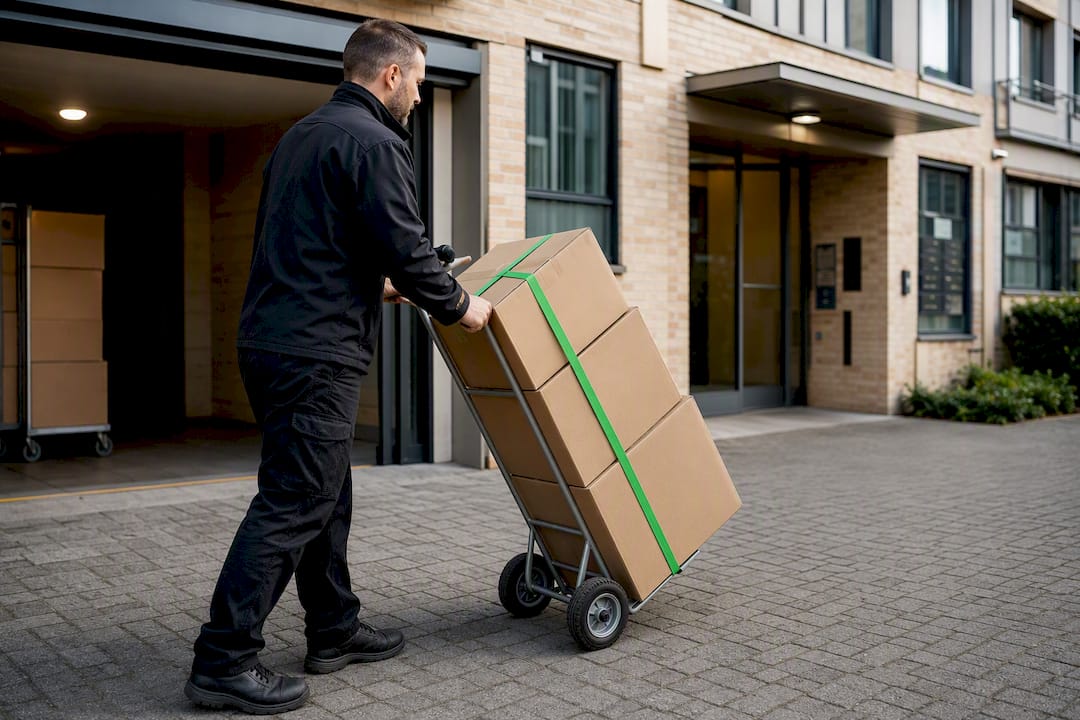
Stair carry is the default fallback and works for most standard furniture once it’s disassembled. It costs more in labour time, since two or three crew members carrying a sofa up four flights takes considerably longer than a lift run.
External hoists or furniture lifts solve the problem for oversized items that won’t fit up a stairwell at all, lifting furniture externally through a window or over a balcony. This route needs building permission almost always, plus a safe staging area on the street or balcony below. Request permission early: building managers often need days or weeks to approve access, insurance checks and any scaffolding or road closure that a hoist requires. EasyMove’s guide to furniture hoists sets out the safety and permission considerations in useful detail, though UK buildings will have their own specific approval process to follow.
Preparation matters whichever route you take:
- Disassemble what you can, since a bed frame in five parts clears a stairwell corner that a whole frame never will.
- Wrap everything that could scuff a wall or bannister, particularly on narrow turns.
- Split heavy items into smaller boxes rather than one overloaded crate, which speeds up both stair carries and hoist loading.
Pro Tip: If you’re not sure whether your lift will take your sofa, measure the sofa’s diagonal depth, not just its width. That’s the dimension that catches people out on tight lift doors.
Day-of coordination: a step-by-step run-sheet for moving day part of apartment move access
Moving day runs smoothest when responsibilities are assigned before the van arrives, not worked out on the doorstep. A simple run-sheet keeps everyone, including the building, on the same page.
- Confirm the arrival window with your crew the evening before, and share a direct contact number.
- Decide who meets the team: you, a porter, or a building representative, so nobody’s waiting outside for ten minutes while someone tracks down a key.
- Assign on-site roles, such as stewarding the parking bay so nobody else parks in it, protecting the lift interior, and keeping an eye on fragile boxes as they move through communal areas.
- Photograph protected areas before the crew starts and again once they’ve finished, covering the lift interior, stairheads and any communal carpet.
- Get a signed completion note from the crew lead before they leave.
Photographing protected areas isn’t just box ticking. It’s the single easiest way to avoid a dispute over a scuffed lift wall or a stained stair runner weeks after the move, when memories of “was that mark already there?” get fuzzy fast.
How Van-247delivery handles apartment access
Fifteen years of moving households and offices around the UK has taught Van-247delivery one thing above all: apartment access problems are predictable, and predictable problems can be planned around. Every insured job starts with the same groundwork, confirming the lift booking, checking parking arrangements, and briefing the crew on any awkward turns or narrow doorways flagged in your quote.
That advance confirmation is exactly what separates a smooth move from a stressful one, echoing the operational approach Van-247delivery sets out for difficult access moves: lock down the lift and parking before the crew leaves the depot, not after they arrive. A single accountable contact, from quote to completion, means you’re not chasing three different people to find out where your sofa currently is.
Choosing a professional crew for a tricky flat move buys you something DIY hire vans rarely offer: someone else absorbing the risk of a damaged bannister or a missed lift slot, with insurance and experience already built into the price.
— Claudiu
Book Van-247delivery for your apartment move
There’s a version of moving day where you spend the morning arguing with a parking warden and the afternoon working out whether the sofa fits in the lift. Van-247delivery exists so that version doesn’t happen to you. Whether it’s a full house removal, a man-with-a-van run for a smaller load, or a hoist-coordinated lift for an oversized piece, the crew arrives already briefed on your building’s access quirks.
Getting an instant quote takes a few details: your move date, the measurements you’ve already gathered from your stairwell and lift, and any parking or access constraints worth flagging in advance. That’s enough for Van-247delivery to confirm your arrival window, insurance cover, protective materials and the right crew size for the job. If your access needs a smaller vehicle or multiple ferried runs instead of one big van, the man with a van service covers that too. Head to the house removals page to get your quote and lock in a date.
FAQ
How far in advance should I book a service lift?
Aim for three weeks ahead where your building operates a booking system, since slots near weekends and month ends fill up quickly.
Who arranges the parking suspension, me or the removals company?
Either can apply, but you’ll need to confirm who’s handling it early, since some councils require the resident’s details rather than the removal firm’s.
What happens if the lift is too small on the day?
Your crew will typically switch to a stair carry with disassembled furniture, or use an external hoist if the building has already approved one in advance.
Does insurance cover damage to communal areas during a move?
A professional removals provider like Van-247delivery carries insured transport cover, and protecting lifts, stairheads and corridors with photographed evidence before and after the job helps resolve any dispute quickly.
What measurements should I send with my quote request?
Door widths, lift internal dimensions, stairwell widths and any height restrictions on your building’s approach road or car park.