Sometimes, yes. Many UK removal teams will take apart beds, wardrobes, dining tables and desks, and put them back together at the new address. But it is usually something you agree when you book, not something you can assume. The Association of International Movers says a mover can dismantle and reassemble furniture only if it is part of your agreement, so get it confirmed before moving day.
That is the short version. Below you will find what usually comes apart, what usually stays whole, how to ask the right questions, and what changes if you are moving an office rather than a home.
TL;DR
- Professional movers can usually dismantle and reassemble standard furniture such as beds, wardrobes and flat-pack pieces, but it is normally agreed in advance.
- Tell your mover exactly which items need taking apart when you request the quote, so it is written into the booking.
- Keep screws, bolts and fittings together in labelled bags, and photograph each piece before it comes apart.
- Offices need extra planning: desks, workstations, shelving and cabling often need dismantling in a set order.
- At Van-247delivery, furniture assembly and disassembly are offered as part of our moving services, alongside packing and removals.
Table of Contents
- So, do movers take apart furniture?
- What movers usually take apart
- What usually stays in one piece
- Will they put it back together at the other end?
- How to prepare your furniture
- Ask before you book: a short checklist
- What about the cost?
- Moving an office: is furniture assembly included?
- Preassembled furniture: do you have to take it apart?
- Perspective: why we plan furniture work into every move
- Let us handle the screwdriver
- A simple timeline for a smooth furniture move
- FAQ
- Sources
So, do movers take apart furniture?
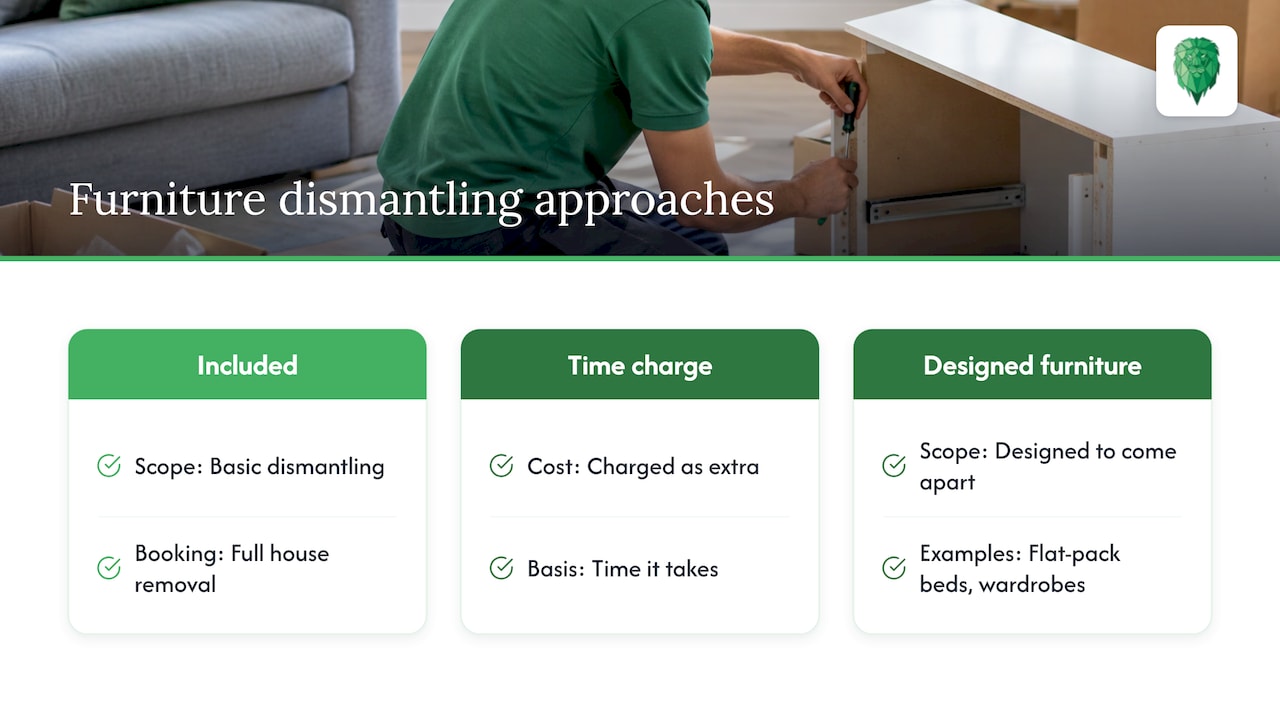
The honest answer depends on the mover and the booking. Some companies include basic dismantling in a full house removal. Others treat it as an extra, charged for the time it takes. Some will only do it for furniture that is designed to be taken apart, such as flat-pack beds and wardrobes.
The reason it matters is simple. A removal crew works to a schedule, a van size and a headcount. If a king-size bed frame needs forty minutes with a screwdriver and nobody planned for it, that time has to come from somewhere. It might delay the rest of the load, or it might simply not happen.
So the useful question is not “do movers disassemble furniture?” but “will you disassemble and reassemble these specific items for my move, and is that in my quote?”
That one sentence, said at the booking stage, saves most of the surprises.
What movers usually take apart
Most crews are comfortable with furniture that was built to come apart. Typical examples:
- Beds: divan bases, bed frames, bunk beds and headboards. Slats and fixings are removed so the frame can be carried through narrow doors and stairwells.
- Wardrobes: especially large flat-pack or sliding-door wardrobes, which are risky to move fully built.
- Tables: dining tables with removable legs, and extending tables that can be reduced in size.
- Shelving and bookcases: modular units, which are easier to protect once flat.
- Desks: home office desks, including those with screw-in legs or drawer units.
- Sofas with detachable feet or arms: where the design allows it.
- TV units and sideboards: where doors, shelves or legs can be removed safely.
Taking these apart does three things. It protects the furniture from knocks and scrapes, it protects your walls and banisters, and it lets the crew load the van more efficiently, with flat panels stacking neatly instead of awkward shapes wasting space.
What usually stays in one piece
Not everything should be dismantled. Some furniture is glued, welded, dowelled or simply too old and fragile to survive being unscrewed and rebuilt. A good crew will tell you when to leave something alone.
Pieces that often stay assembled:
- Solid wood furniture with glued joints
- Antiques and heirlooms, where original fixings may be brittle
- Chests of drawers (drawers come out, the carcass stays)
- Upholstered armchairs and one-piece sofas
- Items with built-in electrics, such as some adjustable beds
If you are unsure, ask the crew to look at it at the quote stage, or send photos. It is much better to hear “we would move this whole, and wrap it” before the day than during it.
For very heavy or delicate items, the right answer is often specialist handling rather than dismantling. That is the case with pianos, for example, which are moved intact with the right equipment. If that is your situation, our piano removal service is built for exactly that.
Will they put it back together at the other end?
This is the part people forget to ask. Taking furniture apart is only half the job. Reassembly at the new address needs the same crew, the same tools and, again, some time.
When you book, check these points:
- Is reassembly included, or only dismantling?
- Which rooms will the furniture be rebuilt in?
- Will the crew have time to do it on the day, or is it a separate visit?
- Are fittings and tools handled by the crew, or do you need to supply anything?
The more specific you are, the easier it is for the mover to plan. “Two wardrobes, one king bed and a desk, taken apart and rebuilt” is a better request than “a bit of furniture assembly”.
How to prepare your furniture
You do not need to be a DIY expert. A little preparation makes the whole day calmer, whether you are doing the dismantling yourself or leaving it to the crew.
Before moving day
- List the items. Write down every piece that needs taking apart and share it with your mover.
- Empty everything. Drawers, wardrobes and shelves should be clear. Items left inside add weight and can shift or break.
- Find the instructions. If you still have the manual or can download it, keep it handy. It helps with reassembly.
- Measure the access. Check doorways, stairs and hallways at both ends. If a piece will not fit through, it has to come apart.
- Clear a path. Moving furniture around boxes is slow and risky.
If you are taking things apart yourself
- Photograph the piece from several angles before you start.
- Take apart in a sensible order and take a photo at each stage.
- Put screws, bolts, cam locks and dowels into a labelled bag for each piece.
- Tape the bag to the furniture itself, on an inside face or in a spot that will not get lost, or keep all bags together in one labelled box.
- Wrap panels and legs, and protect corners and glass.
- Label each part so the right pieces end up in the right room.
The small fittings are the big risk. A missing bolt can stop a bed from being rebuilt that evening, so treat the bags as precious.
Packing matters too
Boxes you pack yourself can be treated differently when it comes to insurance claims. Guidance from a goods-in-transit insurance explainer says items packed by the owner are often excluded, because the mover cannot check how they were packed. The sensible answer is to ask what your cover includes, and to consider professional packing for fragile items. We offer packing as part of our service, so that is something you can include when you request your quote.
Ask before you book: a short checklist
When you phone or fill in a quote form, run through this list:
| Question | Why it matters |
|---|---|
| Do you dismantle and reassemble furniture? | Confirms the service exists |
| Is it included in the quote or an extra? | Avoids a surprise on the day |
| Which items are covered? | Beds and wardrobes are common, specialist pieces may differ |
| Is reassembly at the new address included? | Dismantling alone leaves you with flat parts |
| How much time is allowed? | Complex items take longer |
| What insurance covers the furniture in transit? | Protects you if something is damaged |
| What happens if the job runs over? | Waiting time or extra hours can apply |
Get the answers in writing, or at least in the booking confirmation. That way everyone is working from the same plan.
What about the cost?
Prices vary by company, region, the number of items and how complicated they are. Some movers include a basic level of dismantling in a house move. Others charge by the item or by the hour. Be wary of any figure that is not tied to your actual list of furniture, because a flat-pack wardrobe and a four-poster bed are very different jobs.
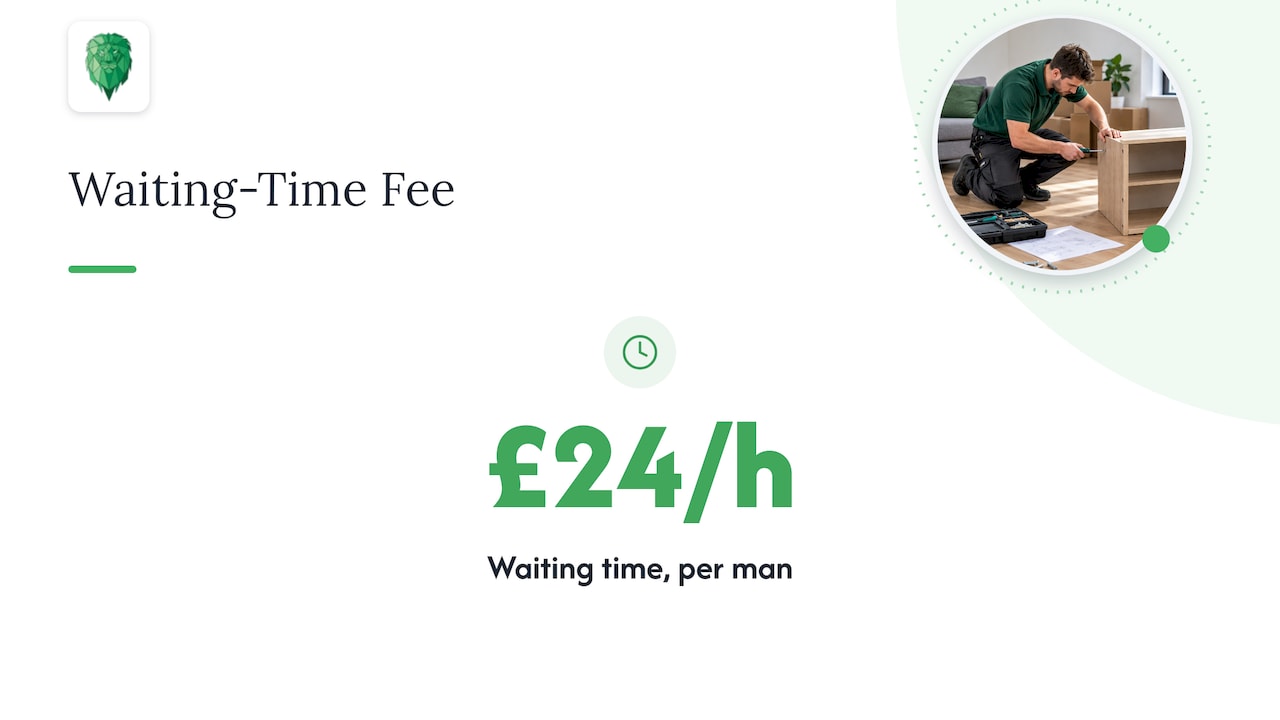
We do not publish a set price for furniture assembly or disassembly, because it depends on what you need. The quickest way to get a figure is to request an instant quote and list your items. One fee we do publish: if the crew has to wait, waiting time is £24 per hour per man. Having your furniture ready, emptied and accessible helps keep that from coming into play.
If you are comparing quotes, compare like with like. One company may look cheaper simply because dismantling, reassembly or packing is not in it.
Moving an office: is furniture assembly included?
Office moves are a different animal. Instead of one bed and a wardrobe, you may have rows of desks, partition screens, meeting tables, filing units and storage racks, plus cabling running through all of it.
Most office relocation teams can dismantle and rebuild standard office furniture, but, as with home moves, the scope should be agreed up front. A good office furniture assembly service plan will usually cover:
- Taking apart desks, workstations and shelving in a planned order
- Labelling each piece by desk, room or department
- Moving the parts and rebuilding them in the new layout
- Handling IT equipment and cabling carefully, so teams can get back to work quickly
For offices, planning is everything. A floor plan of the new space, a numbered inventory and a clear move schedule turn a chaotic weekend into a calm one. Think about downtime too: the faster furniture is rebuilt, the faster people can sit down and work.
Our office relocation service covers office moves, and includes server relocation and the installation and reinstallation of Wi-Fi and video conference systems, so the technical side can be planned together with the furniture.
Preassembled furniture: do you have to take it apart?
Sometimes you can move a piece fully built, and it makes life easier at the other end. A sturdy, preassembled bookcase might go straight onto the van, wrapped and strapped. But there are conditions:
- The piece must fit through every door, stairwell and lift on the route, at both addresses.
- It must be strong enough to be carried without twisting. Flat-pack furniture often loosens or cracks if moved fully built.
- The van needs enough space, since assembled pieces take up more room than flat panels.
If any of those fail, it is back to the screwdriver. Measure first, and your mover can help you decide.
Perspective: why we plan furniture work into every move
We have been moving people and businesses for over 15 years, and one pattern repeats: the stressful moving days are rarely caused by the big things. They come from small things nobody planned, like a bed that will not go round the stair turn, or a missing bag of screws.
That is why we treat disassembly and assembly as part of the plan, not an afterthought. We offer both, alongside packing, storage and removals, so you can book it all in one go instead of juggling several people.
Our advice is to be specific. Tell us what the items are, where they are going and what the access is like. The more we know up front, the better we can plan time, crew and van space, and the calmer your day will be.
Moving day is a marathon, not a sprint. A crew that dismantles carefully, wraps properly and rebuilds the furniture where you want it lets you get on with the things only you can do: handing over keys, checking meters and making that first cup of tea.
Claudiu
Let us handle the screwdriver
If you would rather not spend your last evening in a flat surrounded by bolts and Allen keys, we can help. Van-247delivery offers furniture assembly and disassembly, packing and unpacking, storage and full house removals across the UK, with insured transport and flexible booking.
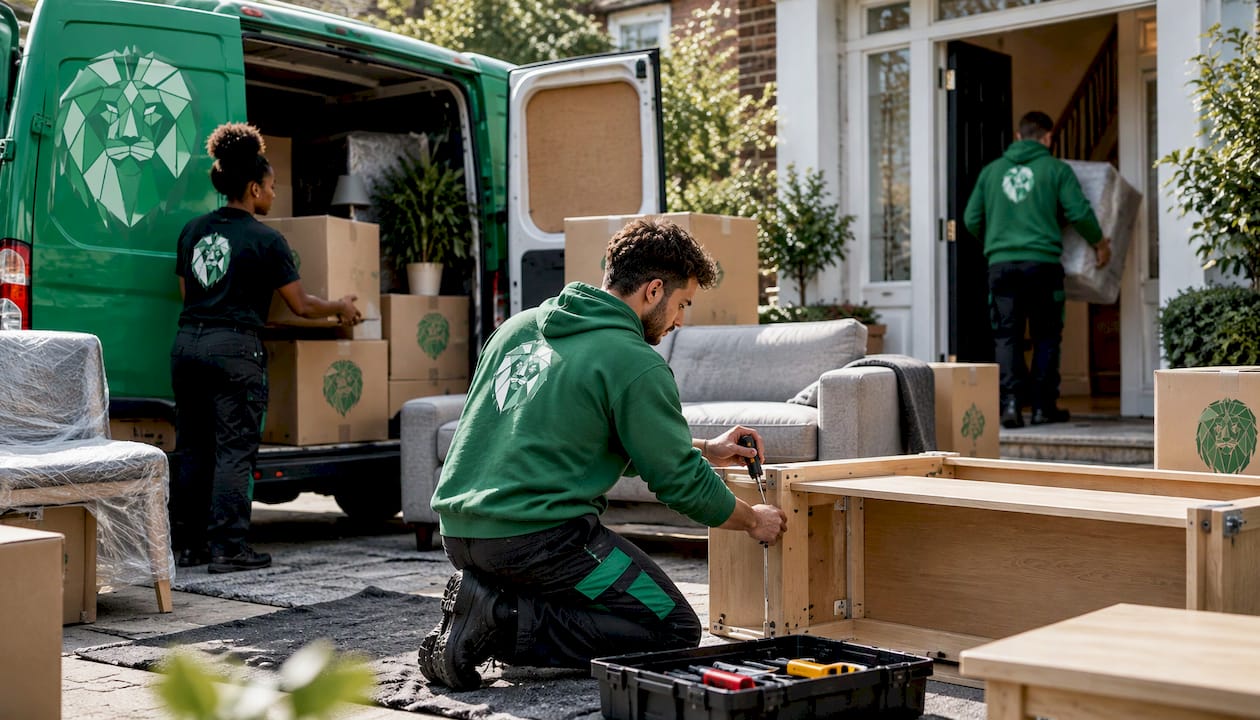
For a single large item, a sofa or a wardrobe that needs to travel, our furniture and large items service is the place to start. Tell us what needs to come apart and what needs to go back together, and we will plan it into your booking.
A simple timeline for a smooth furniture move
If you like having it laid out, here is a rough order of play for a home move.
- Two to three weeks before: list the furniture, measure access, and ask your mover about dismantling and reassembly.
- One to two weeks before: confirm the booking in writing, including which items come apart and which are rebuilt. Gather manuals.
- The week before: empty wardrobes, drawers and shelves. Decide what you will dismantle yourself and what the crew will do.
- The day before: photograph pieces, bag and label fittings, and clear paths in the house.
- Moving day: walk the crew through the list, point out anything fragile, and keep the fittings box with you, not in the van.
- At the new place: show the crew where each piece goes, check it is stable, and note any damage straight away.
It is a lot less daunting when it is broken into steps.
FAQ
Do movers disassemble furniture as standard?
Not always. Many movers can do it, but it is often an optional extra that has to be agreed in advance. Confirm it when you book, and make sure it is in your written quote.
Do movers reassemble furniture at the new address?
Many do, if that is part of the agreement. Always ask whether reassembly is included or only dismantling, and which rooms the furniture will be rebuilt in.
Do office movers assemble furniture?
Often they can, including desks, workstations and shelving. Agree the scope, the order of work and the new layout beforehand, so the team can rebuild everything quickly and people can get back to work.
Should I take furniture apart myself before the movers arrive?
Only if you are comfortable doing it, and only if you tell the movers. If you do, photograph each stage, bag the screws and label everything. If you are unsure, leave it to a crew who has done it many times.
What if my furniture cannot be taken apart?
Some pieces are glued, antique or simply built in one piece. The crew can wrap and carry them whole, or use specialist handling for very heavy items. Share photos and measurements when you request your quote.