How movers wrap furniture: professional movers pad first, protect corners second, then contain everything with stretch film or straps, never the other way round. The typical sequence runs: inspect the piece, remove anything designed to detach, blanket the surface, add corner protection, then secure with wrap or straps before loading. Moving blankets, stretch film, corner guards and ratchet straps do the heavy lifting. Small, sturdy items suit a confident DIY approach; anything fragile, awkward or valuable is worth handing to a crew.
TL;DR:
- Proper wrapping starts with moving blankets that provide consistent cushioning to prevent surface damage during transit.
- Stretch film is only for containment, so it must be applied over blankets and not directly on polished or fragile surfaces.
- Different materials require tailored techniques, such as acid-free paper for glass and layers of blankets plus rigid protection for mirrors.
- Securing and restraining furniture inside the van is crucial, involving proper placement, padding, and regular rechecks during the move.
- Professional movers follow strict, detailed procedures, making crewed services essential for large, fragile, or complex items.
Table of Contents
- What supplies and materials do movers use to wrap furniture?
- How do movers wrap furniture step by step?
- Which wrapping technique suits sofas, wood, glass and other furniture?
- How should wrapped furniture be secured and restrained in the van?
- What should you ask your mover about wrapping and cover?
- How Van-247delivery applies these wrapping standards
- Should you wrap furniture yourself or hire a crew?
- Get pad-wrapping and insured transport sorted with Van-247delivery
- Sources
- FAQ
What supplies and materials do movers use to wrap furniture?
Every layer has a job, and mixing them up is where DIY wrapping usually goes wrong.
Moving blankets are the workhorse. Quilted construction keeps the filling evenly spread across the pad, so you get consistent cushioning rather than the thin, bunched patches you’d get from a household quilt or duvet pressed into service. This matters more than most people expect, since a single-layer substitute leaves exposed areas exactly where a knock is most likely to land.
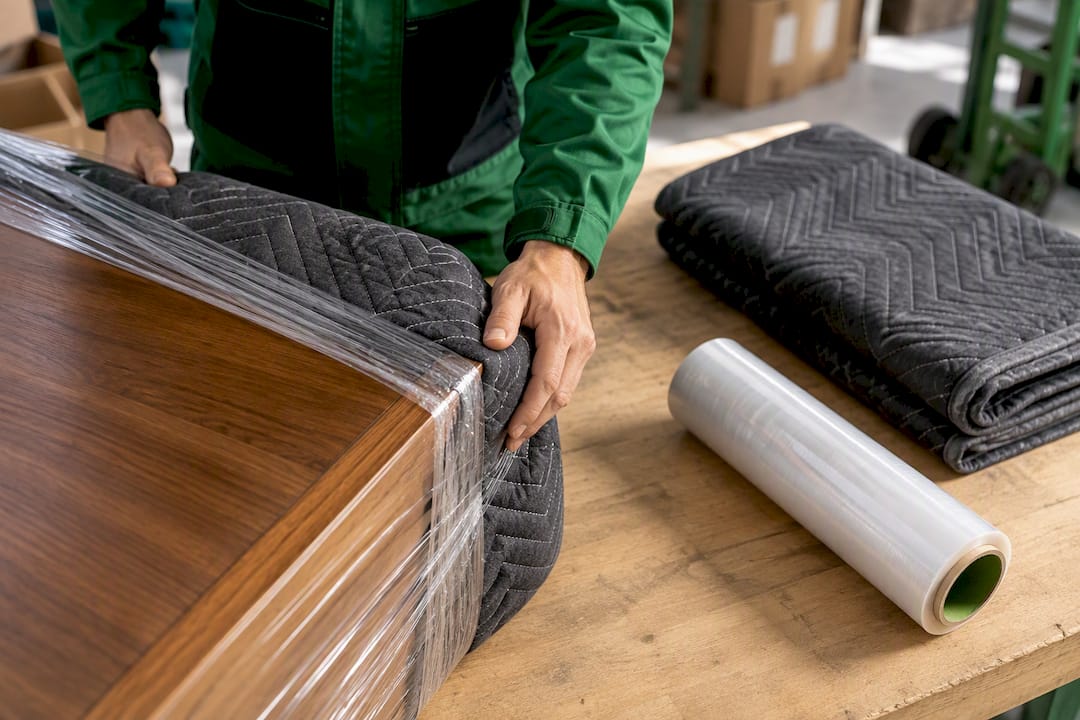
Stretch or shrink wrap comes next, but only as a containment layer. It holds the blanket in place; it does not cushion anything on its own, and wrapping it directly against wood or leather without padding underneath risks trapping moisture against the finish.
Corner guards, foam profiles, cardboard sheets and bubble wrap each solve a specific edge or surface problem, from table corners to glass edges. Mattress bags, sofa covers, and purpose-made cartons for TVs and mirrors keep those awkward shapes clean and rigid during transit.
For fastening, professionals reach for:
- Ratchet or tie-down straps for restraint inside the van
- Cotton tape for securing blanket folds without residue
- Painter’s tape rather than standard adhesive tape, which can lift varnish, paint or veneer on contact
How do movers wrap furniture step by step?
The process below mirrors what a UK removals crew actually does on the day, and it’s worth following even if you’re moving yourself.
- Inspect and photograph. Note existing scratches, dents or marks before touching the item, so any dispute afterwards has evidence either way.
- Measure the route. Wraps add bulk, and a wrapped item that fits a room may no longer clear a doorway, so check clearances first.
- Dismantle only designed-to-remove parts such as table legs, headboards or shelving. Never force apart anything not built to separate.
- Bag and label fixings. Screws, bolts and washers go into a sealed, marked bag taped to the relevant item, following the BAR code of practice.
- Apply the blanket layer first, wrapping it snugly around the whole piece with no loose flaps.
- Add corner protection over the blanket at every vulnerable edge.
- Contain with stretch film, cotton tape or straps, tucking every fold so nothing hangs low enough to snag a foot or a castor.
- Skip tape on finishes entirely. It belongs on the outer wrap, never on wood, leather or paint.
- Check tension. Wraps should hold firm without compressing frames, arms or glass panels.
- Lift and load with a final visual check, confirming nothing has shifted or loosened on the way to the van.
Pro Tip: Before you tape anything down, do a quick “handhold test”: tug gently on any loose blanket edge. If it moves enough that someone could grab it as a lifting point, it’s not secured properly yet, and that’s exactly the kind of shortcut that causes drops on the stairs.
Blankets and stretch film work as a pair rather than substitutes for each other. The blanket absorbs contact and vibration while the wrap keeps folds in place, and skipping the wrap step increases the chance of surface friction damage as the piece squeezes through doorways, potentially by a significant margin. If you’d rather see the full breakdown of blanket types and padding choices, our guide to furniture blanket and padding covers it in more depth.
Which wrapping technique suits sofas, wood, glass and other furniture?
Different materials fail in different ways, so the technique has to change with the item.
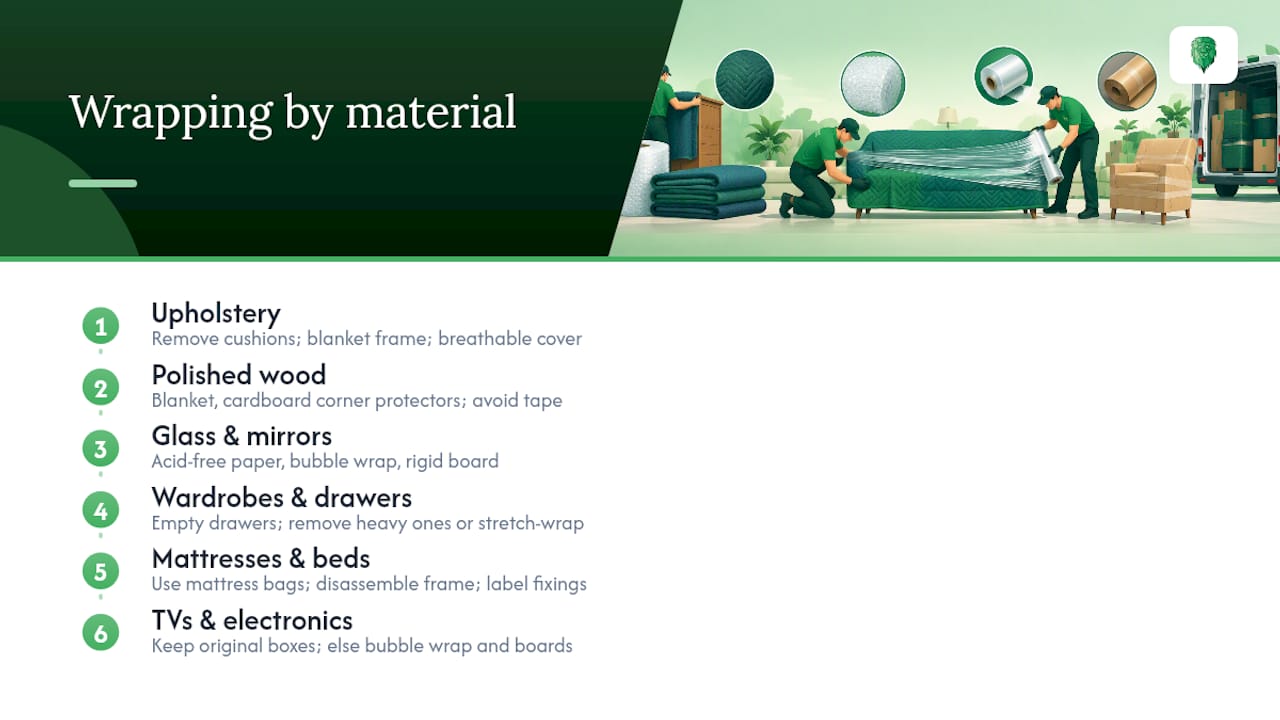
Sofas and upholstery: Remove loose cushions and wrap them separately. Blanket the frame fully, and for leather pieces use a breathable outer layer rather than sealed plastic, which can trap heat and moisture against the hide. Secure seams and arms so the blanket can’t slip during a tight turn on the stairs.
Polished or veneered wood: Blanket first, then cardboard corner protection at every edge. Never tape or cling-film directly onto a polished surface. Adhesive residue and trapped moisture are two of the fastest ways to ruin a good finish.
Glass and mirrors: Use acid-free paper against the surface itself, then bubble wrap, then a rigid board or crate. This layered approach, recommended in BAR’s own packing guidance, keeps tape well away from the glass and prevents scratching from paper fibres bonding to the surface over time. Framed prints and artwork follow a similar logic. If you’re dealing with anything framed and valuable, it’s worth understanding what proper framing protection actually costs before you improvise your own solution.
Wardrobes and drawers: Empty every drawer first. Either remove heavy drawers and wrap them individually, or secure them with stretch wrap over the blanket, taking care not to overtighten and warp the runners.
Mattresses and bed frames: Mattress bags are non-negotiable for hygiene and weatherproofing. Disassemble the frame and label every fixing clearly, following the same bagging principle used for other furniture. Our furniture disassembly guide walks through the safest order to take a bed apart.
TVs and electronics: Original packaging is genuinely the best option if you’ve kept it. Otherwise, bubble wrap plus rigid boards with clear “fragile, this way up” labelling does the job.
How should wrapped furniture be secured and restrained in the van?
Good wrapping counts for little if the load shifts on the first roundabout, so restraint inside the van matters just as much as the wrapping itself.
- Place heavy items forward and low, using large pieces like dressers as internal walls that brace lighter furniture around them.
- Run ratchet straps and tie-down rails over protected areas, not directly across glass panels or delicate mouldings. Straps are for restraint, not cushioning, so add extra padding underneath where a strap crosses a vulnerable edge.
- Pad the van walls and slot extra blankets between neighbouring pieces so nothing rubs directly against another item’s wrap.
- Fill gaps with soft items such as bagged bedding or boxed textiles to stop movement during braking.
- Check strap tension and exposed corners one final time before pulling away.
- Re-check at the first safe stop, since blankets and wraps can loosen slightly once the van is actually moving.
- Keep blankets dry. They’re not waterproof, and sealed plastic film left against a wooden or leather finish for any length of time can trap moisture underneath it, so only add temporary waterproofing for genuinely short exposure, such as a rainy walk to the van.
What should you ask your mover about wrapping and cover?
A few direct questions before booking day save a lot of frustration later.
- Is pad-wrapping included as standard, or does it apply only to certain item categories?
- Which items attract an extra charge for specialist wrapping, such as pianos, antiques or oversized mirrors?
- Are disassembly and reassembly included, and will fixings come back in labelled bags?
- What does the insurance actually cover? Ask specifically about pre-existing damage, declared high-value items, and the process for a transit claim.
- Get the wrapping details in writing on the quote, including any exclusions, so there’s no ambiguity on the day.
- Watch for typical extras, including narrow-stair handling, hoist hire, or specialist packing materials for one-off items.
How Van-247delivery applies these wrapping standards
Van-247delivery’s crews follow the same inspect, photograph and layer sequence set out in BAR’s own packing guidance, applying it consistently across house removals, office relocations and furniture courier jobs. Packing, disassembly and reassembly, furniture-specific covers and insured transport are all part of the standard service offering, rather than treated as afterthoughts bolted on at the last minute.
A wrapped item is only as safe as the crew’s attention to the small details: whether a fold is tucked, whether a strap sits over padding rather than glass, whether the fixings bag actually made it into the van with the frame it belongs to.
Coordinating wrapping, lifting safety and van restraint on the same job is a genuinely practical skill, built from doing dozens of moves rather than reading a single checklist once.
Should you wrap furniture yourself or hire a crew?
DIY wrapping is perfectly sensible for small, sturdy items, provided you’ve got the right blankets, wrap and an extra pair of hands. Where it stops making sense is antiques, large wardrobes, pianos, anything glass-heavy, or homes with tricky staircases and tight doorways. At that point, BAR’s own guidance points toward combining wrapping with proper lifting equipment and access planning, which is exactly what a crewed mover brings that a Saturday afternoon and some borrowed blankets can’t.
— Claudiu
Get pad-wrapping and insured transport sorted with Van-247delivery
Van-247delivery is the alternative to piecing wrapping materials together yourself and hoping the straps hold: over 15 years of experience means every job gets the same inspect, blanket, protect and restrain sequence, whether it’s one sofa or a full house.
House removals, furniture and large item courier work, packing, furniture disassembly and reassembly, and insured transport are part of the service offering, so pad-wrapping isn’t an upsell you have to negotiate for. Got a piano, an oversized wardrobe, or a fragile mirror that’s making you nervous about the move? Check the furniture and large items service for specialist handling, or head to the house removals page to see what’s included alongside unpacking and storage. Getting an instant quote takes a few minutes online, and you’ll know exactly what wrapping and cover is included before you commit to a date.
Sources
- Protect furniture with moving blankets (The Box Warehouse)
- Top ten packing tips (BAR)
- How to protect your furniture when moving (Extra Space)
FAQ
What do movers use to wrap furniture?
Movers use quilted moving blankets as the main cushioning layer, then add corner guards and cardboard for edges, and finish with stretch film or straps as a containment layer. Glass and mirrors get acid-free paper and bubble wrap underneath rigid board protection.
What is the best way to wrap furniture when moving?
Blanket the item first, add corner protection at vulnerable edges, then secure everything with stretch wrap, cotton tape or straps rather than adhesive tape on the finish itself. This layered order, set out in BAR’s packing guidance, keeps padding from shifting during transit.
How much does it cost to move a sofa in the UK?
Sofa moving costs vary by distance, access and whether packing is included, and Van-247delivery doesn’t publish a fixed rate since every job differs. Current pricing is available through an instant quote on the Van-247delivery site.
What type of wrap is best for protecting furniture when moving?
Quilted removal blankets protect the surface itself, while stretch film holds those blankets in place without adding its own cushioning. Using stretch film alone, without a blanket underneath, leaves the item exposed to knocks and scuffs during handling.