Moving furniture across the country is defined as a long-distance relocation, typically priced by shipment weight and total mileage rather than by the hour. For a standard 2–3 bedroom home in the UK, you can expect to pay somewhere between £1,200 and £9,000, depending on service level, distance, and the complexity of your move. Knowing how much to move furniture across country before you book saves you from nasty surprises on moving day.
The main pricing models are weight-based and hourly, and understanding which applies to your move is the single most useful thing you can do before requesting quotes. Van-247delivery, with over 15 years in the UK removals industry, works with both models depending on the job.
How do distance and weight determine the cost to move furniture?
Long-distance moves are priced per unit of weight and per mile travelled, not by the hour. Local moves under roughly 100 miles are typically billed hourly, but once you cross into cross-country territory, the calculation shifts entirely. That distinction matters because it changes how you can control your costs.
For cross-country transport and labour, you can expect to pay approximately £0.35–£0.55 per pound of furniture weight. A typical 2–3 bedroom home generates a shipment of around 7,500 lbs. At that weight, the base transport cost alone sits between £2,625 and £4,125 before any extras are added.

Distance compounds the weight cost in three ways: fuel, labour time, and overnight accommodation for the crew. A move from London to Edinburgh adds far less in fuel than a move from London to the far north of Scotland, but both are calculated on the same weight-plus-mileage formula. The longer the route, the more each additional pound of furniture costs you.
| Move type | Pricing model | Typical base cost |
|---|---|---|
| Local (under 100 miles) | Hourly rate | Lower overall total |
| Cross-country (100–500 miles) | Weight + mileage | Mid-range total |
| Long-distance (500+ miles) | Weight + mileage | Higher total |
Pro Tip: Reducing your shipment weight is the single most direct way to cut your cross-country moving bill. Sell, donate, or dispose of heavy items like old sofas, bulky wardrobes, or unused gym equipment before your inventory is assessed.
What extra fees should you budget for beyond the base price?
The base transport cost is rarely the final figure. Additional charges stack up quickly, and many people only discover them when the invoice arrives. Knowing what to expect puts you in control.
Here are the most common additional costs to factor into your budget:
- Professional packing services: Packing a full home professionally can add £700–£1,200 to your total. That figure covers materials and labour for wrapping, boxing, and labelling your belongings.
- Specialist item handling: Moving a piano, a safe, or large antique furniture requires specialist equipment and trained staff. Specialist item fees typically range from £200 to £1,000 or more, depending on size and complexity.
- Access surcharges: If your home has narrow staircases, no lift, or a long carry from the vehicle to the door, expect additional labour fees. Access challenges like stairs or long carries add costs that online calculators rarely include in their base estimates.
- Insurance: Basic liability cover is usually included, but full-value protection for high-value items costs extra. Always confirm what is covered before you sign.
- Seasonal surcharges: Peak moving months, particularly june through august, see higher demand and higher prices. Booking outside peak season can reduce your total meaningfully.
- Tolls and congestion charges: Long routes through urban areas or toll roads add small but real costs to the final bill.
Pro Tip: Always ask for a fully itemised quote. A quote that lists every potential charge separately is far more useful than a single headline figure. It also makes it easier to compare quotes from different providers.
How can you estimate and budget your total moving costs?
Accurate budgeting for a cross-country furniture move requires more than a quick online search. Online moving cost calculators are useful for setting a baseline, but they should be treated as rough guides rather than firm prices. The real accuracy comes from a detailed inventory.
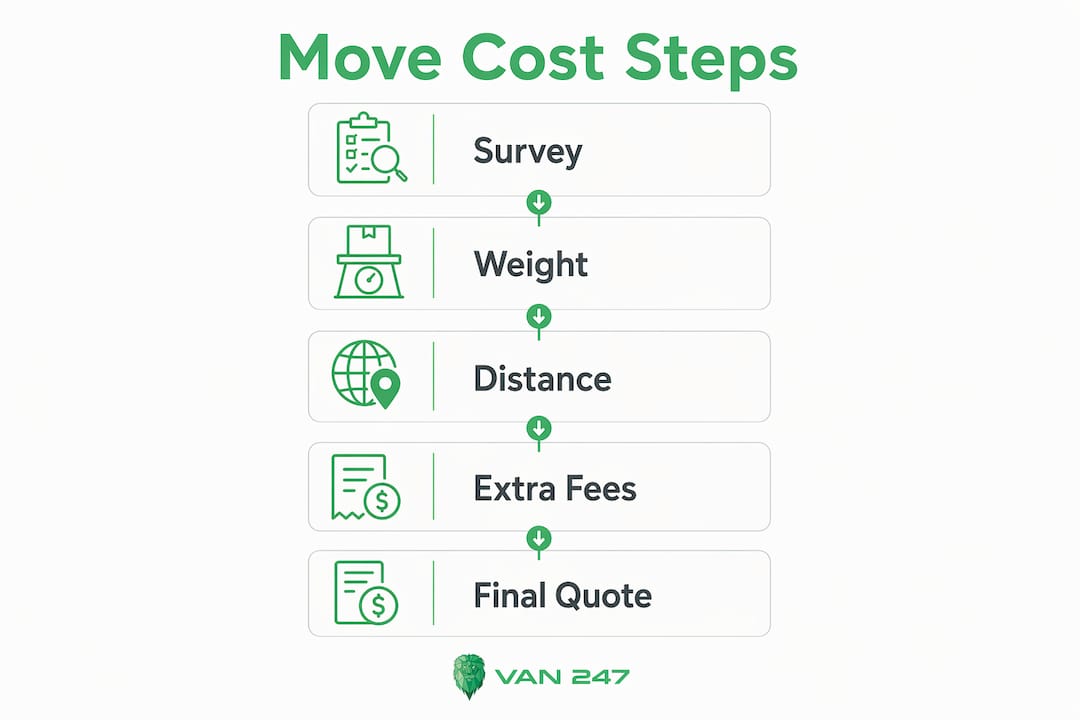
A virtual or in-home survey produces the most reliable quote. A surveyor assesses the volume and weight of your belongings, notes access conditions, and flags any specialist items. That information gives a removal company what it needs to price your move properly.
Getting multiple quotes is non-negotiable. Detailed quotes from licensed movers after an inventory survey remain the most accurate costing method available. Aim for at least three quotes so you can compare service levels, not just prices.
Your service level choice also shapes the total cost significantly:
- DIY van hire: You rent the vehicle and do all the loading, driving, and unloading yourself. This is the lowest cost option but carries the highest physical and logistical risk.
- Labour-only movers: You hire a team to load and unload a vehicle you have rented. This splits the cost and effort sensibly for confident planners.
- Full-service removal: The company handles packing, loading, transport, and unloading. This is the most expensive option but also the least stressful.
- Moving containers: A container is delivered to your door, you fill it at your own pace, and the company collects and transports it. This suits people with flexible timelines.
For a 1–2 bedroom home, full-service cross-country moves typically cost less than for larger properties. A 3-bedroom home move can range from around £2,400 for shorter interstate distances up to £14,500 for moves exceeding 2,000 miles. Those figures give you a realistic ceiling to plan against.
What are the most cost-effective ways to move furniture long distance?
Cost-effectiveness depends on your priorities. If time is tight and your furniture is valuable, full-service moving is worth the premium. If your budget is the priority, there are genuine ways to reduce the total without cutting corners on safety.
Here is a breakdown of your main options and their trade-offs:
- Full-service removal companies: The most convenient option. The crew handles everything. Costs are higher, and full-service providers often have minimum shipment weights, which can make them expensive for smaller loads.
- Moving containers: A practical middle ground. You control the packing timeline, and the company handles transport. Costs sit below full-service but above pure DIY.
- Van hire with labour-only movers: You rent the vehicle and hire a separate team for loading and unloading. This combination works well for straightforward moves without specialist items.
- Man and van services: For smaller loads or partial moves, a man and van service offers flexibility at a lower price point than a full removal company.
The most overlooked cost-saving strategy is downsizing before the move. Every item you remove from the shipment reduces your weight-based cost directly. Selling furniture you were planning to replace anyway is not just practical. It puts money back into your moving budget.
Timing your move outside the summer peak also cuts costs. Seasonal demand drives prices up between june and august. Booking in autumn or winter, if your schedule allows, gives you more negotiating room and better availability.
For specialist items like pianos, always use a provider with specific experience. The cost of specialist handling is far lower than the cost of damage to an irreplaceable instrument.
Key takeaways
The cost to move furniture across the country is primarily driven by shipment weight and distance, with service level, access conditions, and timing adding significantly to the final total.
| Point | Details |
|---|---|
| Weight and distance drive base cost | Expect to pay roughly £0.35–£0.55 per pound, scaled by total mileage. |
| Extra fees add up fast | Packing, specialist items, access surcharges, and insurance all sit outside the base price. |
| Calculators give baselines only | A detailed inventory survey followed by multiple quotes produces the most accurate figure. |
| Service level shapes the total | Full-service costs more but reduces stress; DIY and labour-only options suit confident planners. |
| Timing affects price | Booking outside the summer peak reduces costs and improves availability. |
What I have learned from years of cross-country moving quotes
After more than a decade working in UK removals, the pattern I see most often is this: people underestimate their shipment weight and overestimate how straightforward their access is. Those two miscalculations account for the majority of “the final bill was higher than expected” conversations.
The weight issue is predictable. Most people have not weighed their furniture. A solid oak dining table can weigh 80 kg on its own. A double wardrobe with clothes inside can hit 150 kg. When you multiply those surprises across a full home, the weight-based cost climbs faster than most budgets anticipate.
The access issue is less obvious but just as costly. A third-floor flat with no lift, a narrow Victorian staircase, or a long carry from a restricted parking zone all add labour time. That time costs money. The best thing you can do is photograph your access conditions and share them with every removal company you approach for a quote. It removes ambiguity and protects you from late additions to the invoice.
My honest advice: book your move at least six to eight weeks in advance, particularly if you are moving between april and september. Late bookings in peak season mean higher prices and fewer options. And always ask your mover directly whether their quote includes VAT, fuel, and any minimum weight charges. Those three questions alone will save you from the most common billing surprises.
— Claudiu
Moving furniture across the country with Van-247delivery
Planning a cross-country furniture move is much less stressful when you know exactly what you are paying for before the van arrives.
Van-247delivery has been helping people across the UK move their homes and furniture for over 15 years. From furniture removals for large and specialist items through to full house removals with transparent, itemised pricing, the service is built around making your move straightforward. You get an instant quote, insured transport, and a team that knows how to handle everything from a grand piano to a fragile antique dresser. Get your free quote today and know your costs before moving day.
FAQ
How much does it cost to move a 2-bedroom home across the UK?
A 2-bedroom cross-country move typically costs between £1,200 and £5,000, depending on distance, service level, and whether packing is included. Getting an itemised quote after a home survey gives you the most accurate figure.
Is weight or distance more important for calculating moving costs?
Both matter, but weight is the primary driver for long-distance moves. Distance multiplies the weight-based cost through fuel, labour time, and route complexity.
What is the cheapest way to move furniture across the country?
Hiring a van and managing the move yourself is the lowest-cost option. For those who want help without full-service prices, combining van hire with labour-only movers offers a practical middle ground.
Do moving costs change depending on the time of year?
Yes. Peak demand between june and august pushes prices higher and reduces availability. Booking in autumn or winter typically gives you better rates and more flexibility.
Are online moving cost calculators accurate?
Online calculators provide useful baseline estimates but are not final prices. A detailed inventory survey followed by quotes from at least three licensed movers produces the most reliable budget figure.