How to choose a courier service? Choosing a courier service means matching your specific parcel requirements to a provider that fits your budget, delivery speed, coverage area, and security needs. Get this right and your goods arrive safely, on time, and without nasty surprises on the invoice. Get it wrong and you are left chasing lost parcels, disputing hidden charges, or dealing with damaged goods and no clear recourse.
The Post Office advises that the right starting point is always your item specifics: its type, size, destination, and urgency. This guide walks you through every factor that matters, from pricing structures to contract small print, so you can make a confident, informed decision.
What key factors should you consider when choosing a courier service?
The foundation of any good courier selection is a clear picture of what you are sending, where it is going, and how quickly it needs to arrive. These three questions shape every other decision you make.
Item type, size, and weight are the first things to pin down. A fragile antique vase needs very different handling from a box of office supplies. If you are shipping large or heavy items, you need a courier with the right equipment and experience, not just the cheapest rate. Some couriers impose surcharges for oversized parcels or refuse certain categories altogether, so check restrictions before you book.
Delivery urgency is the next filter. Most UK couriers offer three broad tiers:
- Same day or express: Fastest option, highest cost, ideal for urgent documents or time-sensitive goods. Van-247delivery’s express delivery service is one example of this tier in action.
- Next day: Reliable for most business shipments; widely available across the UK mainland.
- Standard (two to five days): The most affordable option when time is not critical.
Geographic coverage matters more than people realise. A courier with strong coverage in London may struggle with deliveries to the Scottish Highlands or rural Wales. Always confirm that your chosen provider covers both your collection and delivery postcodes before committing.
Special handling requirements add another layer. Refrigerated goods, fragile items, and high-value electronics all need couriers with specific capabilities. Shopify’s courier checklist highlights specialisation as a key selection criterion, particularly for businesses with unusual or high-value shipments.
Pro Tip: Always ask a courier directly whether they subcontract deliveries in your area. Subcontracting can reduce service consistency, especially for fragile or high-value goods.
Finally, confirm that the courier offers real-time tracking and adequate insurance cover. These two features are not optional extras. They are the baseline for any shipment you care about.

How do courier pricing structures and insurance options affect your choice?
Pricing is where most people get caught out. The headline rate rarely tells the whole story, and hidden costs from mismatched pricing are one of the most common traps in courier selection.
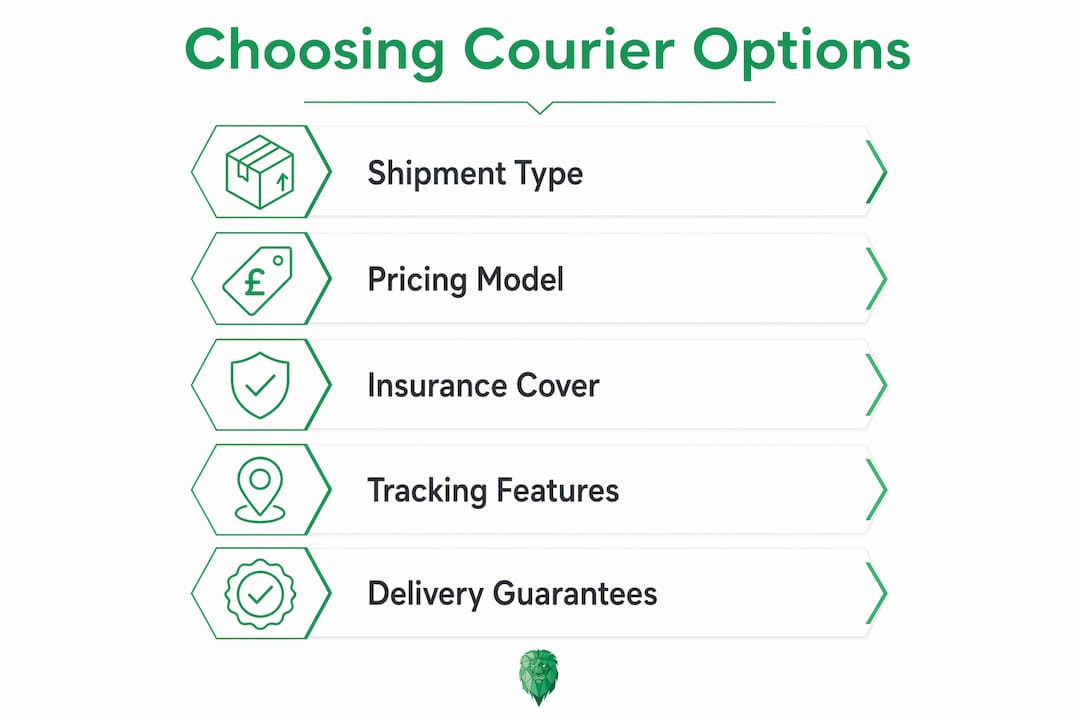
The three main pricing models you will encounter are:
| Pricing model | How it works | Watch out for |
|---|---|---|
| Actual weight | Charged by the physical weight of your parcel | Straightforward, but surcharges may apply for large, light items |
| Dimensional weight | Charged by the parcel’s volume, not its mass | A large, light box can cost far more than expected |
| Flat rate | Fixed price regardless of weight or size | Only cost-effective if your parcels fit the defined size bands |
Dimensional weight pricing catches out businesses and individuals alike. A bulky but lightweight sofa cushion, for example, may be priced as if it weighs considerably more than it does. If you regularly ship items like this, check out how sofa courier costs are calculated to avoid bill shock.
Volume discounts are available from most couriers if you ship regularly. Businesses sending high volumes should always negotiate rather than accept the published rate. Shopify notes that volume is a direct lever for securing better pricing, and many couriers will offer tiered discounts once you commit to a minimum monthly shipment count.
Insurance is the other major cost variable. Some couriers include basic cover in their standard rate; others require you to opt in and pay extra. The difference between included and opt-in insurance can be significant if a parcel is lost or damaged. Always check the maximum compensation limit and whether it covers the full replacement value of your goods.
Pro Tip: If you are shipping high-value items regularly, consider taking out a separate goods-in-transit insurance policy rather than relying solely on the courier’s cover. It often provides broader protection at a competitive cost.
What role do reputation, reviews, and delivery guarantees play?
A courier’s reputation is the most honest signal of what you can actually expect. Published service levels describe what a courier aims to do. Reviews describe what they actually do.
When evaluating couriers, look at:
- Customer reviews on independent platforms such as Trustpilot or Google Reviews. Focus on patterns rather than individual comments. A courier with 500 reviews averaging 4.2 stars is more informative than one with 10 reviews averaging 5 stars.
- Industry certifications. The Post Office recommends checking for certifications such as ISO 9001, which signals consistent quality management processes.
- Delivery guarantees and compensation policies. Does the courier offer a money-back guarantee if a next-day delivery arrives late? What is their process for claiming compensation on lost or damaged goods?
- Proof of delivery options. Photo confirmation, GPS data, and signature capture all provide different levels of accountability. For high-value or disputed deliveries, photo and signature proof is the minimum you should accept.
Real-time tracking has become a standard expectation rather than a premium feature. Any courier that cannot offer live shipment tracking in 2026 is behind the curve, and that gap in technology often reflects broader operational weaknesses.
Technology also matters for your own peace of mind. Knowing exactly where your parcel is at any given moment reduces anxiety and allows you to manage recipient expectations proactively. For businesses, tracking data also provides an audit trail if a dispute arises.
What contractual details should you clarify before committing?
The contract is where courier relationships either hold up or fall apart. Most people skip the small print until something goes wrong. By then, it is too late to renegotiate.
Sprintlaw outlines the key operational terms that every delivery agreement should address clearly. Work through this list before you sign anything:
- Delivery windows and cut-off times. When does the courier collect? What is the latest booking time for next-day delivery? These details directly affect your operational planning.
- Failed delivery attempt rules. How many attempts does the courier make before returning the parcel? Are re-delivery charges applied automatically?
- Proof of delivery formats. Does the contract specify whether photo, signature, or GPS data constitutes valid proof? This matters enormously if a recipient claims non-delivery.
- Liability and insurance terms. Contracts should clarify liability caps, insurance obligations, and the claims deadline for lost or damaged goods. Missing a claims window can void your right to compensation entirely.
- Subcontracting policies. If the courier uses third-party drivers for last-mile delivery, the contract should specify who holds liability during that leg of the journey.
One point that surprises many businesses is the data dimension of proof of delivery. Proof of delivery often involves personal data such as recipient names and signatures, which falls under UK GDPR. Your contract must specify how that data is stored, retained, and processed. Ignoring this creates compliance exposure that most small businesses do not anticipate.
“Service standards during peak periods such as Christmas or Black Friday often differ from standard terms. Always ask your courier how they manage capacity surges and whether your agreed service levels are guaranteed year-round.”
For businesses managing regular commercial shipments, a practical business delivery guide can help you understand which contractual terms carry the most operational weight.
Key takeaways
Choosing the right courier requires matching your shipment characteristics to a provider’s capabilities, pricing model, and contractual terms before you commit.
| Point | Details |
|---|---|
| Start with your shipment specifics | Item type, size, weight, and destination determine which couriers are even suitable. |
| Understand the pricing model | Dimensional weight pricing can inflate costs significantly for bulky, lightweight parcels. |
| Check insurance cover carefully | Opt-in insurance and low liability caps can leave high-value shipments underprotected. |
| Verify reputation independently | ISO 9001 certification and consistent Trustpilot scores are more reliable than marketing claims. |
| Read the contract before signing | Clarify liability caps, failed delivery rules, and proof of delivery formats to avoid disputes. |
What I have learned from years of watching courier decisions go wrong
The single most common mistake I see is people choosing a courier based on price alone, then discovering the real cost only after something goes wrong. A courier that charges 20% less than its competitors but has a liability cap of £50 per parcel is not a bargain if you are shipping goods worth £500.
The second mistake is treating the contract as a formality. I have seen businesses lose compensation claims because they missed a 48-hour claims notification window buried in clause 12 of a standard terms document. That clause costs nothing to read in advance and everything to ignore.
What actually works is building a short evaluation checklist before you approach any courier. Write down your typical parcel dimensions, weight, destination, and value. Then use that profile to test each courier’s pricing calculator and ask direct questions about their insurance and liability terms. You will filter out unsuitable options in minutes rather than discovering problems weeks later.
Technology has genuinely improved courier reliability over the past decade. Real-time tracking, photo proof of delivery, and digital claims portals have all reduced the friction of resolving disputes. But technology only helps if the courier has invested in it properly. A tracking page that updates once a day is not real-time tracking. Ask to see a demo of the tracking interface before you commit to a long-term contract.
My honest advice: treat your courier relationship like any other supplier relationship. Negotiate, review performance quarterly, and do not be afraid to switch if standards slip. Loyalty is only worth something if it is reciprocated with consistent service.
— Claudiu
Why Van-247delivery is worth considering for your next shipment
Van-247delivery has been operating across the UK for over 15 years, covering everything from house removals and office relocations to pallet delivery and specialist furniture transport. If you need a man with a van for a flexible, cost-effective move, or a fully insured solution for large or fragile items, Van-247delivery offers transparent pricing, real-time tracking, and dedicated support throughout. Every booking includes insurance cover, and the team handles the kind of logistics challenges that standard parcel couriers simply are not equipped for. Get an instant quote on the Van-247delivery website and find the right service for your specific needs.
FAQ
What is the most important factor when choosing a courier?
The most important factor is matching the courier’s capabilities to your specific shipment: its size, weight, fragility, and destination. Post Office guidance confirms that item specifics should always be the starting point before comparing price or speed.
How do I avoid hidden costs when selecting a courier service?
Check whether the courier uses dimensional weight pricing, and always read the insurance terms before booking. Shopify highlights that mismatches between shipment characteristics and pricing models are the most frequent source of unexpected charges.
What should a delivery service agreement include?
A delivery agreement should cover delivery windows, failed delivery rules, proof of delivery formats, liability caps, and claims deadlines. Sprintlaw advises that missing any of these terms creates operational and legal risk for both senders and recipients.
Is real-time tracking standard with UK couriers?
Real-time tracking is now widely available but not universal. It is a baseline requirement for any high-value or time-sensitive shipment, and couriers that cannot offer it are generally behind on broader operational standards.
How do I evaluate a courier’s reliability before using them?
Check independent review platforms such as Trustpilot, look for ISO 9001 certification, and ask about their compensation policy for lost or damaged goods. A courier with consistent positive reviews and clear accountability processes is a far safer choice than one competing purely on price.