How to pack valuable goods? Packing valuable goods safely is the process of selecting the right materials, methods, and security measures to protect fragile and high-value items during transit. Whether you are moving a collection of antiques, shipping electronics, or relocating fine art, the stakes are high. Poor packing causes damage, theft, and failed insurance claims.
This guide covers the best packing techniques, preparation steps, security tactics, and the most common mistakes to avoid, so your valuables arrive exactly as they left.
What materials do you need to pack valuable items part very important of how to pack valuable goods?
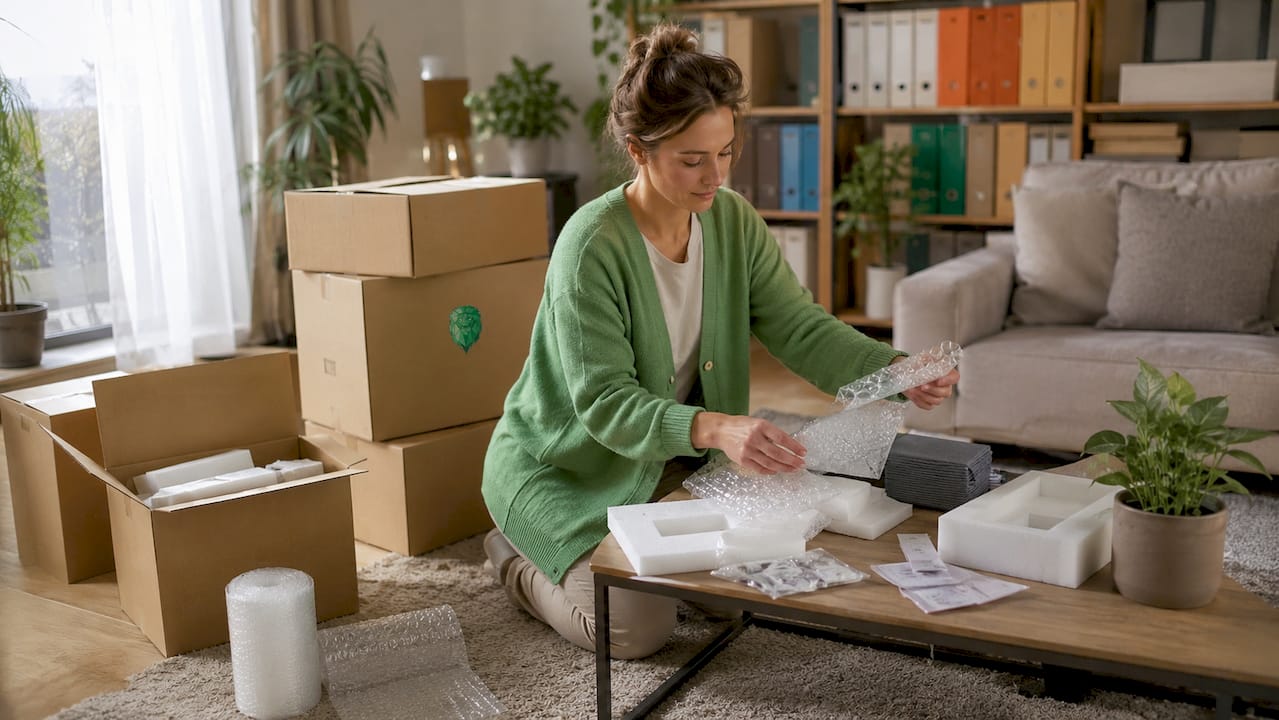
The right materials are the foundation of safe packing. Double-walled corrugated boxes with 2–4 inches of cushioning space are the professional standard for high-value items. Single-walled boxes compress under pressure and offer little protection against shock.
Your core packing kit should include:
- Double-walled corrugated boxes in multiple sizes
- High-density bubble wrap for wrapping individual items
- Foam inserts and moulded foam for items with irregular shapes
- Anti-static bubble wrap and silica gel packets for electronics
- Rigid inner boxes for small valuables such as jewellery and watches
- Corner guards and acid-free tissue paper for framed art and antiques
- Shrink wrap to bundle and protect flat surfaces
- Tamper-evident seals to flag any interference during transit
- 3-inch filament or reinforced sealing tape for outer boxes
The table below shows which materials suit which item types.
| Item type | Recommended materials |
|---|---|
| Electronics | Anti-static bubble wrap, foam inserts, silica gel |
| Jewellery and watches | Rigid inner box, anti-tarnish paper, tamper-evident seal |
| Framed art and mirrors | Corner guards, acid-free tissue, double-walled box |
| Antiques and ceramics | Moulded foam, crumpled kraft paper, bubble wrap |
| Musical instruments | Hard case, foam lining, outer corrugated box |
For specialist items like guitars, the packing requirements differ significantly from standard freight. The packing guide for instruments from MusicStreet covers the specific layering and case requirements for fragile stringed instruments.
Pro Tip: Never reuse old boxes for valuable shipments. Used boxes have weakened walls and compromised corners. Always use new double-walled stock.
How should you prepare valuable goods before packing part of how to pack valuable goods?
Preparation before you pack is just as important as the packing itself. Skipping this stage is one of the most common reasons valuables are damaged or insurance claims are rejected.
Follow these steps before a single item goes into a box:
- Categorise by fragility and value. Separate items into groups: electronics, jewellery, art, ceramics, and documents. Each group needs a different packing approach.
- Document everything with photographs. Photograph each item from multiple angles before packing. This creates a visual record for insurance purposes and dispute resolution.
- Obtain appraisals for high-value items. Jewellery, fine art, and antiques should have current written appraisals. Include appraisals and documentation inside the packaging alongside the item.
- Remove batteries from electronics. Removing batteries prevents leakage during transit. Seal battery compartments with tape and pack batteries separately in anti-static bags.
- Check carrier restrictions. Follow IATA and carrier hazardous materials rules. Non-compliance can void your insurance claim entirely.
- Plan your labelling strategy. Use non-descriptive or coded labels on outer boxes. Writing “Jewellery” or “Electronics” on a box is an open invitation to theft.
- Store documents separately but accessibly. Keep appraisals, receipts, and photos in a dedicated folder that travels with the shipment, not inside the packed box.
Pro Tip: Create a simple packing checklist with photos for each item. A packing standard operating procedure with photos and checklists reduces errors and improves claim success rates significantly.
Step-by-step: how to secure fragile items when packing
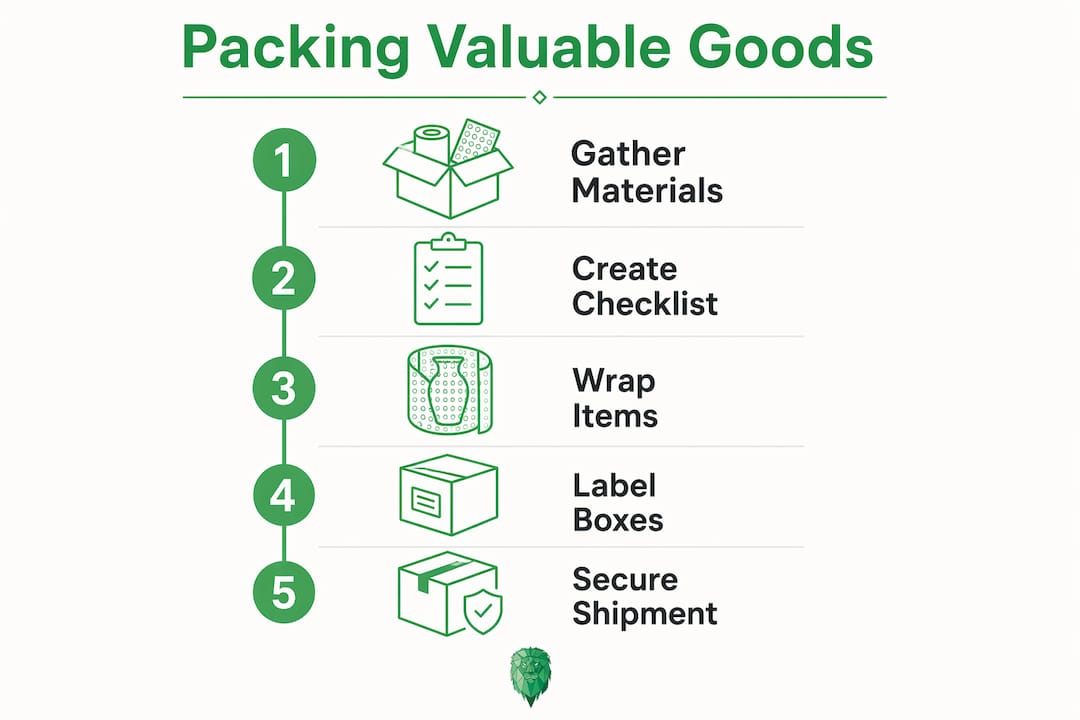
This is where technique matters most. The sequence you follow inside the box determines whether your item survives the journey.
Wrapping individual items part of how to pack valuable goods
Wrap each item individually before it goes near a box. For ceramics and glassware, use at least two full layers of bubble wrap and secure with tape. Plates travel best standing vertically, not flat, as vertical orientation distributes impact force more evenly. For framed artwork, apply corner guards first, then wrap in acid-free tissue, then bubble wrap.
Building the box correctly
- Line the bottom of the box with at least 2 inches of crumpled kraft paper or foam peanuts.
- Place the heaviest items at the bottom, lighter items on top.
- Use cardboard dividers between items to prevent contact.
- Fill every void with foam peanuts, crumpled kraft paper, or air pillows. Movement inside the box causes damage.
- Add a final 2-inch cushioning layer on top before closing.
- Seal the box with 3-inch filament tape along all seams, not just the centre line.
Packing by item category part of how to pack valuable goods
- Jewellery: Place each piece in a small rigid inner box with anti-tarnish paper. Nest that box inside a larger padded outer box. Apply a tamper-evident seal to the inner box.
- Electronics: Wrap in anti-static bubble wrap. Place silica gel packets inside to control moisture. Use the original manufacturer’s box if available, then place that inside a larger corrugated outer box.
- Art and antiques: Use moulded foam or custom foam inserts for irregular shapes. For packing art and antiques, a double-box method works well: pack the item in an inner box, then place that box inside a larger outer box with cushioning between the two.
Pro Tip: Shake the sealed box gently. If you hear or feel movement, open it and add more cushioning. A well-packed box makes no sound when shaken.
How do you ship and insure valuable goods securely?
Packing valuable items safely is only half the job. How you ship and insure them determines whether you recover losses if something goes wrong.
Key steps for secure shipping:
- Choose carriers with dedicated high-value services. Look for tracked, insured, and signature-required options. Timed deliveries and adult signature requirements significantly increase delivery security.
- Use in-person handoffs where possible. In-person handoffs with ID checks reduce the risk of loss at the point of receipt.
- Apply tamper-evident seals to outer boxes. These seals show immediately if a box has been opened during transit.
- Use discreet, non-descriptive labels. Descriptive external labelling invites theft. Use consignment codes instead of content descriptions.
- Review your insurance carefully. Standard carrier insurance often excludes “inherent vice” and caps payouts for high-value categories. Third-party insurance is recommended for collectibles, fine art, and jewellery.
Standard carrier policies rarely cover the full value of collectibles, fine art, or high-end electronics. Read the exclusions before you ship, not after a claim is rejected. A specialist third-party policy costs a fraction of the item’s value and covers scenarios that standard policies exclude entirely.
For personal travel with valuables, the Four-Layer Packing Approach recommends keeping electronics over £500 and passports in your personal carry-on item, never in checked luggage. Placing valuables in the centre of a bag, surrounded by clothing, adds both padding and concealment. Visible outer pockets with low-value items satisfy quick searches without exposing what matters.
What mistakes should you avoid when packing valuables?
Even experienced packers make errors that cost them dearly. These are the most common ones to watch for:
- Using single-walled boxes. They compress and fail under normal transit pressure. Always use double-walled corrugated stock.
- Leaving empty space inside boxes. Voids allow items to shift and collide. Fill every gap.
- Writing content descriptions on outer labels. Labels like “Fragile Glassware” or “Laptop Inside” attract theft. Use codes.
- Skipping documentation. No photos or appraisals means no credible insurance claim.
- Ignoring carrier hazardous material rules. Lithium batteries, aerosols, and certain chemicals have strict rules. Breaking them voids your claim.
- Packing valuables in checked luggage. Checked bags are handled roughly and are out of your sight. Keep valuables in your carry-on.
- Assuming standard insurance covers everything. Insurance policies often exclude inherent vice and limit payouts for high-value categories. Never assume. Always read the fine print.
- Skipping delivery verification. Arrange signature-required delivery and confirm the recipient’s identity for high-value shipments.
Pro Tip: Use internal consignment codes on your boxes rather than content descriptions. Maintaining anonymity during transit reduces theft risk far more effectively than padlocks or warning stickers.
For a broader look at how packaging choices affect the entire relocation process, the role of packaging in relocation guide from Van-247delivery covers material selection and layering in depth.
Key takeaways
Packing valuable goods safely requires the right materials, thorough documentation, discreet labelling, and specialist insurance to protect items from damage, theft, and failed claims.
| Point | Details |
|---|---|
| Use double-walled boxes | Single-walled boxes fail under transit pressure; always use corrugated double-walled stock with 2–4 inches of cushioning. |
| Document before you pack | Photograph every item and obtain appraisals; this is your evidence if an insurance claim is needed. |
| Label discreetly | Use consignment codes, not content descriptions, to reduce theft risk during transit. |
| Review insurance carefully | Standard carrier policies exclude many high-value categories; a third-party specialist policy fills the gaps. |
| Verify delivery | Use signature-required or in-person handoffs with ID checks for high-value shipments. |
Packing valuables: what 15 years of moves has taught me for how to pack valuable goods
The single biggest mistake I see, time and again, is people treating packing as an afterthought. They spend weeks researching the best carrier or the right insurance policy, then wrap a £2,000 piece of art in a single layer of bubble wrap and drop it into a supermarket box. The packing is where the protection actually happens.
What I have learned is that “conscious discretion” matters as much as physical protection. Neutral packaging, coded labels, and dressing down when travelling with valuables reduce theft risk better than any padlock. Overt security signals tell thieves exactly where to look. Anonymity does not.
The other shift I have noticed recently is the move towards recyclable and reusable packing materials. Moulded pulp inserts and corrugated foam alternatives are now good enough for most high-value shipments. They are not just better for the environment. They are often structurally superior to cheap foam peanuts that compress over time.
For ultra-high-value items, such as fine art, antiques, or bespoke furniture, no amount of DIY packing replaces a specialist transport service. The safe moving tips guide covers this well. Professional handlers use custom crating, climate-controlled vehicles, and trained staff who understand exactly how to move items that cannot be replaced.
— Claudiu
Trusted transport for your most valuable items
Knowing how to pack is one thing. Having a team you trust to handle the rest is another.
Van-247delivery has over 15 years of experience moving fragile, high-value, and irreplaceable items across the UK. From professional house removals with specialist handling for antiques and art, to pallet transport for valuable freight, every service includes tracking, insurance guidance, and a team that treats your belongings with care. If you need a flexible option for smaller loads, the man and van service covers sensitive and high-value items too. Get an instant quote and let Van-247delivery take the stress out of moving what matters most.
FAQ
What boxes should I use for packing valuable goods?
Use double-walled corrugated boxes with 2–4 inches of cushioning space around the item. Single-walled boxes compress under transit pressure and do not provide adequate protection.
How do I label boxes containing valuables?
Use non-descriptive or coded labels rather than content descriptions. Writing “Jewellery” or “Electronics” on a box invites theft during transit.
Does standard carrier insurance cover valuable items?
Standard carrier insurance often excludes inherent vice and caps payouts for high-value categories such as fine art and collectibles. A specialist third-party policy is recommended for full coverage.
Should I pack valuables in checked luggage when travelling?
No. Keep valuables in your carry-on personal item. Checked luggage is handled roughly and is out of your control, which significantly increases the risk of damage or theft.
What documents should I keep with a valuable shipment?
Include photographs of each item, written appraisals, and purchase receipts. Store these in a folder that travels with the shipment so they are available immediately if a claim is needed.