Long carry fees: a long carry fee covers the extra labour when your vehicle can’t park close to your door, measured from the back of the van to your entrance. The one thing to do before you book: ask the estimator to confirm the free-carry distance and any charges in writing. Under Gov, firms are expected to make costs like this clear from the outset, not sprung on you at the door.
TL;DR:
- Most long carry fees depend on the measured distance from the van’s rear doors to the entrance, often exceeding a default allowance of 10 to 25 meters.
- Charges are usually calculated per 10-meter band beyond the free allowance, with flat fees or hourly waiting charges also common, making written quotes with specified rates essential.
- Properties with long driveways, restricted parking, shared access, or bulky items are more prone to incurring long carry fees, particularly if multiple access issues apply.
- Preparing by measuring routes, photographing obstacles, and requesting parking permits in advance can significantly reduce or eliminate long carry costs.
- Always seek a written estimate that clearly states the free-carry distance, extra charges, and caps on waiting time to avoid unfair or hidden fees.
Table of Contents
- What a long carry fee is and how movers measure it
- How removal companies calculate long carry and related charges
- Access and property scenarios that commonly trigger long carry fees
- Typical UK cost shapes and worked pricing examples
- How to avoid, reduce or negotiate long carry and related fees
- What to check in quotes and contract terms: UK consumer rights and red flags
- A short worked example: checking and recalculating a disputed long carry fee
- Why trust this advice: practical experience from the removals industry
- How Van-247delivery handles carry and access issues
- A final word and checklist before you book
- FAQ
- Sources
What a long carry fee is and how movers measure it
Most removal firms measure the carry distance from the rear doors of the lorry or van to your front entrance, following the most practical walking route rather than a straight line. If there’s a gate, a flight of steps, or a shared hallway between the two, that distance counts too.
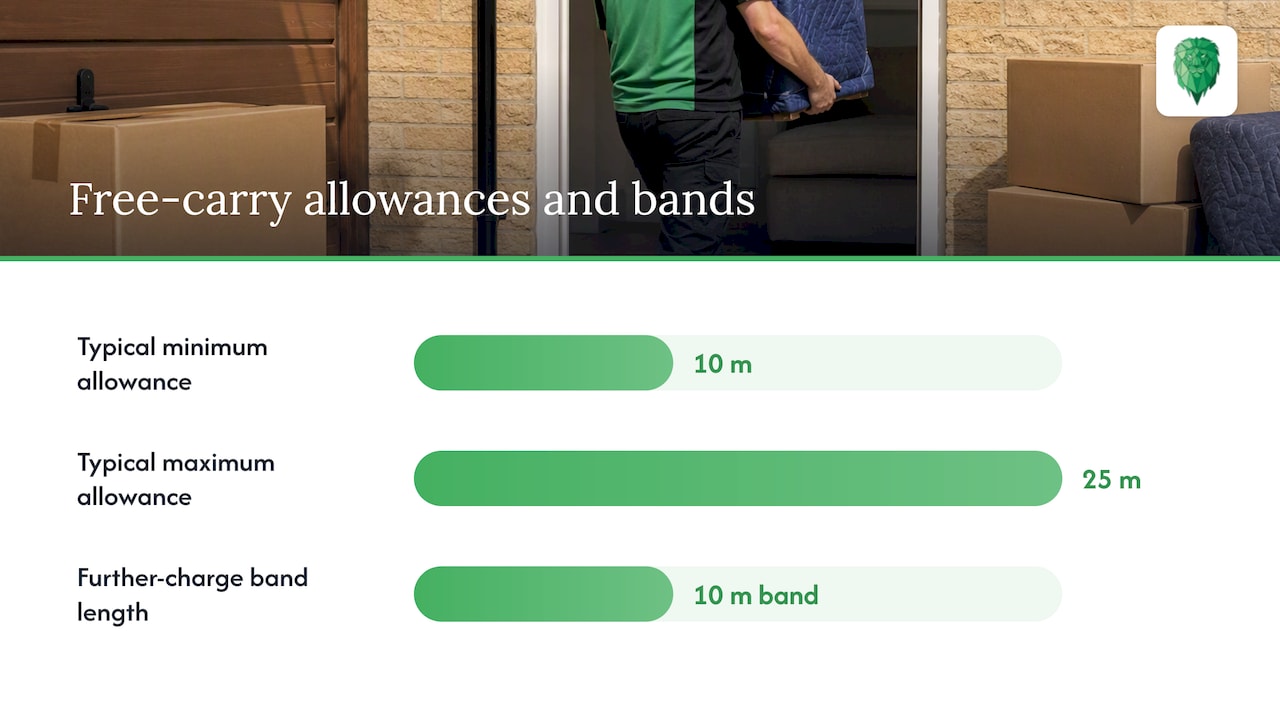
Every firm sets its own free-carry allowance, often somewhere between 10 and 25 metres, though this varies by company and isn’t fixed by any regulation. Anything beyond that allowance is where a long carry fee can start to apply, sometimes measured in bands of a further 10 metres at a time.
A few things can complicate the measurement on the day:
- Multiple stops on the same job (a storage unit en route, for example) may each carry their own free allowance and separate charges.
- Temporary obstructions, such as a delivery van parked outside your house, can push the carry distance up without warning.
- Shared or communal access, like a block of flats with one lift, can mean the carry is measured floor by floor rather than just in metres.
If your property has any of these quirks, it’s worth flagging them before the estimate, not after the van has arrived. A written note of the agreed distance protects both sides if there’s a dispute later, a point reinforced by moving-industry guidance on how long carries are typically assessed.
How removal companies calculate long carry and related charges, part of long carry fees
Pricing models vary across the industry, and spotting which one you’re being quoted matters more than the headline figure. Some firms charge per metre or in 10-metre steps beyond the free allowance; others apply a flat extra fee once you cross a threshold; some simply add it into an hourly crew rate.
According to industry documentation on long-carry charges, the three common structures are per-distance rates, flat fees, and per-item uplifts, often used in combination depending on the job.
Keep an eye out for how these charges bundle together on a quote:
- Stair carries are frequently priced separately from long carries, even though both add time and effort.
- Waiting time, often billed hourly per crew member, can apply if access problems delay to unload.
- Dismantling and reassembly of furniture is sometimes included, sometimes billed as an add-on, depending on the firm.
The clearest sign of a fair quote is specificity. A firm that tells you “£15 per 10 metres beyond 20 metres, confirmed on arrival” is giving you something you can check. A quote that says “long carry charges may apply” with no numbers attached is the one to question before you sign anything, particularly if there are pre-ticked extras you didn’t ask for. Our guide to understanding moving quotes breaks down what a transparent, line-by-line UK quote should include.
Access and property scenarios that commonly trigger long carry fees
Some properties are far more likely to attract a long carry charge than others, and knowing which category yours falls into helps you prepare rather than get caught out.
- Flats without kerbside parking near the entrance, especially where visitor parking is restricted or a permit system is in place.
- Houses with long driveways, winding garden paths, or a front door set well back from the road.
- Blocks with stair-only access or a lift too small for wardrobes and sofas, which forces a longer manual carry.
- City centre streets with loading bay restrictions, resident parking zones, or roadworks that push the van further away than usual.
- Bulky or awkward items such as pianos, large sofas, or wardrobes that take longer to carry even over a short distance, effectively increasing the labour cost.
If more than one of these applies to your move, mention it at the estimate stage rather than waiting for moving day. Our apartment access guide covers the specific problems flats tend to raise, and the broader difficult access planning guide is worth a read if your property ticks several of these boxes.
Typical UK cost shapes and worked pricing examples, part of long carry fees
Long carry charges in the UK tend to follow one of three shapes: a flat band fee once you pass the free allowance, a per-10-metre step rate, or an hourly waiting charge billed per crew member. None of these figures are fixed industry-wide, so a written quote always beats a general average.
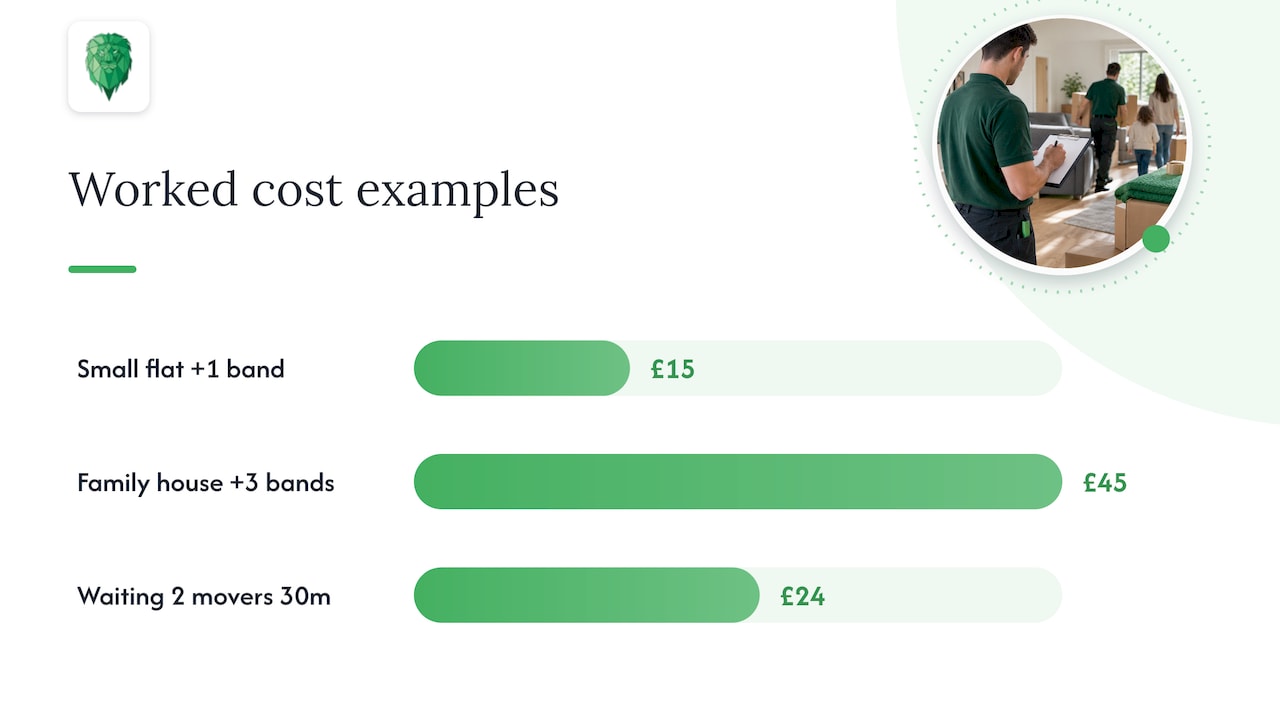
To make this concrete, here are three illustrative examples using typical charge structures (these are worked examples only, not published rates):
Say a small flat has a free-carry allowance of 20 metres and the actual carry is 25 metres. At a rate of £15 per 10 metres beyond the allowance, that’s one extra band, so £15 added to the quote.
Say a family house has a long front path bringing the total carry to 45 metres against the same 20-metre allowance. That’s 25 metres over, rounding up to three bands of 10 metres, so £45 added.
Say an apartment move hits a parking restriction that pushes the van 60 metres from the entrance, well beyond the allowance, and the crew also waits 30 minutes for a lift. Waiting time at Van-247delivery is charged at £24 per hour, per crew member, so half an hour for two movers adds £24, on top of whatever long-carry band applies.
These numbers move around depending on the firm, the region, and the day of the week, which is exactly why a written quote matters more than any rule of thumb you find online.
How to avoid, reduce or negotiate long carry and related fees, part of long carry fees
A bit of preparation before moving day can shrink or remove a long carry charge entirely, and most of it costs nothing but time.
Start with what you can check yourself before the estimator even arrives:
- Measure the likely carry distance from where a van would realistically park to your front door.
- Take photographs of the route, including any steps, narrow gates or shared hallways.
- Flag parking restrictions, permit zones or loading bay rules to the estimator in advance.
On the operational side, a few small fixes often make a bigger difference than people expect. Applying for a temporary parking suspension or loading bay permit from your local council, where available, can bring the van right to your door and remove the long carry altogether. Clearing pathways of bins, bikes or garden furniture the night before saves the crew time, which can keep you under any waiting-time threshold.
Pro Tip: Ask the firm to put a cap on the long carry charge in writing before moving day, so even if access turns out worse than expected, you know the maximum you’ll pay.
When it comes to negotiating, you have more room than you might think. You can offer to carry smaller, lighter items yourself to reduce the crew’s workload. You can ask for a capped waiting time built into the quote rather than an open-ended hourly rate. Some firms will also agree to staged payments or a capped on-the-day variation, so a longer carry than expected doesn’t turn into an unlimited bill. None of this is unreasonable to ask for, and a firm that’s confident in its pricing shouldn’t hesitate to put the agreement in writing.
What to check in quotes and contract terms: UK consumer rights and red flags, part of long carry fees
A written quote isn’t just good practice, it’s what UK guidance expects from a fair contract. Under the Consumer Contracts Regulations guidance, firms must show how any additional payment will be calculated when they can’t confirm a firm price upfront, and pre-ticked extras you didn’t actively choose aren’t allowed.
Before you sign anything, check for these points specifically:
- The exact free-carry distance and the formula used for charges beyond it, not just a vague mention that extras “may apply”.
- Cancellation and booking fee terms that reflect a genuine pre-estimate of loss rather than a flat, disproportionate charge, a test explained in practical guidance on deposits versus booking fees.
- Whether waiting time, stair charges and dismantling are itemised separately or buried in a single “additional services” line.
Regulatory guidance is clear that disproportionate or hidden fees can be treated as unfair and are subject to enforcement by Trading Standards, under the transparency requirements set out by GOV.UK. If a firm won’t put its carry terms in writing, or a clause feels designed to catch you out, your first calls should be to Citizens Advice for guidance, Trading Standards if the terms look unfair, and the small claims process if a dispute over an unreasonable charge can’t be resolved directly with the company.
A short worked example: checking and recalculating a disputed long carry fees
Say your quote states a free-carry allowance of 20 metres, but on moving day the firm charges for a 50-metre carry at £15 per 10 metres, adding £45 to your bill.
- Measure the actual route yourself, door to van, using a tape measure or a mapping app, and compare it against the firm’s figure.
- If your measurement comes to 35 metres rather than 50, recalculate the charge: 15 metres over the allowance rounds up to two bands, so £30 rather than £45.
- Present the recalculation to the company with your measurement and photos, and ask for the invoice to be corrected.
- If they won’t adjust it, request a written explanation of how they reached their figure, which they should be able to provide under fair contract expectations.
A fair outcome is either a corrected invoice or a clear, documented justification for the original one, not a flat refusal to discuss it.
Why trust this advice: practical experience from the removals industry, part of long carry fees
A removal company with over 15 years of experience typically covers house removals, man and van work, office relocations, packing, storage and specialist handling for pianos and large furniture. That range means dealing with long carries, stair charges and waiting-time questions is a routine part of quoting a job, not an edge case.
On-site estimates typically record the carry distance, note any access restrictions. And set out waiting-time policies before a booking is confirmed, which is the same written-confirmation approach this guide recommends. The aim is a quote you can check against what actually happens on the day, rather than one that leaves room for surprises.
How Van-247delivery handles carry and access issues
If measuring driveways and chasing parking permits sounds like more hassle than you want. Van-247delivery can take that off your plate. We quote long carry distances and any related charges in writing before the job starts. So you know exactly what you’re agreeing to, whether you’re booking a full house removal, a man and van job for a smaller move. Or help with large and awkward items like pianos and wardrobes.

When you request a quote, ask us to confirm three things: the free-carry distance for your property. Any cap on waiting-time charges, and the insurance cover included for your move. We’ll set all of it out clearly so you can compare it against any other quote you’ve had.
Get a free quote from Van-247delivery and move with a written carry allowance in hand, not a guess.
A final word and checklist before you book
The most common billing surprise isn’t the quote itself, it’s what’s missing from it: an undefined carry allowance. An open-ended waiting rate, or a cancellation clause with no real logic behind the number. Sort those three out before moving day and most long carry disputes simply don’t happen.
Before you confirm any booking, ask the estimator: what’s the free-carry distance for my property. How is any extra charged, and is there a cap on waiting time? Get the answers in writing. If a firm won’t give you that, UK consumer-rights guidance gives you somewhere to turn, starting with Citizens Advice.
— Claudiu
This article is general information, not a substitute for advice from a qualified financial advisor. Consult a qualified financial professional about your own circumstances before acting on anything here.
FAQ
Is it cheaper to move your furniture or buy new?
It depends on the age, condition and size of your furniture against the cost of moving it. Including any long carry or stair charges that might apply. For large, well-maintained items, moving usually works out cheaper than replacing them. But it’s worth weighing removal costs against replacement prices item by item before deciding.
What is the average cost of house removal in the UK?
Removal costs vary widely depending on property size, distance, access and the extras you need. Such as packing or storage, so there’s no single average figure that applies across the board. The most reliable way to know your cost is a written. Itemised quote from a removal firm based on your specific property and move.
What do house removals not take?
Most removal firms won’t transport hazardous materials, flammable liquids, gas canisters or certain perishable and living items. Though exact restrictions vary by company. It’s worth checking your firm’s terms directly since these exclusions are usually listed in the booking. Or contract documents rather than being set by a single UK-wide rule.
Is it cheaper to hire a van or a man with a van?
Self-hire van rental can look cheaper upfront. But it leaves you doing all the lifting, carrying and driving yourself, with no cover if something’s damaged. A man and van service costs more than rental alone. But includes labour and typically insurance. Which often closes the price gap once you factor in your own time and effort.
Sources
- Gov
- Consumer contracts (information, cancellation and additional payments) regulations implementing guidance
- Deposits vs booking fees: what can you keep?