Move day timing estimate: most local UK household moves vary in duration, depending on loading, driving and unloading. The crew may arrive early in the morning. The range is wide because property size, parking and access, how much is packed, the distance and any delay in key release all push it up or down. Below you will find an hour-by-hour timeline, size-based estimates and a checklist.
TL;DR:
- Local transit often takes under an hour, while loading and unloading depend on home size, access, parking, and whether furniture needs reassembly.
- One four bedroom move was loaded by about 11:30 a.m., yet delayed completion kept the crew waiting until afternoon for key release.
- Standard estimates cover loading, a local drive, and unloading, but not long journeys, return trips for leftover items, or storage stops.
- The provider charges £24 per hour per worker for waiting, so check the contract and agree what happens if key release runs late.
- If driving, loading, and unloading may consume most of the day, book extra time and lodging rather than risk an unplanned second day.
Table of Contents
- What does a moving day look like hour by hour?
- How long does a move take for your size of home?
- What makes moving day longer or shorter?
- How do you plan moving day to hit the estimate?
- Why do completion and key release delay moving day?
- How long do long-distance and multi-load moves take?
- A publisher’s view: why timing is won before the van arrives
- Book a removals service that works to your timing
- FAQ
- Sources
What does a moving day look like hour by hour? Part of move day timing estimate
Think of moving day as a marathon, not a sprint. The crew works steadily, but the clock is rarely lost on the heavy lifting. It is lost in the gaps: waiting for keys, hunting for a parking space, or finishing the last box that was meant to be packed the night before.
A customer account on a MoneySavingExpert forum thread gives a realistic picture. The removal team arrived before 8am, the four-bedroom house was loaded by late morning, and then completion and key release pushed the final sign-off into the afternoon. It is one person’s account, not a rule, but it matches what our own crews see: the physical move is the predictable part, the paperwork is not.
Here is how a typical local move unfolds:
- Crew arrival. Crews leave the depot early and arrive according to their route. Agree an arrival window the day before so you are not guessing.
- Walk-through and briefing. Show the team what goes, what stays, what is fragile and where the van can park. A clear brief at the start saves questions all day.
- Protection and dismantling. Furniture is pad-wrapped, floors and door frames are protected, and beds, wardrobes and tables are taken apart.
- Loading. Heavy items usually go in first, boxes fill the gaps, and the last things in are the first things you will need at the other end.
- Transit. Drivers build in time for traffic, a lunch break and rest stops.
- Unloading and placement. Items go into the right rooms, furniture is reassembled and you check things off against your plan.
- Sign-off. You walk through, confirm nothing is left behind and agree the job is done.
Quick timings you can scan
Treat these as planning bands, not promises. They shift with the factors we cover below.
- Loading: the time needed depends on the size of the job and the home.
- Local transit: often under an hour, but allow a buffer for traffic and a break.
- Unloading and reassembly: usually a little shorter than loading, unless furniture needs rebuilding.
- Sign-off: it can be brief if you are ready, or take longer if you are still hunting for keys.
Customers on Trustpilot reviews of UK removal providers describe much the same pattern: crews turning up early, loading running through the morning, and the occasional comment about waiting around when completion drags.
Pro Tip: Ask your solicitor or agent for a realistic completion time the day before, and tell the crew lead the same evening, so nobody is standing in a van waiting for a phone call.
The takeaway for this part of the day: the work itself follows a rhythm, and your job is to keep the rhythm unbroken. Every gap you remove from the morning is an hour you do not pay for and do not lose from the evening.
How long does a move take for your size of home? Part of move day timing estimate
Home size is the biggest single driver of your timing. More rooms mean more furniture, more boxes, more trips up and down the stairs. These estimates reflect typical UK local moves. Your own figures will depend on access and how much you own, so use them as a starting point when you compare quotes.
- Studio or one-bed flat: the duration depends on the volume of belongings and access. Smaller volumes often fit in one van load with a small crew.
- Two-bed home: usually a bit longer than a one-bed, depending on how much furniture and how many boxes you have.
- Three-bed home: the duration depends on the volume of belongings and access. This is where the day starts to stretch into the afternoon if anything goes wrong.
- Four-bed or larger: the move may take longer, depending on the volume of belongings and access. A four-bed in the forum account above was loaded by late morning, with transit, unloading and key release still to follow.
What the estimate includes, Part of move day timing estimate
A size-based estimate normally covers loading, a local drive and unloading. It does not usually cover a long-distance journey that needs a second day, a second trip back for leftover items or a storage drop-off in the middle. Ask your removals company exactly what the quoted hours include before you rely on them.
When you need extra hands or a second vehicle, Part of move day timing estimate
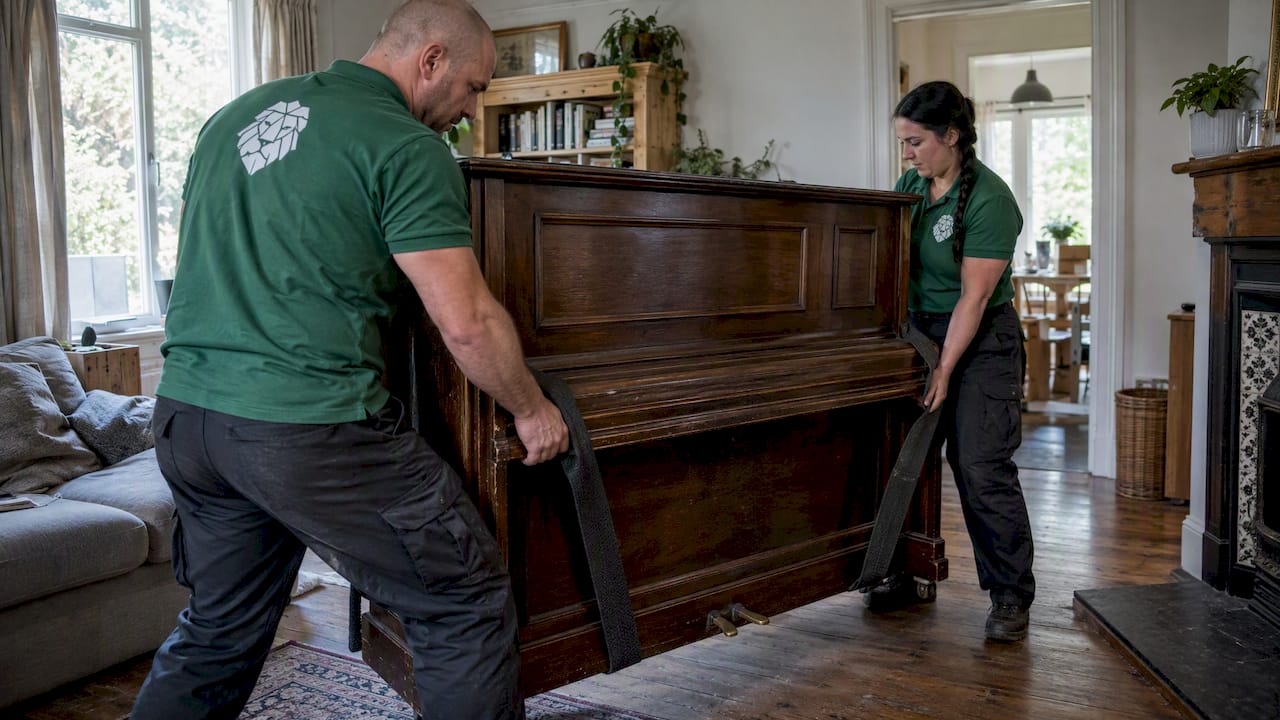
Bigger homes often call for a larger crew, a second vehicle or both. A larger home, an unusually full loft or garage, or something heavy like a piano may change the crew or the vehicle. Adding people tends to shorten the day rather than lengthen it, which is why the cheapest quote is not always the quickest or even the cheapest in the end. If you are unsure, tell us what you have and we will say honestly how many people the job needs, and you can see how we handle large furniture and awkward items.
What makes moving day longer or shorter? Part of move day timing estimate
No two moves are the same, and the same house can take very different times on different days. These are the levers that matter most, and most of them are in your hands.
- Access and parking. A van that cannot park near the door means carrying everything further. Narrow streets, restricted parking, parking permits, long walks from van to door and flights of stairs all add time to both ends of the move.
- Packing completeness. Boxes that are taped, labelled and stacked by room load faster than loose items that need wrapping on the day. Starting to pack well ahead is a common planning rule of thumb, with daily essentials left until last.
- Large or awkward items. Wardrobes, sofas that will not turn a corner and pianos take longer to protect, move and place. They sometimes need specialist handling, which is why we run a dedicated piano removal service.
- Distance and multiple stops. A local move is one loop. Longer journeys, extra collection points or a storage stop add driving time and often a second leg.
- Key release and completion. This is the wild card. Even a perfectly efficient crew cannot unload into a home you cannot yet enter.
A forum account worth remembering: in a MoneySavingExpert thread, a four-bedroom house was loaded by about 11:30am, yet the move still ran into the afternoon because completion was delayed. The truck was ready hours before the keys were.
Pre-packed rooms usually save the most time. A bedroom with its clothes boxed and its drawers emptied can be cleared far faster than one where the crew is still sorting out what belongs in which bag. If you can only do one thing early, pack the rooms you use least first and be ruthless about clearing the loft and garage.
How do you plan moving day to hit the estimate? Part of move day timing estimate
A good plan costs you an evening and saves you a few hours. Work through this day-before and day-of checklist, and you will be among the customers whose moves run to time.
The day before
- Confirm parking and permits. If the van needs a space or a suspended bay, sort it now. Tell neighbours if the road is narrow.
- Label every box by room. Put the label on the side, not the top, so it can be read when stacked.
- Set aside your essentials. Pack a bag with kettle, mugs, tea, chargers, medication, important documents, toiletries and a change of clothes.
- Confirm the arrival window and expected finish with your removals company, and ask how waiting time is charged if completion is late.
- Write a one-page brief for the crew. List what goes, what stays, which items are fragile and where each room’s boxes should be placed.
On the morning
- Appoint one person as the crew’s point of contact. Everyone asking different questions slows things down.
- Keep valuables and essentials with you, not on the van.
- Hand over any special instructions at the walk-through, such as items that must stay upright or furniture that must be dismantled.
- Clear the routes. Prop doors, move cars and clear the hallway so the crew has a straight run in and out.
If the keys are delayed, Part of move day timing estimate
Know who to call and in what order: your solicitor, the agent and then the other party. Agree a temporary meeting point with the crew lead, and ask a friend to collect the keys so you can stay with the van. Check the waiting-time terms in your booking before the day, not during it. Our own waiting rate is £24 per hour per man, which you can see on our main page.

Pro Tip: Load by room and unload by room. If the crew places boxes in the right rooms the first time, you will spend the evening unpacking rather than moving boxes around.
For a fuller preparation schedule from eight weeks out, see our guide to how to move house in the UK.
Why do completion and key release delay moving day? Part of move day timing estimate
Completions tend to cluster around late morning and early afternoon, because funds have to move between several solicitors and banks before keys can be released. That is why a crew can be ready at 11am and still wait. The same forum account has the team done loading by around 11:30am while keys and completion came later in the afternoon, and customer comments on Trustpilot also mention waits tied to completion.
Practical ways to protect your day:
- Send a friend to collect the keys, so you can stay with the van and the crew.
- Agree with your removals company in advance who will wait, for how long and what happens if completion slips beyond that point.
- Add a buffer when booking. Allow some extra time for a solicitor or agent delay rather than assuming the morning will go to plan.
- Ask your solicitor for a realistic completion time and pass it on to the crew lead.
Our guide to removal day paperwork covers which documents to have in hand and who should hold them.
How long do long-distance and multi-load moves take? Part of move day timing estimate
Not every move fits into one day. Long-distance journeys may need an overnight stop, because journey length and the need to return for another load can extend the move. A realistic estimate for these moves should come from the crew, not from a rule of thumb.
Signals at the quoting stage that your move may run beyond one day:
- The distance is long enough that the drive alone fills much of the day.
- Your belongings need more than one van load, or there is a mid-route stop for storage.
- Loading and unloading happen far apart, with a gap in between.
- Completion on the sale and the purchase are on different days.
A good marker for deciding whether to book two days: if the driving plus loading plus unloading looks likely to take most of the day, consider booking extra time and plan for somewhere to stay. It is cheaper to book two days on purpose than to run out of daylight and pay for an unplanned second one.
A publisher’s view: why timing is won before the van arrives. Part of move day timing estimate
Overruns almost never come from the lifting. They come from the things nobody checked: a parking space that does not exist, boxes that were meant to be sealed, a completion call that came late. Through our experience in removals, we have learned that a move which runs to time is usually a move that was planned well, not one that was lucky.
We run house removals, packing, piano transport, man and van jobs and storage across the UK, and insured transport plus optional packing and disassembly take much of the day’s risk off your shoulders. My advice: if you have a big house, a piano or a tight completion window, book extra crew or a specialist vehicle early. Paying for more hands is almost always cheaper than paying for more hours.
— Claudiu
Book a removals service that works to your timing

When the day matters, the surest way to protect it is to hand the heavy work to a crew. Our house removals service covers packing, insured transport and unpacking, and we agree an arrival window with you in advance. Before you confirm, check these points:
- The arrival window and the expected finish time.
- Waiting rates, so a late completion has no surprises.
- Which packing services you need, from a few fragile items to the whole house.
Request an instant quote or contact us through the house removals page, and we will give you an estimate for your own move.
FAQ
What is the typical timeline for moving house in the UK?
A local move can take much of the day. The crew may arrive early, and a larger home may still be loading late in the morning. Preparation takes far longer: starting to pack well ahead is a common rule of thumb. Long-distance moves may take longer, depending on the journey and the logistics.
Do I have a right to leave for moving day in the UK?
There is no general statutory right to time off for moving house, so it depends on your employer and your contract. Check your contract or staff handbook, and ask early for annual leave or an arrangement. For a definitive answer, check the government’s guidance on employment rights.
Is 2026 a good time to move house in the UK?
Timing depends more on your own circumstances than on the year, so there is no single answer. Moves differ widely in cost and timing depending on distance, access and time of year. Book early for busy periods such as the end of the month and school holidays.
What should I expect on moving day in the UK?
Expect an early crew arrival, a walk-through, loading, a drive, unloading and a final sign-off. Key release can add waiting time, so keep your phone on and someone available to collect the keys.
Sources