Removal day paperwork: have your ID, completion statement or tenancy agreement, moving contract, inventory list, insurance papers and a solicitor’s contact number all in one place before removal day starts. The single best thing you can do is build one moving binder, physical or encrypted digital folder, that holds every document you’ll need. Keep meter readings and address notifications top of your list for the day itself, and the rest of the process becomes far easier to manage.
TL;DR:
- Having a dedicated moving binder or digital folder simplifies access to essential documents like IDs, contracts, inventory, and insurance details on moving day.
- Final meter readings should be taken at both properties with photos, then sent to utility providers immediately to avoid billing disputes or inheriting debts.
- Key documents should be carried personally in a secure, labeled bag, while backup copies and important papers should be packed in a clearly marked, waterproof box in the van.
- Notify solicitor, lender, and removals company before moving, and report meter readings, utility discontinuations, and redirect mail on the actual moving day.
- Scheduling removals for the afternoon after exchange prevents delays, with flexible timing and clear communication helping to minimize stress and extra charges.
Table of Contents
- Moving day paperwork checklist: what to have ready
- What to carry with you versus what goes in the van
- Who to notify and when: timing for UK organisations
- Taking time off work for moving day
- Final meter readings and photographic proof
- Building your moving binder and digital backup
- Timing removals around completion day
- Post-move paperwork: the first week and beyond
- Why a paperwork system is the real stress-reliever
- How Van-247delivery supports your removal day paperwork
- Official guidance and forms worth saving
- Sources
- FAQ
Moving day paperwork checklist: what to have ready
Removal day runs smoother when every document has a home and a purpose. Before the van arrives, gather this lot:
- Passport or driving licence, for identity checks with agents or removal staff
- Completion statement (buying) or tenancy agreement (renting)
- Your signed contract with the removals company
- A full inventory or checklist of items being moved
- Contents insurance policy details, including the transit cover section
- Emergency contact list: solicitor, estate agent, removals coordinator, new neighbours if known
On the day itself, a few tasks matter more than they might seem:
- Take final meter readings at both properties, with photos as backup
- Confirm the key handover time with your solicitor or agent
- Check the inventory against what’s actually loaded onto the van
- Confirm your insurance covers your belongings while in transit, not just once they’re unloaded
Pack the paperwork itself with the same care you’d give a fragile vase. Use a labelled folder or a waterproof document sleeve, the kind you’d use for a passport on holiday — and consider how a van remap benefits for diesel vans: the honest guide can improve vehicle reliability during your move. It’s worth keeping one set of copies with you and a duplicate set in the van, so a hold-up with one doesn’t leave you stranded without proof of anything.
What to carry with you versus what goes in the van, part of removal day paperwork
Some documents need to stay within arm’s reach all day. Others can safely travel with the removals crew.
Keep these on your person:
- ID and phone, so you can be reached and verified at any point
- Paper copies of your completion statement or tenancy agreement
- House keys for both properties
- Your contact list for solicitor, agent and removals company
- Any medications or items you’d need urgently, moving day or not
Let the van carry:
- A clearly labelled “important documents” box with backup copies of everything
- The signed inventory list
- A sealed envelope containing solicitor or estate agent paperwork you won’t need until later in the day
Pro Tip: Photograph every key document on your phone before the day starts. If anything goes missing in the shuffle, you’ve still got proof of what it said.
A locked bag for anything carried on your person adds a layer of security, and it’s worth never leaving originals unattended in a parked vehicle, even for a few minutes.
Who to notify and when: timing for UK organisations, part of removal day paperwork
Not everyone needs to hear from you on moving day itself. Some notifications are urgent, others can wait a week without causing problems. Official guidance from nidirect actually recommends waiting until contracts have exchanged before notifying many organisations, so your sale or purchase doesn’t get complicated if something falls through at the last minute.
Here’s a sensible order:
- Before moving day: solicitor, mortgage lender, removals company and, if renting, your letting agent or landlord. These conversations should already be locked in by the time the van turns up.
- On moving day: take your final meter readings and send them to your suppliers the same day. Tell your utility providers you’re moving out, and start your Royal Mail redirection request. It’s worth knowing this can take up to ten days to activate, so don’t leave it until the morning you move.
- Within the first week: update your bank, car insurer and DVLA, register with a GP surgery in your new area, and sort out your council tax account. Benefits claims, if relevant, need updating too.
Our guide to change of address tasks runs through this in more depth if you want a fuller rundown once the dust settles.
Taking time off work for moving day, part of removal day paperwork
There’s no automatic right to a paid day off for moving house in the UK. If you need the day free, you’ll either use annual leave or ask your employer for unpaid leave. According to Acas, employers must give at least twice as much notice as the amount of holiday they’re requiring staff to take, which cuts both ways when you’re the one requesting it.
- Ask early: give your employer as much notice as possible
- Mention flexible working if moving disrupts your regular pattern long-term, since you have the right to request this from day one of employment
- Have a backup plan ready, such as working from home that day, in case your holiday request is refused
Final meter readings and photographic proof, part of removal day paperwork
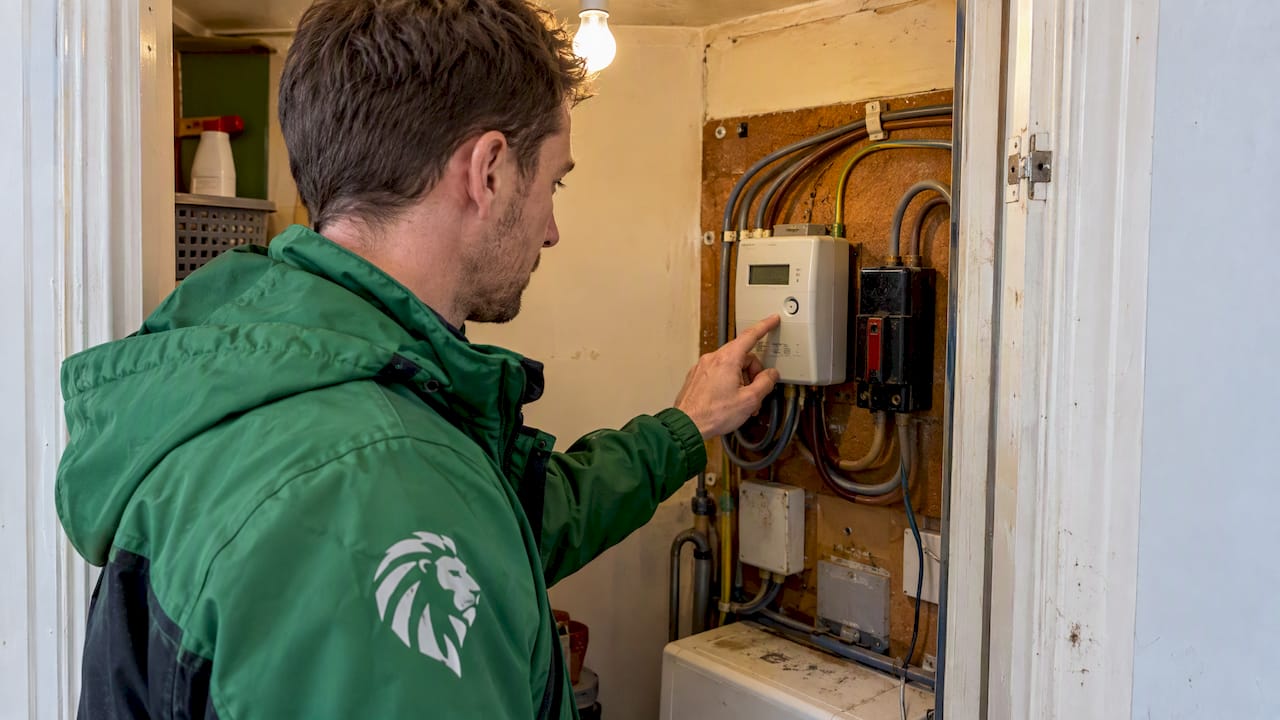
This is one of those small tasks that prevents a genuinely annoying dispute later. Take a reading from every meter at both properties, old and new, and photograph each one clearly, ideally with your phone’s date stamp visible.
- Photograph gas, electricity and water meters at both addresses
- Send the readings to your suppliers the same day, by email or their online form
- Keep the confirmation you receive back, whether that’s an email receipt or a screenshot
One fact worth flagging: council moving guidance specifically recommends taking these readings and contacting your providers promptly to avoid billing confusion between you and the next occupant.
If your old or new home has a prepayment meter, notify the supplier directly. This matters more than it sounds: without that call, you risk inheriting a previous tenant’s outstanding debt on the meter.
Building your moving binder and digital backup, part of removal day paperwork
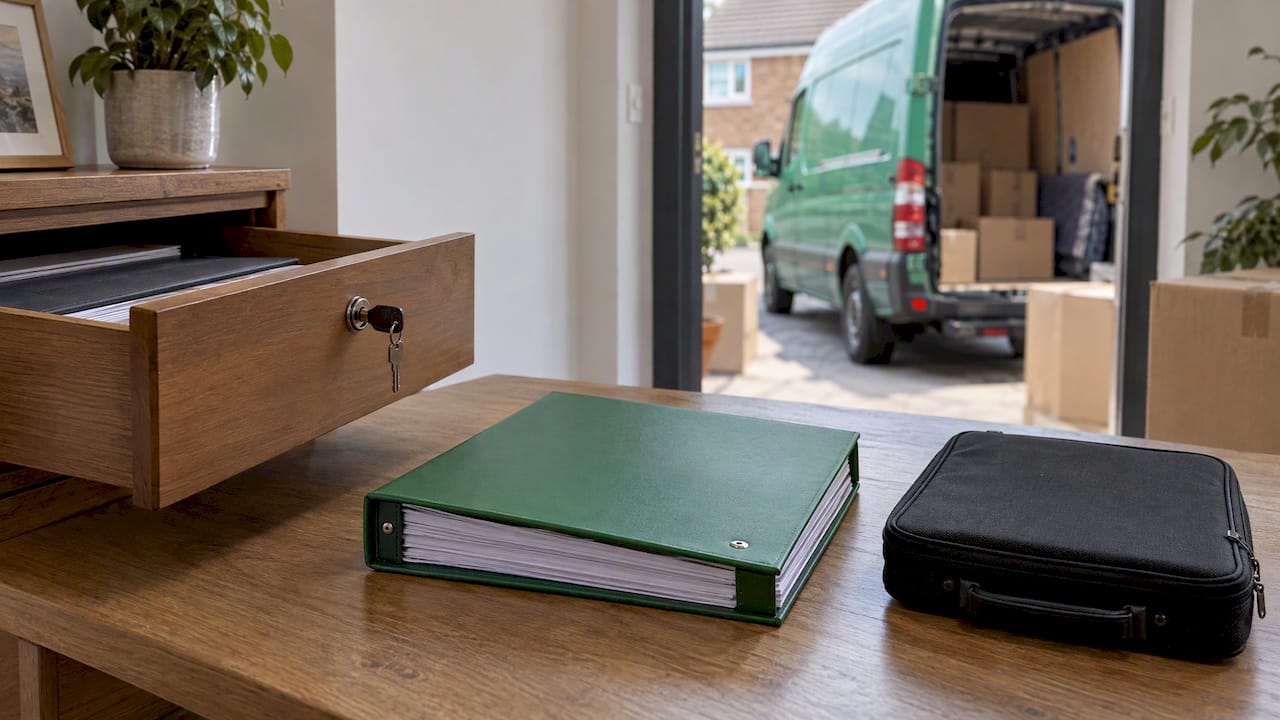
A moving binder sounds old-fashioned, but it’s still the most reliable tool going. Structure it with clear tabs:
- Contracts (removals, tenancy or completion)
- Insurance policies
- Utilities and meter readings
- Inventories
- Receipts
- Key contacts
Back everything up digitally too. Scan each document to a cloud folder and use a consistent naming pattern, something like “Completion statement_20260312”, so anything is easy to find later. Share access with your partner or solicitor if they might need a document while you’re mid-move.
Pro Tip: Password-protect anything containing financial details, and keep your originals somewhere secure rather than loose in a bag. A copy in the van and a copy with you means you’re never caught out either way.
Timing removals around completion day
Getting the timing right on completion day avoids most of the stress that gives moving its bad reputation. Conveyancing practitioners generally advise booking removals for the afternoon, since keys are rarely released first thing in the morning. Set a realistic arrival window with your removals company rather than an exact time, and build in some flexibility either side.
- Agree a waiting arrangement in writing before the day, covering how much free waiting time is included and what extra charges apply beyond that
- Pre-label heavy or awkward items so the crew knows what needs extra care or a second pair of hands
- Keep a disassembled furniture list so nothing gets left half-built at either end
- Pack a “priority box” with items you’ll need the moment you’re through the door: kettle, chargers, toiletries, a change of clothes
Solicitors also point to insurance timing here: have buildings cover in place from exchange, and contents cover running from completion, so there’s no gap where your belongings aren’t protected.
Post-move paperwork: the first week and beyond, part of removal day paperwork
The paperwork doesn’t stop once the van’s unloaded. A little order now saves missed bills or fines later.
- First 48 hours: confirm your utilities are registered in your name, set up or notify the council for council tax, and check your Royal Mail redirection has actually kicked in
- First week: update your bank and insurers with your new address, notify DVLA for your driving licence and the V5C for any vehicle, and register with a local GP if you’ve moved areas
- Ongoing: check the billing addresses on your subscriptions and keep hold of receipts in case anything gets disputed later
Our packing checklist is a useful companion here if you’re still working through boxes while sorting admin.
Why a paperwork system is the real stress-reliever
Most moving day panic comes from a missing document, not a missing box. A binder plus a few photographs on your phone solves nearly every version of that problem before it starts.
One tip we’d add from experience: brief your removals crew on which boxes hold paperwork and which items are fragile before loading begins, not halfway through.
— Claudiu
How Van-247delivery supports your removal day paperwork
Sorting your own paperwork system is half the job. The other half is having a removals team that works around your schedule rather than the other way round. This company has been providing household and office moves across the UK with insured transport and flexible booking options.
When you book, tell us your completion time, any fragile or oversized items, and whether you need packing, storage or assembly handled alongside the move itself.
- House removals with insured transport
- Packing, unpacking and furniture assembly or disassembly
- Storage if there’s a gap between moving out and moving in
- Man and van for smaller jobs or single large items
| Service | What it covers |
|---|---|
| House Removals | Full household move with insured transport |
| Packing | Professional packing before moving day |
| Storage service | Short or longer-term storage between moves |
| Man and Van | Flexible option for smaller loads |
Getting an instant quote for your house removal takes a few minutes, and you’ll know your booking window well before completion day arrives.
Official guidance and forms worth saving
Bookmark nidirect’s moving home guidance and Acas’s holiday rules for your folder, along with your local council’s moving checklist.
Sources
- Asking for and taking holiday – Holiday entitlement – Acas
- Moving to your new home | nidirect
- Completion Day Checklist – JMW Solicitors
- Moving house to do list – Dorset Council
FAQ
Am I entitled to a moving day off work?
No, there’s no automatic right to a paid day off for moving house in the UK. You’ll need to use annual leave or ask your employer for unpaid leave, following the notice rules Acas sets out.
What should I include on my moving day checklist?
Your checklist should cover ID, your completion statement or tenancy agreement, your removals contract, an inventory list, insurance details and emergency contacts. Add meter readings and photographic proof of both properties, along with a Royal Mail redirection request started early since it can take up to ten days to activate.
How does moving day typically work in the UK?
Completion usually happens earlier in the day, with keys released once funds have cleared, which is why removals are often scheduled for the afternoon. Practitioners recommend having buildings insurance active from exchange and contents cover running from completion itself.
Do you get a day off for moving house in the UK?
There’s no statutory entitlement to paid leave specifically for moving house. You’ll need to arrange annual leave or unpaid time off with your employer in advance, giving appropriate notice under the rules Acas outlines.