Office decommissioning is the job of emptying and clearing a workspace you are leaving: furniture out, IT disconnected and wiped, waste handled legally, and the space handed back to the landlord in the state your lease demands. It is more than a removal. A removal moves what you keep. Decommissioning also deals with everything you are not taking, and that is where most of the stress, and most of the surprise bills, come from.
The good news: it is very doable when you break it into stages and start early. This guide walks you through it.
TL;DR
- Office decommissioning means clearing, disconnecting and restoring a space for handover, not just moving boxes. Your lease sets the finish line.
- Read your lease first. Reinstating partitions or other alterations can be your responsibility, and missing it can lead to a dilapidations claim.
- Audit IT early. Printers, hidden drives and servers need secure data destruction, with certificates kept.
- Waste is your legal responsibility. Use a licensed waste carrier and keep your waste transfer notes for at least two years.
- Plan the removal, storage and dismantling of furniture in one go, so nothing is left behind on the last day.
Table of Contents
- What office decommissioning actually means
- Start with your lease
- A realistic timeline
- Office furniture decommissioning, step by step
- IT equipment: where decommissioning gets serious
- Waste, recycling and the paperwork
- Handover day
- What affects time and cost
- Our perspective
- Let us handle the moving side
- FAQ
- Sources
What office decommissioning actually means
Think of it as closing a chapter properly. When you leave a floor, someone has to strip it back to the condition the lease expects. Typical decommissioning work covers furniture removal, technology disconnection and restoration of common modifications such as wall partitions, although that page is our own take on office moves, so use your lease as the final word on scope.
In practice that breaks into four strands:
- Furniture and equipment: desks, chairs, storage, meeting-room kit, kitchen items and signage.
- IT and comms: workstations, servers, network cabling, phones and printers.
- Waste and disposal: what is reused, recycled or discarded, and the paperwork that proves it.
- Handover: cleaning, reinstatement of alterations and agreeing the condition with the landlord.
Decommissioning versus relocation, part of office decommissioning
The two overlap, which is why people mix them up. In a relocation, the old building is decommissioned while the new one is checked for power, network, servers and layout, then recommissioned and taken live. Decommissioning is the “leaving” half of that story. If you are closing down or downsizing with no new premises, it is the whole job.
If you are moving to a new office, our office relocation service covers the moving side, and our guide to commercial removals explained shows how the two halves fit together.
Start with your lease, part of office decommissioning
Before you book a single van or skip, read the lease clauses on yielding up the premises. This is the single most useful hour you will spend on the project.
Look for:
- Reinstatement duties: whether you must remove partitions, raised floors, extra cabling or fitted kitchenettes.
- Condition on exit: most leases expect the space clean and tidy, with your furniture and effects gone.
- Notice and access terms: when you must be out, and whether you may keep access for contractors afterwards.
- Written waivers: anything the landlord has agreed to leave in place should be in writing.
A Schedule of Dilapidations lists the landlord’s alleged breaches of the lease. Tenants may have to reinstate alterations such as partitions or raised floors unless the landlord has agreed in writing to waive that duty. If your lease is complex or you expect a dispute, speak to a chartered surveyor or a property solicitor before you finalise the plan. They can tell you what your particular lease requires.
One more point from the same world: items left behind can be costly. IT kit still in the building at lease exit can trigger a dilapidations claim, because landlords may recover the cost of clearing what you should have removed. Clearing it yourself before you leave is almost always the cheaper route.
A realistic timeline, part of office decommissioning
Moving day is a marathon, not a sprint, and decommissioning is the same. A workable pattern for a typical office looks like this:
| When | What to do |
|---|---|
| 3 to 4 months out | Read the lease, notify the landlord, list what is staying, going or being kept |
| 6 to 8 weeks out | Run the IT audit, book data destruction, decide what happens to surplus furniture |
| 4 weeks out | Book removals, packing, dismantling and storage, and a licensed waste carrier |
| 1 to 2 weeks out | Label everything, confirm access, parking and lift bookings with building management |
| Clearance days | Dismantle, remove, clean, photograph every room |
| Handover | Walk the space with the landlord or agent, return keys, keep your paperwork |
These are planning guides, not rules. Larger floors, strip-out works or hazardous materials add time, so build in slack. If anything on your floor needs specialist removal, ask the landlord or a surveyor what applies before you set dates.
Office furniture decommissioning, step by step, part of office decommissioning
Furniture is usually the biggest physical job, and the one people underestimate. Desks come apart, filing cabinets are heavier than they look, and meeting-room tables rarely fit through doors in one piece.
1. Make an inventory
Walk every room with a clipboard or phone. Note each item and sort it into one of four piles:
- Moving with you to a new office
- Going into storage for a future space or a growing team
- Passing on: sold, donated or offered to staff
- Disposal: broken, unsafe or surplus items
Photos help. They also protect you at handover if a question arises about what was or was not in the space.
2. Decide what gets a second life
Surplus does not have to mean skip. Good desks and chairs can be offered to staff, other businesses, schools or community groups, or sold on. Whoever takes the items, agree a collection date in writing so nothing lingers after your lease ends.
3. Plan dismantling and packing
Workstations, shelving and partition-mounted furniture need to come apart safely. Our team offers furniture disassembly and assembly, and packing, so the pieces you keep travel safely and go back together at the other end. Label every part and bag the fixings to the item they belong to.
For awkward or heavy pieces, our furniture and large items service is built for exactly that kind of load. Our article on office furniture removals and five mistakes to avoid is a handy read before you finalise your plan.
4. Check the building rules
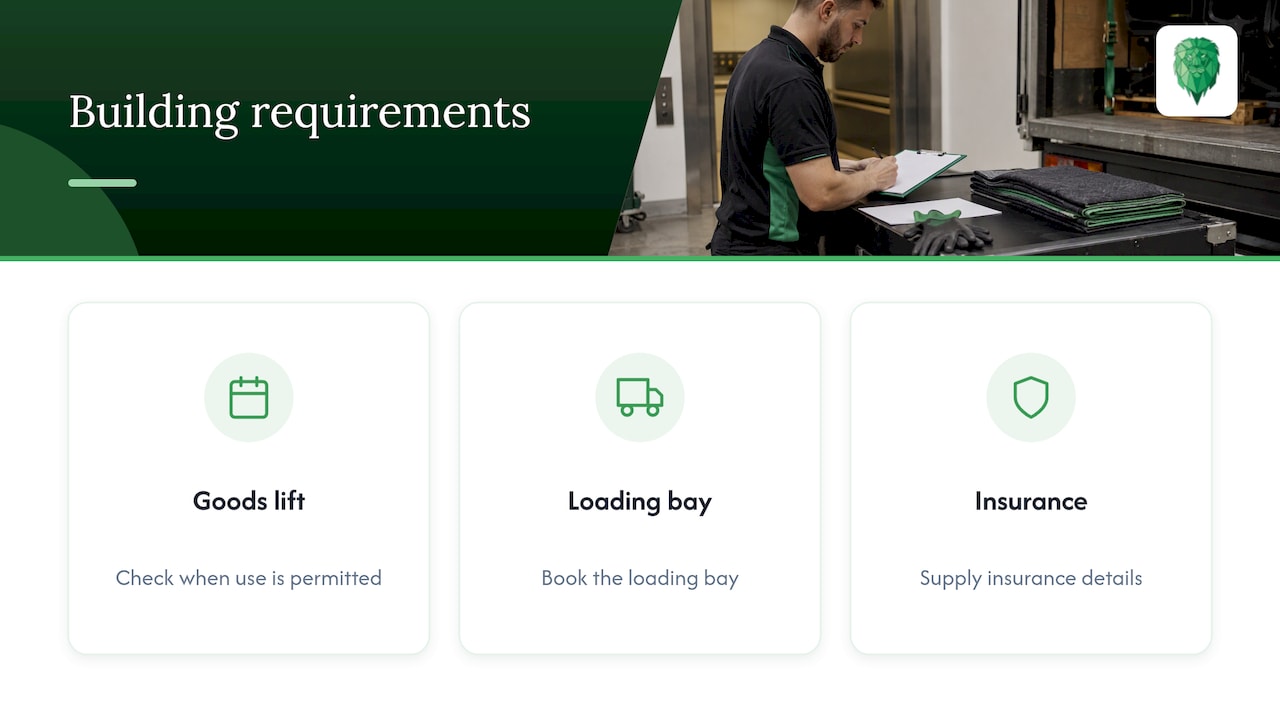
Many managed buildings restrict when goods lifts can be used, require loading bay bookings and ask for insurance details. Sort this early, as it can decide your timetable. Our step-by-step office removal checklist covers these practicalities, including for London buildings.
IT equipment: where decommissioning gets serious, part of office decommissioning
IT is the part you cannot rush. A thorough audit six to eight weeks before the move helps you find every device that needs reuse or proper disposal. Multifunction printers and hidden storage devices are often overlooked, yet they hold data just like laptops and servers do.
A sensible IT checklist:
- List every device, including printers, phones, tablets, external drives and old servers.
- Back up what you need and migrate it before anything is switched off.
- Use certified data erasure or physical drive shredding, and ask for a certificate of destruction.
- Keep the certificates and waste paperwork with your project file.
- Label cables and ports before you unplug, if the kit is coming with you.
If you are moving servers or networking gear to a new site, we handle server relocation, and Wi-Fi and video conference system installation and reinstallation as part of office moves. IT managers planning a larger move can also read our guide to moving IT equipment.
For data protection questions about wiping devices that held personal data, take advice from your data protection lead or an IT security professional. They know what your organisation holds.
Waste, recycling and the paperwork, part of office decommissioning
This is the section people skim, and it is the one with legal teeth. Businesses that produce waste have a duty of care under Section 34(1) of the Environmental Protection Act 1990. In practice you must complete a waste transfer note for each load leaving your premises and keep it for at least two years. You must also check the carrier is registered with the Environment Agency and that the recipient is authorised. The same council page notes that a breach can carry an unlimited fine in the Magistrates’ or Crown Court.
What this means for you:
- Use a licensed waste carrier for anything being thrown away, including broken furniture and old electricals. Ask to see their registration.
- Electrical and IT items are WEEE. Businesses must use a licensed waste carrier for e-waste.
- Keep every note and certificate in one folder, labelled by date.
- Separate your waste. In England, businesses with at least 10 employees must separate dry recyclables, food waste and residual waste.
The rules are also moving towards digital tracking. From April 2026, UK waste management has been shifting from paper waste transfer notes to a government digital database. Check the official government guidance, or ask your waste carrier, how this applies to your waste before clearance day. Rules differ between England, Scotland, Wales and Northern Ireland.
Handover day
Handover is where all your preparation pays off. Here is how to make it calm:
- Schedule the walk-round with the landlord or their agent in advance.
- Clean thoroughly. Leases usually expect clean and tidy premises.
- Photograph every room once it is empty, with date stamps.
- Check reinstatement items against your lease: partitions, cabling, signage, fixings.
- Return all keys, fobs and passes, and get that acknowledged in writing.
- File your paperwork: waste transfer notes, destruction certificates, written waivers and handover photos.
If you want to avoid a last-minute scramble, schedule a spare half day after the main clearance. It costs far less than a landlord’s contractor stepping in.
What affects time and cost, part of office decommissioning
Nobody can give an honest flat figure without knowing the space, so here is what moves the needle:
- Size of the floor and how much furniture and equipment is on it.
- Access: lifts, stairs, parking restrictions and loading bay hours.
- Dismantling needs: fixed workstations and boardroom tables take longer.
- Reinstatement scope: this comes from your lease, and can be the largest item of all.
- IT complexity: servers, cabling and secure destruction.
- Timing: out-of-hours or weekend working can suit your business, so it is worth asking early.
- Waiting time: if access is delayed, our waiting time is £24 per hour per man, so confirm keys and lift bookings in advance.
We give instant online quotes for moving jobs, so you can see what the removal side looks like quickly.
Our perspective
Over 15 years of moving offices, homes and awkward loads, we have seen the same pattern again and again. The move itself is rarely what causes trouble. It is the loose ends: a desk nobody dismantled, a printer nobody wiped, a lift that was not booked.
That is why we think of decommissioning as a project with one owner, not a list of tasks shared between five people. When furniture removal, dismantling, packing, storage and IT relocation are planned together, the final day gets quieter. You are not chasing separate suppliers while the landlord’s agent waits at the door.
Our approach is simple. We help you decide what moves, what stays in storage and what leaves the building. We dismantle and pack carefully, move it with insured transport, and can reconnect servers and Wi-Fi at the other end. For anything going to waste, we will tell you plainly that you need a licensed waste carrier and your paperwork in order, because that duty sits with your business.
Start early, write things down and ask for help before the last week. That is what makes the difference between a stressful exit and a tidy one.
Claudiu
Let us handle the moving side
If you are leaving an office, we can take care of the part that is physically hardest: dismantling, packing, moving and storing what you are keeping, with insured transport across the UK. Tell us about your space and we will give you an instant quote through our office relocation page.

We can also help with storage if your new space is not ready yet, and with furniture assembly at the other end. For more planning ideas, see our office moves tips.
FAQ
Who is responsible for office decommissioning, the tenant or the landlord?
Usually the tenant, as your lease will normally require you to hand the space back clean, cleared and with any required alterations reinstated. The exact duties depend on your lease wording, so read the yielding-up and dilapidations clauses. A chartered surveyor or property solicitor can confirm what applies to you.
How is office decommissioning different from an office move?
An office move transfers your business to a new space, while decommissioning is the process of clearing and restoring the old one. Most moves include both. If you are closing or downsizing without a new site, decommissioning is the entire project.
How do I get rid of unwanted office furniture responsibly?
First see whether it can be reused: offered to staff, sold or donated to community groups. Anything discarded should go with a licensed waste carrier, and you should keep the waste transfer note for at least two years. Electrical items count as WEEE and need the same care.
What should I do with old IT equipment and data?
Audit every device early, including printers and hidden drives. Use certified data erasure or physical shredding and ask for a certificate of destruction. Keep that certificate with your handover paperwork.
Sources
- Office Relocation IT: Decommission to Go-Live
- Dilapidations in UK Commercial Leases: A Tenant’s Guide
- Office Moves & Closures: What to Do With Old IT Equipment
- Waste management: duty of care, Newcastle City Council
- The small business guide to WEEE regulations and e-waste, FSB
- New UK Waste Rules 2026, Astutis