Here is your quick packing materials list for moving house: sturdy moving boxes (small, medium, large), packing paper, bubble wrap, strong packing tape, a tape dispenser, permanent markers, labels, furniture covers, a mattress cover, stretch film, and scissors or a box cutter. That is everything you need to buy in a single trip.
For box counts, use these as your starting point, based on practical moving-supplies guidance:
- Studio or 1-bedroom: 20–40 boxes
- 2-bedroom: 40–60 boxes
- 3-bedroom: 60–90 boxes
- 4-bedroom or larger: 90–120 boxes
Always buy roughly 10% more tape and paper than you think you need. A useful rule of thumb is to plan for about one roll of tape for every batch of boxes. If you would rather skip the supply run entirely, Van-247delivery’s house removal service includes packing materials and a packing add-on, so a professional crew can bring everything on the day.
Key takeaways
A complete packing materials list, combined with box-count estimates and a room-by-room timeline, is the most reliable way to avoid mid-pack supply runs and protect your belongings in transit.
| Point | Details |
|---|---|
| Buy the right box types | Use small boxes for heavy items, dish packs for crockery, and wardrobe boxes for hanging clothes. |
| Match box count to property size | Estimates run from 20–40 boxes for a 1-bedroom up to 90–120 for a 4-bedroom or larger home. |
| Build in a 10% contingency | Buy roughly 10% more tape and packing paper than your estimate to avoid running short mid-pack. |
| Label every box with four details | Write destination room, brief contents, fragility status, and orientation on every box before it moves. |
| Van-247delivery packing add-on | The crew supplies materials and handles packing on the day, covering both labour and specialist boxes in one booking. |
Table of Contents
- What does each packing material actually do?
- How many boxes will you need?
- How to pack fragile and common items step by step
- Where to get packing materials in the UK
- How to set up a packing station and a simple timeline
- Sealing and labelling so boxes arrive organised
- When does it make sense to hire professional packers?
- Safety tips for lifting and handling heavy boxes
- What movers actually see go wrong on packing day
- Van-247delivery’s packing and removal service
- Sources
- FAQ
What does each packing material actually do, part of packing materials list?
Getting the right supplies is half the battle. Here is what each item on your list is for, plus quality notes and eco-friendly swaps worth knowing about.
Boxes
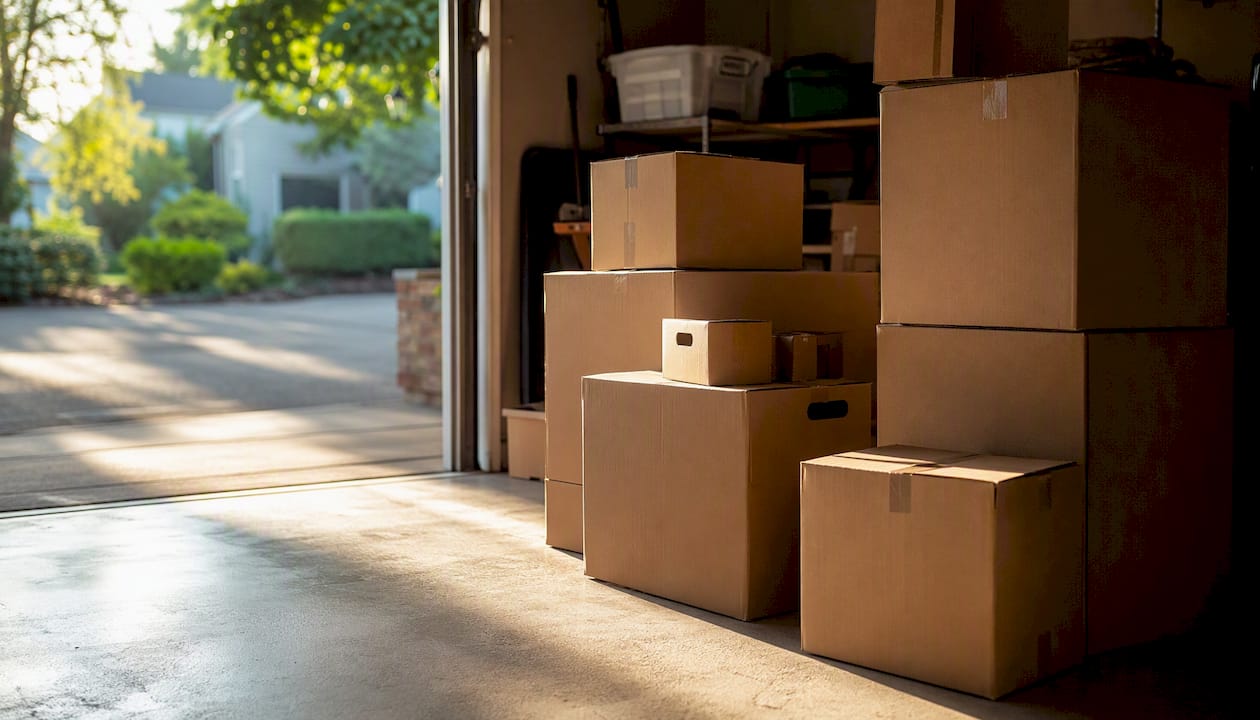
Not all boxes are equal. Small boxes (roughly 1.5 cubic feet) are for books, tins, and anything heavy. Medium boxes (3 cubic feet) handle kitchen items, toys, and folded clothes. Large boxes (4–5 cubic feet) are for lightweight bulky items: duvets, pillows, lampshades. Go bigger than that and a full box becomes genuinely dangerous to lift.
For the kitchen, a dish pack (also called a cell kit or dish barrel) has reinforced walls and internal cardboard dividers. It is the single best investment for crockery. Wardrobe boxes come with a hanging rail and let you transfer clothes directly from the rail without folding. Picture boxes are flat, telescoping boxes that adjust to fit framed art and mirrors.
Buying in bulk and sticking to uniform medium boxes for most of your packing keeps stacking neat and reduces the chance of a mid-pack shortage. For short-distance or single-trip moves, reusable plastic storage bins are a practical, low-waste alternative.
Double-walled boxes are worth the extra cost for heavy items, glassware, and anything irreplaceable. Single-walled boxes are fine for clothes and soft furnishings.
Packing paper and bubble wrap
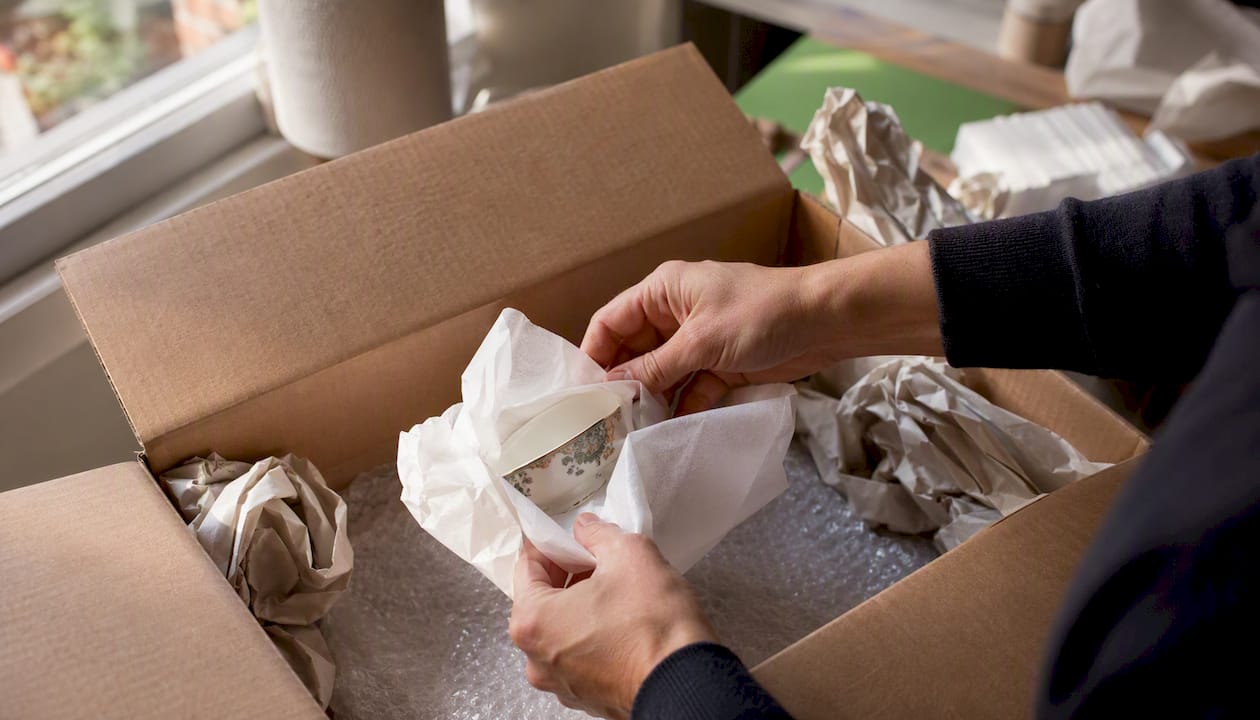
Packing paper (unprinted newsprint) is your go-to cushioning for most items. It wraps plates, fills void space, and lines box bases. Bubble wrap is better for glass, ceramics, and anything with a delicate surface. One important caveat: never place bubble wrap directly against a screen or a polished surface, as the bubbles can leave impressions. Wrap the item in packing paper first, then add a layer of bubble wrap over the top.
Eco alternatives: old towels, tea towels, and blankets make excellent padding for robust items. Newspaper works in a pinch but the ink can smudge onto light-coloured surfaces, so use it with caution on anything pale or porous.
Tape, stretch film, and markers
Use proper brown packing tape, at least 48mm wide. Masking tape and parcel tape are not strong enough for a loaded box. Stretch film (also called stretch wrap or cling film for furniture) is ideal for bundling drawers, wrapping upholstered furniture, and keeping wardrobe doors shut during transit. Furniture pads and moving blankets protect wooden surfaces and upholstery from scuffs and abrasion.
Two permanent markers: one black for labelling, one red for marking fragile boxes. You will use them more than you expect.
Pro Tip: A tape dispenser pays for itself on any move larger than a studio flat. It produces neater, stronger seals than hand-applied tape and cuts sealing time noticeably.
Specialist and protective items
- Mattress covers: protect against dirt, moisture, and tears during loading
- Furniture covers/blankets: prevent scratches on wood, glass table tops, and upholstery
- Zip-lock bags: collect screws, bolts, and small hardware from disassembled furniture
- Box cutter or scissors: for opening boxes at the other end without damaging contents
How many boxes will you need part of packing materials list?
The table below gives conservative estimates. Your actual count depends on how much you own and how tightly you pack, so treat these as a floor, not a ceiling.
| Property size | Estimated boxes | Dish packs | Wardrobe boxes |
|---|---|---|---|
| Studio / 1-bedroom | 20–40 | 1–2 | 1 |
| 2-bedroom | 40–60 | 2–3 | 1–2 |
| 3-bedroom | 60–90 | 3–4 | 2–3 |
| 4-bedroom or larger | 90–120 | 4–6 | 3–4 |
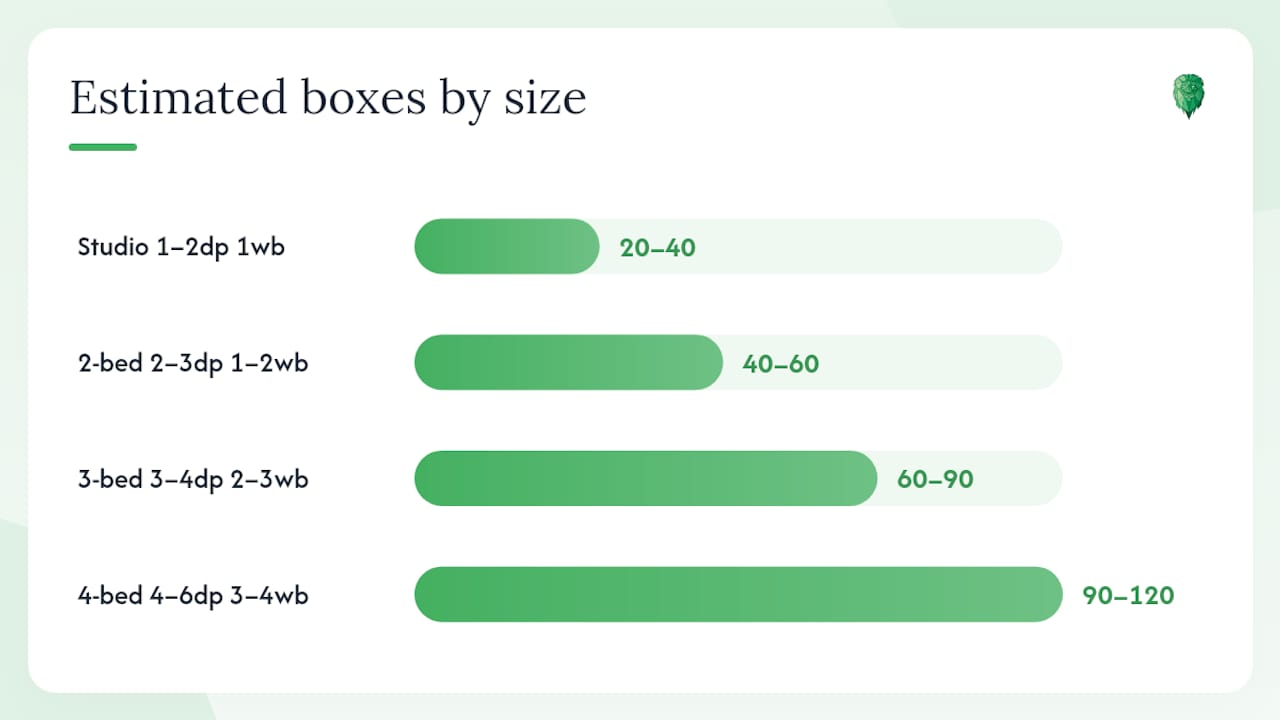
The simplest estimation method is to walk through each room and count the approximate number of medium boxes it would fill, then add dish packs for the kitchen and wardrobe boxes for hanging clothes. Add a contingency of around 10% to your total, particularly for tape and packing paper. A two-bedroom move typically needs around 10 lb of packing paper to wrap and cushion contents properly.
You can reduce your box count by using duvets, towels, and cushions as padding inside boxes, which fills void space and protects fragile items without adding extra packaging. Decluttering before you buy supplies is the most effective way to cut costs.
How to pack fragile and common items step by step part of packing materials list
The core rule for fragile items is: wrap, cushion, and label. Every fragile item needs individual wrapping, a cushioned base in the box, and a clear “Fragile” marking on at least two sides.
Plates and crockery
- Line the base of a dish pack with crumpled packing paper (at least 5 cm deep).
- Wrap each plate individually in two sheets of packing paper, tucking the corners in.
- Pack plates on their edge, not flat. Plates stacked flat are far more likely to crack under pressure.
- Fill any gaps with crumpled paper so nothing shifts.
- Add a final layer of paper on top before closing.
Glasses and mugs
Stuff the inside of each glass with crumpled paper first, then wrap the outside. Use dish-and-glass packing kits with individual cell dividers if you have a large collection. Never stack glasses directly on top of each other.
Framed art and mirrors
Use a purpose-made picture box or create a cardboard sandwich: two pieces of cardboard taped either side of the frame, then wrapped in bubble wrap. Mark the box “Fragile — This Way Up” and stand it upright, never flat.
Books
Pack books in small boxes only. A medium box of books can exceed 25 kg, which is a lifting risk for you and the removal crew. Pack them flat or spine-down, alternating direction to distribute weight.
Electronics
Ideally, use original packaging. If that is not available, wrap each item in anti-static bubble wrap (standard bubble wrap can generate a static charge). Remove batteries, coil cables loosely, and label each cable with a sticky note before packing.
Clothes
Wardrobe boxes let you move hanging clothes without folding. For folded items, use medium boxes and place heavier knitwear at the bottom. Vacuum storage bags work well for bulky items like winter coats and duvets.
Pro Tip: For antiques, musical instruments, and plants, consider specialist packing. Antiques may need custom crating, instruments need humidity-controlled packaging, and plants should travel in open-top boxes with ventilation. For anything of significant value, check our guide on packing valuable goods before moving day.
Safe lifting for heavy boxes
Keep heavy boxes under 20 kg. Bend at the knees, not the waist, and keep the box close to your body. A dolly or hand truck, combined with lifting straps, reduces both effort and injury risk significantly when moving stacked boxes or large items down stairs.
Where to get packing materials in the UK part of packing materials list
Buying new
- DIY and homeware retailers (B&Q, Argos, Wilko) stock moving boxes, tape, and bubble wrap individually or in kits
- Supermarkets (Tesco, Sainsbury’s, Asda) often sell small moving kits near the stationery aisle
- Online retailers (Amazon, eBay) offer bulk box bundles, which are usually cheaper per unit than buying individually
- Specialist removal suppliers sell professional-grade double-walled boxes, dish packs, and wardrobe boxes that are harder to find in general retail
Buying a kit sized to your bedroom count is often cheaper than buying items separately and reduces the risk of running short mid-pack.
How to set up a packing station and a simple timeline part of packing materials list
Your packing station
Pick a clear table or work surface in a low-traffic room. Keep the following within arm’s reach:
- A stack of flat-packed boxes in mixed sizes
- Your tape dispenser, loaded and ready
- A roll of packing paper and a roll of bubble wrap
- Two permanent markers
- A bin or zip-lock bag for small hardware
- Spare labels and a pen
Having everything in one place stops you losing time hunting for tape mid-session. It also means you can pack in short bursts without losing your place.
A simple packing timeline
4–6 weeks out: Declutter room by room. Donate, sell, or dispose of anything you will not move. Buy your supplies once decluttering is done so you do not over-order.
3–4 weeks out: Pack non-essentials first: books, seasonal clothes, decorative items, spare bedding, hobby equipment. Label every box as you go.
1–2 weeks out: Pack the kitchen (except a few plates, mugs, and pans for the final days). Pack the bathroom down to a week’s worth of toiletries. Pack children’s rooms except for a few key toys.
Final 2–3 days: Pack remaining rooms. Prepare your essentials box and day-one bag: kettle, mugs, tea, phone charger, a change of clothes, toilet roll, basic medicines, and any documents you need on moving day.
Moving day is a marathon, not a sprint. Packing in stages keeps it manageable.
Sealing and labelling so boxes arrive organised part of packing materials list
Sealing boxes properly
The H-tape method is the standard for a reason. Run one strip of tape along the centre seam, then two shorter strips across each end of the seam, forming an “H” shape. This distributes stress across the base and prevents the bottom from giving way under load. Use the same method on the top flap.
- Use tape at least 48mm wide
- Apply firm pressure along the full length of each strip
- Double-tape the base of any box over 15 kg
Labelling system
Every box needs four pieces of information:
- Destination room (e.g. “Kitchen”, “Main bedroom”)
- Brief contents (e.g. “Mugs and glasses”)
- Fragility (“Fragile” in red marker if applicable)
- Orientation (“This Way Up” with an arrow for anything liquid or delicate)
Colour-coded labels by room (a different colour per room) let the removal crew place boxes in the right room without reading every label. Numbering boxes and keeping a simple inventory list on your phone means you can spot a missing box quickly at the other end.
Pro Tip: When you disassemble flat-pack furniture, put all screws and fittings into a zip-lock bag and tape it directly to the back of the item. Write the item name on the bag in marker. You will thank yourself at 9pm on moving day.
When does it make sense to hire professional packers?
There are clear situations where paying for professional packing is worth it.
Consider hiring packers when:
- You have a large volume of items and a tight timeline
- You own high-value or fragile items (antiques, artwork, instruments, specialist electronics)
- You have health or mobility constraints that make physical packing difficult
- You are moving long-distance and need insurance-backed packing for transit
Professional packers bring their own materials, including moving blankets, specialist boxes, and stretch wrap. They pack faster than most households manage independently, and their packing is typically covered by the removal company’s goods-in-transit insurance. Van-247delivery’s removal service includes a packing add-on, where the crew supplies materials and handles packing on the day. This is particularly useful when customers prefer a single booked visit to cover both materials and labour.
Questions to ask when getting a quote:
- Are packing materials included in the price, or charged separately?
- What does the insurance cover, and what are the exclusions?
- Do they pack everything, or only specific rooms?
- What is the expected packing time for a property of your size?
Pro Tip: Ask the company whether they use double-walled boxes for kitchen and fragile items as standard, or whether you need to request them. This one question tells you a lot about the quality of the service.
Safety tips for lifting and handling heavy boxes part of packing materials list
Heavy boxes cause more moving-day injuries than almost anything else. A few straightforward habits make a real difference.
Keep every box under 20 kg. If you can barely drag it across the floor, it is too heavy to carry safely. Redistribute the contents into two smaller boxes instead.
When lifting, bend at the knees and hips, not the waist. Keep your back straight, hold the box close to your body, and avoid twisting while carrying. If you need to turn, move your feet rather than rotating your spine.
Use equipment. A dolly or hand truck handles stacked boxes on flat surfaces. Lifting straps distribute the load across your shoulders and forearms, which is far safer for stairs and awkward angles. Furniture sliders let you reposition heavy items without lifting at all.
Wear closed-toe shoes with grip. Flip-flops and socks on a hard floor are a slip hazard when you are carrying something you cannot see over. Clear a path before you start moving boxes, and never carry a load that blocks your line of sight on stairs.
What movers actually see go wrong on packing day part of packing materials list
Most moving-day problems trace back to three packing mistakes, and every one of them is avoidable.
Overpacked boxes are the most common. A box that is too heavy to lift safely slows the whole move and risks injury. The fix is simple: use small boxes for dense items and stop filling when the box reaches around 15–20 kg.
Unlabelled or vaguely labelled boxes create chaos at the other end. “Miscellaneous” tells the crew nothing. Writing the destination room and a two-word contents note takes ten seconds per box and saves thirty minutes of confusion on arrival.
Insufficient void fill is the third. A half-empty box collapses under the weight of boxes stacked on top, which crushes the contents. Fill every gap with crumpled paper, a folded towel, or a spare tea towel. The box should feel firm when you press the top.
One thing that consistently speeds up unloading: boxes labelled with both the room name and a number, matched to a simple list on your phone. The crew can place every box in the right room without asking, and you can confirm everything arrived in under five minutes.
Van-247delivery’s packing and removal service
Packing everything yourself is entirely doable with the right supplies and a clear plan. But if you are short on time, moving a large property, or have fragile or high-value items that need specialist handling, Van-247delivery’s full-service removal option takes the pressure off.
The packing add-on means the crew arrives with materials included: double-walled boxes, dish packs, bubble wrap, stretch film, and moving blankets. You do not need to source anything separately. For a fast, accurate quote, have the following ready: your property size and number of rooms, a note of any large or specialist items (piano, antiques, large appliances), and parking or access details at both addresses. Van-247delivery operates house removals across the UK, with flexible booking and insured transport as standard. Get your instant quote online and know your price before moving day.
Sources
- Packing Supplies Checklist: Full List & Amounts | LIOO
- The Best Supplies and Packing Advice for Making Moving Less Miserable | Reviews by Wirecutter
- The Ultimate Checklist for Packing & Moving Supplies
- Move
- From boxes to bubble wrap: the complete guide to essential moving supplies
FAQ
What are the most common packing materials for moving house?
The core list covers moving boxes in mixed sizes, packing paper, bubble wrap, strong packing tape, a tape dispenser, permanent markers, labels, furniture covers, a mattress cover, and stretch film. Dish packs and wardrobe boxes are worth adding for the kitchen and hanging clothes.
How many boxes do I need for a 3-bedroom house?
A 3-bedroom home typically needs 60–90 standard boxes, plus 3–4 dish packs for the kitchen and 2–3 wardrobe boxes for hanging clothes. Buy around 10% more than your estimate to avoid running short.
What packing materials do I need for fragile items?
Use packing paper for the first layer of wrapping, bubble wrap over the top, and a dish pack or double-walled box for transport. Pack plates on their edge, fill all void space with crumpled paper, and mark every fragile box clearly on at least two sides.
Where can I get free packing boxes in the UK?
Supermarkets, off-licences, and wine merchants often give away sturdy boxes on request. Freecycle, Freegle, Facebook Marketplace, and local community groups are reliable free sources. Check secondhand boxes for damp or damage before using them for fragile loads.
Is it worth buying a packing kit rather than individual supplies?
Yes, for most moves. A kit sized to your bedroom count is usually cheaper per item than buying individually, and it reduces the risk of running out of a specific supply mid-pack. Van-247delivery’s packing add-on covers materials and labour in a single booking, which removes the need to source anything yourself.