Start packing several weeks before your move, with earlier start times recommended for bigger homes or longer distances. The order matters more than the date: declutter first, pack non-essentials next, work room by room, and leave daily essentials until the final 48 hours. Pick your start week today and name the three least-used rooms in your home. That’s where you begin.
TL;DR:
- Starting packing six to eight weeks before moving allows enough time for decluttering, obtaining multiple quotes, and ordering supplies, especially for larger homes.
- Packing should begin with rooms used infrequently, such as garages, lofts, and storage areas, while daily-use items like kitchenware and bathroom essentials are packed last.
- Booking removal companies early and confirming insurance coverage prevents last-minute scheduling issues and unexpected costs, with demand peaking around weekends and month-ends.
- Professional packing services can significantly reduce packing time, especially for fragile or bulky items, and are recommended if a compressed timeline is necessary.
- Proper labelling, disassembly, and packing materials, along with a well-organized timeline, help ensure a smooth move with minimal damage or forgotten items.
Table of Contents
- Building your packing timeline for moving, week by week
- Which rooms should you pack first, and which last?
- What packing materials do you actually need?
- When should you book movers and sort insurance?
- What should you check the day before and on moving day?
- What goes in your first-night box after moving?
- How much time do professional packers actually save?
- Why “move-ready” beats “perfectly packed”
- Get your timeline back with professional packing help
- Where this timeline comes from
- Sources
- FAQ
Building your packing timeline for moving, week by week
A moving timeline works because it forces tasks into the right order, not because the calendar itself is magic. Skip a step (say, decluttering before you pack) and you end up shipping boxes of things you never wanted at your new address. Guides that break the process into weekly stages, from eight weeks out to moving day, consistently produce smoother moves than a last-minute scramble, largely because they build in buffer days for the unexpected.
Here’s how to structure it, whether you’re in a studio flat or a five-bedroom house.
1. Eight-plus weeks before moving day
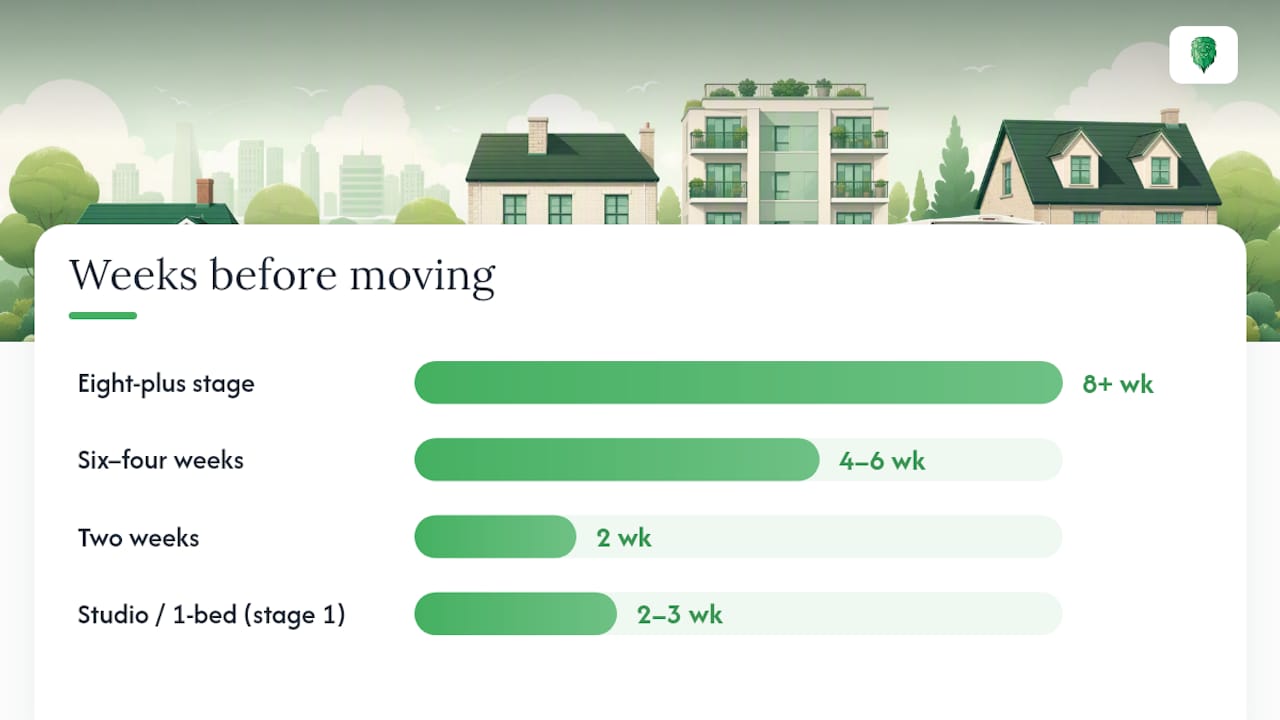
This is your planning stage, and it’s easy to skip if the move feels distant. Don’t. For larger households or long-distance relocations, starting six to eight weeks ahead gives you room to get multiple removal quotes, compare them properly, and lock in your preferred moving date before it’s gone.
- Request quotes from removal companies, including a full inventory of large or awkward items.
- Begin decluttering: start in the garage, loft, or any storage room you rarely open.
- Order your packing supplies now rather than the week you need them.
- Research your moving house timeline to see how the weeks ahead should flow for your specific home size.
Studio and one-bedroom movers can compress this stage into two or three weeks. Family homes with a loft full of decades of accumulated stuff genuinely need the full eight.
2. Six to four weeks before moving day
This is where the bulk of the physical packing starts, and where most people either get ahead of the game or fall permanently behind it.
- Pack non-essential rooms: guest bedrooms, home offices you don’t use daily, and anything in storage.
- Measure large furniture against your new home’s doorways, stairwells, and lift dimensions, so you’re not stuck disassembling a wardrobe on the pavement.
- Confirm your booking with your chosen mover in writing, including date, time window, and any deposit required.
- Sort through wardrobes and pack out-of-season clothing first, leaving current-season items for later.
House & Garden’s checklist backs this staging approach, recommending non-essentials go early and daily-use items stay put until much closer to the move. It’s a small distinction that saves a lot of frustration, because nobody wants to unpack a box hunting for a phone charger three days before moving day.
3. Two weeks before moving day
Momentum matters here. Most of your home should be boxed by the end of this stage, with only the rooms you use every day still open.
- Start the kitchen deep-pack: crockery, glassware, small appliances you don’t use daily, and anything doubled up (you don’t need three cheese graters mid-move).
- Gather and organise important documents: passports, birth certificates, insurance papers, and financial records into one clearly labelled folder or box that travels with you, not the removal van.
- Confirm details with utility providers, your mail redirection service, and anyone else who needs your new address.
- Begin using up frozen and perishable food so there’s less to deal with in the final days.
4. One week before moving day
Things tighten up considerably here. You’re living out of a shrinking set of rooms, and that’s exactly how it should feel.
- Pack daily-use items into clearly labelled boxes, but keep out only what you’ll need for the next 48 hours.
- Disassemble large furniture: bed frames, flat-pack wardrobes, dining tables. Bag every screw and bolt (more on that below).
- Defrost and clean your fridge and freezer at least 24 hours before moving day, otherwise you’ll be mopping up a puddle on collection morning.
- Confirm final arrangements with your removal company, including parking access at both properties.
5. Final 48 to 24 hours, and moving day itself
This is the home stretch, and a short one if you’ve followed the schedule.
- Pack your essentials bag or box: medication, chargers, a change of clothes, toiletries, and any documents you need immediate access to.
- Do a final walkthrough of every room, checking cupboards, drawers, and behind doors for anything left behind.
- Load the van in the right order: heavy furniture and large items first, boxes next, essentials and fragile items last so they come off first.
- Take final meter readings and leave keys where agreed with your landlord, agent, or the new owners.
If your move date lands close to Christmas, a bank holiday weekend, or the last weekend of the month, expect removal companies to be booked solid. Those periods see the heaviest demand, so book earlier than this schedule suggests if your date falls on one. And if you’re working against a genuinely tight deadline, a compressed one-week plan that prioritises storage areas first is a workable fallback, even if it’s not the ideal.
Which rooms should you pack first, and which last?
The room-by-room order matters just as much as the week-by-week schedule; get it backwards and you’ll be searching for saucepans while the loft sits untouched. The general rule holds across nearly every credible moving guide: pack the rooms you use least first, and the ones you rely on daily last.
- Garage, loft, and storage cupboards: these hold items you touch a handful of times a year. Pack them in week one of your timeline, no exceptions.
- Spare rooms and guest bedrooms: low daily use makes these an easy early target, typically a two to three-hour session per room.
- Home office and study: back up any important files digitally before you box up the computer, and keep cables labelled and taped to the device they belong to.
- Living room: books, ornaments, and non-essential media can go early; leave the sofa, TV, and remote controls until the final week.
- Bedrooms: pack out-of-season clothing and spare linen first, keeping one week’s worth of outfits accessible until moving day.
- Kitchen: this is the trickiest room in the house, and it deserves its own strategy. Homes & Gardens recommends leaving daily crockery, cutlery, and the kettle until the final two to three days, packing everything else (the fondue set you used once, the good glasses) well before that.
- Bathroom: pack spare toiletries and towels early, but keep one set of everyday essentials out until the morning of the move.
For time estimates, a one-bedroom flat typically needs six to ten hours of total packing time spread across the schedule above. A three-bedroom family home usually runs to 20 to 30 hours, and a larger four or five-bedroom house with a loft and garage can easily reach 40 hours or more. Breaking that into one or two-hour daily sessions, rather than one exhausting weekend, is the difference between a manageable move and a miserable one.
What packing materials do you actually need?
Buying the right supplies before you start saves you multiple trips to the shop mid-pack, which always seems to happen at the worst possible moment.
Here’s a practical shopping list:
- Small, medium, and large cardboard boxes (small for books and heavy items, large for lightweight bulky things like bedding)
- Strong packing tape, at least two or three rolls
- Bubble wrap or packing paper for fragile items
- Permanent markers, one per box if you can manage it
- Wardrobe boxes for hanging clothes
- Mattress bags to protect bedding during transit
- Furniture blankets or old towels for protecting wooden surfaces
- Sealable plastic bags for small hardware and loose parts
Check the full packing materials list if you want sourcing suggestions for any of these.
For fragile items, follow a consistent sequence every time: wrap first, cushion second, box third. Wrap each piece individually in paper or bubble wrap, cushion the base and sides of the box with crumpled paper, and for genuinely valuable items, consider double-boxing (one wrapped box inside a slightly larger one, with padding between). Label the box “fragile,” mark which way is up, and briefly note the contents.
Pro Tip: When disassembling furniture, put every screw, bolt, and small fixing into a sealable bag and tape it directly to the piece of furniture it came from. It sounds fussy, but it’s the single easiest way to avoid rebuilding a wardrobe with two mystery screws left over.
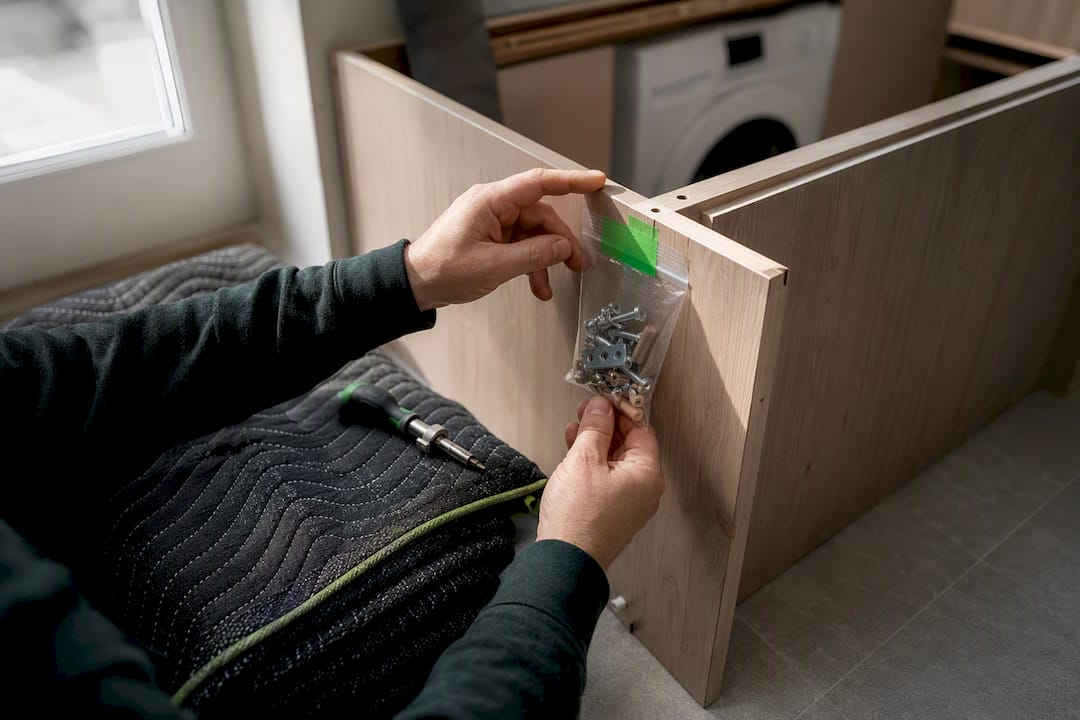
For labelling, keep it simple: a room code and a short contents note beats a detailed inventory nobody reads under pressure. “BED2 – books, lamp, curtains” tells your movers exactly where a box belongs and what’s inside, without slowing anyone down.
When should you book movers and sort insurance?
Booking too late is one of the most common (and most avoidable) mistakes people make on a house move.
- Get accurate quotes early. Give removal companies a genuine room-by-room inventory, including anything unusual like a piano or a large wardrobe that won’t flat-pack. Vague quotes lead to vague prices, and nobody wants a surprise on moving day.
- Book your date as soon as it’s confirmed, particularly around weekends, month-ends, and school holidays, when demand from other movers is highest.
- Ask about insurance cover before you sign anything. Find out whether liability is based on weight or declared value, what happens if something is damaged, and whether your most valuable items need separate cover.
- Notify utility providers, your mail redirection service, and your council two to three weeks out, so gas, electricity, broadband, and council tax all transfer cleanly.
- Sort parking and loading permissions if you live somewhere with restricted access, and book pet or childcare for moving day itself so nobody is underfoot during the loading process.
Getting quotes early also gives you room to compare and potentially reduce your overall moving costs, since prices can vary considerably between providers for the same job.
What should you check the day before and on moving day?
The day before your move is about tying off loose ends, not starting new tasks.
- Confirm your inventory list, gather all keys (old and new), and keep chargers and essential documents in one bag you carry yourself.
- Take final meter readings for gas, electricity, and water before you hand over keys.
- Load the van heaviest and largest items first, boxes in the middle, and essentials or fragile boxes last so they’re the first things off.
- Mark any “open first” boxes clearly, ideally in a bright colour that stands out from the rest.
- Assign roles in advance: one person meets the movers and directs parking, another keeps hold of the essentials bag and paperwork.
- Have a backup plan for common hiccups: a spare key with a neighbour, a note of your mover’s phone number, and a flexible attitude if the weather turns.
For a fuller breakdown of who should do what on the day, the moving day survival guide covers role assignments in more detail.
What goes in your first-night box after moving?
Unpacking after a move doesn’t need to happen all at once, and trying to finish everything on day one usually backfires.
- Keep your first-night kit with you during the move itself, never in the removal van, where it might not surface until the following day.
- Pack medication, phone chargers, a change of clothes, toiletries, and bedding for every household member into that kit.
- Set up the bedroom and bathroom first: made beds and clean towels turn a house full of boxes into somewhere liveable.
- Get the kettle out, find the mugs, and treat that first cup of tea as the unofficial finish line for day one.
- Spread the rest of the unpacking across 48 to 72 hours, tackling one room at a time rather than everything at once.
Settling in properly can take longer than the actual move, and that’s normal. If you’re looking for a small way to mark the occasion, thoughtful first-night gifts for couples who’ve just moved in are worth a browse, even if it’s just a bottle of something nice to open once the last box is empty.
How much time do professional packers actually save?
Timings on paper only tell half the story. In practice, the variable that changes a moving timeline the most isn’t the size of the home. It’s whether one person is doing the packing alone or whether professional help is involved from week one.
A full-service pack, where movers handle the wrapping, boxing, and labelling, typically compresses two to three weeks of evening and weekend packing into two or three working days. That doesn’t mean the homeowner does nothing. It means the schedule above shrinks dramatically, particularly around week six to four, where most people find the workload heaviest.
Successful moving timelines aren’t built around perfection. They’re built around slack: enough buffer that a late delivery, a bad back, or a rainy Saturday doesn’t derail the whole schedule.
Bulky or fragile items (a piano, a glass-top table, an antique wardrobe) are where DIY timelines most often collapse, simply because these items need specialist handling that a general moving day doesn’t account for. Building in one buffer day per week of your schedule, particularly in the final fortnight, gives you room to absorb those surprises without panic.
Why “move-ready” beats “perfectly packed”
Nobody’s move looks like the checklist. Something always slips, a box gets packed at midnight, a drawer gets emptied straight into a bin bag because there’s no time left for bubble wrap. That’s fine. The goal isn’t a flawlessly organised move; it’s getting everything from one home to the next without anything broken or forgotten.
Small daily sessions beat weekend marathons every time, mostly because exhausted packing leads to sloppy decisions: mislabelled boxes, mixed-up hardware, valuables wrapped in a hurry. If your list is long, or includes anything specialised like a piano or a houseful of antiques, bring in professional help earlier rather than later. Booking help in week eight is a decision. Booking it in week one, out of desperation, is a scramble.
— Claudiu
Get your timeline back with professional packing help
If the week-by-week plan above still feels like a lot to fit around work, kids, or simply not having enough weekends left before your move date, that’s exactly where professional packing services earn their keep. Instead of spending three weekends wrapping glassware and hunting for tape, a packing team can pack, label, and load your whole home in a fraction of the time, with insured handling for anything fragile or valuable along the way.

Van-247delivery has spent over 15 years handling UK house removals, from studio flats to five-bedroom family homes, and that includes specialist services for pianos, bulky furniture, and anything else that doesn’t fit neatly into a standard van load. If storage is part of your plan while you find your feet in a new area, that’s covered too, alongside furniture assembly and disassembly on both ends of the move. For anything left over after the boxes are unpacked, our unpacking and cleaning services can take the rest of the job off your hands entirely.
Get an instant quote for your house removal and check availability for your moving date today. If your move includes a piano or other oversized items, our piano removal service is worth a separate look before you book the main job.
Where this timeline comes from
The week-by-week structure above draws on established UK and international moving guidance, cross-checked against practical, on-the-ground packing techniques.
- Complete moving timeline: 8 weeks out to moving day — PODS
- A complete timeline for moving house — House & Garden
- Moving house checklist: essential tips and packing timeline — Homes & Gardens
- 20 top tips for packing your home efficiently — Removal Boxes UK
Sources
- How to Start Packing to Move: Step-by-Step Guide
- Complete moving timeline: 8 weeks out to moving day | PODS
- A complete timeline for moving house
- Moving house checklist: essential tips and packing timeline
- 20 top tips for packing your home efficiently using removal boxes
FAQ
How far in advance should you start packing for a move?
Start six to eight weeks before moving day for a typical household, or earlier for larger homes and long-distance moves. Smaller flats can work with a four to six-week window, as long as decluttering happens first.
What items should you throw away before moving?
Focus on anything duplicated, broken, expired, or unused for the past year: old electronics and cables, expired food and medicine, worn-out towels or linen, broken furniture, single socks, out-of-date paperwork, and clothing that no longer fits. Donating usable items rather than binning them keeps the process quicker and less wasteful.
What day should you avoid moving house on?
Fridays, weekends, and the last few days of the month are the busiest and most expensive times to move, since demand from other households peaks then too. A midweek move, ideally mid-month, tends to be cheaper and easier to book with your preferred removal company.
What should you do four weeks before moving?
Four weeks out, you should be packing non-essential rooms, confirming your removal booking in writing, and starting to notify utility providers and your mail redirection service. This is also the point to measure large furniture against your new home’s doorways and stairwells before you’re stuck disassembling something on the day.
Does Van-247delivery offer packing services alongside removals?
Yes, Van-247delivery offers professional packing and unpacking as part of its house removal service, alongside furniture assembly, disassembly, and storage. Pricing depends on the size of your move, and current rates are available directly through an instant online quote.