Piano tuning after move: if you’re arranging piano transport as part of a house or office move, book specialist piano movers as early as you can, and confirm their insurance cover and access arrangements before you agree a date. Van-247delivery handles this kind of specialist relocation, with UK piano moves averaging around £400 depending on distance and access. That’s your first move, everything else in this guide builds on it.
TL;DR:
- The average cost to move a piano in the UK is around £400, but prices can range from £150 to over £750 depending on factors like distance, piano type, and access.
- Long-distance moves often incur higher costs due to increased handling, longer transit times, and greater exposure to temperature changes, requiring careful inspection upon arrival.
- Proper preparation includes measuring doorways, photographing the piano, clearing routes, and confirming parking to prevent delays or damage during transition points.
- Booking early and confirming insurance coverage, equipment, and disassembly details ensures a smoother move and avoids disputes or unexpected charges.
- After delivery, inspect and photograph the piano immediately, sign a delivery note, and wait two to three weeks before tuning to allow the instrument to stabilize.
Table of Contents
- What to expect: piano moving costs, timing and add-ons
- Preparing your piano and property before the movers arrive
- How do you choose a reliable piano-moving service?
- What should you do the moment your piano arrives?
- What movers actually get right about piano logistics
- Book insured piano transport with Van-247delivery
- Sources
- FAQ
What to expect: piano moving costs, timing and add-ons. Part of piano tuning after move
Piano transport pricing swings more than most house-move quotes, and the reason is simple: pianos are heavy, awkward, and every property is different. Local moves in the UK typically run from £150 to £600, while long-distance jobs, especially anything crossing counties or involving motorways, often climb past £750.
Statistic Callout: The average cost to move a piano in the UK sits at around £400, but that figure hides a wide range driven by piano type, stairs, and distance.
A few factors push your quote up or down:
- Piano type: an upright is far easier to shift than a grand, which needs disassembly of the legs and lid in most cases.
- Access: narrow hallways, tight staircases, or a lack of a lift add time and labour.
- Distance: local jobs might take one to two hours door to door; long-distance moves stretch across half a day or more once loading, driving and unloading are factored in.
- Crane hire: needed occasionally for upper-floor flats with no usable stairwell or lift.
Booking lead time matters too. Specialist movers, including Van-247delivery, tend to fill their diaries a week or two ahead during peak moving periods, so don’t leave it until the last few days. Extras that bump the final bill include disassembly and reassembly, temporary storage if your new property is not ready, and upgraded insurance limits for a particularly valuable instrument. Weather plays its part as well. Rain and extreme cold can affect handling time and instrument protection, something worth checking with your mover if your date falls in a particularly wet or freezing spell.
Preparing your piano and property before the movers arrive. Part of piano tuning after move
Getting this right beforehand saves arguments and delays on the day. Both you and your moving company have jobs to do here, and they’re not the same jobs.
Your checklist as the owner looks like this:
- Measure every doorway, hallway and staircase the piano needs to pass through, including at both the old and new address.
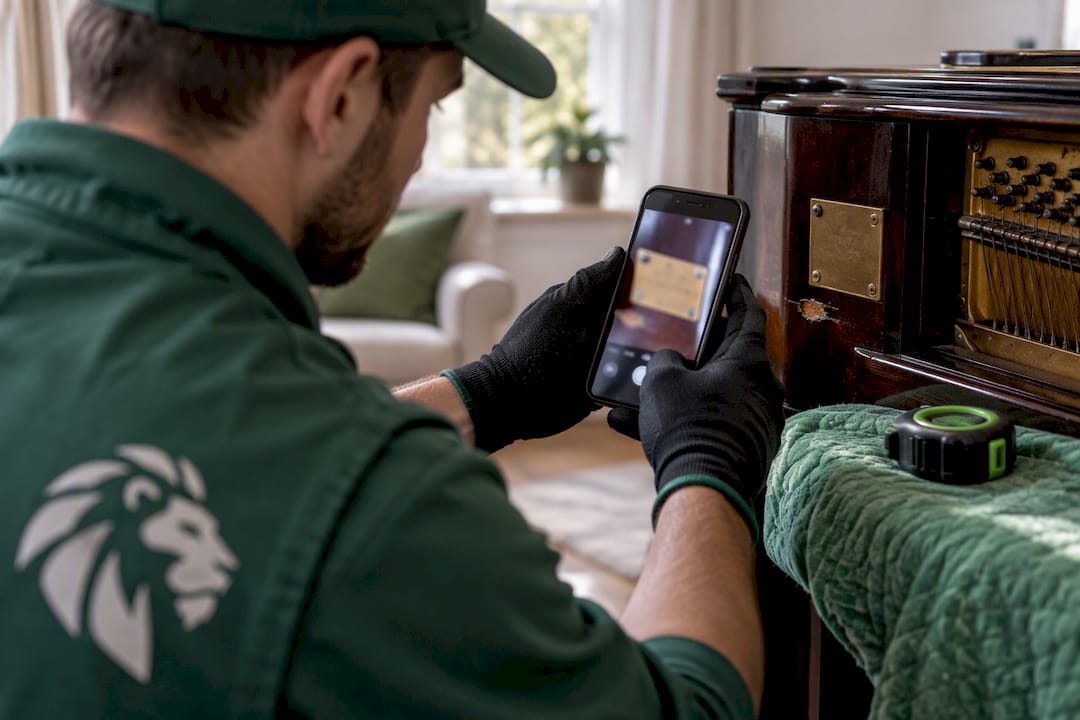
- Photograph the piano from several angles, noting any existing scratches, dents, or worn keys.
- Clear the route of rugs, furniture and anything breakable, and put down floor protection if you’re worried about your flooring.
- Confirm parking access for the removal van, particularly if you’re on a restricted street or in a block with limited loading bays.
The movers, meanwhile, should turn up with protective blankets, lifting straps, a piano dolly or skid boards, and handle any disassembly or reassembly the piano needs. That’s standard kit for a properly equipped piano relocation, and if a company can’t describe this equipment when you ask, that’s worth noting.
Pro Tip: Photograph the piano’s serial number plate and any existing damage with a timestamp visible in the shot, ideally on your phone with location services on. That dated evidence is exactly what insurers ask for if you ever need to make a claim, and it settles disputes about pre-existing wear in seconds rather than arguments. This kind of documented preparation is standard advice from experienced movers, not overkill.
How do you choose a reliable piano-moving service? Part of piano tuning after move
Ask the right questions upfront and you’ll avoid the two most common piano-move disasters: damage and disputed costs. Before you book, put these to any company you’re considering:
- Have they moved your specific piano type before, upright, baby grand, or full grand?
- How many crew members will be on site, and do they specialise in pianos rather than general removals?
- What equipment do they bring, and can they confirm insurance limits in writing?
- Does the quote include disassembly, reassembly, and crane access if your property needs it?
- What’s excluded from the price, extra flights of stairs, waiting time, or permits for street parking?
Red flags are just as telling as good answers. Walk away from any company that won’t give you a written estimate, can’t produce insurance documentation on request, or gives vague, hand wavy answers about crew size and kit. A legitimate mover, including Van-247delivery, should have no trouble spelling out exactly what’s covered.
When comparing quotes, check whether disassembly, temporary storage, and permits are included or billed separately, because two quotes that look similar on the surface can differ wildly once these extras are added. If your access is unusual, a spiral staircase, a listed building with narrow doors, or a fourth-floor flat with no lift, ask for a site visit or send photos before you commit. It’s a quick step that avoids nasty surprises, and comparing prices in advance while doing your own measuring and clearing genuinely brings costs down.
What should you do the moment your piano arrives?
The delivery moment matters more than most people expect, because this is your last chance to catch damage before the movers leave and any claim becomes far harder to prove.
Do these things straight away:
- Inspect the piano thoroughly before the crew leaves, checking the case, legs, pedals and keyboard cover for new marks.
- Photograph anything unusual, comparing against your pre-move shots.
- Ask the crew to sign a delivery note confirming condition on arrival, this is your paper trail if a claim comes later.
- Position the piano away from exterior walls, radiators and direct sunlight, all of which cause temperature and humidity swings that stress the instrument’s frame and strings.
Statistic Callout: Long-distance piano moves often cost £750 or more, and that higher price tag usually reflects longer transit time, more temperature exposure, and more handling stages, all reasons to inspect carefully on arrival.
Once the piano has settled in its new spot for a couple of weeks, letting it adjust to the room’s temperature and humidity, that’s the point to contact a piano technician for tuning. Moving jostles the internal tension of the strings and frame, so retuning is a separate job from the move itself and shouldn’t be rushed on delivery day. If your new property isn’t ready and the piano needs a temporary layover, choose insured, climate-controlled storage rather than a garage or unheated unit, since damp and temperature extremes cause far more harm than the journey does.
What movers actually get right about piano logistics, part of piano tuning after move
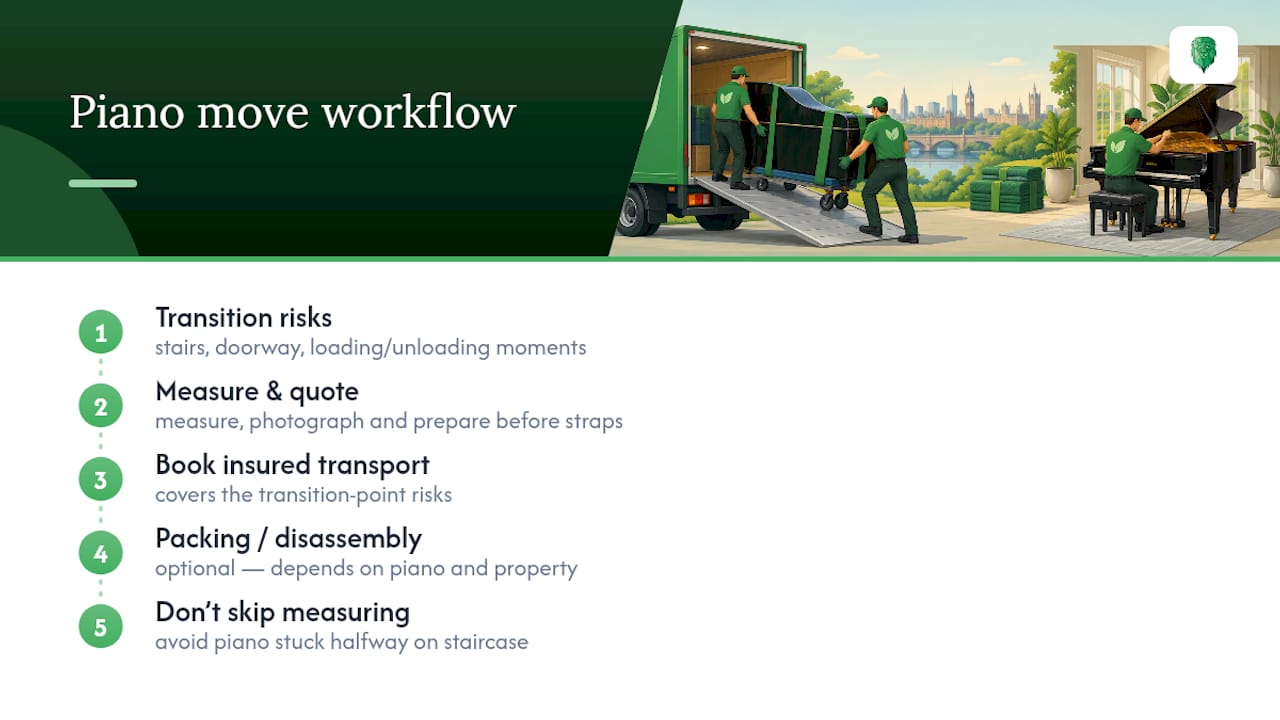
Most piano damage doesn’t happen on the motorway. It happens on the stairs, in the doorway, or during the ten minutes either side of loading when everyone’s rushing and nobody’s double checked the measurements. That’s the pattern worth understanding if you’re paying for this service: the risk sits at the transition points, not the transit itself.
Van-247delivery has spent over 15 years handling exactly these transition points, building practical guides that walk owners through measuring, photographing and preparing a piano before a single strap goes near it. The typical workflow follows a clear sequence: measurement and quote, insured transport booking, then optional packing or disassembly depending on the piano and property. That order matters. Skip the measuring stage and you risk a piano stuck halfway up a staircase, which is a far worse problem than any tuning issue that follows.
— Claudiu
Book insured piano transport with Van-247delivery
Certain piano transport services offer insured handling, packing, and disassembly bundled into one service, rather than requiring coordination of separate specialists.

To get an accurate quote, have these details ready: your piano type (upright, baby grand or grand), rough dimensions, access details at both properties (stairs, doorways, parking), and your preferred moving date. Once you book through the piano transport page, you’ll get measuring confirmation, a defined arrival window, and an experienced crew who bring their own protective equipment rather than expecting you to source it. If your piano is part of a wider house move, the house removals service can bundle everything into a single booking, including storage if your new place isn’t quite ready. Get your instant quote today and lock in a date before the busy season fills up.
FAQ
How much does piano transport cost in the UK?
Local piano moves typically cost between £150 and £600, while long-distance moves often exceed £750. The average across all UK moves sits around £400, with price driven mainly by piano type, access, and distance.
How long does a piano move take?
A local move usually takes one to two hours from loading to placement, assuming reasonable access. Long-distance or complex moves, involving stairs, cranes, or difficult parking, can take considerably longer.
Who is responsible for disassembling the piano?
Your moving company handles disassembly and reassembly when the piano requires it, typically grand pianos needing leg or lid removal. Confirm this is included in your quote before booking, since some providers charge it separately.
When should I get my piano retuned after a move?
Wait around two to three weeks after delivery, letting the piano settle into the new room’s temperature and humidity before booking a tuning appointment. Moving disturbs string tension, so retuning too soon before the instrument has stabilised often means paying for a second visit.
Does Van-247delivery offer insured piano transport?
Yes, Van-247delivery’s piano transport service includes insured handling alongside optional packing, disassembly and reassembly. Pricing isn’t published online, so request a quote with your piano type and access details for an exact figure.