Removal damage claim UK: yes, you can usually claim if a UK removal company damages your goods. Movers owe you a duty of care, and the legal concept of bailment often shifts the burden onto them to prove they took reasonable care, not the other way round. Before you do anything else:
- Photograph every damaged item, plus the packaging it arrived in
- Keep all boxes, wrapping and delivery paperwork
- Write a dated inventory of what’s damaged or missing
- Get the driver or foreman to acknowledge the damage on the delivery note before they leave
Roughly seven days is the standard notification window in most removal contracts, so speed matters. Reputable firms, including those registered with the British Association of Removers (BAR), expect this evidence and have processes built around it. At Van-247delivery, we’ve seen how quickly a well-documented claim gets resolved compared with one built on memory alone.
Key Takeaways
A UK removal damage claim usually succeeds when bailment shifts the burden of proof, evidence is gathered within days, and escalation follows the BAR ADR and small claims route in order.
| Point | Details |
|---|---|
| Act within the notification window | Most removal contracts require written notice of damage within seven days of delivery. |
| Bailment favours you | Once you show goods were damaged in transit, the mover must prove they took reasonable care. |
| Document before you claim | Photos, packaging, a dated inventory and delivery notes make or break a dispute. |
| Escalate in order | Try the mover’s complaints process, then BAR ADR or the Ombudsman, then Money Claim Online. |
| Choose insured movers | Van-247delivery provides goods-in-transit cover and documented delivery notes on every house removal. |
Table of Contents
- Removal damage claim UK: what evidence and timing actually matter
- The legal basis for your claim: bailment, contract and negligence
- Insurance and liability: whose policy pays out?
- What if the removal company refuses to pay?
- Sources
- FAQ
Removal damage claim UK: what evidence and timing actually matter, part of removal damage claim UK
The first 72 hours after your move decide whether your claim sails through or drags on for months. Here’s the order to work through it.
- Photograph everything before you move a single item. Wide shots for scale, close-ups for detail, and a short video walkthrough of each room helps enormously if a dispute later comes down to “how bad was it really”.
- Keep every box, wrapper and dust sheet. Crushed packaging often proves mishandling rather than an item simply being old or fragile, and insurers frequently ask to see it.
- Write a dated inventory listing each damaged or missing item, its approximate age, and what you paid or would pay to replace it.
- Check your contract for the notification deadline. Many removal firms set this notification deadline at about a week from delivery, and missing it can weaken or void your claim entirely.
- Confirm whether the item was owner-packed. Boxes you packed yourself are commonly excluded from a mover’s liability, unless the damage clearly resulted from rough handling rather than poor packing.
- Send your complaint in writing. Email with a read receipt, or recorded delivery if the value is significant, so you have proof it arrived on time.
For costing the claim itself:
- Get two repair quotes where the item can be fixed
- Find comparable listings (eBay, retailer sites) for like-for-like replacement value
- Keep receipts for the original purchase if you still have them, even old ones
Pro Tip: Photograph the packaging separately from the item itself. A caved-in box with your grandmother’s vase inside tells a very different story to the loss adjuster than a vase photographed alone on a table.
The legal basis for your claim: bailment, contract and negligence part of removal damage claim UK
Bailment is the legal principle doing most of the heavy lifting in your favour. When you hand your possessions to a removal company, you create a bailment relationship: they hold your goods temporarily and owe you a duty to look after them. Crucially, once you show the goods left your old home in good condition and arrived damaged, the burden shifts to the mover to prove they took reasonable care, rather than you having to prove exactly how the damage happened.
Legal commentators treat bailment as one of the most practical routes available to consumers precisely because it moves the evidential burden onto the party best placed to explain what went wrong: the mover.
Alongside bailment, you may also have a claim in:
- Breach of contract — if the mover failed to deliver the service they promised in writing
- Negligence — if they handled goods carelessly, separate from any contract terms
Movers often lean on exclusion or limitation clauses buried in their terms. Under the Unfair Contract Terms Act and related consumer protections, these clauses can’t be used to dodge liability for genuinely careless handling, though they can cap what you recover. This is why documentation matters so much: a mover resisting your claim has to show they met a reasonable standard of care, and that’s hard to do without their own paperwork to back it up.
Insurance and liability: whose policy pays out part of removal damage claim UK?
Most removal firms carry goods-in-transit insurance, but it rarely covers full replacement value automatically. Many policies cap compensation per item or per kilogram unless you’ve declared a higher value and paid extra for it, so ask before you book, not after something breaks.
Your own contents insurance can sometimes step in too, particularly for high-value items, though insurers often try to recover their payout from the mover afterwards once they’ve settled with you. Practically, that means:
- Ask the mover for their goods-in-transit policy limits before moving day, not after
- Check whether your contents insurance for movers covers “in transit” damage as standard, or as an add-on
- Owner-packed boxes are commonly excluded from a mover’s liability cover, though bailment principles can still apply where negligence is obvious
- Keep receipts, photos and repair estimates together in one file before you contact either insurer
Roughly seven days is also the typical window insurers expect notification within, which lines up with most removal contracts. For a deeper look at how these policies interact, our moving insurance guide breaks down declared value options in more detail, and Bridges’ primer on moving insurance is worth a read if you want the mechanics spelled out further.
What if the removal company refuses to pay, part of removal damage claim UK?
Don’t jump straight to court. There’s a sensible order to escalation that saves you time, money and stress.
- Raise it with the mover directly, in writing. If they’re BAR-registered, they’re expected to acknowledge and work through complaints within published timeframes rather than leaving you waiting indefinitely.
- Use BAR’s Alternative Dispute Resolution (ADR) service if the mover is a member and the internal complaint stalls. This is free and often quicker than court.
- Contact the Furniture & Home Improvement Ombudsman if the mover falls under their remit; the ombudsman can investigate and make awards, though eligibility and award caps apply, so check before assuming it covers your case.
- Send a formal letter before claim. Template wording exists for this, and it should summarise the facts, list your evidence, state the sum you’re claiming, and give a clear deadline (usually 14 days) before you escalate further.
- File through Money Claim Online if the deadline passes with no resolution. This is the standard route for consumer claims up to £10,000 in England and Wales, and Gov so you know the cost before you commit.
Most disputes never reach step five. The paper trail you built in the first 72 hours is usually what gets you a fair settlement long before court becomes necessary.
What compensation you can actually expect
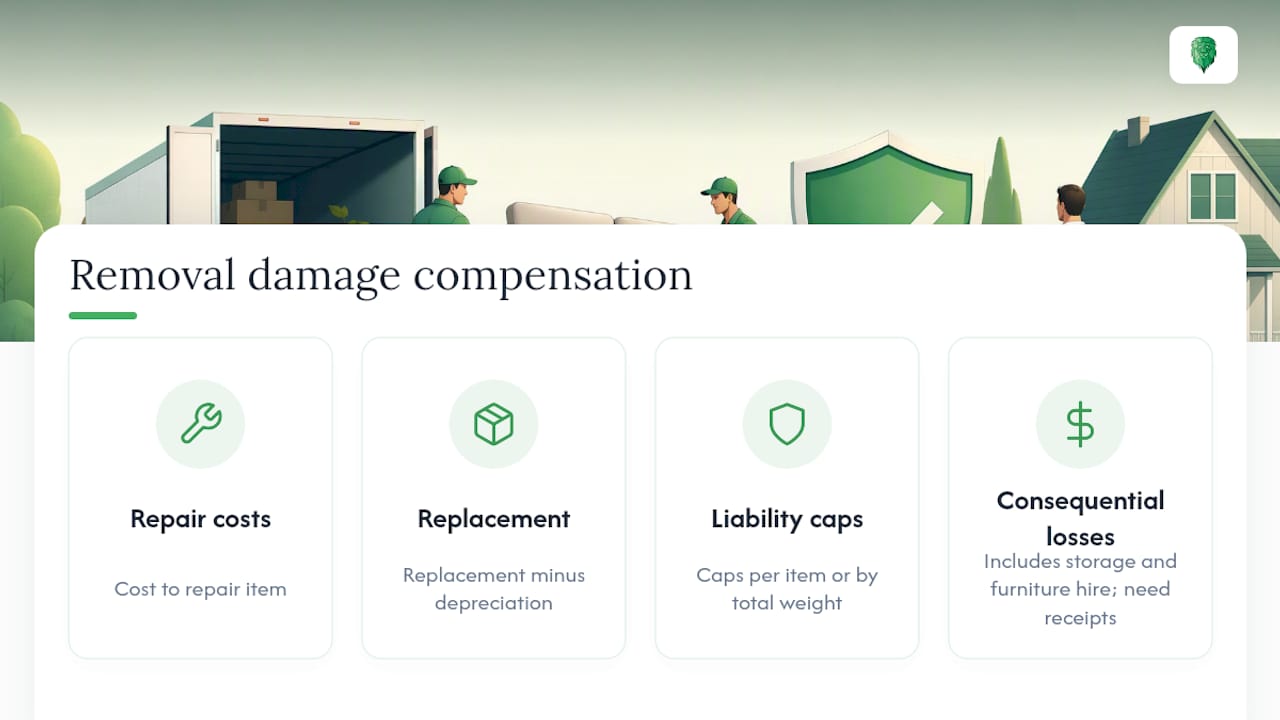
Compensation typically covers repair cost where an item can be fixed, or replacement cost minus a reasonable depreciation allowance for age and wear on items that can’t be repaired. Contractual liability caps, often set per item or by total weight, can reduce what you recover even when the mover accepts full responsibility. Consequential losses, such as emergency storage or replacement furniture hire while a claim is resolved, are sometimes recoverable too, though you’ll need receipts to back them up. Settlement figures vary hugely depending on the item and cap in place, so read your contract’s liability clause before you assume full replacement value is on the table.
Reducing the risk before it happens part of removal damage claim UK
Booking smart cuts your odds of ever needing this guide again.
- Choose a mover with BAR membership or clearly stated goods-in-transit cover. And get the insurance limits confirmed in writing before moving day
- Pay for professional packing on anything fragile or high-value, and photograph items before they go into boxes
- Walk the property with the crew at both collection and delivery. And insist any damage found at handover gets noted on the signed delivery sheet
Pro Tip: If you’re moving something irreplaceable, like a piano or an antique, ask the mover directly how they handle specialist items. Our guide on protecting pianos during a move shows how the right handling technique avoids claims entirely.
How reputable movers actually handle damage on the day part of removal damage claim UK
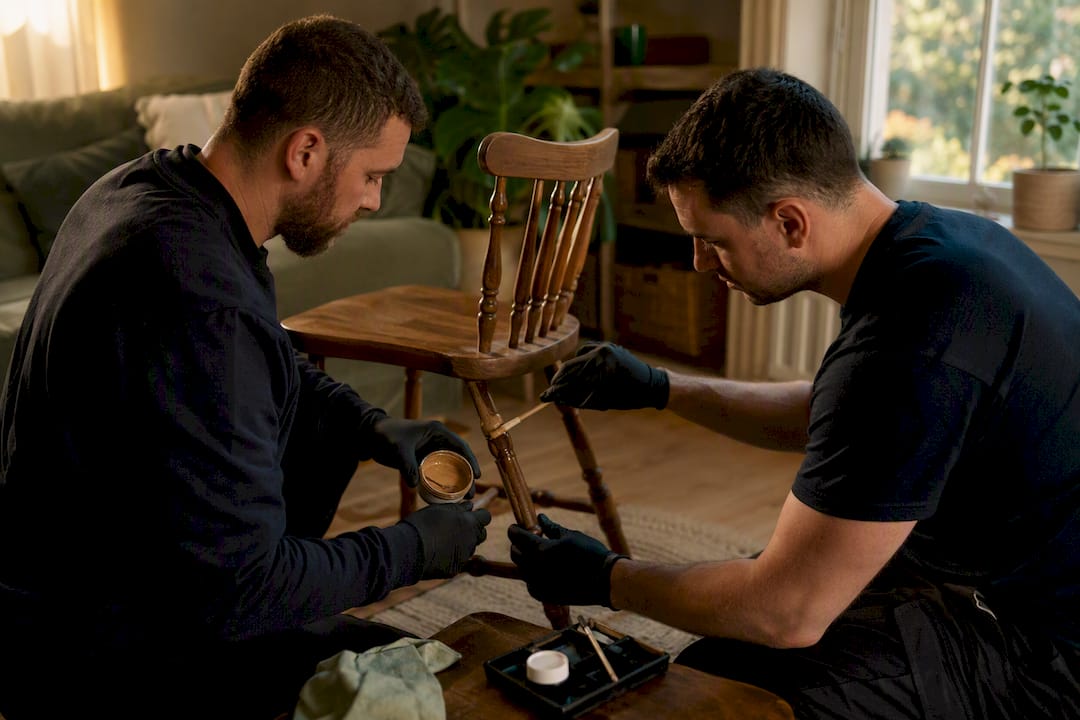
Most damage claims we’ve seen resolved well started with the crew flagging the problem there and then, not weeks later. A scuffed table leg or a dented flight case often gets sorted with an on-site repair offer or a small on-the-spot goodwill gesture, and that kind of quick fix is common across the industry precisely because it avoids the cost and hassle of a formal claim for everyone involved. Clear delivery notes and photos taken at handover are what make that possible, since they give both sides a shared, undisputed record to work from rather than a disagreement about who’s remembering it correctly.
Van-247delivery: insured removals with less claim friction
Every house removal we run comes with goods-in-transit insurance, professional packing options, and delivery notes that record condition at both ends of the job, not just at pickup. That paperwork trail is exactly what protects you if something does go wrong, and it’s why disputes with our customers rarely escalate past a direct conversation with our team.
If you’re planning a move and want fewer headaches on the other end, our insured house removals service covers the whole job from packing through to delivery, with claims support built in rather than bolted on afterwards. Get an instant quote and see exactly what cover comes as standard before you book.
Sources
- Recoveries from removal companies: part 1 – heads of claim
- Removal Company Damaged Or Lost Your Items? UK Claim Steps And Evidence Checklist
- What to do if something goes wrong — British Association of Removers (BAR)
- Gov
- Complaint to a removal company for items damaged during removal | Law Assistance
FAQ
What are my rights if a removal company damaged my property in the UK?
You have a right to claim under bailment and contract law: the mover must generally prove they took reasonable care once you show the damage happened while goods were in their custody.
Can I claim for damage to my property?
Yes, provided you notify the mover in writing within the contract’s deadline (often seven days). And can evidence the damage with photos, an inventory and delivery paperwork.
How to handle damage caused by a contractor in the UK?
Photograph the damage immediately, notify the contractor or mover in writing. And follow their formal complaints process before escalating to ADR or small claims if they refuse to settle fairly.
What compensation can I expect for damaged removal items?
Compensation usually covers repair or depreciated replacement cost, though contractual liability caps can reduce the final figure.
So check your mover’s terms before assuming full value is guaranteed.