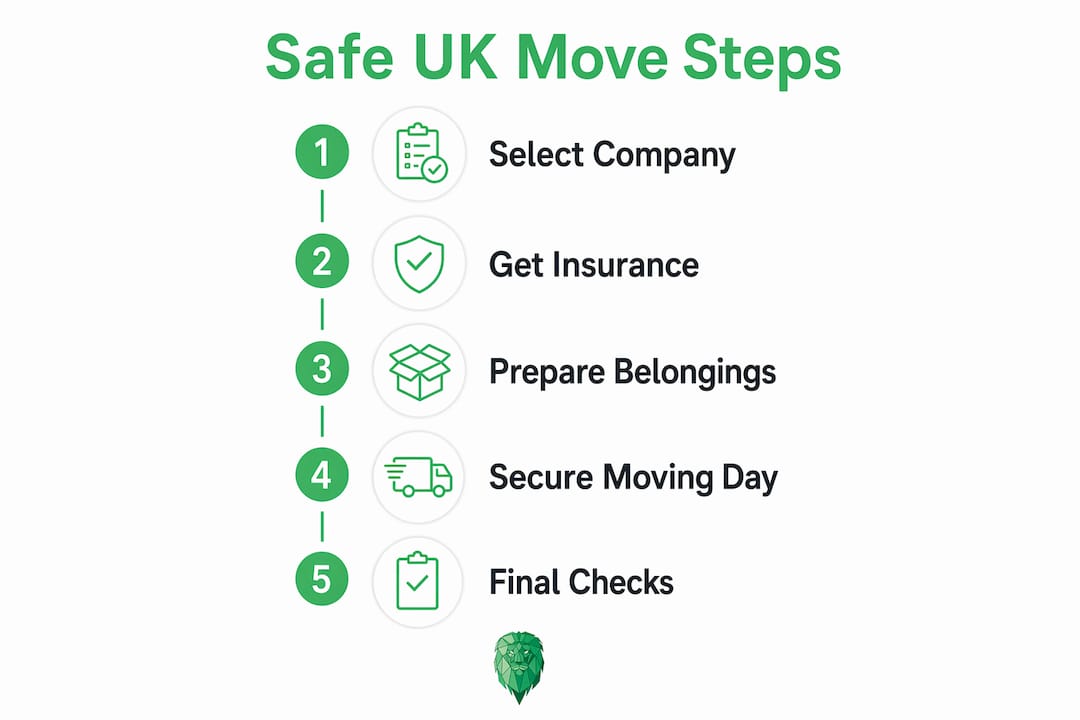
A safe moving process in the UK is defined as a planned, insured, and professionally managed relocation that protects your belongings, your property, and your budget from start to finish. Whether you are moving a family home in Manchester or relocating a business in London, the difference between a smooth move and a stressful one almost always comes down to preparation and the right professional support.
Choosing a BAR-registered removal company is the single most important decision you will make. Get that right, and everything else becomes far more manageable. This guide walks you through every stage of a secure relocation, from verifying credentials to avoiding the most costly mistakes UK movers make.
What credentials and insurance should UK removal companies have part off safe moving process uk?
The British Association of Removers, known as BAR, is the UK’s gold standard for removal company accreditation. BAR membership guarantees that a firm adheres to industry standards, carries appropriate insurance, and operates a fair complaints process. This matters because unaccredited firms have no obligation to follow any code of conduct, leaving you with very little recourse if things go wrong.
Beyond BAR membership, you need to check two specific insurance types before signing anything:
- Public liability insurance: Reputable UK removal companies carry at least £5 to £6 million in public liability cover. This protects you if the crew damages your property during the move.
- Goods-in-transit insurance: This covers your belongings while they are being transported. Always ask for the policy limit and confirm it covers the full replacement value of your possessions.
- Written proof: Request certificates for both policies before you commit. A reputable firm will provide these without hesitation.
- Claims window: Confirm the timeframe for reporting damage. Most firms require claims within 7 to 30 days of delivery.
One fact that catches many people off guard: most UK home insurance policies do not cover your belongings while they are in transit. That means even if you have comprehensive home cover, you could be completely unprotected the moment your sofa leaves the front door. Always confirm transit coverage is included or purchase additional protection separately.
Pro Tip: Ask the removal company to send their insurance certificates directly to your email before moving day. If they hesitate or delay, treat that as a warning sign.
“Choosing a BAR-registered firm is not just about peace of mind. It is about having a structured, transparent process to fall back on if anything goes wrong.” — Removals101.co.uk
How to prepare your possessions and property for a secure move
Good preparation is what separates a chaotic moving day from a calm one. The steps below are not optional extras. They are the foundation of any best moving practice in the UK.
- Declutter before you pack. Decluttering significantly lowers moving costs and reduces the risk of damage by cutting down the total volume being handled. Sell, donate, or dispose of anything you have not used in the past year. Fewer boxes mean fewer opportunities for breakages.
- Use the right packing materials. Double-walled boxes for heavy items, bubble wrap for fragile goods, and packing paper for filling voids inside boxes. Plates should be packed vertically, not flat. Glasses should be individually wrapped and placed upright. These small choices make a measurable difference.
- Label every box clearly. Write the destination room and a brief contents description on at least two sides of each box. Colour-coded labels by room speed up unloading considerably. For moving heavy furniture, mark boxes as “heavy” so the crew can plan their approach safely.
- Dispose of hazardous materials separately. Removal firms are legally prohibited from transporting items such as paint, petrol, bleach, and aerosols. These must be disposed of before moving day. Check your local council’s hazardous waste disposal options well in advance.
- Prepare your property. Lay floor coverings on staircases and hallways to prevent scuffs. Clear pathways of furniture and obstacles. If you are moving out of a flat, book the lift in advance and notify your building management. For guidance on transporting furniture safely up and down stairs, plan the route with your removal crew beforehand.
Pro Tip: Pack a “moving day essentials” bag the night before. Include your kettle, mugs, phone charger, toilet roll, a change of clothes, and any important documents. This bag travels with you, not in the removal van.
When it comes to organisation, a simple spreadsheet listing every box number, its contents, and its destination room takes about 30 minutes to create and saves hours of searching after you arrive. It also gives you a reference point if you need to make a damage claim later.
What steps ensure safety and clarity on moving day part off safe moving process uk?
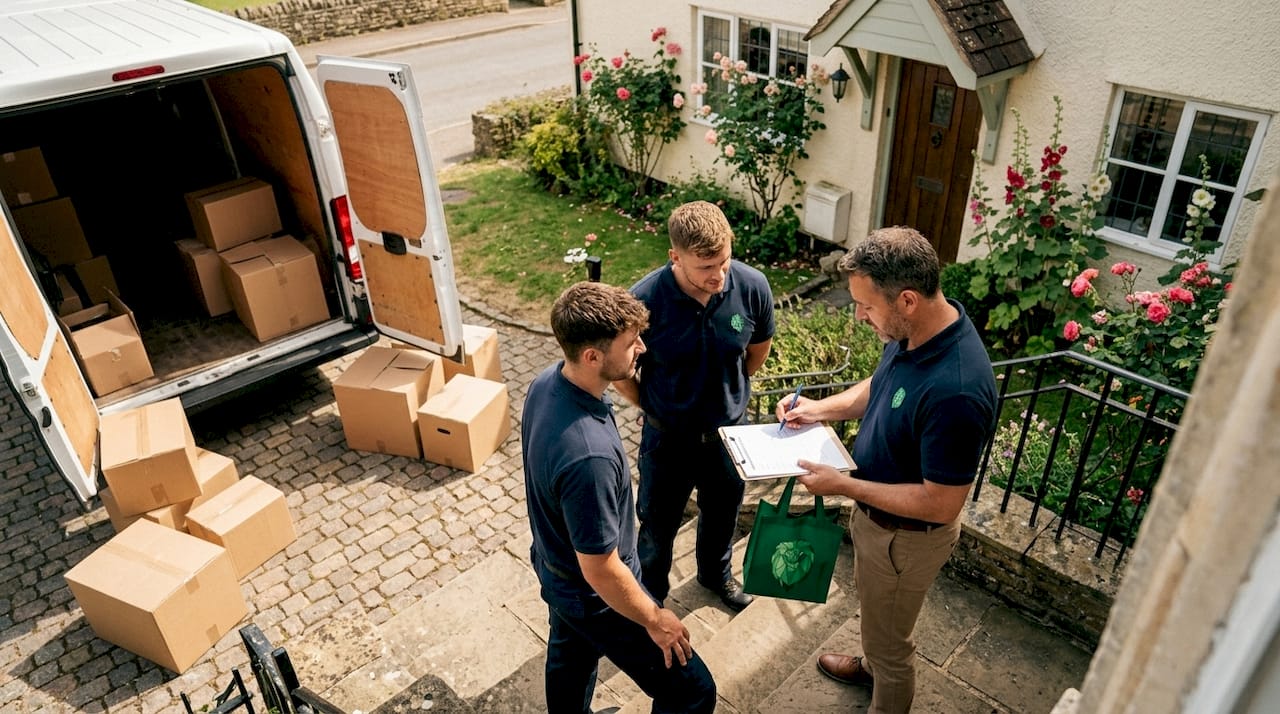
Moving day is a marathon, not a sprint. The more clearly you communicate with your removal crew from the outset, the smoother the day will run.
Before the van arrives, confirm the following:
- Arrival time and crew size: Know exactly how many people are coming and when. A two-bedroom flat typically needs two to three crew members. A four-bedroom house needs at least three to four.
- Parking arrangements: Arrange a parking permit or suspension for the removal vehicle if you are in a controlled zone. Councils in cities like Bristol, Edinburgh, and Birmingham require advance notice of several days.
- Contingency plans: Discuss what happens if the new property is not ready on time. Reputable firms have storage solutions for exactly this scenario.
Once loading begins, do a walk-through of each room with the crew leader and note any pre-existing damage to furniture or walls. Photograph anything you are concerned about. After unloading at the new address, inspect every item before the crew leaves and note any new damage in writing.
| Stage | What to check | Why it matters |
|---|---|---|
| Before loading | Pre-existing damage to items and walls | Creates a clear baseline for any claims |
| During loading | Fragile items handled correctly | Prevents breakages before they happen |
| After unloading | All items present and undamaged | Confirms delivery is complete and correct |
| Payment | Balance paid after inspection | Protects you if damage is discovered |
On the subject of payment: standard practice in the UK is a deposit of 10 to 20% to secure your moving date, with the balance paid only after unloading and inspection. Never pay the full amount upfront. A firm that insists on full payment before the job is done is a firm worth walking away from.
Pro Tip: Keep a copy of your inventory list and the removal company’s insurance details on your phone throughout moving day. If a dispute arises, you will have everything you need immediately to hand.
What are the most common mistakes in UK moves and how do you avoid them part off safe moving process uk?
Even well-organised movers fall into predictable traps. Knowing these pitfalls in advance puts you well ahead of the majority.
- Accepting a quote without a pre-move survey. Online or phone-only quotes without a physical or video survey frequently lead to large unexpected costs on moving day. Professional firms conduct pre-move surveys to assess volume and access accurately. Accurate volume assessment prevents surprise charges and inadequate vehicle planning.
- Not comparing enough quotes. Getting at least three detailed written quotes is the recommended approach. Itemised quotes let you compare like for like and spot firms that are cutting corners on insurance or crew numbers.
- Skipping accreditation checks. Hiring an unaccredited firm to save money is one of the most common and costly mistakes in UK relocations. If something goes wrong, you have no formal complaints process and potentially no insurance cover.
- Ignoring hazardous item rules. Leaving paint tins or aerosols for the removal crew to deal with on the day creates legal liability for both parties. Dispose of these items in advance, full stop.
- Paying in full before the job is complete. This removes your leverage entirely. If damage is found after the crew has left and you have already paid, recovering costs becomes significantly harder.
“The biggest moving mistakes are almost always avoidable. They come from rushing decisions, skipping verification steps, and assuming everything will work out on the day.” — Removals101.co.uk
For a detailed walkthrough of the full process, the step-by-step house removal guide from Van-247delivery covers the 2026 UK context in practical depth.
Key takeaways
A safe moving process in the UK requires BAR-accredited professionals, verified transit insurance, thorough preparation, and a clear payment structure to protect your belongings and budget.
| Point | Details |
|---|---|
| Verify accreditation and insurance | Choose BAR-registered firms with at least £5 to £6 million public liability cover and confirmed goods-in-transit insurance. |
| Prepare and declutter early | Reducing volume before packing lowers costs, minimises damage risk, and makes moving day faster. |
| Inspect before and after | Document item condition before loading and after unloading to support any damage claims. |
| Pay the balance after inspection | A 10 to 20% deposit is standard; never pay in full before the job is verified complete. |
| Get at least three written quotes | Itemised quotes from multiple firms protect you from hidden costs and underinsured operators. |
What I have learnt from years of watching UK moves go right and wrong
From where I stand, the single biggest mistake people make is treating the removal company search as an afterthought. They spend weeks choosing paint colours and months negotiating on the property, then spend 20 minutes picking a removal firm based on price alone. That imbalance costs people dearly.
The firms that consistently deliver safe, stress-free moves share a few traits. They insist on a pre-move survey rather than guessing volumes over the phone. They provide insurance certificates without being asked twice. And they communicate proactively about timing, parking, and contingencies rather than waiting for you to chase them.
My honest advice on insurance: do not assume your home contents policy covers you in transit. Most do not. Spend the extra money on dedicated transit cover, or confirm in writing that your removal firm’s goods-in-transit policy covers the full replacement value of your most valuable items. Antiques, artwork, and electronics deserve a separate conversation with your insurer before moving day.
One thing I would add that most guides overlook: keep your most important documents and irreplaceable items with you personally on moving day. Passports, birth certificates, hard drives, and sentimental items should travel in your car, not the removal van. No insurance pay out compensates for losing something that cannot be replaced.
— Claudiu
How Van-247delivery supports your safe move across the UK
Van-247delivery has been helping individuals and businesses across the UK move safely and efficiently for over 15 years. Whether you need a full house removal service with packing and disassembly, a flexible man and van for a smaller move, or a fully managed office relocation, every service comes with insurance coverage and professional handling as standard. Van-247delivery provides instant quotes, transparent pricing, and a team that understands the practical realities of moving house safely in the UK. If you are planning a relocation and want a vetted, insured, and experienced team behind you, getting a quote takes minutes and gives you the clarity to plan with confidence.
FAQ
What does a safe moving process in the UK involve?
A safe moving process covers choosing an accredited, insured removal firm, preparing and packing belongings correctly, and inspecting items before and after transport. BAR membership and verified goods-in-transit insurance are the two non-negotiable starting points.
How much insurance should a UK removal company carry?
UK removal companies should carry at least £5 to £6 million in public liability insurance, plus goods-in-transit cover for the full value of your belongings. Always request written proof of both policies before booking.
Should I pay a removal company in full before moving day?
No. Standard UK practice is a deposit of 10 to 20% to secure the date, with the remaining balance paid only after your items have been unloaded and inspected at the new address.
What items are removal companies not allowed to transport?
Removal firms in the UK are legally prohibited from carrying hazardous materials including paint, petrol, bleach, and aerosols. These must be disposed of through your local council’s hazardous waste service before moving day.
How many quotes should I get before choosing a removal company?
Get at least three detailed, itemised written quotes. This gives you a fair comparison of pricing, crew size, and insurance cover, and helps you identify any firm that is cutting corners on the services that matter most.