Recognising the signs you need a piano mover is the difference between a safe relocation and a costly, stressful disaster. Pianos are not simply heavy furniture. They are precision instruments with delicate internal mechanisms, and moving one without the right expertise puts both the instrument and your home at serious risk.
Whether you own a compact upright or a full baby grand, the physical and logistical challenges of piano transport demand honest self-assessment before moving day arrives.
1. Your piano weighs more than you think
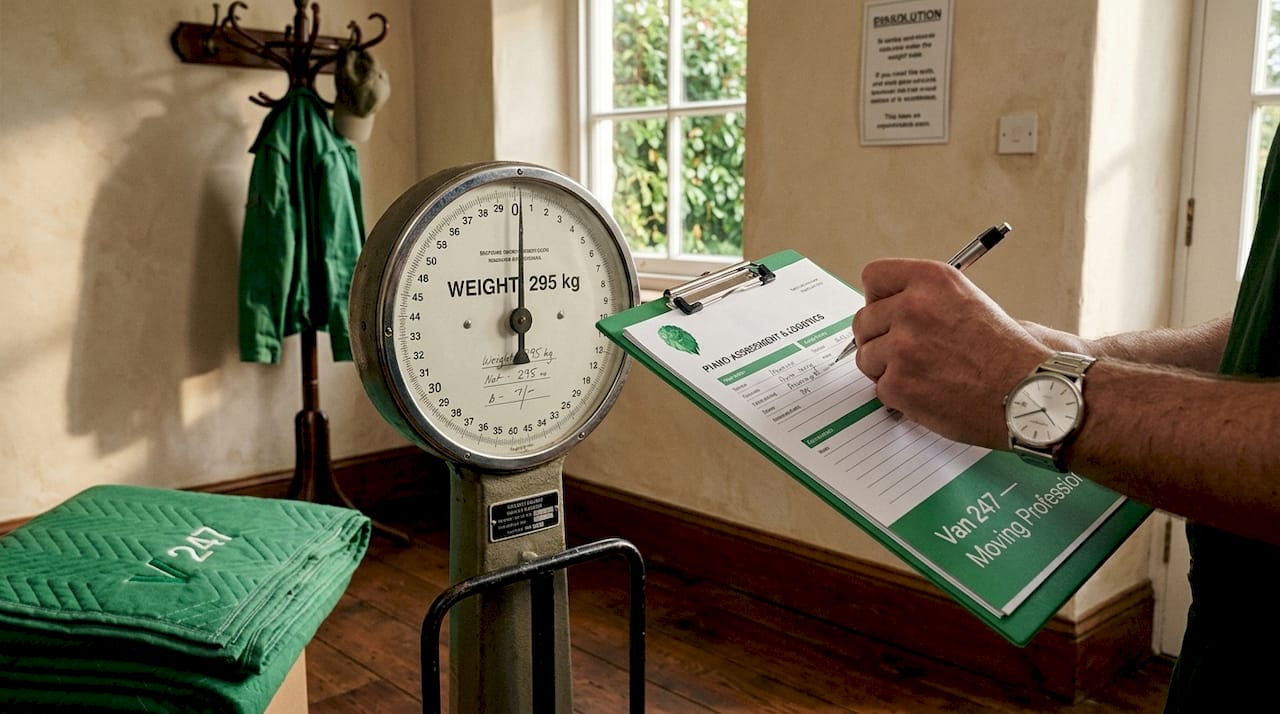
Weight is the most immediate indicator for piano moving, and most people underestimate it significantly. Pianos heavier than 200 pounds typically require professional movers due to handling difficulty and safety risks. That threshold covers almost every piano in a domestic setting, including smaller uprights. A full upright or studio piano can weigh between 200 and 400 kilograms, while a baby grand can exceed 500 kilograms.
One of the most common causes of failed moves is a spec mismatch on moving day, where a crew arrives expecting a 48-inch upright and finds a 60-inch studio model with significantly more weight. That difference leaves the team under-crewed and under-equipped, turning a planned move into a dangerous situation. Professional piano movers price and crew jobs based on exact make and model details, so accurate information from you is critical.
- Measure your piano’s height, width, and depth before contacting any mover
- Check the manufacturer’s specifications online if the original documentation is unavailable
- Note whether the piano has a bench, lid, or removable legs that affect total weight
Pro Tip: Write down your piano’s make, model, and serial number before requesting quotes. This single step prevents the most common cause of under-crewed moves and gives you a more accurate price.
2. Your route involves stairs or tight doorways
Stairs and narrow doorways are the clearest physical indicators that professional help is non-negotiable. Minimum doorway clearance is 36 inches for grands and 28 inches for uprights to move safely. If your doorway measures 27 inches or less, standard removal methods will not work and specialist tools become necessary. That is a situation no DIY team should attempt.
Tight corners, low ceilings, and stair risers all compound the challenge. A piano tilted at the wrong angle on a staircase can shift its centre of gravity unpredictably, putting enormous strain on anyone holding it. Without specialised equipment like skid boards, heavy-duty dollies, protective blankets, and load straps, the risk of injury or damage to your floors and walls increases dramatically.
Before moving day, walk the full route from the piano’s current position to the removal vehicle. Measure every doorway, note every turn, and check stair riser heights. This advance planning is what specialist piano carriers do as standard practice, and it is the reason they rarely encounter surprises on the day.
Pro Tip: If your move involves a flat or apartment building, check whether the service lift requires advance booking. Many buildings also require a certificate of insurance from your mover before granting access.
3. You live in a flat or apartment building
Moving a piano out of a flat introduces a layer of complexity that goes well beyond the physical challenge. Booking the service elevator and providing certificates of insurance is vital for moves involving flats or apartment complexes. Many buildings require movers to be named on the insurance policy with liability cover of £2 million or more. Arriving without this documentation means your move is refused at the door.
Building management teams often impose strict time windows for removals, restrict access to certain lifts, and require protective coverings for shared corridors and lobbies. A professional piano mover will handle all of this coordination as part of the service. If you are planning a DIY move and have not contacted your building manager yet, that oversight alone is a strong indicator that you need professional support.
4. Your piano holds significant financial or sentimental value
The financial case for hiring professionals becomes obvious when you consider the cost of getting it wrong. A damaged soundboard, cracked case, or broken action mechanism can cost hundreds or even thousands of pounds to repair, often exceeding the cost of professional moving fees several times over. For rare or antique models, repair may not even restore the original value.
Sentimental value adds another dimension entirely. A piano passed down through generations carries a weight that no insurance pay out can replace. The risk of damage during an unprofessional move is real, and it is not limited to catastrophic drops. Vibration, moisture exposure during transit, and improper padding can all cause harm that only becomes apparent weeks later.
“The question is never whether you can physically move a piano. The question is whether you can move it without damaging the instrument, your home, or yourself.”
Weigh the cost of professional moving against the replacement or repair value of your piano. For most households, the maths strongly favours hiring experts.
5. You cannot verify a mover’s licence and insurance
Choosing the wrong mover is as risky as attempting the move yourself. Movers requesting large upfront cash deposits or refusing to conduct an in-home survey before quoting are warning signs you should not ignore. Reputable movers provide written, itemised estimates and confirm delivery windows in writing before any payment is made.
Here is what to check before committing to any piano mover:
- Ask for a written estimate that itemises labour, equipment, and any access surcharges
- Confirm the mover carries public liability insurance and goods-in-transit cover
- Check that the company has verifiable credentials, such as membership of a recognised trade body or a traceable business registration
- Avoid any mover who quotes by phone alone without asking about your piano’s make, model, or route details
- Confirm delivery windows in writing and get a clear policy on what happens if damage occurs during the move
A mover who cannot or will not provide these details is not a mover you should trust with a valuable instrument. Proper licensing and insurance are not bureaucratic formalities. They are the clearest signal that a company takes its responsibilities seriously.
6. You do not have the right equipment
Standard removal equipment is not designed for pianos. Ordinary furniture dollies, moving blankets from a hire shop, and ratchet straps intended for flat-pack furniture will not provide the control or protection a piano requires. Professional movers use purpose-built skid boards, piano-specific dollies with locking wheels, and heavy-duty padding designed to absorb shock during transit. The difference in outcome is significant.
If you are planning a move and your equipment list does not include these items, that gap is a direct indicator that professional help is the right call. Renting specialist piano moving equipment is possible in some areas, but operating it safely requires training and experience that most people simply do not have.
7. You are moving a long distance or across regions
Local moves within a single room or between adjacent properties carry manageable risk. Long-distance moves across the UK introduce variables that multiply the challenge: road vibration over extended journeys, temperature and humidity changes during transit, and the need for secure loading that prevents the piano from shifting. Understanding how logistics ensures safe piano moving across the UK involves route planning, vehicle specification, and securing protocols that go well beyond standard removal practice.
A piano transported in an unpadded van over a three-hour motorway journey will experience far more stress than one moved carefully across a single floor. Professional movers use vehicles with air-ride suspension or padded interiors specifically to reduce vibration damage. If your move covers more than a short local distance, this is a clear sign to bring in specialists.
8. You feel uncertain or underprepared
Honest self-assessment is one of the most underrated piano moving tips. If you have read this far and feel uncertain about any aspect of your planned move, that uncertainty is itself a sign. Moving a piano is not a task where confidence alone compensates for missing knowledge or equipment. The consequences of getting it wrong are expensive, potentially dangerous, and sometimes irreversible.
A quick comparison makes the decision clearer:
| Scenario | DIY risk | Professional advantage |
|---|---|---|
| Stairs or tight doorways present | High injury and damage risk | Specialist equipment and trained technique |
| Piano weighs over 200 kg | Crew fatigue and loss of control | Correctly sized team and load management |
| Long-distance transport required | Vibration and shifting damage | Padded vehicles and securing protocols |
| Flat or apartment building involved | Access refusal, no insurance cover | Certificates of insurance and booking handled |
| Valuable or antique instrument | Irreplaceable damage risk | Goods-in-transit cover and careful handling |
Pro Tip: If even one row in this table applies to your situation, contact a professional mover for a written quote before making any final decisions. The quote costs nothing; the alternative might cost a great deal.
Key takeaways
Recognising the signs you need a piano mover early prevents damage, injury, and unnecessary expense on moving day.
| Point | Details |
|---|---|
| Weight threshold matters | Pianos over 200 pounds almost always require a professional crew for safe handling. |
| Measure before you commit | Check doorway widths, stair risers, and turning radii before booking any mover. |
| Verify credentials in writing | Demand itemised written estimates and proof of insurance before any payment. |
| Equipment gaps signal risk | Without skid boards, piano dollies, and specialist padding, DIY moves risk serious damage. |
| Uncertainty is a valid sign | If you are unsure about any part of the move, that doubt is reason enough to call a professional. |
Why I always say: spot the signs before moving day, not after
People often ask me whether hiring a piano mover is really necessary for a “small” upright. My honest answer is almost always yes, and the reason goes beyond the weight. Piano moving is a discipline that combines structural knowledge, route planning, equipment expertise, and physical coordination. Most people only discover how complex it is once something has already gone wrong.
What I have seen repeatedly is that the families who engage professionals early, share accurate piano specs, and walk the route in advance have smooth, uneventful moves. The ones who decide to manage it themselves, or who hire the cheapest option without checking credentials, are the ones calling for help after the fact. By then, the damage is done.
My practical advice: treat the eight signs in this article as a checklist, not a suggestion. If two or more apply to your situation, the decision is already made. Call a specialist, get a written quote, and move your piano the right way.
— Claudiu
Move your piano safely with Van-247delivery

Van-247delivery has over 15 years of experience handling specialist piano relocations across the UK. Whether you are moving a compact upright or a full grand, the team arrives with the right equipment, the right crew size, and full goods-in-transit insurance. Written estimates, confirmed delivery windows, and careful route planning are standard on every job. No surprises, no shortcuts. If your move involves stairs, tight doorways, long distances, or a piano you simply cannot afford to damage, Van-247delivery is the trusted choice. Visit the house removals page to request your quote today and move with confidence.
FAQ
How do I know if my piano is too heavy to move myself?
Pianos heavier than 200 pounds require professional movers due to the handling difficulty and safety risks involved. Most domestic uprights and all grand pianos exceed this threshold.
What doorway width do I need to move a piano safely?
The minimum clearance is 36 inches for a grand piano and 28 inches for an upright. Anything narrower requires specialist tools and an experienced crew.
What are the warning signs of an unreliable piano mover?
Avoid any mover who requests a large upfront cash deposit, refuses to conduct an in-home survey, or will not provide a written itemised estimate. These are established indicators of an untrustworthy operator.
Do I need special insurance to move a piano in a flat?
Yes. Most apartment buildings require the moving company to provide a certificate of insurance naming the building management as additionally insured, often with liability cover of £2 million or more. Confirm this with your building manager before booking.
When is a man-and-van service sufficient for a piano move?
A man-and-van service may be suitable for very short, ground-floor moves with no stairs and wide doorways, provided the operatives have piano-specific experience and equipment. For any move involving stairs, distance, or a valuable instrument, a dedicated piano moving service is the safer choice.