Role of expertise in piano removal, expertise in piano removal is the single factor that determines whether your instrument arrives safely or sustains damage that costs thousands to repair. Moving a piano is not simply a matter of muscle and a large van.
It requires specialist knowledge of piano anatomy, purpose-built equipment such as hydraulic lift gates, and a disciplined logistics process that treats your instrument as the valuable asset it is.
Whether you own a compact upright or a full concert grand, the gap between professional piano removal and an amateur attempt is significant. This guide explains exactly what that expertise looks like in practice, and why it matters so much.
What skills and knowledge define expertise in piano removal?
A piano moving expert understands that no two pianos are structurally identical. Uprights, baby grands, and concert grands each carry their weight differently, have different centres of gravity, and respond differently to movement. Professional movers assess these factors before a single wheel is turned, which is what separates a disciplined process from guesswork.
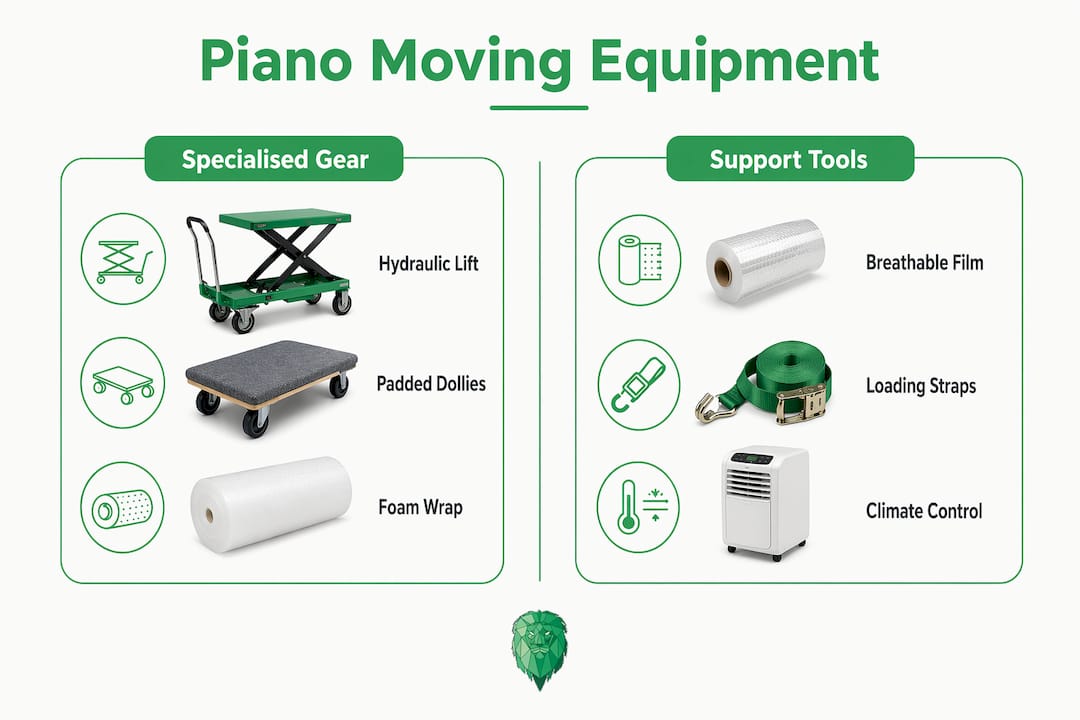
The packing knowledge alone sets specialists apart. Professional piano movers apply high-density foam wrap, breathable piano covers, and custom wood crating to protect against vibration damage and environmental exposure during transit. These are not materials you find at a general removal company. They are chosen specifically because pianos contain thousands of moving wooden and metal parts that react to pressure, moisture, and temperature.
Environmental awareness is another core skill. Humidity directly affects piano tuning stability and structural integrity, because the wooden soundboard and metal strings both expand and contract with moisture changes. Professional movers use digital hygrometers to monitor conditions before, during, and after a move. This level of care is what preserves your piano’s performance and protects your investment long after moving day.
Manoeuvring skill is equally critical. Staircases, narrow hallways, tight doorframes, and low ceilings all present real obstacles. Experienced movers know how to angle, tilt, and guide a piano through confined spaces without scraping walls or straining the instrument’s frame. They also conduct a thorough pre-move inspection, identifying existing damage before transit begins so nothing is misattributed later.
Here is what that expertise checklist looks like in practice:
- Piano type assessment: Identifying structural vulnerabilities specific to upright, baby grand, or concert grand models
- Bespoke packing: Applying high-density foam wrap, breathable covers, and custom crating matched to the instrument’s dimensions
- Environmental monitoring: Using digital hygrometers to track humidity levels and prevent moisture-related damage
- Spatial planning: Mapping the removal route in advance to handle staircases, doorways, and tight corners safely
- Pre-move inspection: Documenting the piano’s condition with photographs and written notes before any movement begins
Pro Tip: Ask your mover to share their pre-move inspection report with you. A professional team will have no hesitation in doing this, and it gives you a clear record of the piano’s condition before transit.
How does specialised equipment support safe piano transport part off role of expertise in piano removal?
Equipment is where professional piano removal becomes visibly different from a general house move. The physical demands of moving a grand piano, which can weigh anywhere from 180 kg to over 600 kg, require machinery that most people simply do not have access to.
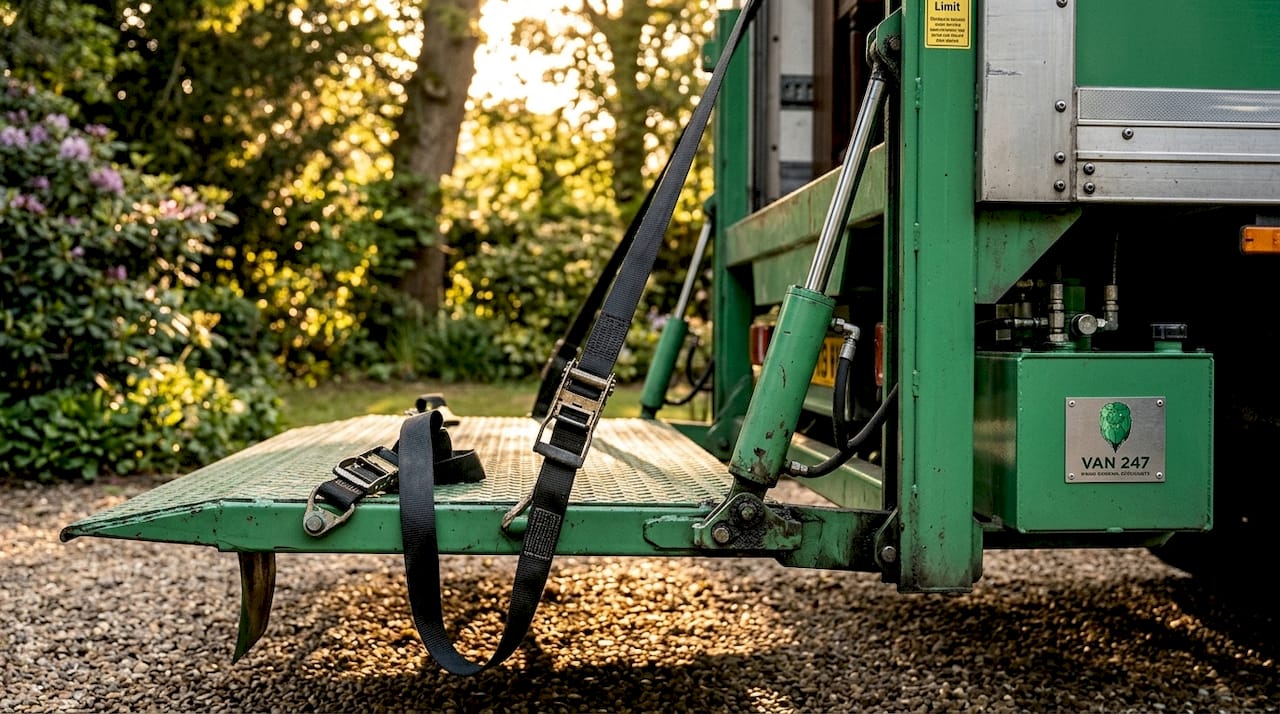
Modern moving trucks use heavy-duty hydraulic lift gates capable of lifting weights over 1,000 kg, which removes the need for manual loading and dramatically reduces the risk of injury and instrument damage. This is not a luxury feature. It is a fundamental safety requirement for any serious piano transport operation. Without it, loading a grand piano onto a truck becomes a dangerous improvisation.
Beyond the lift gate, the logistics discipline matters just as much as the machinery. A professional approach treats the move as a logistics project, with strategic loading patterns that prevent the piano from shifting in transit, careful weight distribution across the vehicle, and documented inventory management at every stage. This reduces operational friction and makes the handover process faster and more reliable.
Climate control during transit is another factor that non-specialist movers overlook. Climate-controlled vehicles and moisture barriers preserve piano condition by mitigating tuning instability and structural damage caused by temperature swings. A piano transported in an unregulated environment on a cold British winter morning can arrive with tuning problems that take weeks to stabilise.
| Equipment or method | Purpose | Risk if absent |
|---|---|---|
| Hydraulic lift gate | Safe loading and unloading of heavy instruments | Injury risk and impact damage during manual loading |
| High-density foam wrap | Vibration absorption and surface protection | Scratches, dents, and internal component damage |
| Custom wood crating | Structural support during transit | Frame stress and lid or leg damage |
| Digital hygrometer | Humidity monitoring pre and post move | Tuning instability and soundboard warping |
| Climate-controlled vehicle | Temperature and moisture regulation in transit | Structural swelling, cracking, or string corrosion |
Pro Tip: When booking a piano removal service, ask specifically whether the vehicle used has a hydraulic lift gate and climate control. If the answer to either is no, keep looking.
What are the risks of moving a piano without professional expertise?
The risks of a non-specialist piano move are not theoretical. They are well-documented and often expensive. Non-specialist piano moves carry a significantly higher risk of damage to both the instrument and the property, as well as increased chances of personal injury to the people involved.
Here is a clear breakdown of what can go wrong:
- Instrument damage: Without proper packing materials and handling technique, the piano’s legs, lid, keys, and internal components are all vulnerable to impact and vibration damage.
- Property damage: Doorframes, staircases, walls, and flooring are all at risk when a heavy instrument is moved without spatial planning and the right equipment.
- Personal injury: Attempting to manually lift and carry a piano without mechanical assistance puts enormous strain on backs, shoulders, and knees. Serious injuries are common in amateur moves.
- Environmental damage: Without humidity control and appropriate packing, a piano exposed to moisture or temperature extremes during transit can suffer soundboard warping, string corrosion, or tuning instability that persists for months.
- Financial loss: Repair costs for a damaged piano can run into thousands of pounds. Without professional insurance coverage, you bear that cost entirely.
The comparison below illustrates the difference clearly:
| Factor | Professional removal | Non-specialist move |
|---|---|---|
| Packing materials | High-density foam, custom crating | Blankets, general padding |
| Loading method | Hydraulic lift gate | Manual lifting |
| Environmental control | Climate-controlled vehicle | Standard van, no regulation |
| Insurance coverage | Specialist instrument cover | General or no cover |
| Pre-move inspection | Documented condition report | None |
The right logistics approach reduces liability by preserving asset value and gives you peace of mind throughout the process. That peace of mind is genuinely worth paying for.
How can you prepare to support your piano movers part off role of expertise in piano removal?
Your role in a successful piano move does not end at booking. The more you prepare, the smoother the process will be for everyone involved, and the better protected your instrument will be throughout.
- Communicate clearly about your piano type and access: Tell your movers whether you have an upright, baby grand, or concert grand, and describe the access points at both the collection and delivery addresses. Mention any stairs, narrow corridors, or low ceilings in advance so the team can plan accordingly.
- Clear the moving path: Remove rugs, furniture, and any obstacles along the route the movers will take. This sounds simple, but it genuinely reduces risk and saves time on the day.
- Monitor humidity before and after the move: Use a digital hygrometer to check the humidity levels in the room where your piano currently lives and where it will be placed. The ideal range for most acoustic pianos is between 45% and 70% relative humidity. If the destination room is significantly drier or more humid, take steps to regulate it before the piano arrives.
- Schedule a post-move tuning: Even a perfectly executed professional move will cause some degree of tuning shift, simply because the piano has been transported and placed in a new environment. Book a tuning appointment for two to four weeks after the move, once the instrument has had time to acclimatise.
- Gather your documentation: Have the piano’s make, model, and serial number ready, along with any existing insurance documents. A good removal company will want this information for their records, and it protects you if any dispute arises.
For more detailed guidance on preparing for the day itself, the complete piano moving guide from Van-247delivery covers the practical steps in full.
Key takeaways
Professional piano removal requires specialist skills, purpose-built equipment, and disciplined logistics to protect both the instrument and the people moving it.
| Point | Details |
|---|---|
| Expertise defines outcomes | Specialist knowledge of piano types, packing, and manoeuvring prevents damage that amateur moves routinely cause. |
| Equipment is non-negotiable | Hydraulic lift gates, climate-controlled vehicles, and custom crating are standard tools for professional piano transport. |
| Environmental control matters | Digital hygrometers and moisture barriers protect tuning stability and structural integrity during and after transit. |
| Preparation supports the movers | Clearing access routes, communicating piano type, and scheduling post-move tuning all contribute to a successful relocation. |
| Insurance coverage protects you | Professional removal services carry specialist instrument cover that non-specialist moves simply cannot provide. |
Why I believe expertise in piano removal is genuinely non-negotiable
Having seen a great many piano moves over the years, the pattern is consistent. The moves that go wrong almost always share one common factor: someone underestimated the complexity involved. A piano looks like a large piece of furniture. It is not. It is a precision instrument with thousands of components, a wooden structure that reacts to its environment, and a weight distribution that makes it genuinely dangerous to move without proper training and equipment.
The most common mistake I see is people assuming that because they have moved heavy furniture before, a piano is just a bigger version of the same challenge. It is not. The centre of gravity on a grand piano shifts as you tilt it. The legs are designed to support vertical load, not lateral stress. The lid and keyboard mechanisms are fragile in ways that are not obvious until something breaks.
What I find most reassuring about working with genuinely expert movers is the process they follow before anything is lifted. The inspection, the documentation, the route planning. These steps feel slow to someone who just wants the piano moved quickly, but they are exactly what prevents the expensive mistakes. Investing in specialist piano carriers is not an indulgence. It is the only rational choice when the alternative is risking an instrument worth thousands of pounds.
My practical advice: do not choose a piano mover based on price alone. Ask about their equipment, their inspection process, and their insurance. A company that answers those questions confidently and specifically is one you can trust.
— Claudiu
Move your piano safely with Van-247delivery

Van-247delivery has over 15 years of experience handling piano relocations across the UK, with trained teams, hydraulic-equipped vehicles, and specialist packing materials as standard. Whether you are moving a compact upright across town or relocating a concert grand to a new home, the team brings the equipment and expertise to do it properly. Every move includes a pre-move inspection, documented inventory, and full insurance coverage for your instrument. You can explore the full range of house removal services or get an instant quote online. Your piano deserves to arrive in the same condition it left.
FAQ
What makes piano removal different from a standard house move?
Piano removal requires specialist packing materials, hydraulic loading equipment, and environmental controls that standard house moves do not use. The weight, structural fragility, and sensitivity of a piano to humidity and vibration make it a category of its own.
How much does professional piano removal cost in the UK?
Costs vary depending on piano type, distance, and access complexity, but professional removal is consistently cheaper than repairing a damaged instrument. Always request a detailed quote that includes insurance coverage and specialist equipment.
Do I need to tune my piano after it has been moved?
Yes. Even a professionally executed move causes some tuning shift as the instrument settles into its new environment. Schedule a tuning appointment two to four weeks after the move, once the piano has acclimatised to the humidity and temperature of its new room.
What humidity level is safe for a piano during and after a move?
Most acoustic pianos perform best between 45% and 70% relative humidity. Use a digital hygrometer to monitor the destination room and regulate conditions before the piano arrives to minimise tuning instability and structural stress.
Is it safe to move a piano without professional help?
Non-specialist moves carry significantly higher risk of damage to the instrument, property, and the people involved. Without hydraulic equipment, specialist packing, and insurance cover, the financial and physical risks are substantial.