Door-to-door delivery is a single-contract logistics service that collects a shipment from the sender’s address and delivers it to the recipient’s address, managing every stage in between. One provider, one booking, one point of contact. Whether you’re sending a small parcel across town or a palletised load to Europe, door-to-door shipping removes the need to coordinate separate carriers, terminals, or customs agents yourself.
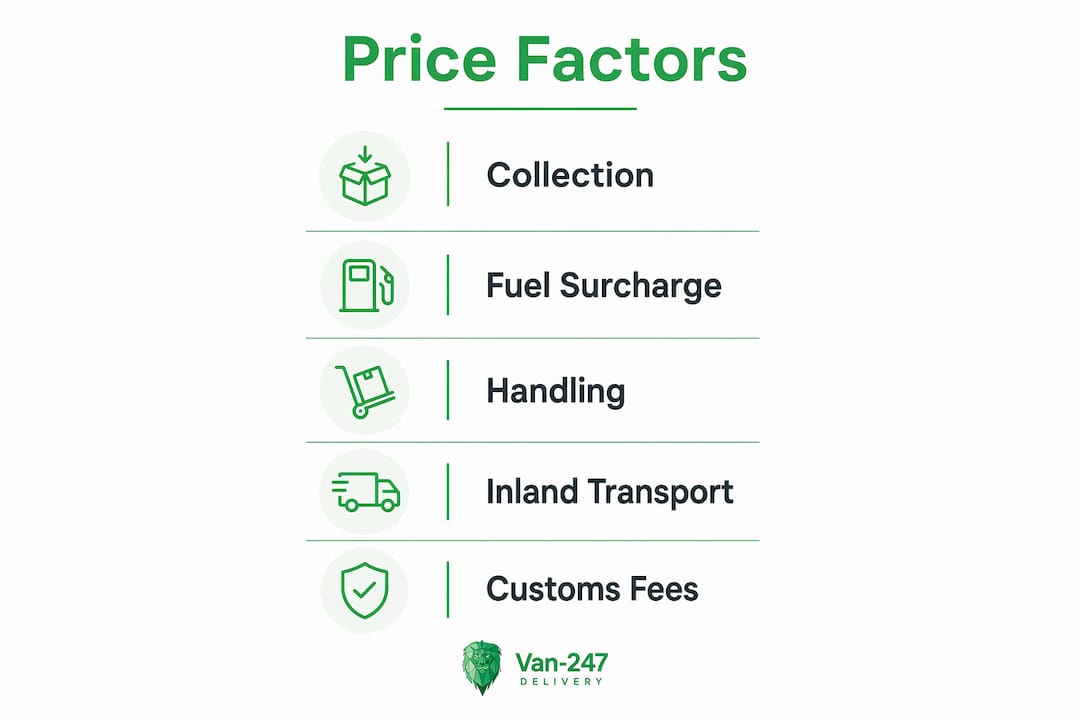
Table of Contents
- What does door-to-door delivery actually cover?
- Why choose door-to-door? The honest pros and cons
- How does door-to-door delivery work, step by step?
- What affects the price of a door-to-door shipment?
- How to book and what to expect at collection
- What you cannot ship and how insurance works
- Tracking and proof of delivery: what to expect
- How door-to-door compares with postal or drop-off services
- How Van-247delivery handles door-to-door in practice
- Key takeaways
- Why the “fully inclusive” assumption catches people out
- Van-247delivery: instant quotes for UK door-to-door collections
- FAQ
What does door-to-door delivery actually cover?
The term covers more ground than most people expect. At its simplest, it means the courier or logistics company handles the full chain: collection, transit, and final drop-off. In practice, the scope varies quite a bit depending on what you’re sending.
Common service types include:
- Parcel D2D: Small to medium packages collected from your home or office and delivered to any UK or international address.
- Pallet and freight D2D: Larger consignments collected on a pallet, processed through a freight network, and delivered to a business or residential address. Pallet collection services add extra steps around loading and site access.
- Same-day D2D: Time-critical collections and deliveries completed within hours, typically within a city or region.
- International D2D: Full-chain management including export documentation, customs clearance, main transit (road, air, or sea), and last-mile delivery abroad.
The key distinction is whether you’re booking a single-contract arrangement (one provider owns the whole journey) or a multi-leg arrangement (you coordinate separate carriers at each stage). True door-to-door shipping is always single-contract.
Pro Tip: When booking pallet freight, confirm whether the quote covers residential delivery. Many pallet networks default to business-address delivery only — residential drops often carry a surcharge.

Why choose door-to-door? The honest pros and cons
The biggest draw is simplicity. As Freightos describes it, door-to-door acts as a “logistics chauffeur” — you hand over the goods once and the provider takes accountability for the rest.
Advantages:
- Single point of contact for queries, delays, and claims
- Consolidated invoicing rather than separate bills from multiple carriers
- Built-in tracking from collection through to delivery
- Insurance options covering the full journey
- Customs handling included (when the service is DDP — more on that below)
- Reduced admin burden, particularly for businesses shipping regularly
Drawbacks:
- The upfront quote can look higher than a port-to-port or drop-off alternative
- Consolidated freight shipments may wait at an origin warehouse while the provider builds a full load, adding lead time
- Last-mile access issues (narrow lanes, restricted parking, internal stairs) can trigger surcharges or failed attempts
- Not always the fastest option for bulk freight where speed matters more than convenience
On the cost point, it’s worth knowing that D2D quotes often bundle terminal handling charges, inland transport, and admin fees that port-to-port quotes leave out. The total landed cost is frequently comparable once you add those extras back in.
Pro Tip: Ask for a line-item breakdown before accepting any quote. Look specifically for fuel surcharges, accessorial fees (liftgate, stairs, waiting time), and whether customs clearance is included or billed separately.
How does door-to-door delivery work, step by step?
The typical D2D process follows six stages. Knowing where you are in the chain makes tracking updates much easier to interpret.
- Collection: The driver arrives at your address within an agreed window, inspects the goods, signs collection documentation, and loads the shipment.
- Consolidation and processing: For freight and international shipments, goods move to an origin warehouse where they are sorted, labelled, and consolidated with other loads heading in the same direction.
- Main transit: Road, air, or sea transport to the destination region. Domestic parcels may skip consolidation entirely and go straight to transit.
- Import customs clearance (international only): The provider submits export and import declarations. Incorrect export documentation is a common cause of delays; according to World Trade Organization data referenced by DocShipper, document errors account for 30% of shipping delays. Always supply accurate commercial invoices and commodity codes.
- Last-mile delivery: A local driver collects from the destination depot and delivers to the recipient’s address.
- Proof of delivery (POD): The recipient signs (electronically or on paper), or the driver photographs the delivered goods. The POD is then available to the sender.
Typical timings
| Service type | Typical transit time |
|---|---|
| UK same-day (city/regional) | typically completed within hours |
| UK next-day parcel | typically completed within the next working day |
| UK pallet (next-day service) | typically completed within a couple of working days |
| Europe road freight (D2D) | typically completed within several working days |
| International air freight (D2D) | typically completed within several working days |
| International sea freight (D2D) | typically requires several weeks of transit time |
DAP vs DDP — know the difference before you book. DAP (Delivered at Place) means the provider delivers to the address but the recipient pays import duties and VAT on arrival. DDP (Delivered Duty Paid) means the sender covers all duties upfront. Unless your quote explicitly states DDP, assume the recipient will face a customs charge at delivery.
What affects the price of a door-to-door shipment?
Pricing is rarely a flat rate. Several factors combine to produce the final figure.
Key price drivers:
- Parcel dimensions and actual or volumetric weight (whichever is greater)
- Distance and transport mode (road is cheapest; air is fastest but most expensive)
- Consolidation vs dedicated vehicle
- Fuel surcharges (applied as a percentage and adjusted regularly)
- Accessorial fees: liftgate service, stairs, waiting time, remote area surcharge
- Declared value insurance
- Customs duties and VAT (for international shipments)
| Quote line item | Typically included? |
|---|---|
| Collection and main transit | Yes |
| Fuel surcharge | Usually (check if capped) |
| Residential delivery surcharge | Sometimes — ask |
| Customs clearance (export) | Often included |
| Import duties and VAT | Only if DDP |
| Declared value insurance | Optional add-on |
| Liftgate / tail-lift service | Extra charge |
For a UK freight shipping guide with more detail on domestic pricing structures, Van-247delivery’s blog covers the main cost categories clearly.
Pro Tip: Always check whether the quote is DAP or DDP for international shipments. A cheaper DAP quote can become expensive for your recipient if duties are significant — especially for goods shipped from outside the UK.
How to book and what to expect at collection
Getting the booking right saves you time and avoids surcharges later. Here’s what to prepare:
- Accurate dimensions and weight of each item or pallet
- Full collection and delivery addresses, including any access restrictions
- Contact numbers for both sender and recipient
- Preferred collection window (morning, afternoon, or a specific slot)
- Packaging confirmation — goods must be properly packed before the driver arrives
- Any special handling notes (fragile, this way up, temperature-sensitive)
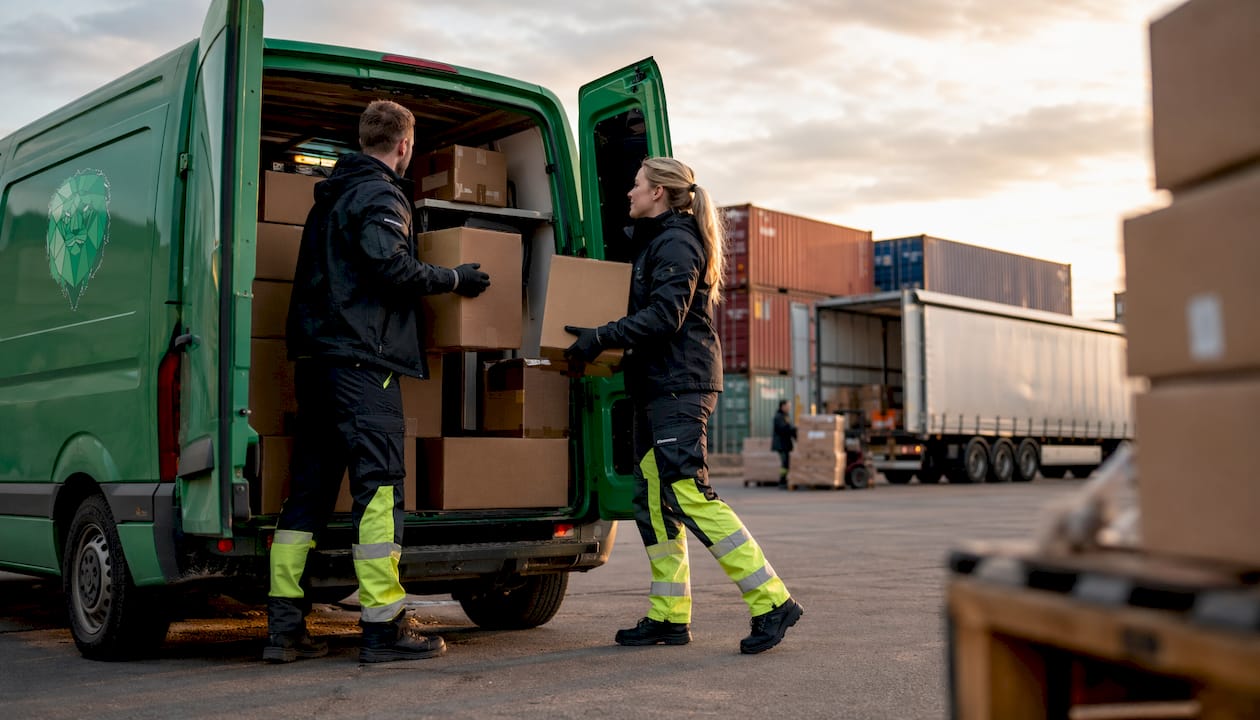
On the day, the driver will typically:
- Arrive within the agreed window and call ahead if running late
- Inspect the goods and note any visible damage before loading
- Sign or scan collection documentation
- Photograph the shipment if required by the service level
- Load using appropriate equipment (sack truck, pallet truck, or tail-lift vehicle)
Last-mile access issues are one of the most common causes of failed deliveries in the UK. Narrow lanes, restricted parking zones, and internal stairs all affect which vehicle can be used. Flag these at booking, not on the day.
What you cannot ship and how insurance works
Most door-to-door providers follow broadly similar prohibited and restricted item lists. Common categories include:
- Hazardous materials (flammable liquids, gases, explosives)
- Perishable goods without specialist temperature-controlled services
- Live animals
- Cash, negotiable instruments, and precious stones
- Counterfeit goods and items prohibited by UK customs
- Certain batteries and electronics (restrictions vary by carrier and mode)
Always check the carrier’s specific prohibited items list before booking. For guidance on shipping large or unusual items, Van-247delivery’s resources cover what to check in advance.
Standard liability covers loss or damage up to a basic limit per kilogram — often too low for valuable goods. Declared value insurance lets you specify the item’s value and pay a premium for full cover. For high-value, fragile, or irreplaceable items, declared value cover is worth the extra cost.
If something goes wrong:
- Document damage with photographs immediately at delivery
- Note the issue on the POD before the driver leaves
- Report the claim to the provider within the stated time limit (often 7 days for damage, longer for loss)
- Keep all original packaging as evidence
Tracking and proof of delivery: what to expect
A good door-to-door courier service gives you visibility at every stage. Typical tracking milestones you’ll see:
- Collected: Driver has picked up the shipment
- At origin hub: Goods received at the processing warehouse
- In transit: Moving between hubs or on main transport leg
- Out for delivery: Local driver has the shipment on their vehicle
- Delivered: POD confirmed
If a delivery attempt fails (no one home, access issue, or customs hold), the provider should notify you and the recipient promptly. Most services offer a re-delivery slot, a collection point option, or a neighbour delivery with photographic confirmation.
Electronic signatures are now standard for most UK courier services. For high-value shipments, some providers require a named-recipient signature rather than a generic doorstep photo.
How door-to-door compares with postal or drop-off services
Royal Mail does offer collection services for parcels, and its Parcelforce network handles larger items. For marketing mail drops, Royal Mail’s door-to-door service delivers unaddressed promotional material to every address on a chosen route. That is a different product entirely from a tracked, insured courier collection.
| Feature | Door-to-door courier | Royal Mail / postal drop-off |
|---|---|---|
| Single contract (full chain) | Yes | Partial (drop-off at post office) |
| Tracked from collection | Yes | Depends on service level |
| Appointment collection slot | Yes | No (drop-off only for most services) |
| Customs handling (international) | Often included | Separate arrangement |
| Insurance / declared value | Yes | Limited |
| Suitable for pallets / large freight | Yes | No |
| Same-day option | Yes (specialist services) | No |
For regular parcel senders, the postal drop-off route is cheaper for small, low-value items. For anything time-sensitive, fragile, large, or international, a dedicated door-to-door courier service gives you far more control and accountability.
How Van-247delivery handles door-to-door in practice
Van-247delivery has been operating across the UK for over 15 years, handling everything from single-item furniture collections to full house removals and pallet transport. The booking process is straightforward: get an instant online quote, confirm your collection slot, and a driver arrives at your address.
What sets the service apart for D2D shipments is the attention to access and handling. Before collection of large items, the team checks for stairs, narrow doorways, parking restrictions, and lift availability. This avoids the failed-delivery surcharges that catch many senders off guard with standard pallet networks.
Van-247delivery’s D2D services include:
- House removals and full-service relocations
- Man with a van for smaller or ad-hoc collections
- Pallet collection and delivery (same-day available)
- Furniture and large item courier with specialist handling
- Insured transport with declared value options
- Packing, assembly, and disassembly as optional add-ons
Pro Tip: When booking a D2D collection for heavy or awkward items, use Van-247delivery’s instant quote tool and include access notes in the booking form. It takes two minutes and prevents surprises on collection day.
For a man with a van booking or a full removal quote, the online form gives you a price without needing to call.
Key takeaways
Door-to-door delivery gives you a single provider managing the full shipment chain, but always confirm whether your quote is DAP or DDP before committing to an international booking.
| Point | Details |
|---|---|
| Single-contract service | One provider handles collection, transit, and final delivery with no handoffs for you to manage. |
| DAP vs DDP matters | Unless the quote states DDP, import duties and VAT are payable by the recipient at delivery. |
| Timings vary by mode | UK same-day takes hours; international sea freight can take several weeks. |
| Verify quote line items | Check for fuel surcharges, residential delivery fees, and whether customs clearance is included. |
| Van-247delivery for UK D2D | Van-247delivery offers instant quotes, insured transport, and same-day pallet collection across the UK. |
Why the “fully inclusive” assumption catches people out
There’s a gap between what door-to-door delivery promises in marketing and what it actually delivers in practice, and it’s worth being direct about it.
The phrase “door-to-door” implies a complete, worry-free service. For domestic UK shipments, that’s largely true; for international shipments, it often isn’t unless you specifically book a DDP service. Most providers default to DAP, which means your recipient gets a knock at the door from a customs agent asking for payment before the goods are released. That’s not a minor footnote; for B2C businesses shipping internationally, it can destroy the customer experience entirely.
The second thing people underestimate is last-mile complexity. A provider can manage the first 99% of a journey flawlessly and still fail at the final address because no one flagged the narrow access road or the third-floor flat with no lift. For high-value or fragile shipments, that last mile deserves as much attention as the main transit leg.
My recommendation: use door-to-door for anything time-sensitive, fragile, or high-value. For bulk, low-value freight where speed is secondary, a port-to-port or drop-off arrangement may genuinely be more cost-effective. But never assume “door-to-door” means “fully inclusive” without reading the Incoterms on your quote.
Van-247delivery: instant quotes for UK door-to-door collections
If you’ve read this far and you’re ready to book, Van-247delivery makes it straightforward. You get a fixed price upfront, a confirmed collection slot, and a driver who knows how to handle access challenges, large items, and fragile goods.
Services available include house removals, same-day pallet collection, man with a van, and insured furniture courier across the UK. No hidden fees, no chasing multiple providers. Get your instant quote on the Van-247delivery website and have your collection booked in minutes.
FAQ
What is door-to-door delivery in simple terms?
Door-to-door delivery means one provider collects your shipment from your address and delivers it directly to the recipient’s address, handling all stages in between. You don’t coordinate separate carriers or manage handoffs yourself.
How does door-to-door delivery work for international shipments?
The provider manages collection, export documentation, customs clearance, main transit, and last-mile delivery in the destination country. Always check whether the quote is DAP (recipient pays duties) or DDP (duties included in your price).
Does Royal Mail offer door-to-door delivery?
Royal Mail offers a door-to-door service for unaddressed marketing mail delivered to every address on a chosen route, and Parcelforce provides tracked parcel collection. Neither covers pallets, large freight, or the full customs-managed chain that a specialist courier provides.
What is the cheapest door-to-door delivery option in the UK?
For small parcels, comparison platforms such as ParcelMonkey aggregate rates from multiple carriers and often surface competitive prices. For larger items or pallets, a specialist like Van-247delivery provides a fixed quote that includes handling and access considerations, which can work out cheaper than paying surcharges on a standard pallet network.
Is door-to-door delivery safe for valuable or fragile items?
Yes, provided you book declared value insurance and confirm the provider has experience with fragile or high-value goods. Document the item’s condition with photographs before collection and note any concerns on the proof of delivery if damage is visible on arrival.