Long distance moving is defined as the transportation of household goods over distances typically exceeding 100 miles or across regional boundaries, requiring specialist planning and compliance with specific regulations. In the UK context, this means relocating between cities, regions, or across the country rather than a short hop across town. Unlike a local move billed by the hour, a long distance move involves weight-based pricing, delivery windows, and a level of logistical coordination that catches many families off guard.
This guide covers long distance moving explained from every angle: costs, timelines, regulations, and practical preparation so you can move with confidence.
What is long distance moving and how does it differ from local moves?
Long distance moving is the relocation of household goods over significant distances, typically more than 100 miles or crossing administrative boundaries, placing it under a distinct regulatory and pricing framework. In many countries, moves crossing state or national lines fall under federal jurisdiction. In the US, for example, interstate moves are governed by 49 CFR Part 375, which requires written estimates and bills of lading for every shipment. The UK equivalent involves compliance with consumer protection law and the use of licensed, insured carriers.
The core difference from a local move is not just distance. Local moves are billed by the hour, typically completed in a single day, and involve no delivery window. Long distance moves are billed by weight and mileage, take days or weeks to complete, and require far more advance planning. Think of a local move as a sprint and a long distance move as a marathon. The preparation, pacing, and stamina required are entirely different.

How is long distance moving priced?
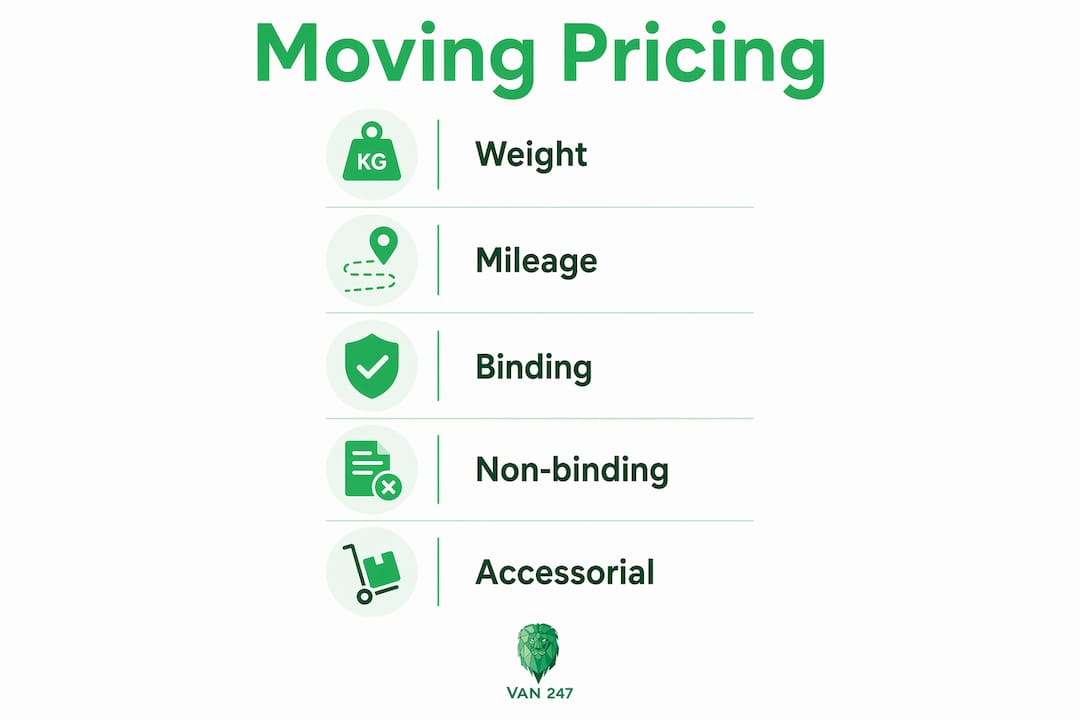
Long distance moves are charged based on shipment weight and the total mileage travelled, not by the hour. Typical linehaul rates range from £0.50 to £1.20 per pound-mile, excluding additional fees. A three-bedroom home moving 1,000 miles can cost £4,000 to £7,000 for the base linehaul alone. That figure does not include packing materials, storage, or accessorial charges.
Several factors push the final cost up or down:
- Volume and weight: More furniture means a heavier shipment and a higher bill.
- Distance: Longer routes cost more, and some routes carry surcharges due to fuel or road access.
- Season: Peak moving season runs from may through august. Prices rise and availability tightens.
- Packing services: Professional packing adds cost but reduces damage risk significantly.
- Accessorial charges: These include shuttle services, long carries, and stair fees for properties with difficult access.
| Cost factor | Impact on price |
|---|---|
| Shipment weight | Primary billing variable |
| Mileage | Directly multiplies the linehaul rate |
| Peak season booking | Can increase costs noticeably |
| Accessorial charges | Variable; can add hundreds to the total |
| Packing services | Fixed add-on; reduces damage claims |
Understanding the difference between binding and non-binding estimates protects you financially. Federal rules cap final payment on non-binding estimates at 110% of the original quote. A binding estimate locks the price regardless of actual weight, giving you certainty. Always get at least three written estimates before committing. You can also read more about furniture moving costs to benchmark what you should expect to pay.
Pro Tip: Ask every removal company whether their estimate is binding or non-binding before signing anything. A non-binding quote can legally increase after loading, so a binding estimate is almost always worth the extra effort to secure.
What is the recommended timeline for planning a long distance move?
Planning should start 10–12 weeks ahead, especially before peak season, to secure licensed movers and arrange storage or vehicle transport. Booking at least 3–8 weeks in advance prevents both availability problems and last-minute price hikes. The earlier you start, the more control you have over every variable.
A practical long distance moving checklist looks like this:
- 10–12 weeks out: Research and contact licensed, insured removal companies. Obtain at least three written estimates. Verify credentials and check reviews.
- 8 weeks out: Confirm your chosen carrier with a signed contract. Begin decluttering. Selling or donating items you no longer need reduces shipment weight and lowers your bill directly.
- 6 weeks out: Arrange storage if there is a gap between your move-out and move-in dates. Organise vehicle transport if you are not driving to your new home.
- 4 weeks out: Begin packing non-essential items. Order specialist packing materials for fragile goods. Notify utility providers, your bank, and the DVLA of your change of address.
- 2 weeks out: Confirm delivery dates and your First Available Delivery Date with the carrier. Pack room by room and label every box clearly.
- Moving week: Pack your essentials bag. Do a final walk-through of your property. Confirm access details with your removal coordinator.
Pro Tip: Decluttering before you get a quote, not after, gives you an accurate estimate from the start. Every box you remove from the shipment saves you money on the linehaul rate.
What logistical challenges apply to long distance moves?
Long distance moves have delivery windows of 7–21 days, influenced by routes, weather, and federal Hours-of-Service driving limits. This is one of the biggest surprises for families who expect their belongings to arrive the next day. Unlike a local move where the van returns the same afternoon, your goods may be in transit for up to three weeks.
The First Available Delivery Date you provide to your carrier controls when delivery can begin. Early arrival cannot be delivered to you before that date, and late delivery beyond the agreed window may entitle you to compensation. Setting this date accurately is one of the most overlooked steps in the entire process.
Accessorial charges often arise from conditions like narrow streets or long carries. Identifying such conditions early in a walk-through with the moving coordinator can significantly reduce surprise fees on moving day.
Other key challenges to prepare for include:
- Shuttle services: If a large removal lorry cannot access your street, a smaller vehicle must transfer your goods. This adds cost and time.
- Re-weighing rights: You have the right to request a re-weigh at the destination before unloading. This prevents overcharges from inflated weight estimates.
- Consumer protections: Reputable carriers must provide consumer disclosures covering valuation choices and your rights. Read these before signing anything.
- Insurance and valuation: Basic carrier liability covers very little. Upgrading your valuation coverage or taking out separate moving insurance is worth serious consideration for a long distance shipment.
How should you prepare practically for moving day?
Moving day is a marathon, not a sprint. The most important practical step is packing an essentials bag for 7–10 days. Your belongings may not arrive for up to three weeks, so this bag needs to cover everything you cannot live without: medications, chargers, a change of clothes, important documents, and basic kitchen items.
Packing for long distance moves requires more durable materials because items remain in transit longer and face more handling than in local moves. Double-walled boxes, bubble wrap, and foam padding protect your belongings through multiple loading and unloading cycles. Label every box with its contents and destination room. A detailed inventory list, matched to the bill of lading your carrier provides, is your best protection against lost or damaged items.
Practical steps for moving day itself:
- Walk the property with your removal coordinator before loading begins. Point out access issues, fragile items, and anything requiring special handling.
- Check the bill of lading before the van leaves. This document is your legal record of what was collected and its condition.
- Photograph everything before it is loaded. Timestamped photos are invaluable if a damage claim arises later.
- Confirm contact details with your driver or coordinator so you can track progress during transit.
Pro Tip: Pack a separate box labelled “Open First” for your new home. Fill it with the basics you will need on arrival night: kettle, mugs, tea bags, toilet roll, and a phone charger. It sounds simple, but it makes an enormous difference after a long day.
You can find more detailed guidance on safe packing techniques to protect your belongings throughout the journey.
Key takeaways
Long distance moving requires weight-based pricing, a 10–12 week planning lead time, and awareness of delivery windows, consumer rights, and accessorial charges to avoid costly surprises.
| Point | Details |
|---|---|
| Definition and regulation | A long distance move exceeds 100 miles or crosses boundaries and requires licensed, insured carriers. |
| Pricing structure | Costs are based on shipment weight and mileage, not hourly rates, with binding estimates offering the most financial certainty. |
| Planning timeline | Start planning 10–12 weeks ahead to secure availability, reduce costs through decluttering, and avoid peak season surcharges. |
| Delivery windows | Expect 7–21 days for delivery; set your First Available Delivery Date accurately to avoid delays and protect compensation rights. |
| Consumer protections | You have the right to request a re-weigh before unloading and to receive full consumer disclosure documents from your carrier. |
What I have learned from years of watching long distance moves go wrong
The most common mistake I see is treating a long distance move as a scaled-up version of a local one. People book a van two weeks out, skip the written estimate, and assume their belongings will arrive within a day or two. They are almost always wrong on every count.
The financial surprises hit hardest. Accessorial charges for shuttle services, long carries, or stair fees regularly add hundreds to a final bill that looked reasonable on paper. The families who avoid this are the ones who did a proper walk-through with their coordinator and asked every awkward question upfront.
The second most overlooked step is understanding your valuation options. Basic carrier liability is not the same as insurance. Many people discover this only after a damaged sofa arrives and the payout covers a fraction of its value. Knowing your rights before you sign is the single most protective thing you can do.
My honest view is that long distance moving rewards preparation and punishes assumptions. The families who move well are not the ones with the biggest budgets. They are the ones who started early, asked questions, and read what they signed.
— Claudiu
Planning a long distance move? Van-247delivery can help
Relocating across the country is a big undertaking, and having the right team behind you makes a real difference.
Van-247delivery has over 15 years of experience handling long distance relocations across the UK, from full house removals to flexible man and van services for smaller or partial moves. Every service comes with insurance coverage, professional handling, and clear pricing so you know exactly what to expect. Whether you are moving a full family home or a single room’s worth of belongings, Van-247delivery offers the right level of support for your situation. Get an instant quote today and take the first step towards a well-organised move.
FAQ
What counts as a long distance move in the UK?
A long distance move typically covers distances exceeding 100 miles or involves relocation between different regions of the country. The key distinction from a local move is the pricing model, delivery timeline, and level of logistical planning required.
How much does a long distance move cost?
Costs depend on shipment weight and mileage. A three-bedroom home moving 1,000 miles can cost £4,000 to £7,000 for the base linehaul, with additional fees for packing, storage, and accessorial charges such as shuttle services.
How far in advance should I book a long distance removal company?
Book at least 8–12 weeks ahead, particularly if you are moving during peak season between may and august. Early booking secures availability and gives you time to obtain multiple written estimates and compare them properly.
What is a binding estimate and why does it matter?
A binding estimate locks your price regardless of the actual shipment weight. A non-binding estimate can legally increase after loading, though federal rules cap the increase at 110% of the original quote. A binding estimate gives you financial certainty.
Can I request a re-weigh if I think my bill is too high?
Yes. You have the right to request a re-weigh of your shipment at the destination before unloading. This ensures your final charge is based on the actual weight of your goods, not an inflated estimate made before loading.