What movers pack: professional movers typically pack most of your household contents, from crockery to clothes, wrapping fragile items and labelling every box by room. There are exceptions, though: hazardous, restricted and some high-value items are usually excluded or need special handling, and exactly what is covered depends on which service level you book. Costs vary with the size of your home and how much packing you ask for.
TL;DR:
- Most removals include packing fragile items such as crockery, glassware, and pictures, but hazardous and restricted items like fuels, fireworks, and firearms are always excluded.
- Insurance usually covers goods in transit but often limits liability per item and excludes self-packed boxes from internal damage coverage, making declared high-value items essential.
- For a two-bedroom home, full packing costs typically range from £300 to £500, with full pack and unpack reaching around £500 to £800, depending on access and materials used.
- Preparing by decluttering, packing an essentials bag, and documenting valuables helps control costs and avoid delays or disputes on moving day.
- Get all packing scope details and insurance limits in writing beforehand to prevent misunderstandings and choose fragile-only packing or self-packing for cost-effective protection.
Table of Contents
- What professional movers typically pack, room by room
- What movers will not pack or will restrict
- Packing service levels and typical UK cost ranges
- How to prepare before the packers arrive
- Insurance, goods-in-transit cover and self-packed boxes
- How Van-247delivery approaches packing
- Where the standard advice falls short
- Getting help from Van-247delivery
- Sources
- FAQ
What professional movers typically pack, room by room
Packers work through your home methodically, and most reputable teams follow a similar pattern regardless of who you book.
In the kitchen, expect dish packs, layers of packing paper and individually wrapped plates, glasses and small appliances. This is the room where professional packing earns its keep: crockery breaks easily, and a good packer knows how to stack and cushion it so it survives the journey.
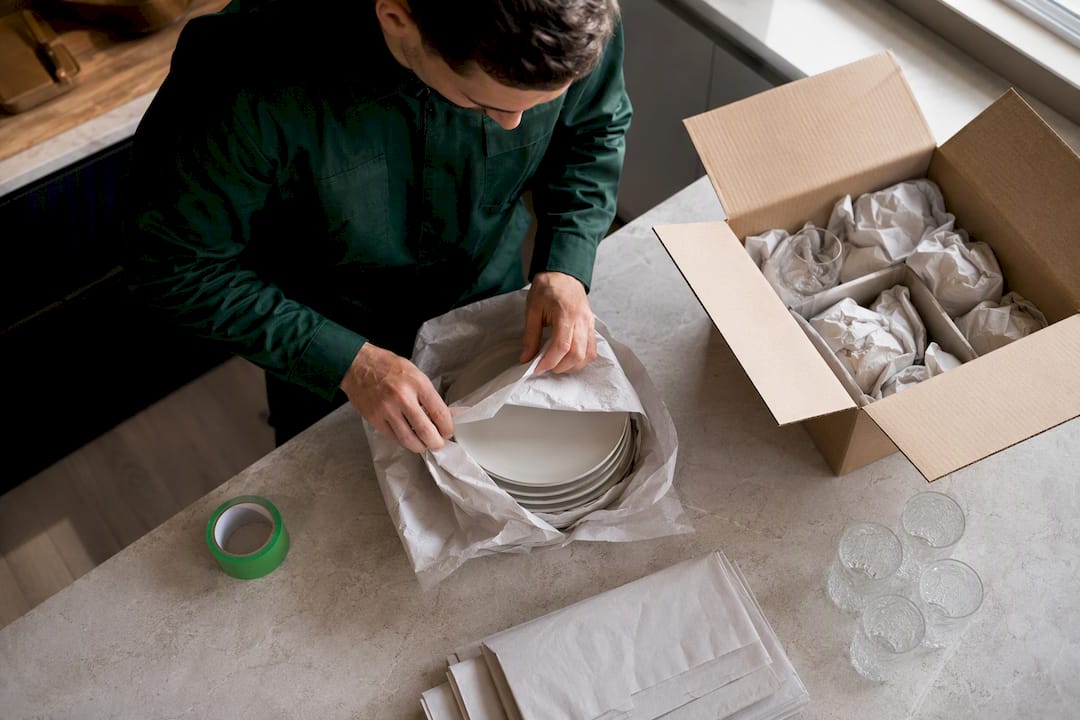
Living rooms and bedrooms are usually boxed too, with books, bedding, cushions and other soft furnishings going into standard cartons. Many people choose to pack their own clothes and personal papers, partly for privacy and partly because it is one of the easiest jobs to do yourself.
Electronics, TVs and artwork get separate treatment. Screens go into padded or original boxes where possible, and pictures and mirrors are usually wrapped and boxed flat. For genuinely valuable pieces, some movers offer bespoke crating rather than standard boxing.
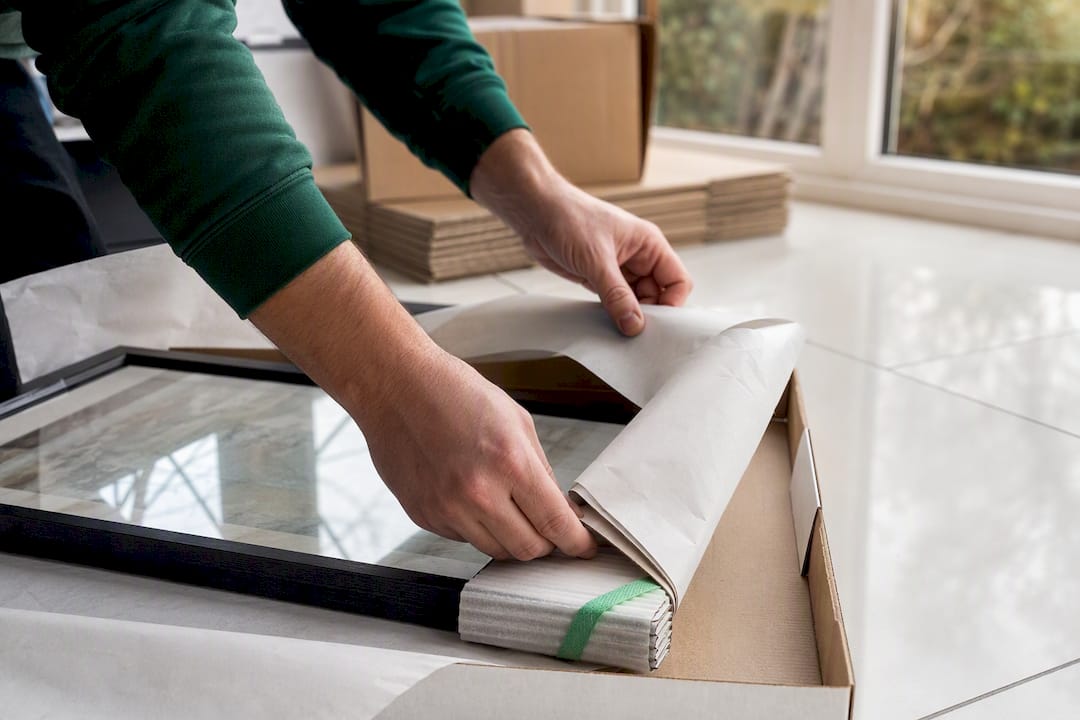
Garden furniture, tools and anything loft-based often need a different approach, and fuel-powered equipment such as mowers or trimmers may require draining or separate transport for safety reasons.
The materials used tend to be consistent across the trade:
- Single-wall and double-wall cardboard boxes, chosen by weight and contents
- Bubble wrap and plain packing paper for cushioning fragile items
- Wardrobe boxes that let you hang clothes straight from the rail
- Strong tape and clear labelling for each box’s destination room
What movers will not pack or will restrict, part of what movers pack
Certain items sit outside what any responsible mover will pack, and the reasons are practical as much as legal.
Fuels, paints, solvents and fireworks are hazardous in a moving van, and most movers refuse them outright for safety. Leaking or damaged batteries fall into the same category, and lithium-ion batteries in e-bikes or scooters often need specific handling because of fire risk. Firearms and ammunition are tightly controlled, and Gov confirms that moving your household to Great Britain does not remove the licensing requirements for restricted goods such as firearms or protected species. Alcohol and tobacco are also excluded from relief under the same guidance, which matters if you are moving from outside the UK.
Common exclusions include:
- Fuels, paint, solvents and aerosols
- Fireworks and pressurised gas canisters
- Leaking or damaged batteries, including some e-bike batteries
- Firearms, ammunition and certain restricted goods
- Alcohol and tobacco under customs rules
GOV.UK’s transfer-of-residence guidance sets out household effects and lists restricted goods requiring licences. (gov.uk) If you are unsure whether something you own falls into a restricted category, declare it to your mover early, check whether you need a licence, and ask for the company’s written exclusions policy before booking.
Packing service levels and typical UK cost ranges, part of what movers pack
Most UK movers offer packing as a tiered add-on rather than a single fixed package, so it helps to know what each tier actually covers.
- Materials only: boxes, tape and paper delivered or dropped off, you do the packing
- Fragile-only: professionals handle breakables like glassware, crockery and pictures, you pack everything else
- Full pack: the whole house is packed by the crew, usually the day before or the morning of the move
- Full pack and unpack: packing plus unpacking at the new address, boxes removed once emptied
- Dismantle and reassemble: furniture taken apart for transport and rebuilt on arrival
For a typical two-bedroom home, UK price guidance for 2026 puts full packing at roughly £300 to £500, rising to around £500 to £800 for full pack and unpack together. What moves these figures up or down is largely materials, labour hours and access difficulties such as long carries or restricted parking.
A sensible middle ground for many households is to pack your own clothes and books, then pay for fragile-only cover on the kitchen and any artwork. That keeps costs down while protecting the items most likely to break. Whichever tier you choose, confirm in writing whether materials are included in the price and whether parking or carry charges apply on the day.
How to prepare before the packers arrive, part of what movers pack
A little preparation on your part keeps the day running smoothly and can stop costs creeping up unexpectedly.
- Declutter first: separate anything you are not taking, and donate or dispose of it before packing day.
- Pack an essentials bag with medication, important documents, phone chargers and a change of clothes, and keep it with you rather than in the van.
- Keep valuables, keys and anything irreplaceable on your person, not in a box.
- Note any high-value items and make sure they appear on the mover’s inventory, since this matters for insurance later.
- Sort out parking and lift access in advance, and confirm whether the crew will dismantle and reassemble furniture or whether that is down to you.
Pro Tip: Photograph anything valuable or already damaged before the movers arrive, so there is no argument later about its condition.
Decluttering and preparing an essentials bag are steps GOV.UK’s guidance and most industry checklists recommend as standard practice before packing day.
Insurance, goods-in-transit cover and self-packed boxes, part of what movers pack
Insurance is where a lot of moving-day disputes start, mostly because people assume more is covered than actually is.
Most movers carry goods-in-transit cover, but it usually comes with per-item limits rather than one blanket figure. Ask for those limits in writing before you book, not on the day.
- Headline cover figures often hide low per-item caps that only surface when you make a claim
- Boxes you pack yourself are commonly excluded from cover for internal damage, since the mover cannot verify how well they were packed
- High-value items should be declared individually and confirmed in the written quote, not just mentioned verbally
- If something is damaged, report it in writing as soon as possible and keep photos as evidence, since most policies set a claim window
Price guidance for 2026 flags this exact issue: self-packed boxes are frequently excluded from internal-damage cover, which is one more reason fragile-only packing appeals to a lot of households.
How Van-247delivery approaches packing
This company has extensive experience handling removals in the UK, offering insured transport alongside packing, unpacking, disassembly and reassembly as part of house removals services. In practice, that means fragile-only packing for kitchenware, glassware and pictures is often recommended, with full packing reserved for households short on time. When requesting a quote, ask about materials, insurance limits, exclusions and any parking or access charges, so the scope is agreed before moving day rather than argued over on it.
Where the standard advice falls short, part of what movers pack
Most packing advice treats “full service” as a single, simple product, and that is where readers get caught out. In reality, packing is a menu of separate choices covering materials, labour, and which rooms get professional attention, and treating it as one thing leads to vague quotes and disappointed expectations on moving day.
The bigger issue is insurance, not packing quality. Households spend far more energy worrying about whether a box will be wrapped well than about whether that box is actually covered if it is damaged in transit. Per-item limits and self-pack exclusions catch far more people out than a poorly wrapped plate ever does.
If you take one thing from this guide, make it this: get the scope and the insurance limits in writing before the van arrives, not after. Fragile-only packing paired with a written policy on self-packed boxes covers most households’ real risk, and it usually costs less than paying for a full pack you did not need.
— Claudiu
Getting help from Van-247delivery
Van-247delivery offers house removals, packing, unpacking and insured transport as part of one booking, so you are not juggling separate suppliers for the parts of your move that matter most.
- Get an instant online quote or request a survey before you commit to a service level
- Ask for packing scope, materials and insurance limits confirmed in writing
- Combine fragile-only packing with self-packed clothes and books to control cost
Start with an instant quote for house removals and ask Van-247delivery to confirm the packing details in writing before booking day.
Sources
FAQ
Which movers are the best in the UK?
There is no single official ranking of UK movers, so the best choice depends on your budget, the size of your move and whether you need specialist services like piano or office relocation. Look for insured transport, clear written quotes and a defined packing scope before booking.
What is the average cost of movers in the UK?
Removal costs vary widely by home size, distance and packing level, with full packing for a two-bedroom home typically running £300 to £500, and full pack and unpack together closer to £500 to £800. Getting a written quote is the only reliable way to know your own cost.
Do movers also pack your stuff?
Yes, most UK movers offer packing as an add-on service, ranging from materials-only through to full pack and unpack. Some movers include packing, unpacking and disassembly options alongside house removals services.
What are red flags with movers?
Watch for vague verbal quotes with no written scope, no mention of insurance limits, or reluctance to confirm exclusions for hazardous or restricted items in writing. A mover unwilling to put packing materials, insurance caps and parking charges in writing is worth questioning before you book.