bouWhat movers wont move UK: most UK removal companies will not carry hazardous goods such as paint, aerosols, gas cylinders, fuel and ammunition. They also usually refuse perishable food, live animals, many plants, cash and important documents, and anything illegal or stolen. A few of these items can travel if you declare them in advance and the insurer agrees in writing. Most are better dealt with by you, so it pays to know the list well before the van turns up.
This guide walks you through what gets refused, why, what can sometimes be arranged, and what to do with everything else. Moving is a marathon, not a sprint, and a short sort-out now saves a stressful scramble on the day.
TL;DR
- Removers usually refuse dangerous items (paint, aerosols, fuel, gas cylinders, ammunition), perishables, animals, many plants, valuables and documents, and prohibited or stolen goods.
- The reasons are legal restrictions, contamination or spoilage risk, and insurance: a mover’s policy often simply does not cover these goods.
- Some goods can be carried if you declare them, the insurer agrees in writing and you accept any extra charge. Ask before booking, not on the day.
- Take passports, cash, jewellery and legal papers with you, and use your council’s recycling centre or a licensed contractor for hazardous waste.
- Tell your mover about anything unusual (a piano, a safe, a shed) when you get your quote.
Table of Contents
- Why movers refuse certain items
- Dangerous and flammable items
- Valuables and important documents
- Perishables, plants and animals
- Prohibited, stolen and licensed goods
- Items that can sometimes be carried, if you ask first
- Things movers may not do, even if they can carry them
- Very heavy, awkward and fragile items
- What to do with items your mover won’t take
- A two-week countdown for restricted items
- Our perspective
- How Van-247 can help
- Office moves, pallets and furniture delivery
- FAQ
- Sources
Why movers refuse certain items, part of what movers wont move uk
It is rarely about being awkward. The Association of Independent Movers (AIM) explains that exclusions generally come from legal restrictions or from the remover’s insurance not covering the risk. In other words, a crew that loaded a half-full can of petrol into your van might be breaking the rules, and could leave you with no cover if something went wrong.
Three things sit behind almost every refusal:
- The law. Dangerous goods must be packaged and labelled properly, and the people handling them need the right training, according to GOV.UK’s guidance on moving dangerous goods. A standard removal crew is trained to carry sofas, not chemicals.
- Contamination or spoilage. Food can go off and attract vermin. Plants can deteriorate. Either can spoil the rest of the load, including your furniture.
- Insurance. Goods in transit insurance is written around ordinary household contents. Cash, jewellery or flammable liquids often fall outside it.
The next sections go through each group in plain terms.
Dangerous and flammable items, part of what movers wont move uk
This is the category people most often get caught out by, because it hides in garages, sheds and under the kitchen sink. AIM lists paint, aerosols, ammunition and firearms among the dangerous, damaging or explosive items that removers commonly exclude.
Check these spots before the survey:
- Garage and shed: petrol, diesel, paraffin, white spirit, creosote, weedkiller, pesticides, antifreeze, brake fluid.
- Kitchen and utility room: bleach in bulk, oven cleaner, drain unblocker, lighter fluid, matches in large quantities.
- Living areas: aerosols such as hairspray and polish, nail varnish remover, fireworks, candles in bulk.
- DIY stash: tins of paint and varnish, adhesives, solvents, fillers with warnings on the label.
- Gas: camping gas canisters, propane bottles for a barbecue, patio heater cylinders.
Why gas cylinders get special attention, part of what movers wont move uk
The Health and Safety Executive (HSE) notes that cylinders of compressed or liquefied gas need special care, suitable handling equipment and trained people. A cylinder rolling about in the back of a van is a genuine hazard, which is why most removers decline them outright.
Mixing dangerous goods with your belongings, part of what movers wont move uk
HSE’s guidance on carriage, loading and handling of dangerous goods covers things such as limits on mixed loading, precautions around foodstuffs, quantity limits, how goods are stowed and secured, and cleaning vehicles after leaks. Put that next to a van full of mattresses and boxed kitchenware and you can see why a responsible crew says no.
“But I’ve heard small amounts are exempt”
There are exemptions in the dangerous goods rules, including for some private-use carriage. HSE’s list of main exemptions is clear that an exemption does not mean an ordinary removal van can take the item without checking the conditions that apply. A removal company is entitled to say no even where the law might technically allow it, because its insurer and its crew’s training set their own limits.
Valuables and important documents, part of what movers wont move uk
This group surprises people, because the items are small and not dangerous. The issue is risk and insurance. AIM says removers commonly exclude passports, travel documents, cash, bank cards, jewellery, watches, precious stones, deeds, securities, stamps, coins and valuable collections. Its advice is to arrange your own transport for them or use a suitably insured specialist courier.
The practical version:
- Carry on your person or in your own car: passports, driving licence, cash, bank cards, house keys for the new place, medication.
- Take with you on the day: tenancy or completion paperwork, deeds, insurance documents, birth and marriage certificates.
- Think about a specialist courier for: a coin or stamp collection, valuable watches, high-value jewellery.
A good tip: keep a “first night” bag with these items and a kettle, tea bags and phone chargers. You will be glad of it, and you will never wonder which box held the passports.
Perishables, plants and animals, part of what movers wont move uk
Food and frozen goods
AIM lists perishables that need a controlled environment among usual exclusions, and notes that food can attract vermin and contaminate other goods. A removal van is not refrigerated, and a spilt freezer can ruin a sofa. Plan to eat down the freezer in the final weeks, and take any remaining chilled food in a cool bag in your car.
Tins, dry goods and sealed jars are usually fine if packed properly. Opened bottles of oil, sauces and spices are better binned or carried by you.
Houseplants
Plants are a grey area, and the answer depends on the firm. According to AIM, plants may be moved within the UK by written agreement and may need a separate vehicle on short trips. Moves overseas bring certification and import rules. If you are fond of your fiddle-leaf fig, ask at the quote stage, and expect a crew to decline anything that could shed soil or spoil in a long journey.
Pets
Animals travel with you, not in the van. Fish tanks, hamsters, birds and reptiles all need a plan of their own. Empty the tank, and move the animals in your car with water, ventilation and a calm, quiet space, ideally with a friend looking after them while the crew loads.
Prohibited, stolen and licensed goods, part of what movers wont move uk
This one is simple. Removers will not carry illegal drugs, stolen goods or anything prohibited by law. They also usually decline goods that require special licences. Firearms and ammunition fall here, and if you hold a certificate for a legally owned firearm, the transport has to be organised separately and lawfully, not through a normal removal crew.
Items that can sometimes be carried, if you ask first, part of what movers wont move uk
Here is the good news. A refusal is not always final. AIM says some goods may be covered if they are declared, the insurer agrees in writing and an additional charge is accepted. That means:
- Declare early. At the survey or when you request a quote, not when the crew is loading.
- Get it in writing. A verbal “should be fine” from the driver counts for nothing if something goes wrong.
- Expect a cost. Extra cover or a separate vehicle is not free.
The British Association of Removers (BAR) code of practice for its members requires them to comply with statutory and regulatory requirements, use suitable vehicles and equipment, offer insurance or another form of protection, and describe the services and any exclusions in the contract. So read the exclusions in your quote carefully.
Things movers may not do, even if they can carry them, part of what movers wont move uk
Sometimes the item is fine but the job around it is excluded. The same BAR code says members identify excluded services such as appliance disconnection, furniture dismantling, sheds, greenhouses and similar specialist work. Typical examples:
- Disconnecting a gas cooker or plumbed-in washing machine (you need a qualified tradesperson).
- Taking down a shed, trampoline, greenhouse or built-in wardrobe.
- Moving a hot tub, a large safe or a heavy pool table without prior notice.
Tell the surveyor about each one. A mover who knows in advance can bring the right people and kit, and quote accurately, as the BAR code expects a written quotation describing the items and services.
Very heavy, awkward and fragile items, part of what movers wont move uk
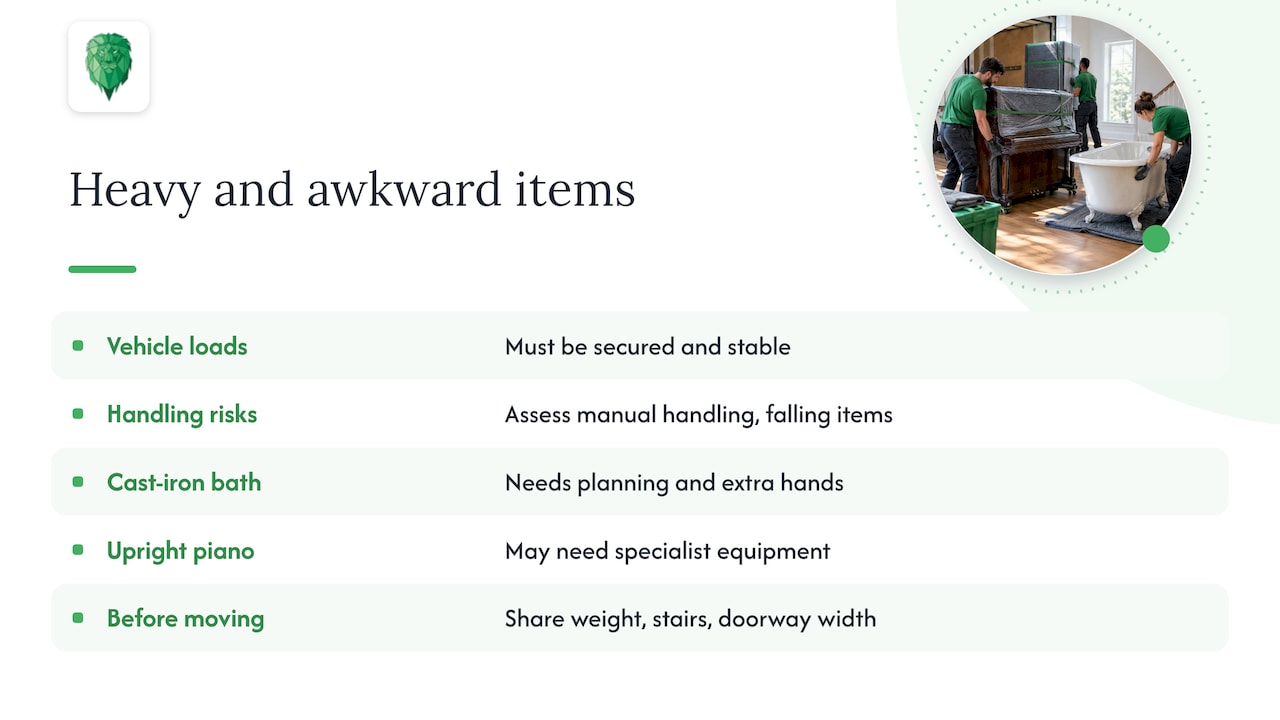
Not refused, but worth flagging. Heavy loads raise safety questions for the crew and the van. HSE says vehicle loads must be secured and stable, and risks such as manual handling and falling items must be assessed during loading and unloading. That is why a cast-iron bath, a gun safe or an upright piano needs planning, extra hands and sometimes specialist equipment.
If you own one of these, speak to a specialist team rather than a general one. We handle piano removals and larger awkward pieces through our furniture and large items service, and we would always rather hear about the weight, the stairs and the doorway width before the day.
What to do with items your mover won’t take, part of what movers wont move uk
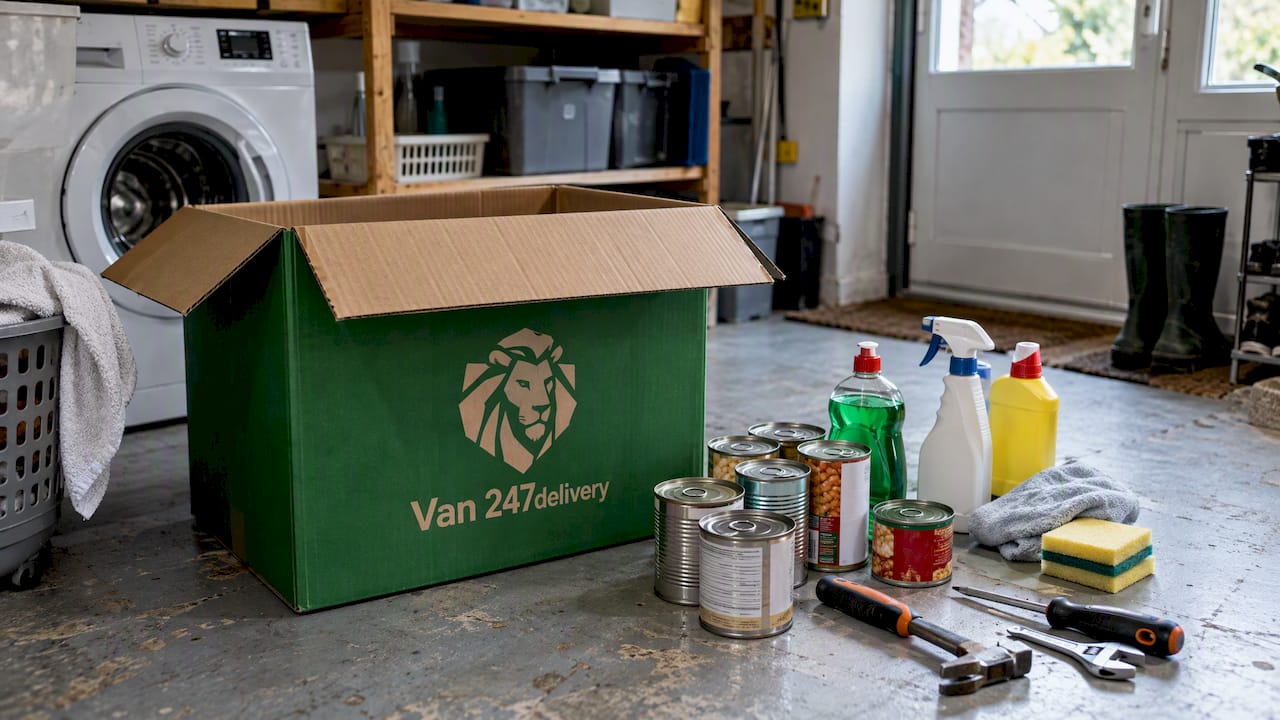
Here is where most people get stuck. You have a shed full of half-used paint, and the van arrives on Friday. Your options:
Use your household recycling centre
Rules vary by council, so check yours first. For example, Cheshire East Council lists acceptance of items including batteries, small domestic gas cylinders, paint, oil and limited hazardous waste, but says residents should phone ahead to confirm the particular item can be accepted.
Buckinghamshire Council, as another example, accepts up to 5 litres of garden chemicals, paraffin, petrol or diesel in non-leaking original containers. Your own council will have its own limits and permit rules, so look at its website.
Asbestos is a special case
If you find asbestos sheeting in an old garage, do not put it in the van or in the bin. Buckinghamshire Council recommends a registered private waste contractor, and accepts only bonded asbestos at its centres when it is double-bagged and wrapped, within set quantity limits and with a waste permit. Other councils differ, so contact yours.
Give away, sell or donate
Unopened paint, tools, unopened tinned food and unused cleaning products often go happily to neighbours, community groups or food banks. Opened chemicals should go to the recycling centre instead.
Hire a specialist
For valuables, a suitably insured specialist courier. About firearms, a lawful, licensed arrangement. And asbestos, a registered contractor.
A two-week countdown for restricted items, part of what movers wont move uk
You do not need to do it all in a weekend. Spread it out:
| When | What to do |
|---|---|
| Two weeks before | Walk the house, garage and shed. List everything flammable, corrosive or perishable. Ask your mover about anything unusual. |
| One week before | Take chemicals and paint to the recycling centre. Start eating down the freezer. Arrange plant and pet plans. |
| Three days before | Defrost the freezer, drain the washing machine, empty the fuel from the lawnmower. |
| The day before | Pack your “first night” bag with documents, medicines, chargers and valuables. |
| Moving day | Keep valuables and documents with you. Do a final walk-round of cupboards, loft and shed. |
A lawnmower or strimmer with fuel in the tank is one of the most common slips, so drain it a few days ahead and let it air.
Our perspective
After more than 15 years in removals and delivery, we have noticed that the problems are rarely the big, obvious items. They are the cupboard under the stairs, the half-empty tin of gloss, the box of important papers that ended up on the van by mistake. People are often embarrassed to ask, but we would much rather you did.
Our advice is simple. Be upfront when you ask for a quote. Tell us about the piano, the safe, the fish tank and the shed. Ask what is covered, and ask for exclusions in writing. A move goes smoothly when nothing is a surprise on the day, and honest questions at the start are the quickest route to that.
And if something cannot travel with us, there is almost always a sensible alternative, whether that is the recycling centre, a courier or the boot of your own car. Sorting it early takes the pressure off.
— Claudiu
How Van-247 can help
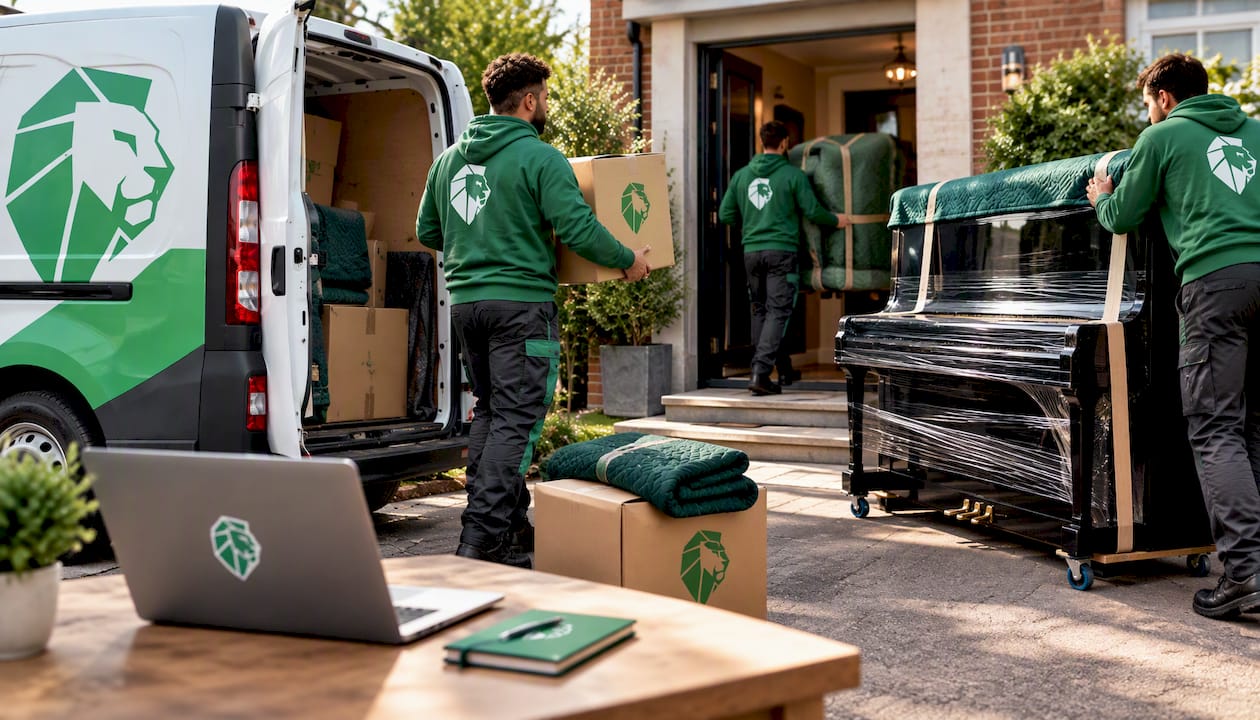
We offer house removals, office relocations, man and van, furniture and large item courier, pallet delivery and piano transport across the UK, with insured transport, and optional packing, storage, assembly and disassembly. Packing is one of the easiest ways to avoid a mistake, because someone experienced is checking what goes in each box.
If you are planning a home move, look at our house removals service and get an instant online quote. Moving an office? See our office relocation service, and for freight on a pallet, our pallet delivery page. Tell us about anything unusual when you book, and we will talk it through with you. If a job runs over, waiting time is charged at £24 per hour per man.
Office moves, pallets and furniture delivery
The core list is much the same whatever you are moving, since the law and insurance reasons do not change. A few differences are worth knowing:
- Offices: confidential files, hard drives, cash boxes and company documents are usually best moved by your own team or a secure specialist. Servers and network kit need planning, and we cover server relocation and Wi-Fi and video conference reinstallation as part of our office service.
- Pallet freight: the contents need to be declared accurately. Chemicals, batteries, aerosols and liquids in bulk are the usual red flags, and packaging must be sturdy and labelled.
- Furniture courier: the main restrictions are size and access. Tell the carrier about stairs, lifts and narrow doorways so the right crew arrives.
FAQ
Will movers take cleaning products and toiletries?
Many removers will take sealed, unopened household items if they are packed securely in a box, but opened bleach, oven cleaner and aerosols are commonly refused. Ask when you request your quote. If in doubt, use them up, give them away or take them with you in the car.
Can I move my houseplants with a removal company?
Sometimes. Within the UK, AIM says plants may be moved by written agreement, and a separate vehicle may be needed on short trips. Some firms decline them altogether, so ask at the quote stage, and consider taking prized plants in your own car.
What happens if I hide a banned item in a box?
It puts the crew, your belongings and your insurance at risk. If something leaks or catches fire, cover may not apply, and the mover could refuse to continue the job. Declaring it at the start is always safer.
Do movers take frozen food?
Usually not, as a standard removal van is not refrigerated and spoilage can contaminate other goods. Run down your freezer in the weeks before the move, and carry any remaining food in a cool bag.
Where can I get rid of old paint and chemicals?
Use your council’s household recycling centre, after checking its rules and limits on its website or by phone. Some centres need a permit or cap quantities, and asbestos needs specialist handling through a registered contractor.
Sources
- Prohibited items for Removals and Storage, Association of Independent Movers
- Moving dangerous goods: Overview, GOV.UK
- Drum and cylinder handling, HSE
- Carriage, loading, unloading and handling, HSE
- Main exemptions, HSE
- Load security, HSE
- BAR Code of Practice, British Association of Removers
- Dispose of hazardous household waste, Buckinghamshire Council
- What you can recycle at your household waste recycling centre, Cheshire East Council