Moving fragile items safely means applying three non-negotiable principles: individual wrapping, at least 5cm of cushioning on all sides of every item, and zero movement inside the sealed box. These are not suggestions. They are the standards that determine whether your glassware, electronics, and antiques survive the journey intact. Get any one of them wrong and the risk of breakage rises sharply. This guide gives you the materials, the method, and the verification steps to move fragile items with confidence.
What materials do you need to pack fragile items?
The right supplies make the difference between a safe move and a costly one. Buying cheap or substituting materials is the single most common reason fragile items arrive broken. Stock up on everything below before you pack a single box.
Core packing materials:
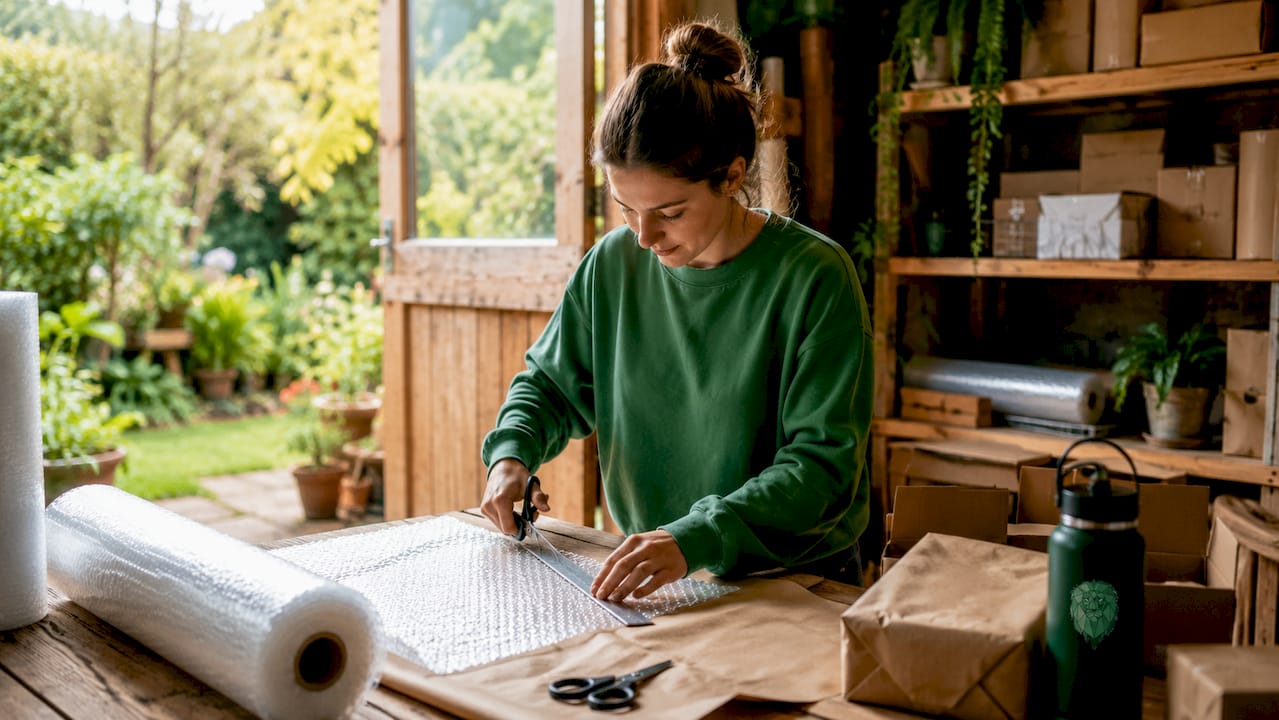
- Packing paper and bubble wrap: Use packing paper for the first layer around each item and bubble wrap (small bubbles for glassware, large bubbles for electronics and art) as the outer protective layer.
- Double-walled corrugated boxes: Standard single-wall boxes compress under load. Double-walled boxes resist crushing and are the correct choice for anything breakable. Dish-pack boxes with extra-thick walls are ideal for kitchenware.
- Packing peanuts, foam sheets, and air pillows: These fill voids and absorb vibration. Foam sheets work especially well between stacked plates or picture frames.
- Reinforced packing tape: Standard tape peels under weight and humidity. Use reinforced or heavy-duty tape rated for moving boxes.
- Labels: “Fragile” and “This Side Up” labels are not optional. They communicate handling instructions to everyone who touches the box.
- Corner protectors and painter’s tape: Corner protectors guard framed art and mirrors. Painter’s tape applied across glass fronts holds shards together if a crack occurs.
- Cell dividers: Cardboard cell dividers inside boxes keep stemware and glasses separated, preventing contact and chipping.
Pro Tip: Buy at least 30% more bubble wrap and packing paper than you think you need. Running out mid-pack leads to shortcuts, and shortcuts lead to breakage.
A good packing materials guide will confirm that the quality of your supplies directly affects the outcome. Do not reuse old, crushed boxes from a supermarket. They have already lost their structural integrity.
How to pack fragile items step by step
A methodical process removes guesswork and protects your belongings. Follow these steps in order.
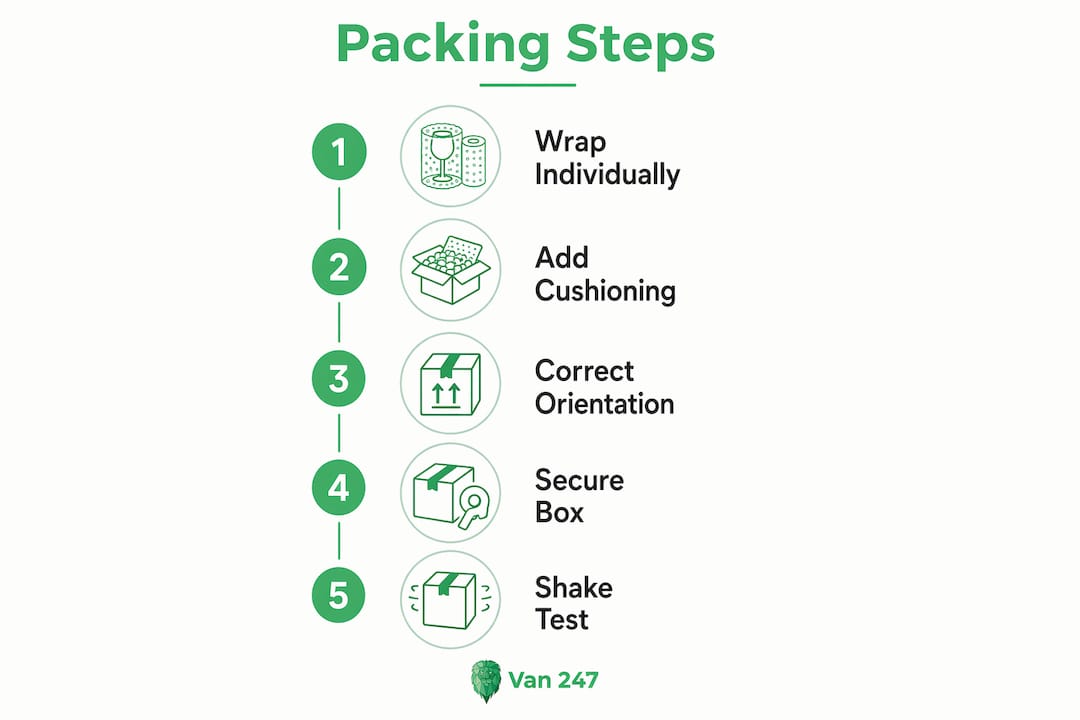
- Sort and group items by material and shape. Keep glassware together, electronics together, and art separate. This makes box selection easier and prevents incompatible items from sharing a box.
- Wrap each item individually. Start with a sheet of packing paper, then add a layer of bubble wrap. Secure with tape. Never wrap two items together as contact between them causes chips and cracks.
- Prepare the box base. Lay at least 5cm of packing peanuts or crumpled paper at the bottom before placing any item inside.
- Position items correctly. Plates and framed art should always stand upright on their edges, never flat. Flat packing causes flexing and cracking under the weight of other boxes stacked on top.
- Fill every void. Pack cushioning material around and between items until nothing can shift. Shake the box gently. If you hear or feel any movement, add more padding.
- Double-box high-value items. Place the packed inner box inside a larger outer box with at least 5cm of cushioning on all sides between the two boxes. UPS and FedEx require double-boxing for fragile items with a declared value over £80 to validate insurance claims.
- Seal using the H-tape method. Run tape along the centre seam and then along both edges, forming an H shape. This prevents the base from splitting under load.
- Label clearly. Write “Fragile” and “This Side Up” on at least three sides of the box. Place heavier boxes at the bottom of stacks and lighter fragile boxes on top.
The shake test is the definitive quality check. Any sound or sensation of movement inside the sealed box means you need to repack before transport.
| Item type | Correct orientation | Max box weight |
|---|---|---|
| Plates and bowls | Upright on edge | Under 20kg |
| Glassware | Upright with cell dividers | Under 15kg |
| Framed art and mirrors | Vertical, edge-standing | Under 20kg |
| Electronics | Flat, double-boxed | Under 20kg |
Pro Tip: Keep packed box weight under 20kg for all fragile items. Heavier boxes are harder to carry safely and are more likely to be dropped.
How do you pack glassware, art, electronics, and antiques?
Different materials need different approaches. Generic packing advice fails here. Tailor your method to the item.
Glassware and dishes
Pack glasses upright, never on their sides. Use cell dividers to keep each glass in its own compartment. Wrap each piece individually in packing paper before placing it in the cell. For a detailed walkthrough, the Van-247delivery guide on packing glassware safely covers every step. The most common error with glassware is overfilling the box. Stop when the box is full, even if a few glasses remain. Start a second box rather than forcing items in.
Framed art and mirrors
Apply painter’s tape in an X pattern across the glass front before wrapping. This holds any shards in place if the glass cracks during transit. Fit corner protectors on all four corners, then wrap the entire piece in bubble wrap. Pack vertically in a purpose-made picture box or between two pieces of foam board. Never lay framed art flat in a box with other items on top.
Electronics
Use the original packaging whenever possible. It is designed specifically for the device’s shape and weight. If original packaging is unavailable, wrap the device in anti-static bubble wrap, not standard bubble wrap, which can generate static and damage components. For guidance on shipping electronics safely, anti-static materials and double-boxing are both non-negotiable. Place the wrapped device in a snug inner box, then double-box with 5cm of cushioning between the two boxes.
Antiques and oddly shaped items
Custom wooden crates provide the best protection for irreplaceable, oddly shaped, or structurally fragile items such as large mirrors, sculptures, or antique furniture. A crate built to the item’s exact dimensions eliminates movement entirely and distributes external pressure evenly. For anything you cannot afford to lose, a custom crate is not an extravagance. It is the correct choice.
The most frequent error with antiques is assuming bubble wrap alone is sufficient. It is not. Bubble wrap cushions impact but does not prevent movement. Combine it with foam sheets, void fill, and a correctly sized box or crate.
What mistakes cause fragile items to break during a move?
Most damage to fragile items comes from continuous vibration and shifting inside the box, not from a single large knock. That insight changes how you think about packing. Your goal is immobilisation, not just padding.
The most common mistakes:
- Packing items flat instead of upright. Plates, mirrors, and framed art packed flat crack under the pressure of boxes stacked above them.
- Leaving empty space in the box. Any gap allows items to shift during transit. Vibration turns small movements into repeated impacts over a long journey.
- Overloading boxes. A box over 20kg is harder to handle and more likely to be dropped or to split at the base.
- Skipping double-boxing for valuable items. A neat-looking box can still fail if items are not immobilised inside. Double-boxing adds a second layer of protection that a single box cannot provide.
- Using insufficient or wrong tape. Standard office tape is not rated for moving boxes. It peels under load and humidity.
- Ignoring the shake test. Sealing a box without performing the shake test is the most avoidable mistake on this list.
- Poor labelling and incorrect stacking. Boxes without clear “Fragile” markings get stacked under heavy items. Always label every side and communicate handling requirements clearly.
Pro Tip: Pack your most fragile items last, so they go into the van last and come out first. This reduces the time they spend at the bottom of a load.
Key takeaways
Safe fragile item transport depends on immobilisation, correct orientation, and verified cushioning before the box is sealed.
| Point | Details |
|---|---|
| Cushion every side | Use at least 5cm of padding on all sides, top, and bottom of every fragile item. |
| Stand items upright | Plates, mirrors, and framed art must stand on their edges, never lie flat. |
| Keep boxes under 20kg | Lighter boxes are handled more carefully and are less likely to be dropped. |
| Double-box high-value items | A second outer box with 5cm of cushioning between layers protects against insurance claim denial. |
| Always perform the shake test | If you feel or hear movement inside the sealed box, repack before transport. |
Why the shake test changed how I think about packing
When I first started working in removals, I thought a well-wrapped item was a safe item. I was wrong. The real risk is not the wrapping. It is the space left around the item once it is inside the box. A beautifully wrapped wine glass rattling around in a half-filled box will not survive a two-hour drive, no matter how many layers of bubble wrap you used.
The shake test taught me that. You pick up the sealed box, give it a gentle shake, and listen. Any sound at all means you have work to do. It sounds simple, but most people skip it because the box looks fine from the outside. A neat exterior tells you nothing about what is happening inside.
The other thing I have learned is that people consistently underestimate vibration. A van travelling at motorway speed generates constant low-frequency vibration for the entire journey. Over 90 minutes, that vibration works like a slow grinder on anything that is not fully immobilised. This is why professional removals teams pack so tightly. It is not fussiness. It is physics.
My honest advice: if you have items that are genuinely irreplaceable, whether that is a family heirloom, a valuable antique, or a high-end piece of electronics, do not rely on DIY packing alone. The cost of professional packing services is far lower than the cost of replacing something that cannot be replaced.
— Claudiu
Van-247delivery: professional fragile item removals across the UK
Moving fragile items yourself is manageable with the right preparation. For large-scale moves or items you simply cannot risk, professional help makes sense.
Van-247delivery has over 15 years of experience handling fragile household goods, antiques, and electronics across the UK. The team applies the same cushioning and double-boxing standards covered in this guide, with trained staff who know how to load and secure a van correctly. For your next move, house removals with Van-247delivery include expert fragile item handling, insured transport, and flexible booking to fit your schedule. Get an instant quote and take the stress out of moving your most delicate belongings.
FAQ
What is the minimum cushioning needed for fragile items?
Fragile items require at least 5cm of cushioning on all sides, including the top and bottom of the box. This meets standard insurance requirements and prevents vibration damage during transit.
Should plates be packed flat or upright?
Plates should always be packed upright on their edges. Packing them flat increases the risk of cracking under the weight of boxes stacked above.
When is double-boxing required for fragile items?
Double-boxing is required for any fragile item with significant value. Carriers including UPS and FedEx require double-boxing for declared-value items to validate insurance coverage.
How heavy should a box of fragile items be?
Keep packed boxes of fragile items under 20kg. Heavier boxes are harder to carry safely and are more likely to be dropped or to collapse at the base.
What is the shake test and why does it matter?
The shake test is the final check before sealing a box. If you hear or feel any movement inside, add more cushioning until the contents are fully immobilised.