Public liability movers: if you’re weighing up a mover, here’s the one-sentence verdict: only hire a company that can produce a current public liability certificate and goods-in-transit cover, on request, before a penny changes hands. If they hesitate, dodge the question, or can’t show you a policy number, that’s your answer. Walk away.
Here’s what to do right now, before you book anyone:
- Ask for the certificate. Request the insurer’s name, policy number, and expiry date in writing, not just a verbal assurance.
- Check the limit. Anything under £1 million for public liability should raise an eyebrow for a standard house move.
- Note who’s covering what. Public liability protects third parties and their property; it’s a separate policy from goods-in-transit, which protects your belongings.
Van-247delivery is one option that supplies insurer details on request during booking. We’ll come back to that later, but for now, the checklist above is what matters most.
Key Takeaways
Hiring a public liability mover in the UK means verifying a current certificate showing insurer, policy number, and expiry before you book, not after.
| Point | Details |
|---|---|
| PL and GIT are different | Public liability covers third parties and property; goods-in-transit covers your belongings, ask for both. |
| £1m is the common baseline | Most UK movers carry £1m to £2m public liability, with £5m typical for commercial jobs. |
| Certificates should name specifics | Insurer name, policy number, cover type, limit, and expiry date, all in writing, not verbal. |
| Biggest red flag | A mover who won’t show a verifiable certificate or gives vague answers about cover. |
| Evidence protects your claim | Time-stamped photos and a signed condition report matter more than a verbal complaint. |
| Van-247delivery supplies details on request | Insured house removals, man-with-a-van, and pallet delivery across the UK, with insurer details shared during booking. |
Table of Contents
- What public liability movers cover (and what they don’t)
- Public liability vs goods-in-transit vs employers’ liability
- How do I verify a mover’s public liability insurance?
- What should I ask when getting a moving quote?
- What to do if something gets damaged during your move
- What experience tells you about trusting a mover’s cover
- How Van-247delivery handles insured moves
- Sources
- FAQ
What public liability movers cover (and what they don’t)
A “public liability mover” is a removal or man-with-a-van company that holds public liability insurance covering injury to third parties or damage to property caused during their work. It’s the cover that kicks in if a crew member scrapes your hallway wall, knocks over a neighbour’s fence panel while manoeuvring the van, or a passer-by is hurt by a dropped item on the pavement.
Public liability isn’t a legal requirement for removal firms in the way employers’ liability is, but it’s become a market expectation. Most customers and letting agents won’t accept a company that can’t prove it, and Simply Business notes that public liability limits at insurers typically range from £1 million to £10 million, with £1 million being the most common choice among removal firms.
Here’s the split that trips people up:
| Covered by public liability | Not covered by public liability |
|---|---|
| Scratched or dented flooring caused by the crew | Your boxed belongings lost or damaged in transit |
| Injury to a passer-by or neighbour during loading | Pre-existing damage to furniture (a wobbly leg, an old crack) |
| A neighbour’s fence or gate damaged by the van | General wear and tear on items over the course of the move |
A £1 million public liability limit is the baseline you should expect from a UK removal company, though some insurers offer up to £10 million and larger commercial jobs often carry higher limits still. Exclusions vary policy to policy, so always ask the mover to confirm specifics rather than assuming.
Public liability movers vs goods-in-transit vs employers’ liability
These three covers get mixed up constantly, and the confusion costs people money when something goes wrong. Each protects a different thing.
- Public Liability (PL): covers injury or property damage to third parties, i.e., not you or your goods, caused by the mover’s operations.
- Goods in Transit (GIT): covers loss or damage to your belongings while they’re in the van or being carried.
- Employers’ Liability (EL): covers injury to the mover’s own staff. It’s legally required the moment a removal company employs anyone, separate from PL and GIT entirely.
Picture three scenarios: a crew member scuffs your hallway paintwork (that’s PL), your grandmother’s china cabinet cracks in transit (that’s GIT), or a warehouse worker throws his back out lifting your sofa (that’s EL, and it’s the mover’s legal problem, not yours). Legitimate removal companies should hold both GIT and PL as standard, and if you’re booking a firm with a crew rather than a sole operator, EL should be in place too.
Pro Tip: For anything genuinely valuable, jewellery, antiques, a piano, don’t rely on standard GIT limits. Ask the mover whether declared-value cover is available, and compare it against what your own home insurance would pay out for the same item in transit.
How do I verify a mover’s public liability insurance, part of public liability movers?
You don’t need to be an insurance expert to do this properly. You need four pieces of paper and thirty seconds of scepticism.
Ask for the certificate of insurance itself, not a summary. It should show the insurer’s name, the policy number, the type of cover (PL and GIT listed separately), the limit, any excess, and the expiry date. A legitimate operator will provide this on request and clarify cover levels without being cagey about it.
Once you have it, check three things:
- Does the trading name on the certificate match the company you’re actually booking?
- Is the expiry date after your move date, with a comfortable margin?
- If in doubt, call the insurer’s helpline directly and confirm the policy is active. Genuine insurers expect this call and won’t treat it as odd.
A copy-ready line you can send in a message: “Could you send over your current certificate of insurance showing your public liability and goods-in-transit cover, including the policy number and expiry date?”
Pro Tip: If a mover gets defensive, vague, or offers you a “trust me” instead of paperwork, treat that as your biggest red flag. A company with nothing to hide shows you the certificate without a fuss.
What should I ask when getting a moving quote?
Beyond the certificate itself, a good quote conversation should cover:
- What’s your public liability limit, and does it apply per claim or per policy year?
- Is goods-in-transit included, and what’s the value cap per load?
- What’s the excess, and who pays it if a claim is made?
- If subcontractors are used on the job, are they covered under your policy or their own?
- How are claims handled, and what’s the typical response time?
On cost, expectations vary by scale. Small removal operators commonly carry £1m to £2m in public liability cover, stepping up to £5m for commercial work, and that cover typically costs the operator somewhere in the £100 to £300 range annually, which is usually baked into your quote rather than itemised separately.
| Business size | Typical PL limit | Rough annual PL cost to operator |
|---|---|---|
| Sole trader / small firm | £1m–£2m | £100–£300 |
| Established commercial mover | Up to £5m | Higher, scaled to turnover |
Insurance is usually included in the headline price, though some insurers advertise low entry-level premiums that don’t reflect the fuller cover most customers actually want. Ask for a breakdown rather than assuming the cheapest quote carries the same protection as a mid-range one. On timing: your policy needs to be in force on the actual move date, not just when you booked, and urgent or out-of-hours moves can carry a small premium on top.
What to do if something gets damaged during your move, part of public liability movers
Mistakes happen even with insured, careful crews. What separates a smooth claim from a drawn-out argument is what you do in the first hour.
- Stop and note the damage before anything gets moved further or covered up.
- Photograph it immediately, ideally with a timestamp and something in frame for scale.
- Get names and contact details of anyone present, including any witness who saw it happen.
- Don’t dispose of or repair the damaged item until the claim is settled.
- Request the mover’s insurer details on the spot, insurer name, policy number, and claims contact.
- Tell your own home insurer if the item or property falls under your household policy too.
- Keep every receipt, delivery note, and signed condition report from the day.
Time-stamped photos and a signed condition report at drop-off matter more than almost anything else in a dispute. Claims stall when there’s no paper trail, not usually because the mover is dishonest, but because “he said, she said” doesn’t hold up against an insurer’s process.
Pro Tip: Keep a short damage log on your phone as the move happens, room by room. It takes two minutes and gives you a clear record if you need to submit a claim within the mover’s stated reporting window, often just a few days.
What experience tells you about trusting a mover’s cover
Transparency is the tell. A mover confident in their own cover shows you the certificate before you ask twice, and doesn’t flinch when you request the insurer’s name and policy number. That willingness says more about how they’ll handle a dispute than the policy limit itself.
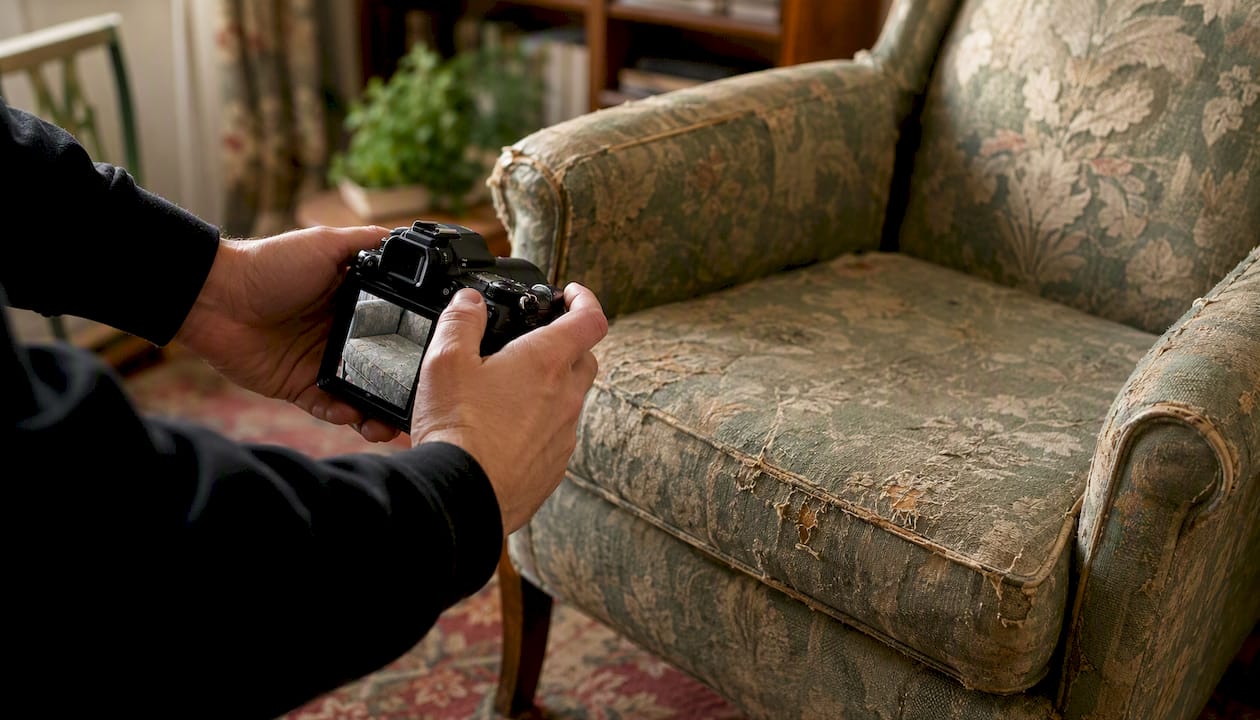
At Van-247delivery, insurer details are supplied as part of the booking conversation, not held back until a customer pushes for them. On the day, that usually means the crew is upfront about condition notes before lifting a single box, and photographs anything that’s already marked or worn, so nobody’s left guessing later whose fault a scratch was.
Insurance is one trust signal among several, not the whole picture. A company can hold a perfectly good policy and still be disorganised, unresponsive, or short on reviews. Pair the paperwork check with a look at accreditation, such as membership of the British Association of Removers, genuine customer reviews, and a clear written contract that names the insurer and cover limits, not just the price.
How Van-247delivery handles insured moves
There are other ways to sort a move, a national chain, a local one-man outfit, a DIY van hire, but each asks you to trade something: a chain costs more for the same crew quality, a one-man outfit may not carry the paperwork to prove cover, and hiring your own van removes public liability altogether. Van-247delivery’s angle is straightforward: insured cover as standard, without the overhead of a national chain’s pricing.
Van-247delivery covers UK-wide house removals, office relocations, man-with-a-van jobs, pallet delivery, and specialist moves like pianos, all under insured transport. When you get a quote, you can ask directly for the insurer’s name, policy number, and expiry date, and that information is provided as a normal part of the booking process, not something you have to chase after paying a deposit.
If you’re weighing up a move, start with an instant quote on the house removals page for a full relocation, or the man and van service for a smaller single-crew job, and request insurer details as part of that first conversation.
Sources
A handful of independent pages are worth bookmarking if you want to check policy wording yourself or dig deeper before contacting an insurer directly.
- Removals insurance explained: UK cover guide | Move and Store
- Removal company insurance | Simply Business
Use these alongside a direct call to the mover’s insurer if anything on a certificate looks unclear. It costs nothing and takes minutes.
FAQ
Do all UK removal companies need public liability insurance?
It’s not a legal requirement, but it’s a market standard. Most customers and letting agents won’t book a company that can’t prove GIT and PL cover.
What’s a typical public liability limit for a house move?
Expect £1 million as a baseline, with some insurers offering up to £10 million and commercial jobs often sitting around £5 million.
Does public liability cover my belongings if they’re damaged?
No. Public liability covers third-party injury and property damage; your own belongings are covered by goods-in-transit, a separate policy you should also confirm.
What should I do if a mover won’t show their insurance certificate?
Treat it as a red flag and look elsewhere. A legitimate operator provides insurer name, policy number, and expiry on request without pushback.
Does Van-247delivery provide proof of insurance?
Yes, insurer details including policy number and expiry are supplied as part of the booking process for house removals, man-with-a-van jobs, and pallet delivery.