Protect floors during a move with a layered, route-first system: stop grit and moisture at the door, cover the entire walking path with a continuous runner or rigid board, and add impact protection wherever heavy items pass. Start by cleaning the route, then measure it before you buy anything. If you’d rather hand the risk to someone else, an experienced provider like Van-247delivery brings this exact system as standard.
TL;DR:
- Rigid boards like Masonite or Ram Board are essential for high-traffic areas on hardwood, tile, and stone floors to prevent dents from wheels and heavy items.
- Using tape directly on finished floors can cause damage or residue; instead, tape protective sheets to each other and avoid adhesive on the flooring itself.
- Properly measuring and cleaning the route, then sealing gaps and corners with coverings and tape, prevents grit from trapping and scratching surfaces during the move.
- Moving heavy furniture with dollies fitted with rubber wheels and using plywood ramps at thresholds minimizes risk of scratching or cracking floors.
- Hiring professional movers often provides all necessary protection materials and insurance, making it a safer option for delicate or complex moves.
Table of Contents
- Which floor protection materials work best for hardwood, tile, vinyl and carpet?
- How do you prepare the route from your front door to the van?
- How do you move furniture and appliances without scratching or denting floors?
- How do you protect stairs, doorways and thresholds?
- What common mistakes damage floors during a move?
- When should you hire professional movers for floor protection?
- The layered approach, distilled
- How Van-247delivery keeps your floors intact on moving day
- Sources
- FAQ
Which floor protection materials work best for hardwood, tile, vinyl and carpet part of protect floors during move?
Not every surface needs the same armour. Get this wrong and you’ll either waste money on overkill or leave a soft hardwood floor exposed to a dolly wheel that shouldn’t have been anywhere near it.
Hardwood, tile and stone need something rigid underfoot wherever dollies, sack trucks or repeated foot traffic will pass. Ram Board or Masonite is the standard choice here because it spreads weight across a wide surface rather than letting a wheel or a chair leg dig into one spot. Think of it as a temporary floating floor: it doesn’t stop every knock, but it stops the crushing point-loads that leave permanent dents.
Red rosin paper or builder’s paper is a cheaper alternative, and it’s fine for light-traffic zones like a hallway you’ll only walk through occasionally. It won’t survive a fridge on a dolly, though, so don’t use it as your only line of defence on the main route.
Carpet
behaves differently. Carpet film is the easiest solution because it’s a self-adhesive, peel-away layer that stops stains and stops grit working its way down into the pile. It’s brilliant for cut- and loop-pile carpets, but always test a small offcut or hidden corner first. Some cheaper films leave a faint residue on delicate or older carpets, and you don’t want to discover that after the whole hallway is covered.
Vinyl and laminate sit somewhere in between. They’re more forgiving than hardwood but still scratch under a dragged sofa leg, so treat them with the same rigid-board approach you’d use on hardwood in high-traffic zones, and rosin paper elsewhere.
Materials worth having on hand, by job:
- Ram Board or Masonite sheets: for the main dolly route across hardwood, tile or stone
- Red rosin/builder’s paper: for low-traffic hallways and spare rooms
- Carpet film: for stairs, hallways and rooms with fitted carpet
- Moving blankets: wrapped around furniture legs and draped over floor edges near turns
- Scuff guards: for appliance corners and thresholds
- Cardboard: only as a short-term, low-traffic filler; never on wet days (more on that below)
You can buy most of these from builders’ merchants, hardware stores and online moving-supply retailers, and rigid board typically comes in large rolls or sheets that cover several metres per length. If you’d rather not stock a garage full of materials you’ll only use once, hiring a crew that already carries this kit, Van-247delivery among them, often works out cheaper than buying everything yourself for a single move.
How do you prepare the route from your front door to the van, part of protect floors during move?
A protected route is only as strong as its weakest gap. One unprotected metre of hallway can undo three rooms’ worth of careful covering, because that’s exactly where a dolly wheel picks up grit and drags it onto everything beyond it.
- Clean first. Vacuum or sweep the entire route before you lay anything down. Protection laid over trapped grit just turns into sandpaper under a moving wheel.
- Measure the path. Walk it door to door and note the length and width of every section, including turns. A rough formula works well: multiply length by width, then add 10 to 15% for overlaps and awkward corners.
- Stage the entrance. Put a doormat and a boot tray just inside the front door, and agree a simple wipe policy with anyone helping you carry, so muddy boots stop at the threshold rather than travelling through the house.
- Lay coverings end-to-end. No gaps, no islands of bare floor between sheets. Measuring the path properly and cleaning before laying down protection is what actually prevents grit from ending up trapped and scratching the surface underneath.
- Tape carefully. Tape protective sheets to each other, or use low-tack painter’s tape on the covering itself, never adhesive tape stuck directly onto a finished floor.
- Check turns and drop zones separately. Corners where furniture pivots and the spot just inside the van doors both take extra wear, so double up your covering there.
A well-staged entrance does more heavy lifting than people expect. It’s a small thing, and it’s usually where wet-weather moves either stay under control or turn into a mess by lunchtime.
How do you move furniture and appliances without scratching or denting floors, part of protect floors during move?
The biggest single decision on moving day is whether to lift an item or roll it. Lifting keeps weight off the floor entirely, which is right for anything light enough for two people to carry comfortably. Anything heavier, a fridge, a wardrobe, a sofa, needs a dolly or sliders, because dragging it risks gouging even a protected floor.
When you do roll something, put plywood or Masonite under the wheels on the main route, and check the wheels themselves. Dollies and carts fitted with rubber wheels are far less likely to scratch hardwood than the hard-plastic or metal wheels that come on some cheaper trolleys.
Appliances need their own tactics.
A washing machine or fridge shouldn’t be dragged across a threshold on its own feet.
- Fit scuff guards with pull straps to appliance corners so you can pull rather than push, keeping your posture upright and the load steady.
- Lay a plywood ramp over any threshold or transition strip before rolling an appliance across it, which stops the wheels bumping and cracking the strip.
- Where possible, disassemble bulky furniture (bed frames, large wardrobes, dining tables) to cut down on point loads and awkward pivots.
- Wrap sharp legs and corners in moving blankets before they go anywhere near a doorway.
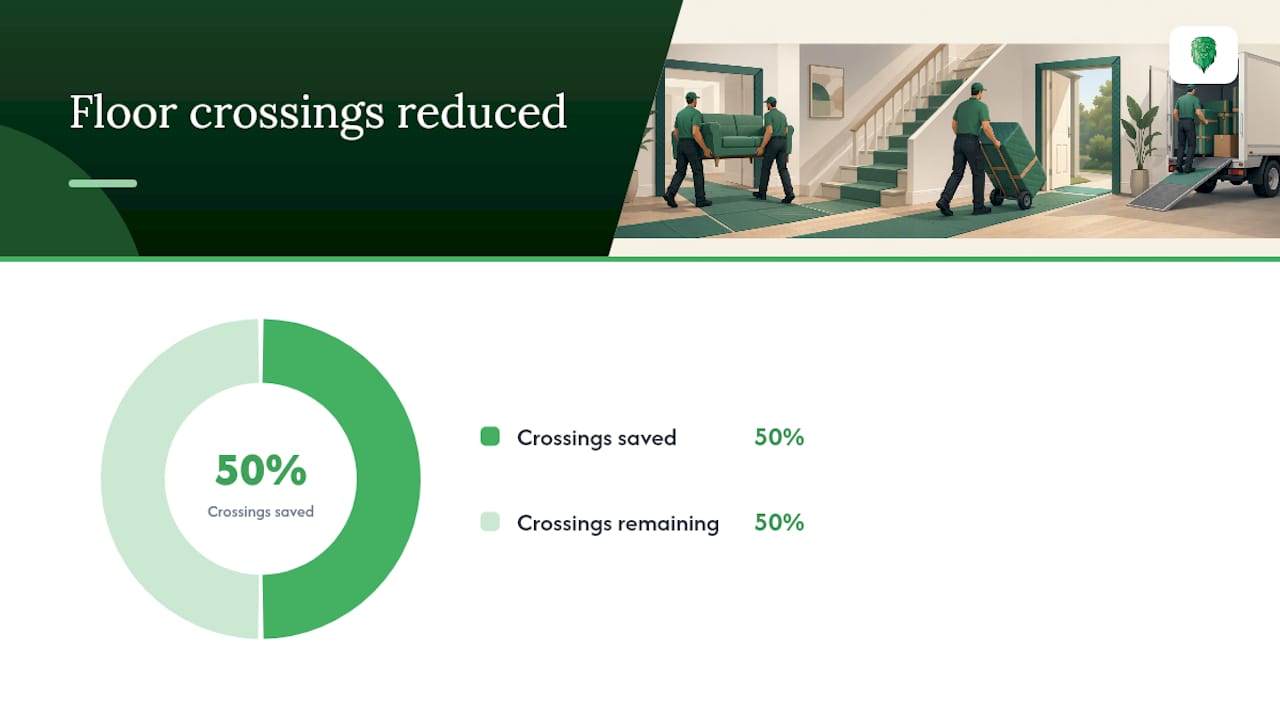
Pro Tip: Split your crew into an “inside team” and an “outside team” rather than having everyone walk the full route each trip. The inside team carries items to the door, the outside team takes over from there to the van. It halves the number of times boots and wheels cross your protected floors, and it’s one of the simplest ways to cut wear on a long move.
For anything genuinely awkward, a piano, a large armchair that won’t turn corners easily, it’s worth reading up on specific handling techniques for large items before moving day rather than improvising on the spot.
How do you protect stairs, doorways and thresholds, part of protect floors during move?
Doorways, stair nosing and threshold strips are where most damage actually happens, because that’s where movers pivot heavy items and where wheels catch an edge they can’t see.
Stairs need a covering that won’t shift underfoot. On carpeted stairs, a runner secured with non-slip tape at each edge works well; on hard stairs, thin rigid treads or a heavy-duty runner taped only to itself, never to the stair nosing, gives grip without leaving residue.
- Cover each stair tread edge to edge, with no loose flaps that could catch a boot
- Use plywood mini-ramps over metal or wooden threshold strips so wheels roll rather than bump
- Fit foam corner guards or wrap blankets around door frames on any turn a sofa or wardrobe has to navigate
- Check every covering is taped down flat, not just tucked in, since a lifted edge on a staircase is a trip hazard waiting to happen
Get thresholds wrong and you’ll usually find out the hard way: a cracked transition strip or a chipped stair nosing, both of which cost far more to fix than the ramp or corner guard that would have prevented it.
What common mistakes damage floors during a move, part of protect floors during move?
Most floor damage during a move comes down to a handful of repeat offenders, and nearly all of them are avoidable.
- Taping straight onto finished wood or stone. Aggressive tape applied directly to a polished floor can pull up finish or leave sticky residue behind. Tape to the protective sheet itself, never the floor.
- Leaving gaps in the covered route. A single uncovered stretch drags grit onto everything beyond it, undoing the rest of your prep.
- Using cardboard on wet or muddy days. Cardboard turns slick and can tear the moment it gets damp, so swap it for rigid board or rubber-backed matting whenever the forecast is against you.
- Trusting a cheap drop cloth under heavy furniture. Thin cloths shift and bunch, which creates the exact point-load risk they’re supposed to prevent.
- Skipping documentation. Take before and after photos of your floors, especially rented properties, so you have evidence for a deposit dispute or an insurance claim if anything does go wrong.
One detail worth remembering on a tight schedule: floor damage claims on rental deposits are one of the most common disputes tenants raise at the end of a tenancy, and photographic evidence taken before you start moving is usually the difference between a smooth deposit return and a drawn-out argument.
When should you hire professional movers for floor protection, part of protect floors during move?
Some moves are genuinely higher risk than a DIY approach can manage safely, a piano, an antique hardwood floor with a delicate finish, a narrow staircase with awkward turns. In those situations, the smarter call is to bring in movers who arrive with the right kit and know how to use it.
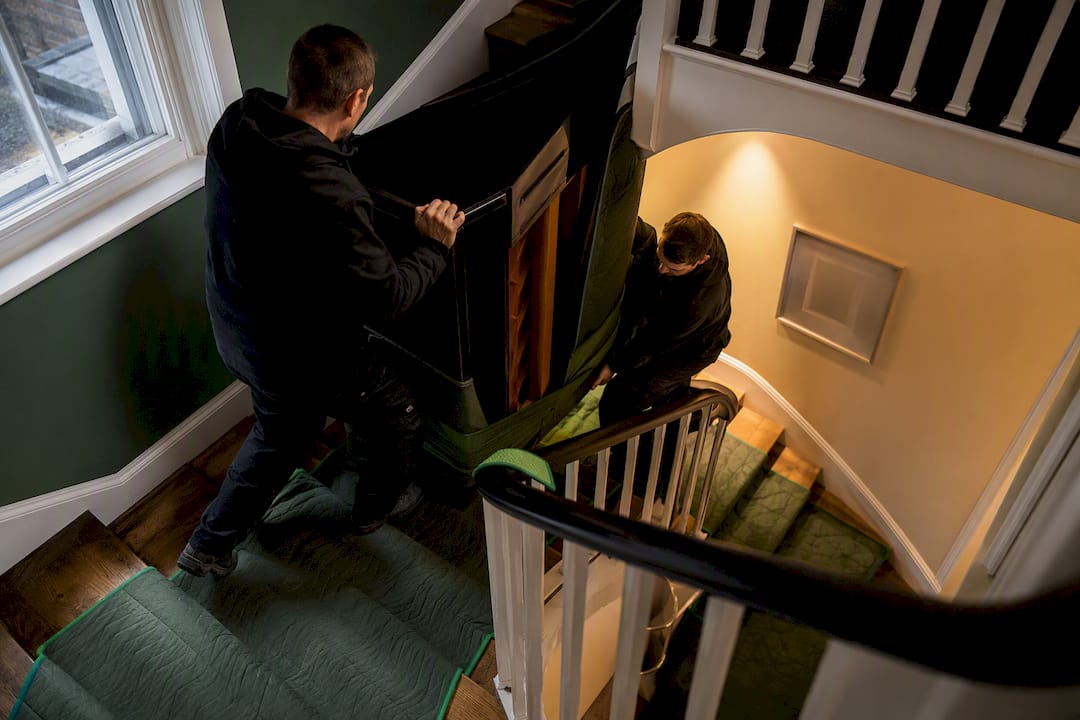
Professional crews typically bring their own floor protection as standard, including Masonite sheets, moving blankets, and corner guards, rather than expecting you to source it. That’s worth confirming before you book, not assuming.
Questions worth asking any mover before you commit:
- What floor protection materials do you bring as standard, and do you charge extra for them?
- What wheel type do your dollies and sack trucks use?
- Is floor damage covered under your insurance, and what’s the claims process if something goes wrong?
- Can you confirm the specific protection measures in writing before moving day?
Van-247delivery’s crews carry Masonite, moving blankets and corner guards as part of insured house and office removals, which gives you a useful benchmark for what a properly equipped mover should turn up with. If a quote you’re comparing doesn’t mention any of this unprompted, ask.
The layered approach, distilled
Every method in this guide comes back to one idea: think in layers, not single fixes. Stop debris at the door, keep the walking route continuous with no gaps, and add impact protection wherever weight or wheels concentrate. Miss one layer and the others do less work than they should.
Quick checklist:
- Entrance: doormat, boot tray, wipe policy
- Route: rigid board or runner, laid end-to-end, taped to itself only
- Impact zones: rubber-wheeled dollies, plywood ramps at thresholds, corner guards on turns
- Verify: walk the finished route before moving day, photograph floors before and after
Fifteen-plus years of removals work across UK homes and offices, which is roughly how long Van-247delivery has been doing this, teaches you that the moves which go wrong on floors almost always skipped one of these four steps rather than lacking expensive kit.
— Claudiu
How Van-247delivery keeps your floors intact on moving day
Van-247delivery is the alternative to piecing together your own protection kit and hoping it’s enough. Every insured house and office removal comes with crews who already carry moving blankets, plywood, and Masonite as standard, so you’re not buying rigid board for a single day’s use or guessing whether your dolly wheels are floor-safe.

If you’d rather manage the move yourself but want backup for the heavy or awkward parts, a man and van service covers single-item transport without the cost of a full crew. Larger household moves suit a full house removals booking, where floor protection, insurance and handling are agreed upfront rather than negotiated on the day. Businesses relocating desks, filing cabinets and IT equipment across a larger footprint should look at office removals, where the same layered protection applies across corridors and reception areas that see far more foot traffic than a typical hallway.
Whichever route you take, ask for your protection measures in writing before the day itself; and if you’re going it alone, keep the checklist above pinned somewhere you’ll actually see it. Get a quote through Van-247delivery to see exactly what’s included before you decide.
Sources
- How to Protect Floors When Moving | Practical Floor Safety Tips
- Top (9) Essential Moving Floor Protection Tips – Neighbor Blog
- How to protect your floors during a move
- How to protect floors when moving furniture?
FAQ
How do you protect floors when moving appliances?
Fit scuff guards with pull straps to appliance corners so you can pull rather than drag, and lay a plywood ramp over any threshold to stop wheels bumping and cracking the transition strip.
How do you move furniture without scratching floors?
Use rubber-wheeled dollies or sliders rather than dragging items, put rigid board like Masonite or Ram Board under the wheels on the main route, and wrap sharp legs and corners in moving blankets before they reach doorways or turns.
What’s the best way to protect carpet during a move?
Adhesive carpet film is the most effective option because it’s a peel-away layer that stops stains and stops grit embedding in the pile, though it’s worth testing a small hidden patch first on delicate or older carpets.
How do you protect carpets when moving house?
Vacuum thoroughly before laying anything down, then cover the full route with carpet film or a taped-down runner, paying particular attention to stairs and hallways where foot traffic and dolly wheels concentrate.
Should I hire professional movers just for floor protection?
If your move involves a piano, a delicate hardwood finish, or a tricky staircase, hiring insured professionals who already carry Masonite, blankets and corner guards is usually safer and often cheaper than buying all that kit for one day’s use.