A partial packing service means the removal team packs only the parts of your home you choose, usually the fragile, awkward or time-hungry bits, while you pack the rest. It sits between full packing and doing everything yourself. It suits you if you want help where it counts without paying for every box. Below you’ll find what it typically includes, what it costs in the UK, how to split the work and what to put in writing.
TL;DR
- A partial packing service covers only the rooms or items you pick: typically the kitchen, glassware, mirrors, artwork, electronics and other fragile things.
- Full packing for a typical 3-bed house adds roughly £300 to £600 to a move, so a partial service usually costs less than that, depending on what you hand over.
- Items you pack yourself are generally not covered by the removal firm’s insurance, so let professionals pack anything valuable or breakable.
- Ask for a written quote that says exactly which rooms and items are packed, who supplies materials and what is insured.
- Start sorting and packing your own share early: the less the packers have to untangle, the smoother moving day goes.
Table of Contents
- What a partial packing service actually is
- What you can choose to have packed
- What a partial packing service costs in the UK
- Partial packing, full packing or doing it all yourself?
- Why the fragile things are worth handing over
- What to pack yourself
- Items to keep with you, not in the van
- How to prepare for the packers
- What your written quote should say
- Our perspective
- Book your partial packing with us
- FAQ
- Sources
What a partial packing service actually is
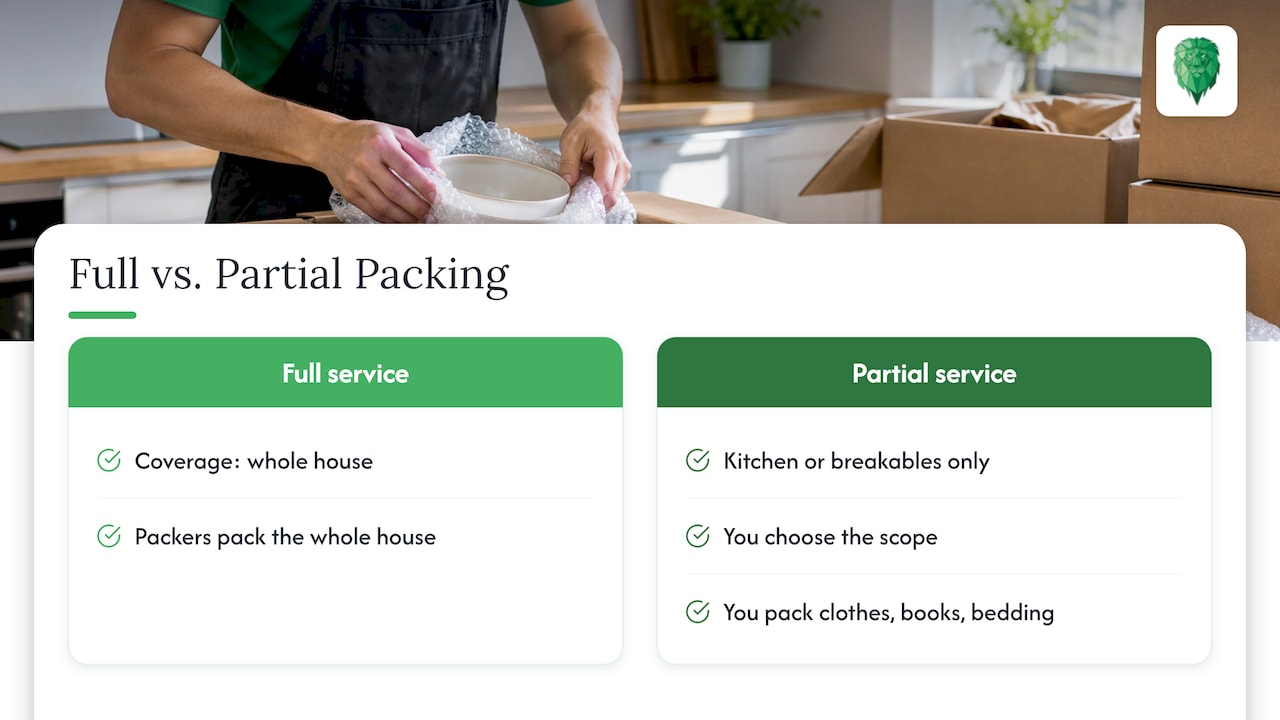
Think of it as a menu rather than a set meal. With a full service, packers arrive with boxes, tape and wrapping and pack the whole house. With a partial service, you decide the scope. Some people book the kitchen only. Others hand over everything breakable and pack clothes, books and bedding themselves.
It is a popular middle ground. AIM describes packing just the kitchen or fragile items only as a sensible option, and it’s easy to see why. The kitchen is often the most time-consuming room, with plates, glasses, odd-shaped gadgets and lots of small items. Clothes and paperbacks, on the other hand, are easy to pack with a roll of tape and a free weekend.
If you’d like a team to take on more, our professional packing services page explains how packing fits into a move with us.
What you can choose to have packed, part of partial packing service
There is no single fixed list, because each removal firm sets its own options. These are the choices people most often make:
- One room. The kitchen is the classic pick. Dining rooms with china and glassware are another.
- Fragile items only. Glassware, ornaments, mirrors, framed pictures and lamps.
- High-value or awkward items. Artwork, antiques, instruments and large electronics. AIM notes that these cost more to pack professionally because they need more care and materials.
- Wardrobes and clothing. Some people prefer to leave hanging clothes to the team and pack everything else themselves.
- Unpacking at the other end. Some firms also offer unpacking, so you can ask for the essential rooms to be unpacked first. We offer unpacking alongside our house removals.
- Dismantling furniture. Not packing as such, but often booked at the same time: taking apart beds and wardrobes so they travel safely. We offer both disassembly and assembly.
When you talk to a firm, name the rooms or items clearly. “Just the kitchen and the glass cabinet in the lounge” is far better than “a bit of packing”.
What a partial packing service costs in the UK
Prices depend on volume, how fragile the items are and where you live. Two published figures give you a useful ceiling:
| Source | What it covers | Typical cost |
|---|---|---|
| AIM, April 2026 | Full packing, typical 3-bed house | Approximately £300 to £600 added to the move |
| Hold Storage, 2026 | Packing service add-on | £300 to £400 |
A partial service covers less than the whole house, so it should land below these full-packing figures. How far below depends on your choices. Packing one room costs far less than packing every cupboard.
We don’t publish a fixed price for packing, because it depends on the job. The quickest route is an instant quote through our main site, where you can say what you need.
What pushes the price up or down, part of partial packing service
- Volume. More rooms and more boxes mean more hours.
- Fragility. Artwork, antiques and instruments need specialist wrapping and cost more.
- Location. Hold Storage notes that London removals typically run 20 to 30 percent above national averages.
- Wider costs. AIM points to higher fuel, employer National Insurance and wage costs feeding into UK removal pricing in 2025 and 2026.
- Access. Stairs, long carries and tight parking can add time for the whole job.
If you want a closer look at what a quote should show, see the section on written quotes below.
Partial packing, full packing or doing it all yourself? Part of partial packing service
Here is how the three options compare on what matters most to most movers.
| Full packing | Partial packing | All self-pack | |
|---|---|---|---|
| Cost | Highest | Middle, set by what you hand over | Lowest, apart from materials |
| Your time | Very little | Moderate | Most |
| Fragile items | Packed by professionals | Packed by professionals, if you choose | Packed by you |
| Stress level | Lowest | Low to moderate | Highest |
| Best for | Busy households, big homes | Most people | Small moves, tight budgets |
Which? says that having the removal company pack costs extra but takes away stress, is quicker than packing yourself and adds surprisingly little to the move cost. It adds that professional firms generally need between half a day and two days, depending on how much you own.
So why choose partial? Because you get that speed and care exactly where you need it. You keep the cheap, easy jobs for yourself.
Why the fragile things are worth handing over, part of partial packing service
This is the most important point in the article, so here it is plainly: what you pack yourself is usually not covered by the removal firm’s insurance.
- Which? says you can do some packing yourself to save money, but you should steer clear of packing breakables, because the firm’s insurance won’t cover items you’ve packed.
- AIM says the same: if a box you packed arrives damaged, the company isn’t liable. That matters if you own valuable items, and it’s worth weighing against the saving.
- Standard industry terms based on the BAR model say that with owner-packed boxes, the customer is responsible for making sure goods are suitably packed for transport or storage.
This is the real value of a partial service. You hand over the glass, the mirrors, the artwork and the electronics. You keep the towels and the paperbacks. If you want to understand how cover works, our guides on goods in transit insurance and goods in transit versus liability explain the terms in plain English.
What to pack yourself, part of partial packing service
These are the easy wins. Do them over the weeks before moving day:
- Clothes, shoes and bedding (keep one set out for the first night)
- Books, using small boxes so they stay liftable. Our guide to packing books covers it
- Toys, games and DVDs
- Bathroom items, towels and linen
- Non-fragile kitchenware you won’t miss, such as plastic containers
- Paperwork and files you don’t need to keep in a safe place
A few simple rules make a big difference:
- Small boxes for heavy things, bigger boxes for light things.
- Label every box with the room it belongs in and a short note of what’s inside. Which? also advises labelling anything fragile as such.
- Don’t overfill. If the lid bulges, the box is too heavy or too full.
- Seal the bottom properly with tape before you start.
Houseplants need their own plan. They’re awkward, living and easily damaged, so read some plant relocation tips on loading them last and unloading them first, then check with your removal team where they’ll travel.
Our packing and moving guide has a longer room-by-room checklist if you want one.
Items to keep with you, not in the van. Part of partial packing service
Some things should never go in a box, whoever packs them. BAR-model terms say certain goods shouldn’t be submitted for removal or storage unless agreed in writing. These include dangerous or explosive goods, and categories such as jewellery, money, deeds, securities, mobile phones and portable media or computing devices.
In practice, carry your passport, bank cards, jewellery, house keys, laptops and phones with you. Which? also suggests thinking about moving particularly delicate items in your own car rather than the van. If you’re unsure whether something is allowed, ask before moving day, not on it.
How to prepare for the packers, part of partial packing service
A little preparation turns a good packing day into a great one.
Two to three weeks before
- Declutter first. Every item you give away is an item nobody has to pack, carry or pay for.
- Decide the scope. Walk through the house and mark what the packers will take. Sticky notes on cupboards work well.
- Start your own boxes. Begin with rarely used rooms: spare bedroom, loft, garage.
The week before
- Finish your own packing so the van isn’t loaded with half-open boxes.
- Set aside an essentials box with kettle, mugs, chargers, medicines, toiletries and a first-night change of clothes.
- Clear access. Make sure the packers can reach the rooms they’re doing, and that parking is sorted.
- Tell the team about unusual items such as a glass-topped table, a grandfather clock or a large mirror.
On the day
- Be around to answer questions, or leave a contact number.
- Keep pets and young children out of the way.
- Don’t leave the kettle packed if you want tea.
Packing materials are normally supplied by the packers, though you should confirm this at the quote stage. For your own boxes, strong double-walled cartons and a good supply of bubble wrap help. Our post on bubble wrap rolls shows how to use it, and our guide to moving fragile items safely covers wrapping for plates, glasses and frames.
What your written quote should say, part of partial packing service
With partial packing, the scope is everything. A vague quote leads to “I thought you were packing that” on moving day. AIM says a written quotation should set out what’s included and not included, the total cost and payment terms, and the terms and conditions, including what happens if your move date changes.
For a partial service, check that it names:
- The exact rooms or items being packed
- Who supplies boxes and wrapping, and whether they’re charged separately
- Whether unpacking is included
- What’s insured, and what isn’t (such as boxes you pack)
- The number of people and the expected duration
- What happens if the move date moves
Which? suggests asking for a breakdown so you can see what you’re paying for insurance, packing, hourly rate, mileage and any storage. It also recommends getting at least three quotes, preferably from firms that visit your property rather than quote by phone.
AIM also advises asking about goods-in-transit and public liability cover, including limits and exclusions, because some goods-in-transit policies have low per-item limits. If you own something valuable, mention it at the quote stage so it can be dealt with properly.
Our perspective
We’ve been moving people for over 15 years, and the question we hear most is: “Do I really need the whole house packed?” Usually the honest answer is no.
What we see is that the stress of a move isn’t spread evenly. It’s concentrated in a handful of places: the kitchen, the glass cabinet, the mirrors and pictures, the TV and the home office. Everything else is boxes of clothes and books that most people can pack in front of a film.
That’s why we like partial packing. You get trained hands where mistakes are expensive, and you stay in control of the budget. Add our packing, storage, assembly and disassembly options and you can build the move around your life, rather than the other way round.
Our advice: choose the rooms that worry you most, put the scope in writing, and let us handle those first. Moving day is a marathon, not a sprint, and it helps to share the load.
Claudiu
Book your partial packing with us
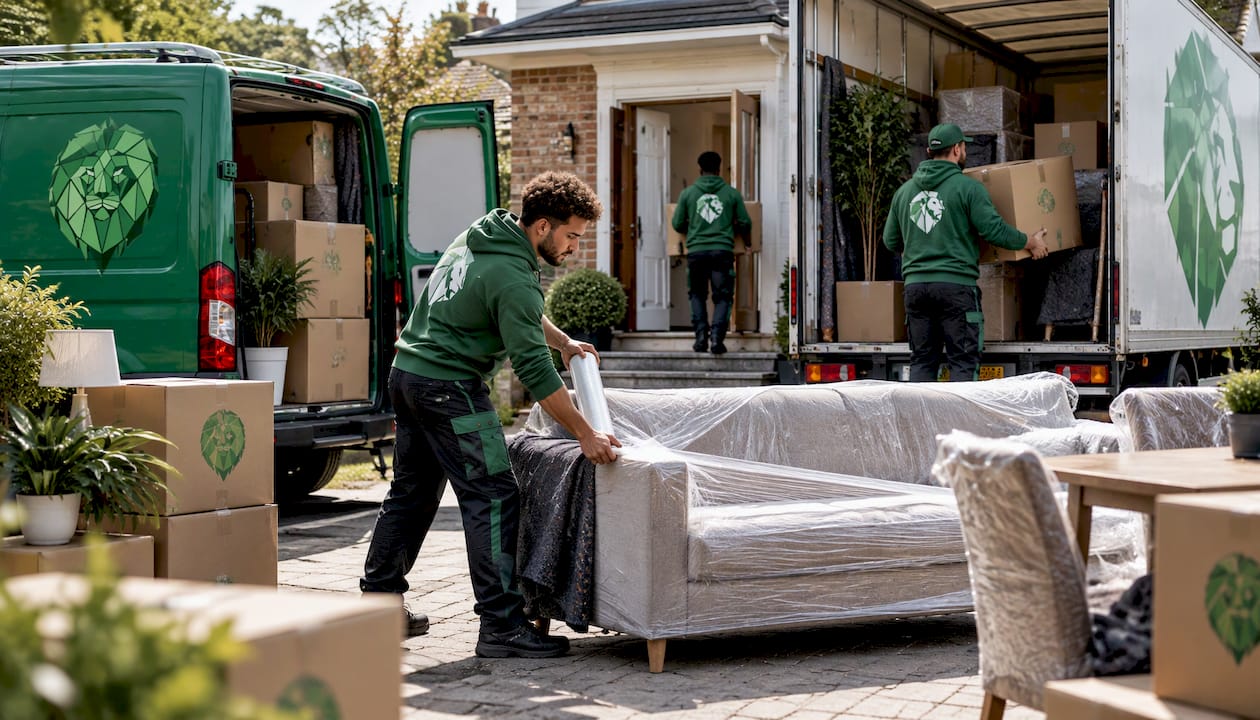
We pack, move, store and set up, all under one roof. You can book packing alongside a house removal, add unpacking, storage or post-move cleaning, and have furniture taken apart and rebuilt at the other end. Our transport is insured, and you can tell us which rooms or items you want us to pack when you request your quote.
For a few boxes and a bit of furniture, our man and van service might be all you need. For anything bigger, get an instant quote and tell us what you’d like packed.
FAQ
Is a partial packing service worth it?
For most people, yes. It gives you professional packing for the fragile and valuable things, which is where damage and uninsured risk are highest, while you save money on easy items. Which? says professional packing is quicker than DIY and adds surprisingly little to a move’s cost.
How much does packing cost for a UK house move?
AIM puts full packing at roughly £300 to £600 extra for a typical 3-bed house. A partial service covers only part of that, so your price depends on the rooms and items you choose. Ask for an itemised quote.
Will insurance cover boxes I pack myself?
Generally not. Which? says the firm’s insurance won’t cover items you’ve packed, and recommends leaving breakables to the professionals. Check the cover terms in your written quote before you decide what to self-pack.
How long does professional packing take?
This depends on how much you own. Which? says professional firms generally take half a day to two days. A partial service for one or two rooms usually sits at the shorter end.
Can I do the packing and still get unpacking help?
Often, yes. Many firms let you mix and match, so you could pack your own books and clothes, have the kitchen packed, and ask for the kitchen to be unpacked first. Tell us what you’d like when you request a quote.