Packaging is the single most important factor in safe piano transport. The role of packaging in piano transport is to protect the instrument from shocks, vibration, moisture, and uncontrolled movement at every stage of handling and transit. A piano is not simply a large piece of furniture. It contains thousands of delicate internal components, a precision-tuned soundboard, and a lacquered finish that can be ruined by a single misplaced piece of tape.
Getting the packaging right is what separates a piano that arrives in perfect condition from one that needs expensive repairs.
What materials and techniques are essential for effective piano packaging?
Effective piano moving packaging relies on a coordinated system of materials, not a single layer of protection. Each material serves a specific purpose, and skipping any one of them increases the risk of damage significantly.
The core materials for packing a piano safely are:
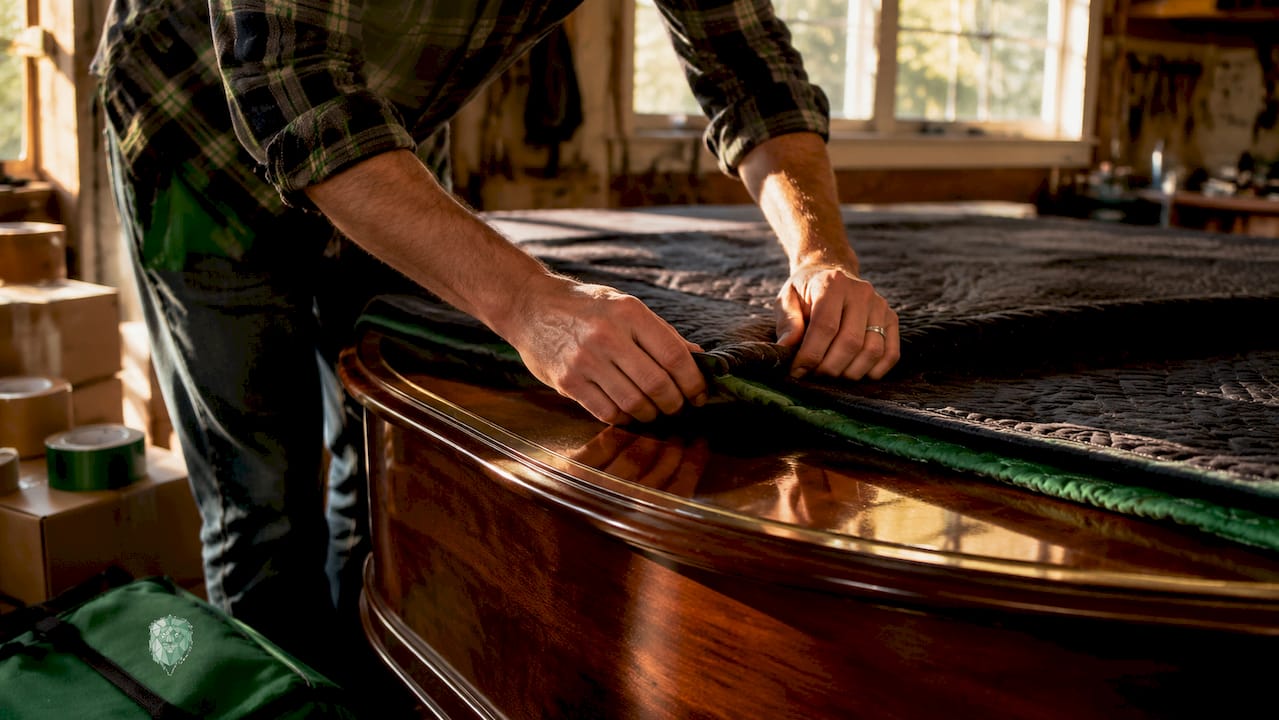
- Heavy-duty moving blankets: These wrap the entire exterior of the piano, cushioning the body and protecting the finish from scratches and impact. Use multiple layers on corners and edges, which are the most vulnerable points.
- Bubble wrap: Applied over blankets on particularly fragile areas such as the keyboard lid, legs, and pedals. It adds a secondary shock-absorbing layer without adding excessive bulk.
- Stretch wrap: Wound tightly over the blankets to hold all padding firmly in place. Stretch wrap holds padding securely without leaving any adhesive residue on the finish.
- Ratchet straps: Used to secure the wrapped piano to the moving board or dolly. They prevent the instrument from shifting during loading, transit, and unloading.
- Piano boards and dollies: A piano board is a flat, padded platform that the instrument is laid or stood on for movement. Dollies with locking wheels allow controlled repositioning without lifting.
- Specialised skid boards: Used primarily for grand pianos, these allow the instrument to be moved on its side safely after disassembly.
One rule applies without exception: never apply adhesive tape directly to a piano’s surface. Direct adhesive contact damages delicate lacquered finishes and can strip veneer. Always tape over the stretch wrap or blankets, never onto the wood or painted surface itself.
Pro Tip: Wrap the piano keyboard lid separately with bubble wrap and secure it shut with stretch wrap before applying the outer blanket layer. This prevents the lid from swinging open and cracking during a move.
How does piano packaging prevent damage from vibration, moisture, and movement?
Most piano transport damage comes from shifting, vibration, and sustained pressure rather than a single dramatic accident. This is a critical point that many people underestimate. A piano that moves even a few centimetres repeatedly during a long journey can suffer cumulative damage to its internal hammers, strings, and bridges.
Good packaging prevents this through three mechanisms: cushioning, immobilisation, and environmental protection.
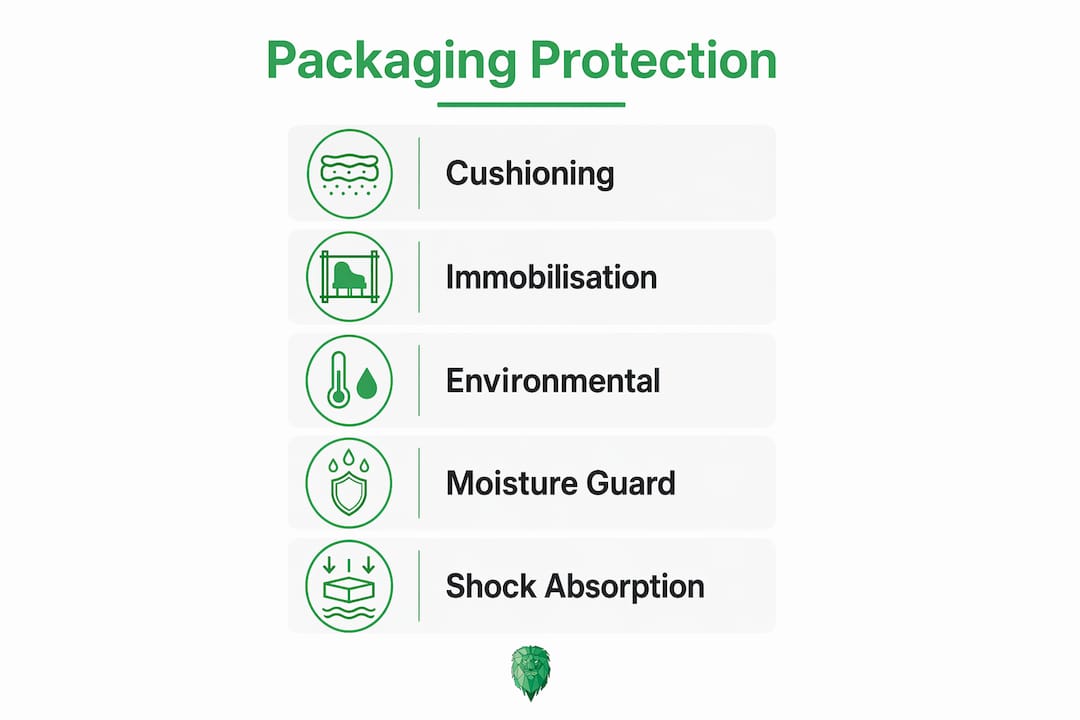
Cushioning absorbs the energy from road vibrations and sudden jolts. Moving blankets and bubble wrap act as shock absorbers, reducing the force transmitted to the piano’s body and internal components. For long-distance moves, reinforced crates with internal bracing and vibration-absorbing padding go further by keeping the piano completely immobile within a rigid outer structure.
Immobilisation is equally critical. Ratchet straps and piano boards work together to prevent the instrument from tilting or sliding inside the vehicle. Padding that migrates during transit leaves vulnerable areas exposed to direct impact. The packaging must be treated as a restraint system, not just a cushion.
Moisture is the hidden threat in piano transport. Wood is hygroscopic, meaning it absorbs and releases moisture from the surrounding air. Humidity and rapid temperature changes during transit can cause wood to swell, metal parts to corrode, and mould to develop inside the instrument. For long-distance or cross-country moves, moisture-barrier wrapping and climate-controlled vehicles are not optional extras. They are part of the packaging system.
The consequences of poor packaging extend beyond cosmetic damage. A piano that has been poorly secured during transport will almost certainly need professional tuning after delivery. Scheduling that tuning 2–4 weeks after arrival allows the instrument to settle fully before the technician works on it.
How do packaging methods differ by piano type?
Not all pianos are the same shape, weight, or structural configuration. The best packaging for pianos depends entirely on the type of instrument you are moving.
| Piano type | Transport position | Key packaging requirements |
|---|---|---|
| Upright piano | Upright, on a dolly | Heavy blankets, ratchet straps, padded dolly, keyboard lid secured |
| Baby grand piano | On its side, on a skid board | Legs and pedal lyre removed, padded skid board, full blanket wrap |
| Grand piano | On its side, on a skid board | Full disassembly of legs and lyre, reinforced crating for long distance |
| Digital piano | Upright or flat, depending on size | Extra padding for electronics, moisture barrier, avoid pressure on control panels |
Upright and grand pianos require fundamentally different transport techniques. Uprights travel in their natural standing position, strapped securely to a padded dolly. Grand and baby grand pianos must be partially disassembled. The legs and pedal lyre are removed, wrapped individually, and packed separately. The main body is then placed on its side on a skid board, fully blanketed, and strapped down.
Digital pianos present a different set of challenges. The electronic components inside are sensitive to both physical shock and moisture. Packaging for a digital piano must include a moisture barrier layer and extra padding around the control panel and speaker areas. Avoid applying any side pressure to the casing, as this can crack the housing or damage internal circuit boards.
For any grand piano move, professional advice is not just helpful. It is necessary. The disassembly and re-packaging process requires experience to execute without causing damage during the preparation stage itself.
What are common mistakes in piano packaging and how can they be avoided?
Packaging errors are the leading cause of preventable piano damage during moves. Knowing what to avoid is just as useful as knowing what to do.
- Using standard household packing materials only. Cardboard boxes and thin bubble wrap are designed for smaller, lighter items. They do not provide the structural support or cushioning depth that a piano requires. Always use heavy-duty moving blankets and purpose-built piano boards.
- Applying adhesive tape directly to the finish. This is one of the most common and costly mistakes. Tape residue and the tearing action of removal can strip lacquer and veneer. Use stretch wrap over blankets instead.
- Insufficient immobilisation. Wrapping a piano well but failing to strap it securely inside the vehicle means it will shift during transit. Improper packaging mistakes including insufficient immobilisation lead to scratches, internal damage, and long-term tuning problems.
- Stacking items on top of the piano. A piano is not a shelf. Placing boxes or other items on top adds uneven pressure to the lid and case, which can crack the wood or damage the internal action.
- Ignoring environmental conditions. Long moves through varying climates require moisture-barrier wrapping. Skipping this step because the weather looks fine at the start of the journey is a gamble that often ends badly.
Pro Tip: Before wrapping, photograph the piano from all angles. This gives you a clear record of its condition before the move and is invaluable if you need to make an insurance claim.
For a deeper look at what goes wrong and how to avoid it, the piano transport mistakes guide from Van-247delivery covers the most frequent errors in detail.
Key takeaways
Proper piano packaging is a coordinated restraint system that protects the instrument from vibration, moisture, and movement throughout the entire move.
| Point | Details |
|---|---|
| Packaging is a restraint system | Blankets, stretch wrap, and ratchet straps must work together to immobilise the piano, not just cushion it. |
| Never tape directly onto the finish | Use stretch wrap over blankets to secure padding without leaving adhesive residue on the piano’s surface. |
| Piano type determines method | Uprights travel upright on dollies; grand pianos require disassembly and skid boards before wrapping. |
| Moisture is a serious transport risk | Humidity and temperature changes cause wood swelling and internal corrosion; use moisture-barrier wrapping on long moves. |
| Post-move tuning is always needed | Schedule a professional tuning 2–4 weeks after delivery to allow the piano to settle fully before adjustment. |
Why packaging is the part most people get wrong
I have seen a lot of piano moves over the years, and the pattern is almost always the same. People spend weeks researching the right removal company, the right vehicle size, the right route. Then they hand the piano over wrapped in a single moving blanket held on with parcel tape, and wonder why it arrives with a cracked lid or a buzzing string.
The truth is that packaging is not a finishing touch. It is the core of the whole operation. Packaging prevents shocks and internal component movement that would otherwise compromise the instrument’s integrity. A piano that looks fine on the outside can have shifted hammers or a cracked bridge that only becomes apparent when a tuner opens it up weeks later.
What I find most people miss is the difference between cushioning and restraint. Cushioning absorbs impact. Restraint stops the piano from moving in the first place. You need both. A beautifully padded piano that is not strapped down will still shift on a motorway bend. A tightly strapped piano with no padding will transmit every road vibration directly into the soundboard.
My honest advice: if you are not certain you have the right materials and the right technique for your specific piano type, bring in professionals who do this regularly. The cost of a professional piano packaging service is a fraction of what a repair bill looks like after a badly packaged move.
— Claudiu
Van-247delivery’s piano transport service: what you get
Moving a piano safely takes more than good intentions. It takes the right equipment, the right technique, and people who have done it many times before.

Van-247delivery has over 15 years of experience handling large, fragile, and high-value items across the UK. The piano transport service includes specialised dollies, moving boards, heavy-duty blankets, stretch wrap, and ratchet straps as standard. Every move comes with insurance cover, so you have genuine peace of mind from collection to delivery. Whether you need a local man and van for a short move or a full house removal service that includes your piano, Van-247delivery handles the packaging and the logistics so you do not have to.
FAQ
What is the most important packaging material for piano transport?
Heavy-duty moving blankets are the foundation of any piano packaging system. They must be combined with stretch wrap and ratchet straps to both cushion and immobilise the instrument during transit.
Can I pack a piano myself for a house move?
You can wrap a piano yourself using blankets and stretch wrap, but professional-grade dollies, piano boards, and ratchet straps are needed to do it safely. Without the right equipment, the risk of damage during loading and unloading is high.
Why should I never use tape directly on a piano?
Adhesive tape damages lacquered and veneered finishes on contact. Always apply tape over stretch wrap or blankets, never directly onto the piano’s surface.
Does packaging affect whether a piano needs tuning after a move?
Good packaging reduces damage but does not eliminate the need for tuning. Schedule a professional tuning 2–4 weeks after delivery to allow the piano to settle in its new environment before adjustment.
How is packaging different for a grand piano versus an upright?
Grand pianos require partial disassembly, with legs and the pedal lyre removed and wrapped separately, before the body is placed on a skid board. Upright pianos travel in their standing position, strapped to a padded dolly with full blanket coverage.