Piano transport insurance is the financial safety net that protects your instrument’s full value if it is damaged or lost during a move. Without it, you could face repair or replacement costs running into thousands of pounds, with little recourse against a mover whose standard liability barely covers the weight of the instrument. The role of insurance in piano transport goes far beyond a box ticked on a booking form.
It is a layered system involving mover liability policies, home contents coverage, and specialist instrument riders, each filling gaps the others leave open.
What types of insurance cover piano transport?
Three distinct coverage types apply when you move a piano, and understanding how they work together is the starting point for protecting your instrument properly.
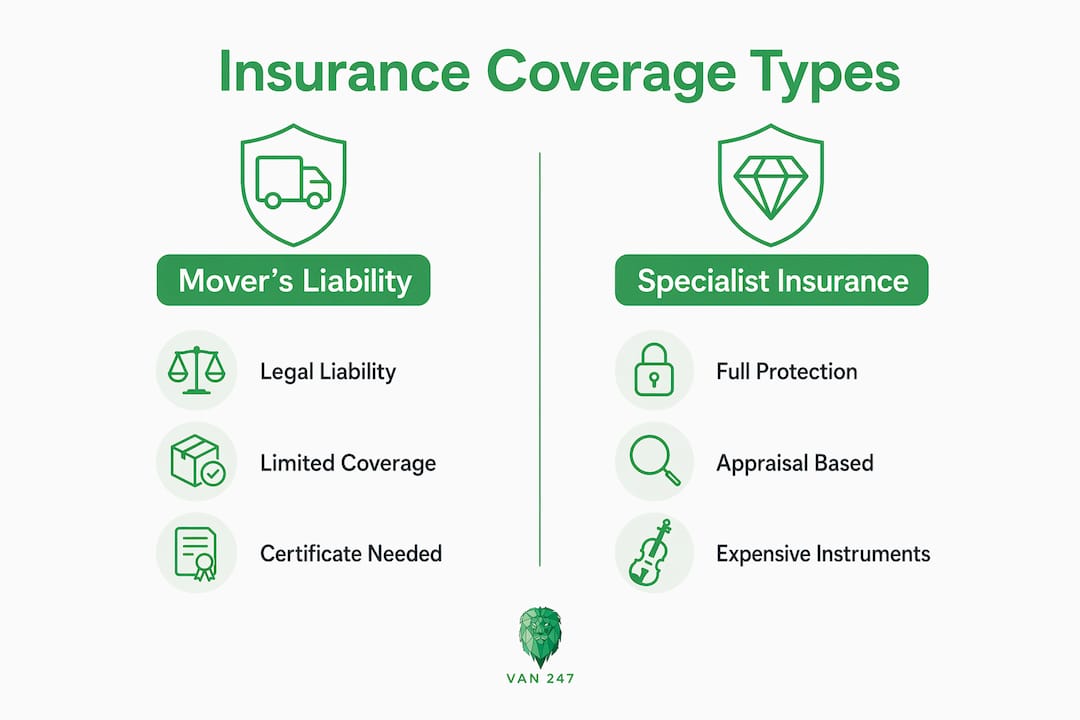
Mover’s liability insurance is the first layer. Professional piano movers typically carry a minimum of $1 million general liability insurance covering piano transport. That figure sounds reassuring, but liability insurance covers the mover’s legal exposure, not necessarily the full replacement value of your piano.
Home contents insurance is the second layer, and it is often weaker than owners expect. Most home contents policies have limited or no coverage for pianos during transit because of specific transit exclusions. Clients frequently discover this only after the piano has left the property and a claim is already needed.
Specialist instrument riders form the third and most protective layer. For pianos appraised over £25,000, a specialty instrument rider is recommended to cover gaps beyond mover liability and home insurance. This rider acts as a top-up policy that fully restores the owner in the event of a total loss.
Here is a quick comparison of how the three layers interact:
| Coverage type | What it covers | Common gap |
|---|---|---|
| Mover’s liability | Legal liability for damage caused by the mover | May not match full replacement value |
| Home contents insurance | Items owned by you, sometimes in transit | Transit exclusions often apply away from home |
| Specialist instrument rider | Full appraised value, mechanical and environmental damage | Requires separate purchase and appraisal |
Pro Tip: Request a certificate of insurance from your mover before the move date. Confirm it explicitly names piano transport and states the cargo coverage limit.
Why standard moving insurance is often inadequate
Standard released value protection is the default coverage most movers offer, and it is almost always insufficient for a piano. Released value protection typically covers only around $0.60 per pound of the instrument’s weight. A 600 lb upright piano would yield just $360 in a total-loss settlement. Replacing that same piano from a reputable dealer can cost well over $3,500 for an upright and more than $10,000 for a grand. That gap is not a technicality. It is a very real financial exposure that catches owners off guard.
Beyond the valuation shortfall, standard policies carry exclusions that matter enormously for pianos. Standard moving insurance frequently excludes damage caused by temperature and humidity changes during transport. Pianos are built from wood, felt, and metal, all of which react to environmental shifts. A move on a cold, damp day can cause soundboard cracking or pin block swelling that no standard policy will pay for.
A piano is not furniture. It is a precision instrument with hundreds of moving parts, and its insurance needs to reflect that complexity, not the weight of its cabinet.
Post-move tuning is another area where owners are often surprised. Insurance policies do not cover post-move tuning because it is expected as a normal consequence of moving a piano. Tuning two to four weeks after the instrument has settled is standard practice, not evidence of damage. Knowing this in advance saves you from a rejected claim and a frustrating conversation with your insurer.
Professional appraisals are the foundation of any meaningful coverage. Insurance valuation is based on replacement from professional dealer markets, not private sales or online classified prices. If your piano is appraised at £8,000 but your policy limit is £2,000, you carry the remaining £6,000 of risk yourself.
How to verify and secure the right coverage before your move
Getting the right insurance coverage for your piano is a process, not a single phone call. Follow these steps before your move date.
- Request a certificate of insurance from your mover. Ask for the COI in writing and check that it covers cargo, not just general liability. Confirm the policy is active on your move date.
- Check your home contents policy for transit clauses. Call your insurer and ask specifically whether your piano is covered while being transported by a third party. Get the answer in writing.
- Commission a professional appraisal. Replacement value considers the piano’s condition and the cost of a comparable instrument from a primary market dealer. An appraisal gives you a defensible figure to base your coverage on.
- Match your policy limit to the appraised value. If your mover’s cargo limit is lower than the appraisal, you need a top-up. A specialist instrument rider fills that gap.
- Ask specifically about environmental and mechanical damage. Confirm whether your coverage includes humidity damage, temperature fluctuation, and internal mechanical failure. If it does not, a specialist rider is the answer.
- Document your piano’s condition before the move. Photograph the instrument from every angle, including the interior, keys, and pedals. Note any existing scratches, chips, or tuning issues in writing.
Pro Tip: Keep your appraisal certificate, photographs, and COI copies together in a single folder, either physical or digital. If a claim arises, having everything in one place speeds up the process considerably.
The advantages of insured piano delivery go beyond financial protection. A well-documented move with verified coverage gives you a clear record of the instrument’s condition, which protects both you and the mover from disputes.
Common misconceptions about piano insurance during transport
Several widely held beliefs about piano insurance lead owners into real financial trouble. Knowing what is false is as useful as knowing what is true.
- “My home contents insurance covers everything.” This is the most common mistake. Many piano owners mistakenly treat pianos like furniture under home contents policies, ignoring the piano’s unique sensitivities and specific insurance needs. Transit exclusions are standard in most home policies.
- “The mover’s insurance is enough.” Mover liability covers the mover’s legal exposure. It does not automatically cover the full replacement cost of your instrument, particularly for high-value or vintage pianos.
- “I don’t need to document the piano’s condition beforehand.” Without pre-move photographs and written notes, any claim you make can be disputed on the grounds of pre-existing damage. Documentation is your evidence.
- “Tuning costs after the move are covered.” They are not. Post-move tuning is considered routine maintenance, not insurable damage.
- “Environmental damage is always covered.” Specialist insurers emphasise that clear communication about policy exclusions, including environmental damage, is needed before the move. Humidity and temperature damage are excluded from most standard policies.
- “A cheap mover with basic insurance is fine for a short move.” Distance does not determine risk. A piano can be damaged in a ten-minute journey just as easily as a ten-hour one, particularly during loading and unloading.
Understanding the risks in transporting a piano means accepting that the instrument is vulnerable at every stage, not just on the road.
What are the benefits of hiring insured specialist piano movers?
Specialist piano movers do not just carry better insurance. They actively reduce the likelihood of a claim being needed in the first place.
- Expert handling reduces damage risk. Trained piano movers understand weight distribution, staircase angles, and the correct way to secure an instrument in a vehicle. This expertise prevents the accidents that trigger claims.
- Climate-controlled vehicles protect against environmental damage. Climate-controlled vehicles and documented risk management are the primary tools for mitigating humidity and temperature damage, which standard policies do not cover. This is a practical safeguard, not a luxury.
- Pre-move documentation is standard practice. Specialist piano movers provide documented inventories with photographs before transport. This practice clarifies condition disputes and prevents claims being denied due to alleged pre-existing damage.
- Transparent insurance terms reduce surprises. Reputable movers explain their policy deductibles, exclusions, and valuation methods before you sign anything. That transparency is part of the service.
- Claims support is part of the package. If something does go wrong, a specialist mover has a process for handling claims. You are not left navigating an insurer alone.
| Benefit | How it helps you |
|---|---|
| Expert handling | Fewer accidents during loading, transit, and unloading |
| Climate-controlled transport | Protection from humidity and temperature damage |
| Pre-move documentation | Clear evidence for any insurance claim |
| Transparent policy terms | No unexpected exclusions or coverage gaps |
| Claims support | Faster, less stressful resolution if damage occurs |
Specialist piano carriers combine physical protection with financial protection. The two work together. Better handling means fewer claims. Better documentation means faster settlements when claims do arise.
Key takeaways
Insurance coverage for piano shipping requires multiple coordinated layers because no single policy covers every risk a piano faces during transit.
| Point | Details |
|---|---|
| Standard liability is insufficient | Released value protection covers only a fraction of a piano’s replacement cost. |
| Home contents policies have gaps | Transit exclusions mean your home insurer may not pay out once the piano leaves your property. |
| Specialist riders fill the gap | For pianos valued over £25,000, a specialist instrument rider is the most reliable top-up coverage. |
| Documentation prevents disputes | Photographs and written condition notes before the move protect your claim from being denied. |
| Specialist movers reduce risk | Expert handling and climate-controlled vehicles lower the chance of damage occurring at all. |
Why I think most piano owners get this badly wrong
A personal perspective from Claudiu
After years of working in logistics and removals, the pattern I see most often is not carelessness. It is misplaced confidence. Piano owners assume that because they have home insurance and the mover has insurance, they are covered. They are not, and the gap between those two policies is where the real financial risk lives.
The thing that surprises people most is how little the standard liability payout actually is. When you tell someone that their 600 lb piano might only be covered for a few hundred pounds under a basic mover’s policy, the reaction is always disbelief. But that is the reality of released value protection, and it is entirely legal.
What I have found works is treating insurance verification the same way you treat the physical move itself: as a task with specific steps, a checklist, and a deadline. Get the appraisal done. Request the COI. Check your home policy. Buy the rider if the numbers do not add up. It takes a few hours and it can save you thousands.
Insurance in piano moving is part of a managed risk process where professional documentation and transparent communication reduce claim disputes. That is not a bureaucratic observation. It is the practical difference between a stressful claim and a resolved one.
The other thing I would say is this: the mover you choose matters as much as the policy you buy. A specialist who documents the piano’s condition before loading, uses a climate-controlled vehicle, and explains their coverage terms clearly is giving you something no policy alone can provide. They are reducing the probability that you ever need to make a claim at all.
— Claudiu
Van-247delivery: insured piano transport you can rely on
Moving a piano is one of the most demanding transport jobs there is, and having the right insurance in place is only half the answer. The other half is choosing a mover who handles the instrument with the care it deserves.

Van-247delivery provides insured house removal services that include specialist piano transport across the UK. With over 15 years of experience, Van-247delivery combines verified insurance coverage with professional handling, pre-move documentation, and clear communication about policy terms. You get a mover who knows what they are doing and the paperwork to prove it. If you are planning a piano move and want to know exactly what is covered before the vehicle arrives, Van-247delivery is a straightforward place to start.
FAQ
What does standard mover’s insurance actually cover for a piano?
Standard released value protection covers approximately $0.60 per pound of the piano’s weight, which is far below the actual replacement cost of most instruments. For meaningful coverage, you need to upgrade to full value protection or purchase a specialist instrument rider.
Does home contents insurance cover my piano during a move?
Most home contents policies exclude pianos during transit due to specific transit clauses. You should contact your insurer directly and ask whether coverage applies once the piano leaves your property.
How do I insure a piano properly before transport?
Commission a professional appraisal, request a certificate of insurance from your mover, check your home contents policy for transit exclusions, and purchase a specialist instrument rider if the coverage limits do not match the appraised value.
Is post-move tuning covered by piano transport insurance?
No. Post-move tuning is considered a routine consequence of moving a piano and is not classed as insurable damage. Tuning two to four weeks after the move is standard and expected.
Why do specialist piano movers matter for insurance purposes?
Specialist movers provide pre-move documentation with photographs that support insurance claims and prevent disputes over pre-existing damage. Their expertise also reduces the risk of damage occurring, which is the most effective form of protection available.