Storage is defined as the strategic buffer that gives your move flexibility, security, and control when timelines refuse to cooperate. The role of storage in moving goes far beyond renting a unit and filling it with boxes. It is a logistics tool that bridges the gap between your move-out date and your move-in date, reduces the number of times your belongings are handled, and protects you from the chaos of misaligned schedules.
Whether you are a household relocating across town or a business shifting an entire office, understanding how storage fits into your plan is the difference between a smooth move and a stressful one.
How do different storage solutions support moving logistics?
Two main storage types serve movers: Storage-in-Transit (SIT) and self-storage. Each solves a different problem, and choosing the wrong one costs you time and money.
Storage-in-Transit (SIT) is an integrated service where your removal company collects, stores, and delivers your belongings as part of a single contract. SIT offers storage periods up to 90 days, which covers most delayed move-ins, renovation overruns, and chain-related hold-ups. The key advantage is that your goods stay in the same container from collection to delivery, meaning fewer touchpoints and a lower risk of damage.
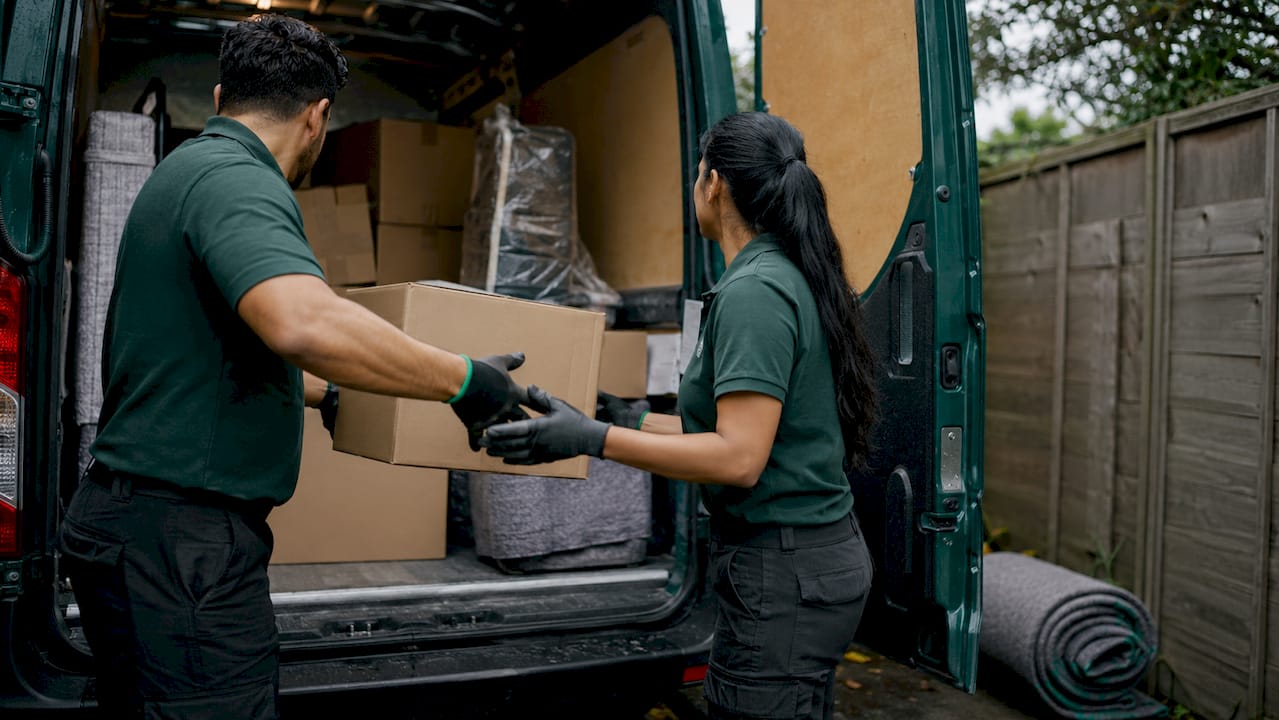
Self-storage is the independent route. You rent a unit, arrange your own transport, and manage access yourself. It is more flexible for long-term needs but requires two separate moves: one into the unit and one out again. Those extra moves add cost and handling risk that many people underestimate.
Here is a direct comparison to help you decide:
| Storage Type | Typical Monthly Cost | Handling Required | Best For |
|---|---|---|---|
| Storage-in-Transit (SIT) | £120–£400 | Minimal (single load) | Short-term gaps, delayed move-ins |
| Self-Storage (standard) | £40–£300 | Two separate moves | Long-term storage, flexible access |
| Climate-Controlled Self-Storage | £60–£400+ | Two separate moves | Sensitive items, antiques, electronics |
| Integrated Removal + Storage | Bundled pricing | Minimal | Full-service, stress-free relocations |
Climate-controlled storage is not a luxury upgrade. It is the correct choice for electronics, wooden furniture, artwork, and documents. Humidity and temperature swings cause warping, mould, and deterioration that no amount of careful packing can prevent. Security features across reputable facilities include staff screening, CCTV cameras, and authorised-only entry, giving you confidence that your possessions are genuinely protected.
For a broader view of how storage fits into the full logistics picture, the UK removals logistics guide from Van-247delivery covers the operational side in detail.
What is the optimal timeline for integrating storage into your moving plan?
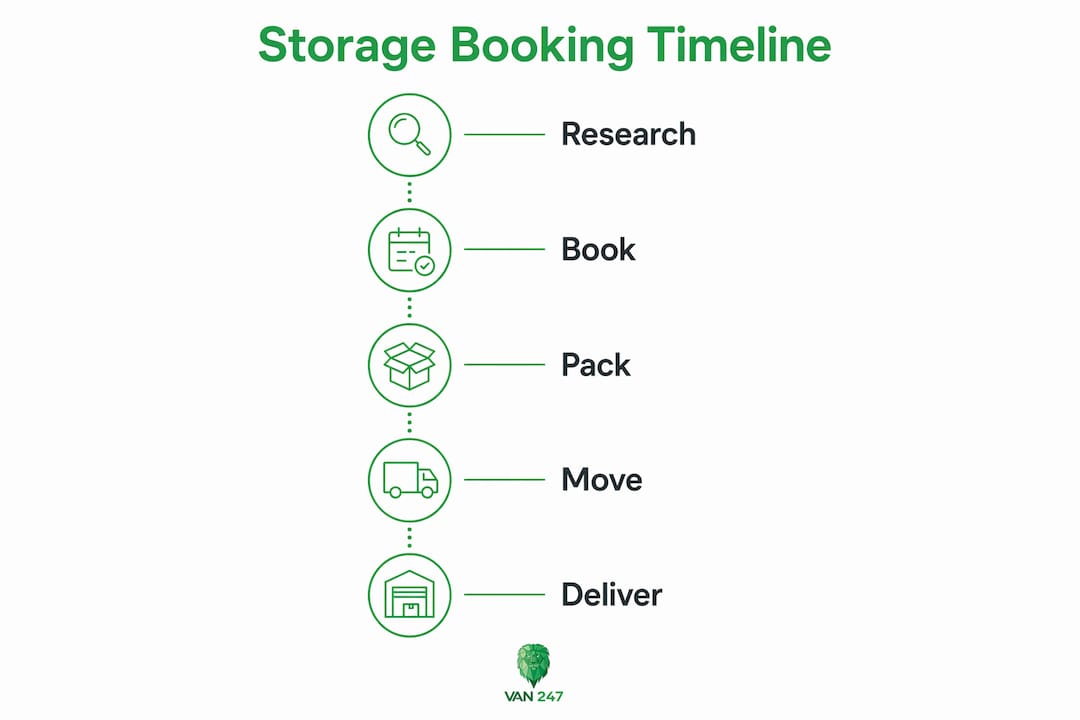
Timing your storage booking is as important as choosing the right type. Effective storage planning recommends comparing providers 6–8 weeks before moving, booking 4–6 weeks in advance, and packing 2–4 weeks before your move-out date. That structure exists for a reason: it gives you room to absorb delays without paying for empty storage or scrambling at the last minute.
Here is a practical timeline to follow:
- 6–8 weeks before moving: Research and compare storage providers. Check unit sizes, climate control options, access hours, and contract terms. Get at least three quotes.
- 4–6 weeks before moving: Book your storage unit or confirm SIT arrangements with your removal company. Confirm access dates and any insurance requirements.
- 2–4 weeks before moving: Begin packing non-essential items. Label every box clearly with contents and destination room. Start building your inventory list.
- 1–2 weeks before moving: Complete packing. Confirm collection or drop-off logistics with your provider. Double-check access arrangements.
- Moving day: Transfer items to storage as planned. Keep an essentials bag separate so you are not hunting through boxes for your phone charger on night one.
Treating storage booking as planned milestones rather than a single event synchronises your packing, transport, and delivery phases. This approach prevents the common mistake of booking storage too late and then rushing the packing process.
Pro Tip: If your move involves a property chain or a renovation, build an extra two weeks of buffer into your storage booking. Chains collapse and builders overrun. A pre-booked unit costs far less than an emergency extension.
Storage solutions give you breathing space to make measured decisions rather than rushed ones. That breathing space is especially valuable when you are selling a property and need to stage it for viewings while still living in it.
How does strategic storage reduce moving risks and costs?
The cost argument for integrated storage is stronger than most people realise. Double-moving costs in self-storage often exceed SIT overall despite lower monthly rental rates. The reason is simple: self-storage requires two separate transport operations, and each one carries a labour cost, a fuel cost, and a damage risk.
Integrated moving and storage reduces double handling, which directly lowers the probability of breakage. Every time a box is lifted, carried, and set down, the chance of something going wrong increases. Cutting the number of handling events from four to two is not a minor improvement. It is a structural reduction in risk.
Beyond damage, storage serves as a staging area that makes unpacking far less overwhelming:
- Declutter before you move: Use storage to hold items you are unsure about rather than cramming them into your new home. This keeps your new space clear while you decide what stays.
- Stage your property for sale: An empty or lightly furnished home photographs better and sells faster. Storage lets you remove excess furniture without discarding it.
- Unpack gradually: Using storage as a staging area allows gradual unpacking and better adjustment to your new space, reducing the pressure to sort everything on day one.
- Protect high-value items: Keep antiques, artwork, or irreplaceable items in a secure, climate-controlled unit until your new home is fully ready to receive them safely.
For businesses, the stakes are even higher. Office relocations involve IT equipment, confidential files, and furniture that cannot be left in an unsecured environment. Van-247delivery’s guide on business relocation efficiency outlines how commercial moves benefit from the same integrated storage principles.
Pro Tip: When comparing SIT and self-storage costs, always calculate the total cost of both moves, not just the monthly rental. Add transport, labour, and insurance for each journey. The real figure is often surprising.
What practical tips keep your belongings safe and organised in storage?
Packing for storage is different from packing for a direct move. Items may sit untouched for weeks or months, so protection and organisation matter more than speed.
Choose the right environment
Climate-controlled storage is critical for any item sensitive to humidity or temperature. This includes wooden furniture, musical instruments, electronics, leather goods, and paper documents. Standard units are fine for metal tools, garden equipment, and robust household items.
Pack and stack correctly
- Use dry, sturdy boxes of uniform size. Uniform boxes stack cleanly and reduce the risk of collapse.
- Wrap fragile items individually in bubble wrap or packing paper. Never rely on soft furnishings as padding inside boxes.
- Label every box on the side, not the top. When boxes are stacked, side labels remain visible.
- Place heavy items in small boxes and lighter items in large boxes. This prevents boxes from becoming too heavy to lift safely.
Organise for access
The Last In First Out (LIFO) system is the most practical approach for storage units. Pack the items you will need first closest to the door, and place items you will not need until you are fully settled at the back. Create a central aisle down the middle of the unit so you can reach any box without dismantling the entire stack.
Maintain a written or digital inventory of everything in storage. A simple spreadsheet with box numbers, contents, and locations saves enormous time when you need to retrieve a specific item. Apps like Sortly or a basic Google Sheets document work well for this.
Pro Tip: Place a moisture absorber such as a silica gel pack or a small dehumidifier inside your storage unit if you are storing items for more than four weeks. Even in climate-controlled facilities, this extra step protects against localised humidity.
For more advice on protecting furniture and fragile items during transport and storage, Van-247delivery’s furniture moving tips are worth reading before you start packing.
Key takeaways
Storage is the single most effective tool for converting a chaotic move into a controlled, phased process that protects your belongings and your sanity.
| Point | Details |
|---|---|
| SIT vs self-storage | SIT reduces handling and overall cost; self-storage suits long-term or flexible-access needs. |
| Book storage early | Compare providers 6–8 weeks out and book 4–6 weeks before your move to avoid delays. |
| Climate control matters | Use climate-controlled units for electronics, wood, leather, and documents to prevent damage. |
| LIFO organisation | Pack frequently needed items near the door and maintain a central aisle for easy access. |
| Storage as a staging area | Use storage to declutter, stage your property, and unpack gradually in your new home. |
Why i think most people get storage wrong
People treat storage as a last resort. They book it when the dates do not align and cancel it the moment they get the keys. That approach misses the real value entirely.
The importance of storage in relocation is not about solving a date problem. It is about giving yourself permission to move at a human pace. I have seen moves go sideways because someone tried to align a sale, a purchase, and a removal in a single day. One delay in the chain and the whole thing unravels. Storage removes that pressure. It turns a single high-stakes day into a manageable sequence of smaller steps.
The cost argument also gets misread. People see the monthly rental figure and assume self-storage is cheaper than integrated SIT. It rarely is once you account for the second transport operation, the extra labour, and the additional insurance. The stress-free interstate storage approach makes this point clearly: the hidden costs of double-moving are the ones that catch people out.
My honest advice is to book storage before you think you need it. Use it as a tool for control, not a fix for a crisis. The moves I have seen go smoothly are the ones where storage was planned in from the start, not bolted on at the end.
— Claudiu
How Van-247delivery makes moving and storage simpler
Moving day is a marathon, not a sprint. Van-247delivery has spent over 15 years helping households and businesses across the UK manage that marathon without hitting the wall.
Van-247delivery’s house removals service combines professional packing, insured transport, and secure storage options under one roof. Working with a single provider means your belongings are handled by the same team from start to finish, which cuts handling risk and removes the coordination headache of managing separate removal and storage companies. You get flexible booking, real-time tracking, and the reassurance of knowing your possessions are in experienced hands. Get an instant quote today and take the first step towards a calmer, better-planned move.
FAQ
What is the role of storage in moving?
Storage acts as a flexible buffer between your move-out and move-in dates, reducing handling risk and giving you control over your timeline. It is particularly useful when property chains, renovations, or scheduling conflicts create gaps in your relocation plan.
Is storage-in-transit cheaper than self-storage?
SIT often costs less overall despite higher monthly rates because it eliminates the second transport operation required by self-storage. Double-moving costs in self-storage frequently exceed SIT when you factor in additional transport and labour.
How far in advance should i book storage for a move?
Book your storage unit 4–6 weeks before your move date, and begin comparing providers 6–8 weeks out. This timeline gives you room to absorb delays without paying for unused storage.
Do i need climate-controlled storage?
Climate-controlled storage is the right choice for electronics, wooden furniture, leather, artwork, and documents. Standard units are suitable for robust items like garden tools, metal furniture, and kitchenware.
Can businesses use storage during an office relocation?
Businesses benefit significantly from integrated storage during office moves, particularly for IT equipment, confidential files, and high-value furniture. Secure facilities with inventory tracking and authorised-only access protect commercial assets throughout the transition.